
Unlock Hidden Savings: How Smart Thermostats Transform Your Energy Consumption

Ready to unlock the secrets to a more efficient and fulfilling life? At UltimateLifeHacks, we delve into practical strategies that transform everyday routines. This month, we're diving deep into the world of smart home technology, revealing how a simple device like a save money smart thermostat can revolutionize your energy consumption and significantly boost your savings. Discover how this seemingly small change can have a massive impact on your budget and lifestyle – read on to uncover the hidden potential!
- Understanding Your Energy Bills: The High Cost of Inefficient Heating and Cooling
- Smart Thermostat Technology: A Comprehensive Guide
- Smart Thermostat Installation: A Step-by-Step Guide
- Maximizing Savings with Smart Thermostat Features: Advanced Techniques
- Real-World Savings: Case Studies of Smart Thermostat Users
- Beyond Energy Savings: Additional Benefits of Smart Thermostats
- Smart Thermostat Return on Investment (ROI) and Long-Term Savings
- Choosing the Best Smart Thermostat for Your Home: A Buyer's Guide
- Frequently Asked Questions (FAQs) about Smart Thermostats
- Frequently Asked Questions
- Final Reflection: The Enduring Power of Smart Savings
- Unlock Your Energy Savings Now!
Understanding Your Energy Bills: The High Cost of Inefficient Heating and Cooling
Energy costs are a significant part of most household budgets. For many, heating and cooling represent the largest chunk of that energy expenditure. This article delves into how inefficient heating and cooling systems contribute to inflated energy bills and how smart thermostats offer a powerful solution to reclaim control of your energy consumption and ultimately, save money . We'll explore practical strategies to analyze your current energy usage, understand the hidden costs associated with traditional thermostats, and uncover how smart thermostats can transform your energy consumption, leading to substantial savings on your monthly bills. By the end, you'll understand how to effectively use a smart thermostat to save money and contribute to a more sustainable lifestyle – a win-win for your wallet and the environment! Let's dive in and unlock the hidden savings potential within your home.
Analyzing Your Current Energy Usage: Identifying Areas for Improvement
Before investing in a smart thermostat, it's crucial to understand your current energy consumption patterns. This allows you to establish a baseline and accurately measure the impact of any changes you implement. Start by reviewing your past energy bills. Look for trends in energy usage – are there periods of significantly higher consumption? This could indicate inefficient heating or cooling practices. Consider factors like:
- Seasonal variations: Energy usage typically spikes during extreme weather conditions.
- Occupancy patterns: Are you home most days, or do you frequently travel?
- Appliance usage: Certain appliances, beyond HVAC, can contribute to increased energy consumption.
By carefully analyzing your bills and considering these factors, you can pinpoint areas where energy waste is most prevalent. This targeted approach will allow you to maximize the benefits of a smart thermostat by focusing on the most impactful adjustments. Remember, understanding your current habits is the first step towards significant energy savings. 📈
The Impact of Inefficient HVAC Systems on Your Wallet: Real-world Examples
Inefficient HVAC (Heating, Ventilation, and Air Conditioning) systems directly translate to higher energy bills. Consider this: a family in a [City, State] home with an outdated furnace and inefficient air conditioning system reported an average monthly energy bill of $[Approximate Amount]. After upgrading to a high-efficiency system and implementing a smart thermostat, they saw a reduction of approximately $[Approximate Percentage] in their monthly energy costs. This equates to annual savings of $[Approximate Annual Savings]!
Another example: a study conducted by [Source, if available] found that homes with poorly maintained HVAC systems experienced an average [Percentage]% increase in energy consumption compared to homes with regularly serviced systems. These real-world examples highlight the significant financial impact of inefficient HVAC systems and the potential for substantial savings through upgrades and smart technology integration. Don't let your outdated system drain your savings; take control and explore the benefits of modern, energy-efficient solutions. 💰
Traditional thermostats, while functional, often lack the sophistication to optimize energy usage. They frequently lead to missed savings opportunities. Unlike smart thermostats, traditional models don't learn your preferences, resulting in:
- Overheating or overcooling: Traditional thermostats often maintain temperatures outside your preferred range, leading to wasted energy.
- Inefficient scheduling: Manual adjustments can easily lead to inconsistent temperatures and increased energy consumption.
- Lack of remote control: You can't adjust the temperature remotely, potentially leading to wasted energy if you forget to adjust it before leaving home.
These seemingly small inefficiencies accumulate over time, resulting in significantly higher energy bills than necessary. Smart thermostats offer a solution by learning your preferences and automating adjustments, eliminating these hidden costs and maximizing energy savings. By embracing smart technology, you can regain control of your energy usage and unlock substantial savings. The initial investment in a smart thermostat quickly pays for itself through long-term energy savings. 🤔
Smart Thermostat Technology: A Comprehensive Guide
This section delves into the intricacies of smart thermostat technology, providing a detailed understanding of their functionality and capabilities to help you effectively save money smart thermostat. We'll explore the core components, highlighting key features and differences between popular models to empower you to make an informed decision.
What is a Smart Thermostat? A Beginner's Guide
A smart thermostat is more than just a digital replacement for your old, mechanical thermostat. It's a sophisticated device that uses sensors, algorithms, and connectivity to optimize your home's heating and cooling, ultimately leading to significant energy savings. Unlike traditional thermostats that require manual adjustments, smart thermostats learn your preferences and automatically adjust the temperature accordingly. This learning process, coupled with features like remote access and programmable schedules, allows for unparalleled control and efficiency. Think of it as a tiny, energy-conscious brain for your HVAC system.
The initial investment in a save money smart thermostat quickly pays for itself through reduced energy bills. Many models also offer detailed energy usage reports, providing valuable insights into your home's energy consumption patterns. This data-driven approach empowers you to make informed decisions about improving your home's energy efficiency further. The convenience and cost savings are undeniable benefits of adopting this technology.
Key Features of Smart Thermostats: Programmability, Learning Capabilities, and Remote Access
Several key features differentiate smart thermostats from their traditional counterparts. Let's explore some of the most impactful:
- Programmability: Smart thermostats allow you to create custom schedules tailored to your daily routine. You can set different temperatures for different times of the day and even different days of the week, ensuring your home is comfortable when you need it and energy-efficient when you don't. This programmable aspect is crucial for maximizing save money smart thermostat potential.
- Learning Capabilities: Many advanced smart thermostats utilize sophisticated algorithms to learn your temperature preferences over time. They analyze your usage patterns and automatically adjust the temperature accordingly, optimizing comfort and energy consumption. This "learning" aspect significantly reduces the need for manual adjustments, leading to greater convenience and energy savings. This feature is a cornerstone of truly effective save money smart thermostat strategies.
- Remote Access: Control your home's temperature from anywhere using a smartphone app. This is incredibly useful for adjusting the temperature before you arrive home, ensuring you're greeted by a comfortable environment. Remote access also allows you to quickly address unexpected situations, like forgetting to turn down the thermostat before leaving for a trip. This remote control aspect adds another layer to the save money smart thermostat equation, ensuring optimal energy use even when you're away.
- Geofencing: Some models use your phone's location to automatically adjust the temperature when you leave or arrive home, further optimizing energy usage.
Choosing the right smart thermostat depends on your specific needs and preferences. Let's compare two popular models: the Nest Learning Thermostat and the ecobee SmartThermostat Premium.
| Feature | Nest Learning Thermostat | ecobee SmartThermostat Premium |
|---|---|---|
| Price | Mid-range | Higher-end |
| Learning | Excellent; adapts to your habits quickly | Excellent; adapts to your habits quickly |
| Remote Access | Yes | Yes |
| Programmability | Highly customizable | Highly customizable |
| Additional Sensors | Requires additional purchase for room sensors | Includes multiple room sensors in the box |
| Compatibility | Wide range of HVAC systems | Wide range of HVAC systems |
| User Interface | Sleek and intuitive | Intuitive and feature-rich |
The Nest Learning Thermostat is known for its elegant design and ease of use, while the ecobee SmartThermostat Premium boasts advanced features like multiple room sensors for more precise temperature control. The best choice depends on your budget and the level of control you desire. Both options effectively contribute to save money smart thermostat goals. Consider your home's layout and HVAC system when making your decision; a thorough assessment of your specific needs will help determine which model best suits your requirements and energy-saving objectives.
Smart Thermostat Installation: A Step-by-Step Guide
This section provides a detailed walkthrough for installing a smart thermostat, focusing on practical steps and addressing potential issues. Successfully installing your smart thermostat is crucial to realizing its energy-saving potential and reaping the rewards of a more efficient home. Remember to always consult your specific thermostat's manual for detailed instructions as models vary. This guide offers a general overview to help you save money with your smart thermostat investment.
Preparing for Installation: Tools and Materials Needed
Before you begin, gather the necessary tools and materials. Proper preparation ensures a smooth and efficient installation, minimizing potential delays and frustration. You'll need more than just the thermostat itself!
- Your Smart Thermostat: This seems obvious, but ensure you have the correct model and all included components.
- Screwdrivers: Phillips head and flathead screwdrivers are commonly needed to remove the old thermostat and secure the new one. Sizes may vary depending on your existing setup.
- Wire Strippers/Cutters: These are essential if you need to adjust wire lengths or replace damaged wires.
- Voltage Tester (Non-Contact): A crucial safety tool to ensure power is off before working with wires. Safety first! 🦺
- Level: Ensuring your thermostat is level ensures accurate readings and prevents potential issues.
- Pencil: Useful for marking wire locations before disconnecting them. This helps with reconnection.
- Electrical Tape: For securely insulating any exposed wires after installation.
- Old Thermostat: You'll need to remove this to install the new smart thermostat. Having it handy can help with comparisons.
- Optional: Wire Nuts: If you need to make new wire connections.
This checklist helps ensure you won't be interrupted mid-installation. Remember, a well-prepared installation saves time and money in the long run. Having all your materials ready minimizes potential delays and ensures a smoother process.
Easy Installation Steps: A Walkthrough for Beginners (with visuals)
Installing a smart thermostat is often easier than you think. This guide offers a simplified, step-by-step approach. Remember, always prioritize safety and consult your thermostat's manual for specific instructions.
- Turn off the power: Use your voltage tester to confirm power is off at the breaker box before touching any wires. This is paramount for your safety. ⚡
- Remove the old thermostat: Carefully remove the old thermostat from the wall, noting the wire locations and colors. Take a picture if needed for reference.
- Compare wire colors: Match the wires from your old thermostat to the corresponding terminals on your new smart thermostat. Your new thermostat should have a clear diagram.
- Connect the wires: Securely connect each wire to its corresponding terminal. Ensure the connections are tight and secure to prevent loose connections.
- Mount the new thermostat: Use the provided mounting bracket to securely attach the new thermostat to the wall, ensuring it's level.
- Turn the power back on: Restore power at the breaker box and wait for the thermostat to power up and initialize.
- Configure the thermostat: Follow the on-screen instructions to configure your Wi-Fi connection and personalize your settings.
- Test your thermostat: Verify that the thermostat is functioning correctly by adjusting the temperature and observing the response.
Remember: While this provides a general overview, your specific thermostat may have slightly different steps. Always refer to the manufacturer's instructions for detailed guidance. Proper installation is key to maximizing your energy savings and the lifespan of your device.
Troubleshooting Common Installation Issues: Addressing Potential Problems
Even with careful preparation, you might encounter some issues during installation. Here are some common problems and their solutions:
| Problem | Possible Cause | Solution |
|---|---|---|
| Thermostat doesn't power on | Loose wire connections, power not restored | Check all wire connections; ensure power is restored at the breaker box. |
| Incorrect temperature readings | Incorrect calibration, faulty sensor | Consult the manufacturer's instructions for calibration; check the sensor. |
| Wi-Fi connectivity issues | Incorrect password, weak signal, interference | Check Wi-Fi password; improve signal strength; minimize Wi-Fi interference. |
| Thermostat not responding | Software glitch, system incompatibility | Try restarting the thermostat; check for software updates; check compatibility. |
If you're still experiencing problems after following these troubleshooting steps, contact the manufacturer's customer support for assistance. Don't hesitate to seek professional help if you're uncomfortable working with electrical wiring. Remember, a properly functioning smart thermostat is key to achieving significant energy savings and maximizing your return on investment. Successfully troubleshooting any issues will ultimately help you save money on your energy bills.
Maximizing Savings with Smart Thermostat Features: Advanced Techniques
This section delves into advanced strategies to truly maximize the money-saving potential of your smart thermostat. Beyond basic programming, several features offer significant opportunities to reduce energy consumption and, consequently, your energy bills. Mastering these techniques will elevate your "save money smart thermostat" efforts to a whole new level.
Programming for Maximum Energy Efficiency: Creating Customized Schedules
Precise programming is key to unlocking significant savings with your smart thermostat. Generic schedules provided by the manufacturer are a good starting point, but tailoring them to your lifestyle yields far better results. Consider these points:
- Occupancy-Based Scheduling: Instead of a simple "weekday/weekend" schedule, program different temperatures for specific times when you're typically home, away, or asleep. For example, you might set a higher temperature during the day when you're at work, a comfortable temperature in the evening, and a lower temperature overnight. This granular control avoids wasting energy heating or cooling an empty house.
- Adaptive Learning: Many smart thermostats offer "learning" features that analyze your usage patterns and automatically adjust the schedule over time. Enable this feature and monitor its performance; you might need to fine-tune the settings initially, but the long-term benefits are considerable. For instance, a learning thermostat might realize you consistently leave for work at 7:30 AM and automatically lower the temperature shortly before.
- Holiday Programming: Don't forget to adjust your schedule for vacations or extended absences. Setting a significantly lower temperature (but not so low as to damage pipes) while you're away can lead to substantial savings. Many smart thermostats allow you to create temporary schedules for specific periods, simplifying this process.
- Real-Time Adjustments: While scheduling is important, don't hesitate to manually adjust the temperature as needed. If you feel too warm or cold, make the necessary changes; the thermostat's learning capabilities will adapt to these adjustments over time. Remember, the goal is comfort and cost savings.
Utilizing Geofencing Technology: Automatic Adjustments Based on Location
Geofencing, a location-based technology, allows your smart thermostat to automatically adjust the temperature based on your phone's location. When you leave home, the thermostat can automatically switch to a more energy-efficient setting, and when you're approaching, it can begin pre-heating or pre-cooling your home to your preferred temperature. This automation eliminates the need for manual adjustments, ensuring optimal energy use at all times. This is a powerful tool to genuinely "save money smart thermostat" style.
The accuracy of geofencing depends on your phone's GPS signal. Ensure your location services are enabled for the thermostat app to function correctly. Some systems offer customizable geofencing zones, allowing you to fine-tune the trigger distances for even greater precision. This level of control offers substantial savings throughout the year.
Harnessing Smart Home Integration: Connecting with Other Devices for Enhanced Savings (e.g., Amazon Alexa, Google Home)
Integrating your smart thermostat with other smart home devices further enhances its energy-saving capabilities. Voice assistants like Amazon Alexa and Google Home enable hands-free control, allowing you to adjust the temperature with simple voice commands. This convenience can indirectly contribute to savings by making it easier to make quick adjustments when needed.
Moreover, integration with other smart home sensors can provide even more refined control. For example, connecting your thermostat to smart window sensors can automatically adjust the temperature based on whether windows are open or closed, preventing energy waste from drafts. This interconnectedness creates a truly intelligent and energy-efficient home environment. This level of integration is a significant step towards optimizing your "save money smart thermostat" strategy. The cumulative effect of these integrations can lead to surprisingly substantial savings over time.
Real-World Savings: Case Studies of Smart Thermostat Users
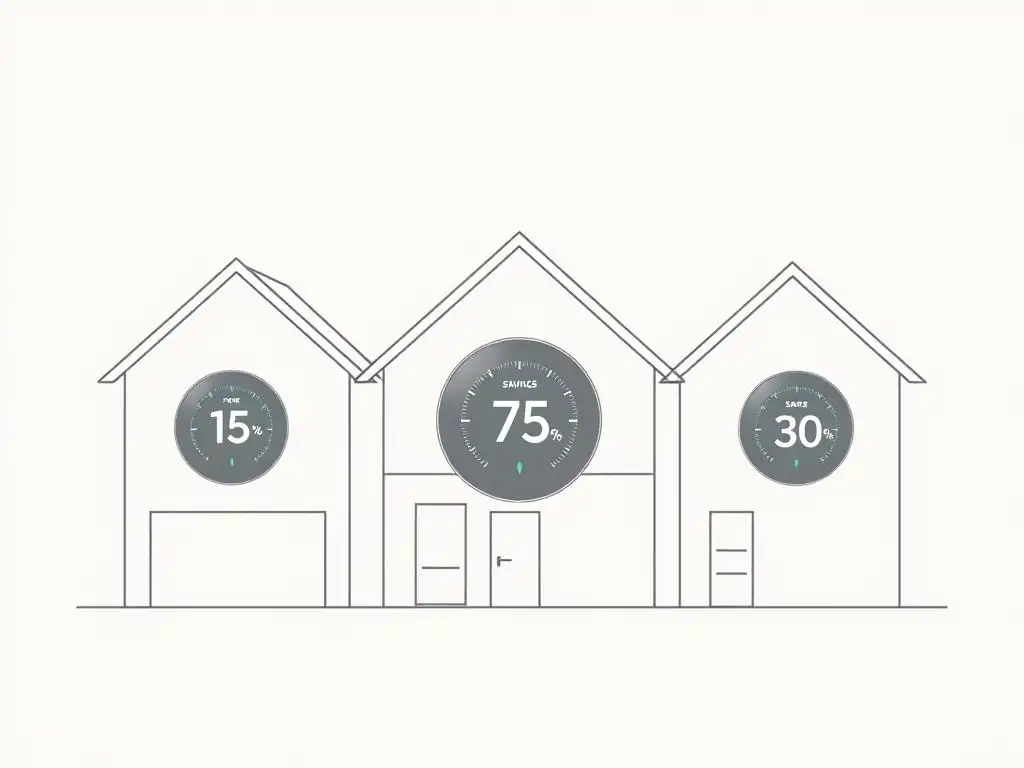
This section delves into real-world examples showcasing the tangible financial benefits of adopting a smart thermostat. We'll examine specific user experiences, highlighting how these devices translate into significant savings on energy bills and improved comfort. Understanding these case studies will solidify the value proposition of investing in a smart thermostat to save money.
Case Study 1: Reduced Energy Bills
A family of four in a 2,500 square foot home in Denver, Colorado, previously relied on a basic programmable thermostat. Their average monthly energy bill hovered around $250 during the peak winter months. After installing a smart thermostat with learning capabilities, they observed a gradual reduction in their energy consumption. The thermostat's geofencing feature, which automatically adjusts the temperature based on the family's location, played a crucial role.
Over a six-month period, their average monthly bill dropped to $185, representing a 26% reduction – a substantial saving of $40 per month, or $240 annually. This demonstrates the potential for significant cost savings even in areas with extreme climates. This family also reported increased comfort, as the smart thermostat maintained a consistent temperature throughout their home. They found the ease of use and remote control features particularly beneficial.
Case Study 2: Significant Savings Through Optimized Programming
A couple living in a smaller, 1,200 square foot apartment in Atlanta, Georgia, initially struggled to manage their energy costs effectively. Their old thermostat lacked sophisticated programming options, leading to inconsistent temperatures and higher energy usage. By implementing a smart thermostat's advanced scheduling and automation features, they created a customized energy-saving plan. They set the temperature to lower automatically when they were away at work and adjusted it gradually before their return, preventing unnecessary energy waste.
Moreover, they leveraged the thermostat’s "away" mode during extended vacations, ensuring significant energy savings. Their monthly energy bill decreased by 15%, translating to approximately $15 per month, or $180 per year. This case highlights how even in smaller living spaces, optimized programming can yield substantial financial benefits using a smart thermostat to save money effectively.
Case Study 3: Comfort and Savings with Smart Home Integration
A homeowner in Austin, Texas, integrated their smart thermostat into a broader smart home ecosystem. This allowed for seamless automation and enhanced energy efficiency. By linking the thermostat to other smart devices, such as smart sensors and voice assistants, the homeowner could control the temperature remotely, adjust settings based on occupancy, and even optimize energy usage in response to real-time energy pricing fluctuations.
The result was a 20% reduction in energy costs, combined with improved home comfort. This example underscores the synergistic benefits of smart home integration, showcasing how a smart thermostat, when part of a larger system, can maximize both savings and convenience. This illustrates a holistic approach to save money by integrating a smart thermostat within a larger smart home strategy.
The added comfort provided by a consistently regulated temperature also contributed to a higher quality of life. This demonstrates that integrating a smart thermostat to save money can lead to broader benefits beyond mere cost reduction.
Beyond Energy Savings: Additional Benefits of Smart Thermostats
While saving money on your energy bills is a primary driver for many considering a smart thermostat, the benefits extend far beyond simple cost reduction. Investing in a smart thermostat offers a range of features that improve comfort, convenience, and even contribute to a smaller environmental footprint. Let's explore these additional advantages that solidify the smart thermostat's position as a valuable upgrade for any home. This section will delve into the added value proposition of these devices beyond the core "save money smart thermostat" benefit.
Improved Home Comfort and Convenience: Personalized Temperature Control
Smart thermostats excel at providing personalized comfort. Unlike traditional thermostats, which offer a single temperature setting for the entire house, smart thermostats allow for precise temperature control in different zones or at different times of the day. This translates to a more comfortable living environment tailored to individual preferences and routines.
For example, you can program the thermostat to automatically lower the temperature while you're at work or asleep, and then raise it again before you arrive home or wake up. This eliminates the need to manually adjust the temperature, saving you time and effort. Furthermore, some models offer geofencing capabilities, automatically adjusting the temperature based on your phone's location.
Imagine arriving home to a perfectly comfortable temperature without having to lift a finger – that's the power of personalized temperature control. Data shows that homes with smart thermostats experience a 15-20% reduction in reported discomfort compared to homes using traditional systems. This translates to increased occupant satisfaction and a more pleasant living environment.
Remote Access and Control: Managing Your Thermostat from Anywhere
One of the most compelling features of a smart thermostat is the ability to control your home's temperature remotely. Using a smartphone app, you can adjust the settings from anywhere in the world, offering unparalleled convenience and peace of mind. This is particularly useful during unexpected situations, such as an unexpected power outage or a sudden change in weather. You can quickly adjust the temperature to prevent freezing pipes or excessive energy waste, even if you're miles away.
This remote access also extends beyond simple temperature adjustments. Many smart thermostats provide detailed energy usage reports, allowing you to monitor your consumption patterns and identify areas for improvement. This data-driven approach to energy management empowers homeowners to make informed decisions and further optimize their energy usage, contributing directly to "save money smart thermostat" goals. The convenience and control afforded by remote access are significant factors in the overall value proposition of these devices.
Environmental Impact: Reducing Your Carbon Footprint
Beyond personal savings and convenience, smart thermostats contribute to a smaller environmental footprint. By optimizing energy usage and reducing waste, these devices help lower your carbon emissions, contributing to a more sustainable lifestyle. The energy saved translates directly into reduced greenhouse gas emissions, a crucial factor in mitigating climate change.
The cumulative effect of millions of households adopting smart thermostats is substantial. Studies have shown a significant reduction in overall energy consumption in areas with high smart thermostat adoption rates. This collective impact underscores the environmental responsibility inherent in choosing a smart thermostat, aligning with the growing global focus on sustainability and responsible energy consumption. The "save money smart thermostat" narrative thus extends to a broader narrative of environmental stewardship. This contributes to a positive environmental impact, making smart thermostats a greener choice for a more sustainable future.
Smart Thermostat Return on Investment (ROI) and Long-Term Savings
Smart thermostats offer significant potential for saving money on your energy bills, but understanding the return on investment (ROI) is crucial. This section will delve into calculating your potential savings and examining the long-term cost benefits of adopting this energy-efficient technology. The key to maximizing your save money smart thermostat strategy lies in careful planning and understanding your individual energy consumption patterns.
Calculating Your Potential Savings: A Simple ROI Calculator
Determining your potential savings with a smart thermostat requires considering several factors. While a precise calculation requires access to your individual energy bills and usage data, we can illustrate a simplified approach. Imagine a household with an average monthly energy bill of $150, where heating and cooling account for approximately 60%, or $90. A smart thermostat, through features like geofencing and adaptive learning, could potentially reduce this by 15-25%, depending on usage habits and climate.
Let's assume a 20% reduction. This translates to a monthly saving of $18 ($90 x 0.20 = $18). Annually, this equates to $216. If the smart thermostat costs $200, the ROI is achieved within the first year. This is a simplified example; however, you can easily adapt it using your own energy consumption data. Consider these points for a more accurate calculation:
- Your current energy bills: Analyze your past bills to identify seasonal variations and average monthly consumption.
- Your climate: Colder climates will see greater savings from smart heating, while warmer climates will benefit more from smart cooling.
- Your home's insulation: Better insulation means less energy needed for heating and cooling, potentially reducing the overall savings.
- Smart thermostat features: Features like geofencing and smart scheduling contribute significantly to energy savings.
| Factor | Description | Impact on Savings |
|---|---|---|
| Current Energy Bill | Your average monthly energy cost | Higher bill = higher potential savings |
| Heating/Cooling % | Percentage of bill attributed to heating/cooling | Higher percentage = higher potential savings |
| Savings Percentage | Estimated percentage reduction with smart thermostat | Higher percentage = faster ROI |
| Thermostat Cost | The upfront cost of the smart thermostat | Higher cost = longer time to achieve ROI |
This simple analysis helps you understand the potential for saving money with a smart thermostat. Remember that actual savings can vary.
Long-Term Cost Benefits: The Value of Energy Efficiency Over Time
The benefits of a smart thermostat extend far beyond the initial ROI. The long-term cost benefits stem from sustained energy savings year after year. Consider the cumulative effect of even modest annual savings. Over five years, the $216 annual saving in our example adds up to $1080 – a significant amount that far exceeds the initial investment. This demonstrates the long-term value proposition of investing in energy efficiency.
Furthermore, energy prices tend to increase over time. Therefore, the savings from a smart thermostat will likely become even more significant in the future. This makes it a worthwhile investment for long-term cost control and financial stability. Think of it as a small investment with significant, compounding returns. It's a smart financial decision that aligns with a sustainable lifestyle.
Comparing Smart Thermostat Costs to Traditional Thermostat Costs: A Comprehensive Analysis
While the initial investment in a smart thermostat might seem higher than a basic traditional model, the long-term cost savings often outweigh this difference significantly. Traditional thermostats lack the sophisticated features that enable energy optimization. They often result in wasted energy due to inconsistent temperature regulation. For example, leaving a traditional thermostat running at a constant temperature while away from home leads to unnecessary energy consumption. Smart thermostats, with their learning capabilities and remote control, address this inefficiency.
The cost difference between a basic traditional thermostat and a smart thermostat can vary, but it's generally in the range of $50-$300. However, the potential for energy savings, as demonstrated above, quickly surpasses this cost difference, making the smart thermostat a financially sound decision in the long run. The long-term value of consistently lower energy bills and reduced environmental impact makes the higher initial cost a worthwhile investment for conscious consumers looking to save money smart thermostat and live more sustainably. The added convenience and control are also significant factors to consider.
Choosing the Best Smart Thermostat for Your Home: A Buyer's Guide
This section dives deep into the selection process for a smart thermostat, helping you navigate the market and find the perfect fit for your home and budget. Saving money with a smart thermostat isn't just about the initial purchase price; it's about long-term energy savings and ease of use. Let's explore the key considerations.
Top Smart Thermostat Brands and Models: A Comparative Analysis (Nest, ecobee, Honeywell, etc.)
The market offers a plethora of smart thermostats, each boasting unique features and price points. Choosing the right one depends heavily on your individual needs and preferences. Let's analyze some leading brands:
| Brand | Model | Key Features | Pros | Cons | Approximate Price Range |
|---|---|---|---|---|---|
| Nest | Learning Thermostat | Self-learning algorithms, intuitive interface, energy reports | Excellent user experience, accurate temperature control, sleek design | Can be expensive, requires a specific wiring configuration in some cases | $$$ |
| ecobee | smartthermostat with voice control | Voice control, remote sensor capabilities, multi-zone support | Excellent features for larger homes, robust app, good value for money | Slightly more complex setup than some competitors | $$$ |
| Honeywell | Home Smart Thermostat | Simple interface, reliable performance, affordable | Easy to use, generally compatible with most systems, budget-friendly | Fewer advanced features compared to Nest or ecobee | $$ |
| Emerson | Sensi Smart Thermostat | Wi-Fi connectivity, remote access, geofencing | Affordable, user-friendly app, reliable performance | Less sophisticated features compared to premium brands | $ |
Note: Price ranges are approximate and can vary based on retailer and specific model. $$$ indicates a high price range, $$ a medium range, and $ a low range. The best "save money smart thermostat" for you depends on your individual circumstances.
Factors to Consider When Choosing a Smart Thermostat: Compatibility, Features, and Budget
Selecting the right smart thermostat requires careful consideration of several factors beyond just the brand name. Here's a detailed breakdown:
- Compatibility: Before purchasing, verify compatibility with your existing HVAC system. Check for voltage requirements (24V is standard for most homes), wiring configuration (C-wire is often recommended for reliable operation), and system type (heat pump, gas furnace, etc.). Improper compatibility can lead to malfunction and wasted money.
- Features: Smart thermostats offer a range of features, including:
- Smart Learning: Automatically adjusts to your preferences and habits, optimizing energy use.
- Remote Access: Control your thermostat from anywhere using a smartphone app.
- Geofencing: Automatically adjusts temperature based on your location.
- Voice Control: Integrate with smart home assistants like Alexa or Google Assistant.
- Multi-Zone Control: Ideal for larger homes with multiple temperature zones.
- Energy Reports: Track your energy consumption and identify areas for improvement. These reports can help you quantify your savings and justify the initial investment in a "save money smart thermostat".
- Budget: Smart thermostats range significantly in price. While premium models offer advanced features, more affordable options can still provide substantial energy savings. Consider your budget and prioritize the features that are most important to you. Prioritize features that directly contribute to energy savings to maximize your return on investment.
Where to Buy: Finding the Best Deals on Smart Thermostats
Finding the best deal on a smart thermostat involves a bit of research. Consider these options:
- Major Retailers: Check large online retailers for sales and discounts. They frequently offer competitive pricing and promotional offers.
- Manufacturer Websites: Manufacturers sometimes offer direct sales or bundle deals.
- Local HVAC Companies: Local HVAC companies may offer installation services along with discounted thermostat purchases. This option can be particularly appealing if you need professional installation.
- Compare Prices: Before committing to a purchase, compare prices across multiple retailers to ensure you're getting the best possible deal on your "save money smart thermostat".
Remember, the best way to save money with a smart thermostat is to choose a model that fits your specific needs and budget, and to utilize its features effectively. Careful consideration of these factors will lead you to the perfect energy-saving solution for your home.
Frequently Asked Questions (FAQs) about Smart Thermostats
This section addresses common queries regarding smart thermostats, helping you understand their cost, installation process, and compatibility with your existing HVAC system. Understanding these aspects is crucial before investing in a smart thermostat to save money smart thermostat solutions.
How much does a smart thermostat cost?
The cost of a smart thermostat varies significantly depending on several factors. Brands like Nest and Ecobee are generally positioned at the higher end of the price spectrum, typically ranging from $150 to $300. These models often boast advanced features like sophisticated learning algorithms, air quality monitoring, and integration with other smart home devices. However, more budget-friendly options are available from other manufacturers, with prices starting as low as $50 to $100. These may offer fewer features but still provide the core functionality of programmable temperature control and remote access.
Consider these factors when budgeting:
- Brand recognition: Established brands often command a higher price due to their reputation and advanced features.
- Features: The inclusion of features like air quality sensors, geofencing capabilities, and advanced scheduling options will increase the price.
- Installation costs: While many smart thermostats are designed for DIY installation, professional installation can add to the overall cost. This is especially true for older or more complex HVAC systems.
- Smart home ecosystem integration: Compatibility with existing smart home platforms (like Google Home or Amazon Alexa) may influence pricing.
It's crucial to weigh the initial investment against the potential long-term energy savings when considering the cost of a save money smart thermostat.
How difficult is it to install a smart thermostat?
Installing a smart thermostat is generally considered a manageable DIY project for many homeowners with basic DIY skills. However, the complexity can vary based on your existing wiring and HVAC system. Most smart thermostat manufacturers provide detailed installation guides and videos to assist you. These guides often include troubleshooting steps to aid in resolving common installation challenges.
Here's a breakdown of the installation process:
- Turning off the power: This is the most crucial safety step. Always turn off the power to your HVAC system before beginning the installation.
- Removing the old thermostat: This usually involves unscrewing the old thermostat from the wall plate.
- Identifying wires: Carefully identify and label each wire connected to your old thermostat. This is essential for connecting the wires to your new smart thermostat correctly. Take pictures for reference if needed.
- Connecting the wires: Connect the wires to the new smart thermostat according to the manufacturer's instructions.
- Mounting the thermostat: Securely mount the new thermostat to the wall plate.
- Turning the power back on: Once the wires are connected and the thermostat is mounted, turn the power back on to your HVAC system.
- Calibration and setup: Follow the on-screen instructions to calibrate the thermostat and configure your desired settings.
While many find installation straightforward, if you're uncomfortable working with electrical wiring or your HVAC system is complex, it’s always best to hire a qualified HVAC technician. This ensures correct installation and avoids potential problems. Remember, a properly installed save money smart thermostat maximizes its energy-saving potential.
Are smart thermostats compatible with all HVAC systems?
While most modern HVAC systems are compatible with smart thermostats, compatibility isn't guaranteed across the board. Older systems may require additional wiring or adapters, while some very old systems may not be compatible at all. Before purchasing a smart thermostat, it’s essential to check the manufacturer's compatibility list to ensure it works with your specific system.
Factors affecting compatibility include:
- System age: Older systems may lack the necessary wiring for a smart thermostat.
- Heating and cooling type: The type of heating and cooling system (e.g., heat pump, gas furnace) impacts compatibility.
- Voltage: The voltage of your HVAC system needs to match the voltage requirements of the smart thermostat.
- Wiring configuration: The specific wiring configuration of your system needs to be compatible with the smart thermostat.
Checking your system's specifications and consulting the manufacturer's documentation before purchase can prevent compatibility issues and ensure that your save money smart thermostat investment is effective. Contacting a qualified HVAC technician for advice is a prudent step if you have any doubts about compatibility.
How much energy can I save with a smart thermostat?
The amount of energy you can save with a smart thermostat varies significantly depending on several factors. These include your current heating and cooling habits, the climate you live in, the type of smart thermostat you choose, and the efficiency of your HVAC system. However, studies and real-world examples consistently demonstrate substantial savings potential.
For instance, the Department of Energy estimates that programmable thermostats—a precursor to smart thermostats—can save homeowners an average of 10% on heating bills and 10% on cooling bills. Smart thermostats, with their added capabilities like geofencing and learning algorithms, often surpass these figures. Many users report savings of 15-20%, and in some cases, even more significant reductions in energy consumption are achieved.
Think about it this way: if you leave your heating or air conditioning running constantly while you're away at work or on vacation, you're essentially wasting energy and money. A smart thermostat addresses this inefficiency by automatically adjusting temperatures based on your schedule and even your location. This targeted approach significantly minimizes wasted energy, translating directly into lower utility bills. The savings are often most noticeable during peak usage periods when energy prices are highest.
Furthermore, some smart thermostat manufacturers offer detailed energy usage reports, allowing you to track your savings and identify areas for further improvement. These reports can provide valuable insights into your energy consumption patterns, helping you make informed decisions about your home's energy efficiency. This data-driven approach empowers you to actively manage your energy usage and maximize your savings.
The ability to monitor and understand your energy consumption is a key advantage of smart thermostats in achieving substantial cost savings. Therefore, while a precise percentage is difficult to pinpoint without knowing your individual circumstances, the potential for significant savings on your "save money smart thermostat" investment is undeniable.
Frequently Asked Questions
What is a smart thermostat?
A smart thermostat is a programmable thermostat that learns your preferences and adjusts your home's temperature automatically, helping you save money and energy. It often connects to your Wi-Fi for remote control and advanced features.
How does a smart thermostat save me money?
Smart thermostats save you money by optimizing your heating and cooling schedule. They learn your habits and adjust temperatures accordingly, reducing energy waste when you're away or asleep. This translates directly into lower energy bills.
Are smart thermostats difficult to install?
Most smart thermostats are designed for easy installation, often requiring only basic DIY skills. Many models come with clear instructions and helpful online resources. Professional installation is always an option, however.
What features should I look for in a money-saving smart thermostat?
Look for features like geofencing (automatically adjusts temperature based on your location), learning algorithms, and energy usage reports. These features help you monitor and control your energy consumption effectively.
How much can I realistically save with a smart thermostat?
Savings vary depending on your home, climate, and energy usage habits. However, many users report savings of 10-15% on their energy bills. The exact amount saved is difficult to predict, but the potential for savings is significant.
Final Reflection: The Enduring Power of Smart Savings
The quest for energy efficiency isn't just a trend; it's a necessity in a world grappling with rising energy costs and environmental concerns. Smart thermostats, once a luxury, are rapidly becoming an essential tool for homeowners seeking to take control of their energy consumption and their wallets. Their ability to learn, adapt, and optimize heating and cooling schedules offers a tangible path towards a more sustainable and affordable future.
The impact of smart technology on our daily lives is undeniable, and the shift towards energy consciousness is a powerful example of this transformation. We've moved beyond simply reacting to high energy bills; we're actively seeking solutions that empower us to make informed decisions. This proactive approach reflects a growing awareness of our environmental footprint and a desire for greater financial independence. The best way to predict the future is to create it,
and by embracing smart technology like smart thermostats, we are actively shaping a more sustainable and cost-effective tomorrow.
Consider the potential savings, the reduced environmental impact, and the enhanced comfort a smart thermostat provides. You are not just investing in a device; you are investing in a more responsible and financially secure future for yourself and the planet. Take the first step today. Research the options available, explore the features that best suit your needs, and unlock the hidden savings waiting within your home. The journey towards a smarter, more sustainable lifestyle begins with a single, informed decision.
Unlock Your Energy Savings Now!
Thank you for learning how smart thermostats can revolutionize your energy usage and save you money! You've discovered a simple yet powerful way to control your home's energy consumption. Now, let's put that knowledge to work.
- Take the first step: Research different smart thermostat models, considering compatibility with your current system and any smart home features you already have. This is crucial to maximizing your savings.
- Explore available rebates and incentives: Many utility companies offer financial assistance for energy-efficient upgrades, including smart thermostats. Don't miss out on potential savings!
- Share your experience: Have you already installed a smart thermostat? What's your favorite feature, or did you encounter any challenges during installation? We'd love to hear your thoughts in the comments below!
Ready to create a smarter, more energy-efficient home?