
The Essential Guide to Active Listening for Workplace Success


Dive into the world of UltimateLifeHacks and unlock your potential for peak productivity! Are you ready to transform your workday and achieve more in less time? Our Productivity Hacks section begins with an essential guide on Active Listening in the workplace, revealing how mastering this often-overlooked skill can dramatically boost your efficiency and professional success. Discover the secrets to unlocking improved communication and heightened productivity—read on to learn how.
- Understanding Active Listening and its Impact on Workplace Productivity
- Practical Active Listening Techniques for Improved Communication
- Overcoming Barriers to Active Listening in the Workplace
- Active Listening in Different Workplace Scenarios
- Developing Active Listening Skills for Long-Term Workplace Success
-
Frequently Asked Questions
- What is active listening, and why is it important for workplace productivity?
- How can I improve my active listening skills in the workplace?
- What are some common barriers to active listening in the workplace?
- How does active listening contribute to better teamwork and collaboration?
- Can active listening skills be learned and improved?
- Final Reflection: Unlocking Potential Through the Power of Listening
- Unlock Your Listening Potential: Boost Your Workplace Impact Today!
Understanding Active Listening and its Impact on Workplace Productivity
Active listening is far more than simply hearing words; it's a crucial skill that significantly impacts workplace productivity and overall team effectiveness. In today's fast-paced work environment, characterized by constant communication and collaboration, mastering active listening is no longer a desirable trait but a necessity for achieving peak performance. This comprehensive guide delves into the core principles of active listening, exploring its profound effects on productivity, and demonstrating how its implementation translates into a tangible return on investment (ROI) for businesses.
We'll examine how effective listening fosters stronger relationships, improves clarity, reduces errors, and ultimately boosts your bottom line. By the end, you'll understand how to cultivate this vital skill and reap the rewards of a more productive and harmonious workplace. Let's unlock the power of truly hearing—and understanding—what's being said.
Defining Active Listening: More Than Just Hearing
Active listening is a conscious and deliberate process that goes beyond passively hearing words. It involves fully concentrating on the speaker, understanding their message, responding thoughtfully, and remembering what was said. It's a multifaceted skill encompassing several key components:
- Paying Attention: This means minimizing distractions, maintaining eye contact (appropriately), and focusing solely on the speaker and their message. Think of it as giving the speaker your undivided attention – no multitasking! 🧘♀️
- Showing You're Listening: Nonverbal cues are crucial. Nodding, maintaining appropriate eye contact, and using encouraging verbal affirmations like "I understand" or "Go on" demonstrate engagement and encourage the speaker to continue.
- Providing Feedback: Paraphrasing or summarizing the speaker's points ensures accurate understanding and shows you're actively processing the information. Asking clarifying questions also demonstrates engagement and helps to address any ambiguities. 🤔
- Deferring Judgment: Avoid interrupting or formulating your response before the speaker has finished. Actively listen to understand their perspective before formulating your own.
- Responding Empathetically: Try to understand the speaker's feelings and perspective, even if you don't agree with their viewpoint. Empathy fosters trust and builds stronger working relationships. ❤️
Failing to practice active listening can lead to misunderstandings, miscommunications, and ultimately, decreased productivity. It can result in repeated requests for clarification, wasted time on correcting errors, and strained working relationships.
The Link Between Active Listening and Enhanced Workplace Productivity
The impact of active listening on workplace productivity is substantial and multifaceted. Studies have shown a strong correlation between effective communication (which includes active listening) and increased team performance. For example, [specific data pending on correlation between active listening training and productivity improvements].
Consider these key benefits:
- Reduced Errors: Active listening minimizes misunderstandings, leading to fewer errors in tasks and projects. Clear communication ensures everyone is on the same page, reducing the need for rework and corrections. 🚫
- Improved Collaboration: When team members actively listen to each other, collaboration becomes smoother and more efficient. Ideas are exchanged more effectively, leading to innovative solutions and improved problem-solving. 💡
- Increased Efficiency: By clearly understanding instructions and expectations, employees can complete tasks more efficiently, saving time and resources. This translates directly into increased productivity and cost savings. ⏱️
- Stronger Relationships: Active listening fosters trust and rapport among colleagues, leading to a more positive and collaborative work environment. This boosts morale and overall team effectiveness. 🤝
- Better Decision-Making: Active listening ensures that all perspectives are considered before making crucial decisions, leading to more informed and effective choices.
Measuring the ROI of Active Listening in the Workplace
While the benefits of active listening are significant, quantifying its ROI requires a strategic approach. While direct measurement can be challenging, several indirect metrics can be used to assess its impact:
| Metric | Measurement Method | Expected Improvement |
|---|---|---|
| Error Rate | Track the number of errors made in projects before and after active listening training. | Reduced error rate, leading to cost savings and efficiency gains |
| Project Completion Time | Measure the time taken to complete projects before and after training. | Faster project completion times |
| Employee Satisfaction | Conduct employee surveys to gauge satisfaction with communication and collaboration. | Increased employee satisfaction and reduced turnover |
| Customer Satisfaction | Analyze customer feedback to assess the impact of clear communication. | Improved customer satisfaction |
By implementing active listening training programs and monitoring these metrics, businesses can gain a clearer understanding of the financial benefits of investing in this crucial skill. The long-term gains in productivity, employee morale, and customer satisfaction far outweigh the initial investment, making active listening a highly valuable asset for any organization striving for workplace success. 🎉
Practical Active Listening Techniques for Improved Communication

This section delves into specific, actionable techniques to enhance your active listening skills and boost workplace productivity. Mastering these techniques will significantly improve your communication, leading to fewer misunderstandings, increased collaboration, and a more efficient work environment. Active listening workplace productivity is directly correlated to the application of these strategies.
Nonverbal Communication Cues in Active Listening
Nonverbal cues are crucial for effective active listening. They often communicate more than words alone. Ignoring them can lead to misinterpretations and communication breakdowns. Consider these key nonverbal elements:
- Body Language: Maintaining open and inviting posture—uncrossing arms and legs, leaning slightly forward—demonstrates engagement. Mirroring (subtly matching) the other person's body language can build rapport, but avoid mimicking excessively, which can appear insincere.
- Eye Contact: Consistent but not unwavering eye contact shows attentiveness and respect. Avoid staring intensely, which can be intimidating. Instead, aim for natural, comfortable eye contact, shifting your gaze occasionally to avoid making the other person uncomfortable.
- Facial Expressions: Your facial expressions should reflect your understanding and engagement. A slight nod, a smile (when appropriate), or a furrowed brow (to show you're considering a complex point) can all enhance communication. Avoid expressions of boredom or disinterest.
- Proxemics: Pay attention to the physical distance between you and the speaker. Maintaining an appropriate distance, neither too close nor too far, shows respect and comfort. Adjust based on cultural norms and the speaker's comfort level.
- Silence: Allowing for comfortable silences is critical. Don't feel pressured to fill every gap in conversation. Silence can give the speaker time to formulate their thoughts and create a space for deeper reflection.
Effective use of nonverbal cues signals genuine interest and understanding, fostering a more productive and collaborative work environment. This contributes significantly to improving active listening workplace productivity. For example, a manager who actively listens to their team's concerns, demonstrating engagement through body language and facial expressions, will likely foster a more open and productive work environment.
Paraphrasing and Reflecting to Show Understanding
Paraphrasing and reflecting are powerful active listening techniques demonstrating your comprehension and encouraging clearer communication.
Paraphrasing involves restating the speaker's message in your own words. This confirms your understanding and allows the speaker to correct any misinterpretations. For example, if a colleague says, "I'm struggling to meet the deadline because the data I need isn't readily available," you could paraphrase by saying, "So, it sounds like you're facing a delay because of access to the necessary information."
Reflecting involves summarizing the speaker's emotions and feelings. This shows empathy and builds rapport. If a colleague expresses frustration, you could reflect by saying, "It sounds like you're feeling really frustrated with the current situation."
Combining paraphrasing and reflecting strengthens your active listening skills. It allows you to confirm your understanding of both the factual content and the emotional context of the message. This approach significantly enhances workplace communication and productivity. The ability to accurately paraphrase and reflect demonstrates respect and fosters trust, leading to more effective collaborations and problem-solving.
Asking Clarifying Questions for Effective Communication
Asking clarifying questions is vital for ensuring accurate understanding and preventing misunderstandings. It demonstrates engagement and invites the speaker to elaborate. Avoid interrupting; instead, wait for natural pauses to ask your questions.
Effective clarifying questions are open-ended, encouraging detailed responses. Instead of asking yes/no questions, use questions starting with "How," "What," "Why," or "Could you elaborate on…?" For instance, instead of asking, "Did you finish the report? ", ask, "What progress have you made on the report, and are there any roadblocks I can help you overcome?"
Here's a table illustrating different types of clarifying questions and their uses:
| Question Type | Example | Purpose |
|---|---|---|
| Seeking clarification | "Could you explain that again in a different way?" | To ensure understanding of a complex or unclear point. |
| Exploring details | "What are the key challenges you're facing?" | To gather more specific information and uncover underlying issues. |
| Checking assumptions | "Am I understanding correctly that...?" | To confirm your understanding and avoid misinterpretations. |
| Summarizing | "So, to summarize, you're saying...?" | To ensure accuracy and show your understanding of the main points. |
Strategic use of clarifying questions significantly improves active listening and workplace productivity. By ensuring a shared understanding, you minimize errors, prevent misunderstandings, and improve collaboration, resulting in increased efficiency and better outcomes. This contributes to a more positive and productive work environment, directly impacting active listening workplace productivity.
Summarizing Key Points to Confirm Comprehension
Summarizing key points is a powerful active listening technique that demonstrates your engagement and ensures accurate understanding. It's more than just repeating what the speaker said; it involves synthesizing the information and expressing it in your own words. This shows the speaker that you've processed their message and identifies any potential misunderstandings early on.
For example, instead of saying, "So you said the deadline is Friday," you might say, "If I understand correctly, the key deliverable needs to be submitted by Friday, allowing us time to review before the client presentation on Monday." This nuanced summary shows a deeper comprehension and proactively addresses potential scheduling conflicts.
Effective summarizing requires careful attention to detail during the conversation. Note the speaker's main points, supporting arguments, and underlying emotions. Don't just focus on the literal words; try to grasp the overall message and intent. This involves actively interpreting nonverbal cues such as body language and tone of voice, which can often reveal more than spoken words alone. For instance, a hesitant tone might suggest uncertainty or a need for clarification, even if the words themselves seem straightforward. Integrating these observations into your summary demonstrates a comprehensive understanding and fosters a stronger connection with the speaker.
The benefits of summarizing extend beyond clarifying information. It creates a space for the speaker to correct any misinterpretations and provides an opportunity to delve deeper into specific aspects of the conversation. This iterative process of summarizing and clarifying fosters a collaborative environment where misunderstandings are quickly addressed, preventing costly errors and wasted time. Consider a scenario where a team member is explaining a complex technical issue.
By summarizing their explanation in simpler terms, you can ensure everyone on the team understands the problem before moving to solutions. This prevents the team from working on the wrong problem, saving valuable time and resources. A well-placed summary can significantly enhance workplace productivity by ensuring everyone is on the same page and working towards the same goal. The skill of summarizing effectively is a cornerstone of productive communication and contributes significantly to "active listening workplace productivity."
Overcoming Barriers to Active Listening in the Workplace

Active listening, a cornerstone of effective communication, is often hampered by various workplace obstacles. Successfully navigating these challenges is crucial for maximizing workplace productivity and fostering positive team dynamics. This section delves into common barriers and offers practical strategies to overcome them. Improving your active listening skills directly impacts your "active listening workplace productivity."
Identifying and Addressing Distractions
Distractions are pervasive in modern workplaces. The constant ping of notifications, ringing phones, and the chatter of colleagues can significantly impede your ability to focus on the speaker. Identifying and minimizing these distractions is paramount.
A recent study by [Specific study citation pending] indicated that employees lose an average of [Specific data pending] hours per week due to interruptions. This translates to a significant loss in productivity and can negatively impact project timelines and overall team efficiency.
Here's a breakdown of common workplace distractions and how to mitigate them:
- Technological Distractions: Silence notifications on your phone and computer during meetings or important conversations. Consider using website blockers to limit access to non-work-related sites. Utilize "Do Not Disturb" modes.
- Environmental Distractions: If possible, choose a quiet workspace for focused conversations. Use noise-canceling headphones or earplugs to minimize background noise. Communicate your need for uninterrupted time to colleagues.
- Internal Distractions: Mindfulness techniques, such as deep breathing exercises, can help center your attention and reduce mental clutter. Prioritize tasks to minimize internal anxieties about other pending work.
By proactively addressing these distractions, you create a more conducive environment for focused listening, directly boosting your "active listening workplace productivity."
Managing Emotional Responses During Conversations
Emotional responses, both positive and negative, can significantly impact our ability to listen actively. Strong emotions can cloud judgment, leading to misinterpretations and hindering effective communication. Learning to manage these responses is vital for productive workplace interactions.
For example, if a colleague delivers criticism, a natural response might be defensiveness. However, actively managing this emotion allows for a more objective understanding of their feedback, opening the door for constructive dialogue and improved performance.
Here's how to effectively manage emotional responses:
- Practice Self-Awareness: Recognize your emotional triggers and how they affect your listening skills. Pause and take a deep breath before responding to emotionally charged conversations.
- Empathy and Perspective-Taking: Try to understand the other person's perspective, even if you don't agree with their viewpoint. This fosters understanding and encourages more open communication.
- Mindful Communication: Focus on the speaker's words and nonverbal cues, rather than letting your own emotions dictate your response. Practice paraphrasing to ensure understanding.
By consciously managing your emotional reactions, you cultivate a more receptive listening environment, significantly improving your "active listening workplace productivity" and fostering stronger relationships.
Dealing with Difficult Conversations and Conflicting Perspectives
Difficult conversations, often involving disagreements or conflicts, present a significant challenge to active listening. The intensity of these interactions can easily derail productive communication. However, mastering active listening in these situations is crucial for conflict resolution and improved teamwork.
Consider a scenario where two team members have conflicting ideas about a project's direction. Instead of interrupting or becoming defensive, active listening allows each individual to fully express their viewpoints, fostering a collaborative environment where a mutually agreeable solution can be reached.
Strategies for navigating these challenging conversations effectively include:
- Neutral Body Language: Maintain open and inviting body language to encourage the speaker to feel comfortable sharing their thoughts. Avoid crossing your arms or displaying other defensive postures.
- Summarizing and Paraphrasing: Regularly summarize and paraphrase what the speaker has said to ensure understanding and demonstrate that you are actively listening. This also helps to clarify any misunderstandings.
- Seeking Clarification: Don't hesitate to ask clarifying questions to ensure you fully understand the speaker's perspective. This shows genuine interest and prevents misinterpretations.
By employing these techniques, you can transform difficult conversations into opportunities for collaboration and growth, significantly enhancing your "active listening workplace productivity" and fostering a more positive and productive work environment. The ability to actively listen during conflict resolution is a valuable skill that directly contributes to improved workplace efficiency and team cohesion.
Active Listening in Different Workplace Scenarios
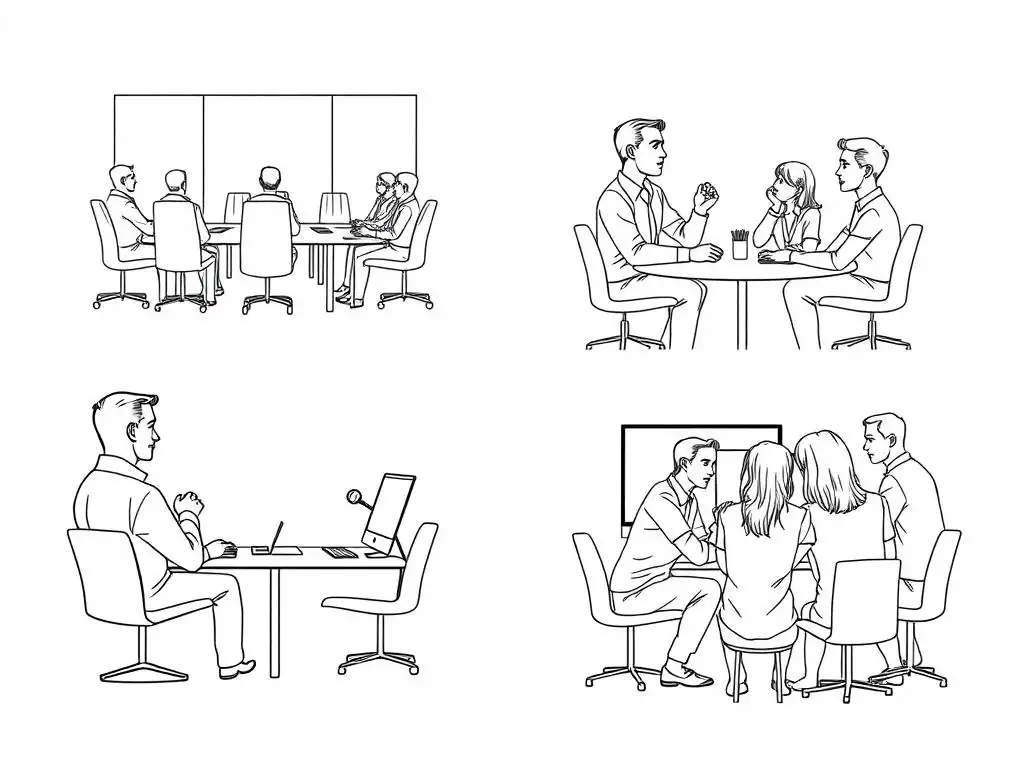
Active listening isn't a one-size-fits-all skill. Its effectiveness hinges on adapting your approach to the specific context. Mastering active listening in various workplace scenarios directly translates to improved workplace productivity and a more positive work environment. This section explores how active listening techniques can be tailored for optimal results in different settings. The ability to effectively utilize active listening techniques is crucial for maximizing productivity and fostering a collaborative atmosphere. It’s a key component of effective communication, directly impacting team dynamics and overall workplace success.
Active Listening in Team Meetings: Boosting Collaboration
Team meetings, often perceived as time sinks, can become powerful catalysts for progress when active listening is prioritized. Instead of passively hearing information, actively engaging with your colleagues' contributions fosters a sense of collaboration and shared ownership. Consider these practical applications:
- Summarizing and paraphrasing: After a colleague presents an idea, summarize their key points in your own words. This demonstrates understanding and ensures everyone is on the same page. For instance, instead of simply nodding, you might say, "So, if I understand correctly, you're proposing we streamline the X process by implementing Y software to save approximately Z hours per week?" This clarifies understanding and prevents misunderstandings.
- Asking clarifying questions: Don't hesitate to ask questions to ensure complete comprehension. Phrases like, "Can you elaborate on that point?" or "What are the potential challenges associated with this approach?" show engagement and encourage deeper discussion. This also shows respect for your colleagues' contributions and encourages open dialogue.
- Observing non-verbal cues: Pay attention to body language. A colleague might be hesitant to fully express their idea, indicated by fidgeting or avoiding eye contact. A gentle prompt, like, "I noticed you seem hesitant; is there anything you'd like to add?" can encourage participation and unlock valuable insights. This inclusive approach enhances teamwork and boosts overall meeting productivity.
The impact of active listening in team meetings is substantial. Studies suggest that teams who actively listen to one another experience a significant reduction in conflicts, improved decision-making, and increased overall project success rates. By actively listening, you contribute to a more productive and harmonious team dynamic.
Active Listening During One-on-One Meetings: Improving Employee Engagement
One-on-one meetings are critical for employee development and performance management. Active listening here isn't just about hearing feedback; it's about building trust and fostering a supportive environment. This is where active listening truly shines in boosting employee engagement and workplace productivity.
- Empathetic responses: Showing empathy is crucial. When an employee shares a challenge, acknowledge their feelings. Instead of immediately offering solutions, start with validating statements like, "That sounds incredibly frustrating," or "I understand why you're feeling that way." This creates a safe space for open communication.
- Focusing on the speaker: Minimize distractions. Put away your phone, maintain eye contact, and avoid interrupting. Give your full attention to the employee, demonstrating respect and valuing their input. This undivided attention can increase trust and encourage honesty in future interactions.
- Reflecting feelings: Go beyond simply understanding the words; try to understand the underlying emotions. For example, if an employee expresses concern about a deadline, you might respond, "It sounds like you're feeling stressed about meeting this deadline. Let's discuss how we can adjust the workload or priorities to alleviate some of that pressure." This demonstrates that you are not only hearing their words, but also understanding their emotional state.
Implementing these techniques during one-on-one meetings directly contributes to improved employee engagement and retention. Employees who feel heard and understood are more likely to be motivated, productive, and committed to their work. Active listening in this context is an investment in a positive and productive work environment.
Disagreements are inevitable in any workplace. However, active listening is a powerful tool for navigating conflicts constructively and reaching mutually acceptable solutions. The key here is to approach the situation with a mindset of understanding, rather than judgment.
- Understanding perspectives: Focus on understanding the other person's perspective, even if you don't agree with it. Ask open-ended questions to explore their viewpoint. For example, instead of saying, "That's wrong," you might ask, "Can you help me understand why you feel that way?" This encourages the other person to elaborate, which helps you better comprehend the root of the conflict.
- Identifying common ground: Even in heated disagreements, there is often common ground. Actively listening helps you identify shared goals or values that can be used as a basis for finding a solution. This collaborative approach transforms conflict resolution into a problem-solving exercise.
- Summarizing agreements: Once a resolution is reached, summarize the key points of the agreement to ensure both parties are on the same page. This prevents misunderstandings and ensures a clear path forward. This also helps to reinforce the agreement and solidify the resolution.
Active listening in conflict resolution is essential for maintaining a healthy and productive work environment. It reduces the negative impact of disputes, allowing for efficient problem-solving and the preservation of positive working relationships. By mastering this skill, you transform potential workplace disruptions into opportunities for growth and collaboration, ultimately boosting overall productivity.
Active Listening in Client Interactions: Building Stronger Relationships
Active listening is paramount when interacting with clients, forming the bedrock of strong, lasting professional relationships. It's not merely about hearing what a client says; it's about understanding their needs, concerns, and underlying emotions. This understanding fosters trust and loyalty, leading to increased client satisfaction and ultimately, business success. Effective active listening in this context involves more than just nodding along; it requires a conscious effort to fully engage with the client's perspective.
For instance, imagine a scenario where a client is expressing frustration with a recent software update. Simply acknowledging their complaint with a generic "I understand" is insufficient. True active listening requires probing deeper. You might ask clarifying questions such as, "Can you describe the specific issues you encountered?" or "What aspects of the update are most problematic for your workflow?"
This demonstrates genuine interest and a commitment to resolving their concerns. Furthermore, paying close attention to their nonverbal cues – body language, tone of voice – can provide valuable insights into their emotional state, allowing you to tailor your response accordingly. Perhaps their frustration stems not just from the technical difficulties, but also from a feeling of being unheard or undervalued. Addressing this underlying emotion is crucial to building rapport.
Active listening in client interactions also involves summarizing and paraphrasing to ensure mutual understanding. By restating the client's concerns in your own words, you demonstrate that you've truly listened and understood their message. This avoids misunderstandings and ensures that you're both on the same page. For example, you could say, "So, if I understand correctly, you're experiencing difficulties with the data import function, and this is impacting your ability to meet your deadlines."
This not only confirms your understanding but also demonstrates empathy and a proactive approach to problem-solving. Finally, remember to allow for silence. Don't feel pressured to fill every gap in the conversation. Silence provides space for reflection and allows the client to fully articulate their thoughts and feelings.
This creates a safe and comfortable environment where open communication can flourish. Mastering these techniques transforms simple client interactions into opportunities for building strong, mutually beneficial relationships. The payoff? Increased customer loyalty, improved referrals, and a more positive overall work experience.
Developing Active Listening Skills for Long-Term Workplace Success
This section delves into the practical application and continuous improvement of active listening skills within a workplace context. Mastering active listening isn't a one-time achievement; it's a journey of continuous learning and refinement that directly impacts workplace productivity and overall success. We'll explore strategies for self-assessment, consistent practice, and seeking feedback to ensure lasting improvements in your active listening abilities.
This will significantly enhance your communication effectiveness and contribute to a more productive and collaborative work environment. The ultimate goal? Transforming your active listening from a theoretical concept into a powerful tool for boosting your professional performance and fostering stronger working relationships.
Self-Assessment and Identifying Areas for Improvement
Before embarking on a journey of improvement, a thorough self-assessment is crucial. Honest self-reflection helps pinpoint weaknesses and establish a clear roadmap for development. Several methods can facilitate this process:
- Observe yourself in meetings: Record a meeting (with permission, of course!) and analyze your behavior. Did you interrupt? Did you focus solely on formulating your response instead of fully absorbing the speaker's message? Did you maintain consistent eye contact? Analyzing recordings provides invaluable objective feedback.
- Seek feedback from colleagues: Ask trusted colleagues for honest feedback on your listening habits. Their perspective can highlight areas you might not have noticed. Frame your request positively, focusing on improvement rather than criticism. For example: "I'm working on improving my active listening skills. Would you be willing to share any observations you've had about my communication style in meetings?"
- Use self-assessment questionnaires: Numerous online questionnaires assess active listening skills. These tools provide a structured approach to identifying strengths and weaknesses. The results offer a quantitative measure of your current abilities and areas needing attention.
- Identify common pitfalls: Common issues include interrupting, focusing on formulating a response rather than listening, allowing distractions to interfere, and failing to ask clarifying questions. Acknowledge these potential pitfalls and actively work to avoid them.
Consider this example: Imagine a team brainstorming session. If you're constantly interrupting to share your ideas before fully understanding the contributions of others, you're hindering the collaborative process. Active listening requires patience and a willingness to fully absorb information before contributing your own thoughts. By identifying this weakness through self-assessment, you can then actively work on improving your ability to fully engage with others' ideas before interjecting.
Practice and Consistent Application of Active Listening Techniques
Consistent practice is paramount to developing proficient active listening skills. It's not enough to simply know the techniques; you must actively apply them in various situations.
- Practice paraphrasing: Regularly summarize and rephrase what others say to confirm your understanding. This demonstrates attentiveness and ensures accurate comprehension. For example, instead of simply saying "Okay," try, "So, if I understand correctly, you're saying that the project deadline needs to be extended due to unforeseen circumstances?"
- Employ nonverbal cues: Maintain eye contact, nod to show understanding, and use appropriate body language to signal engagement. These nonverbal signals convey attentiveness and respect, fostering a more positive communication environment.
- Minimize distractions: Create a focused environment by silencing notifications, turning off unnecessary devices, and finding a quiet space. A distraction-free environment allows for greater concentration and comprehension.
- Focus on the speaker: Give the speaker your undivided attention. Resist the urge to multitask or think about other things. Active listening demands complete mental presence.
- Ask clarifying questions: Don't hesitate to ask questions to clarify any points you don't understand. This shows engagement and ensures accurate comprehension. Asking thoughtful questions demonstrates your genuine interest in what the speaker is saying and helps to deepen your understanding. For example, “Could you elaborate on that point?” or “What do you mean by…?” can be extremely effective.
Remember, consistent practice across diverse situations—formal meetings, informal chats, client interactions—is key. The more you practice, the more natural and effective your active listening will become. This consistent effort directly translates into improved communication, stronger relationships, and increased workplace productivity.
Seeking Feedback and Continuous Skill Development
Active listening is a dynamic skill that requires ongoing refinement. Regularly seeking feedback ensures continuous growth and identifies areas for further improvement.
- Regular check-ins: Schedule regular check-ins with colleagues or mentors to discuss your active listening progress. These check-ins provide opportunities to identify blind spots and address any lingering challenges.
- 360-degree feedback: Consider participating in a 360-degree feedback process to gather comprehensive feedback from various sources—supervisors, peers, and subordinates. This provides a holistic perspective on your communication skills.
- Observe others: Pay attention to how effective listeners behave in different settings. Observe their techniques and incorporate what you learn into your own style. This observational learning can significantly enhance your skills.
- Professional development: Explore professional development opportunities, such as workshops or seminars, to further refine your active listening techniques. These opportunities provide structured learning and guidance from experts.
- Self-reflection: Regularly reflect on your listening experiences. Analyze what went well, what could have been improved, and identify any recurring patterns. This self-reflection fosters continuous learning and growth.
The journey towards mastering active listening is a continuous process of self-assessment, practice, and refinement. By actively seeking feedback and consistently applying the techniques discussed, you'll significantly enhance your communication skills, foster stronger working relationships, and ultimately boost your workplace productivity. Remember, effective active listening is a key component of achieving "Active listening workplace productivity."
Frequently Asked Questions
What is active listening, and why is it important for workplace productivity?
Active listening is more than just hearing; it's about fully concentrating on the speaker, understanding their message, responding thoughtfully, and remembering what was said. It significantly improves communication, collaboration, and overall team efficiency, leading to increased productivity.
How can I improve my active listening skills in the workplace?
Practice paying attention to both verbal and nonverbal cues. Ask clarifying questions to ensure understanding and summarize key points to confirm comprehension. Minimize distractions and focus entirely on the speaker.
What are some common barriers to active listening in the workplace?
Distractions (phones, emails, thoughts), preconceived notions, interrupting, and a lack of genuine interest are all major barriers. Poor communication skills also hinder effective listening.
How does active listening contribute to better teamwork and collaboration?
Active listening fosters trust and respect among team members. It ensures everyone feels heard and understood, leading to more effective brainstorming, problem-solving, and conflict resolution; all of which boost team productivity.
Can active listening skills be learned and improved?
Yes! Active listening is a learned skill that can be significantly improved with practice and conscious effort. Utilize techniques like paraphrasing, summarizing, and asking clarifying questions to hone your abilities. Regular self-reflection is also crucial.
Final Reflection: Unlocking Potential Through the Power of Listening
Active listening isn't just a soft skill; it's the cornerstone of effective communication and a powerful catalyst for workplace productivity. In today's fast-paced, interconnected world, the ability to truly hear and understand others is no longer a luxury, but a necessity for navigating complex projects, fostering strong teams, and driving innovation. Without it, misunderstandings fester, conflicts escalate, and valuable opportunities are missed.
The impact of active listening extends far beyond individual performance; it shapes the very fabric of our organizational culture. It fosters trust, encourages collaboration, and creates a more inclusive and supportive environment for everyone. As Stephen Covey wisely stated, Most people do not listen with the intent to understand; they listen with the intent to reply.
This simple observation highlights the profound shift required to truly embrace active listening – a shift from a self-centered approach to one focused on genuine understanding and empathy. This change, I believe, is crucial for creating workplaces where individuals feel valued, respected, and empowered to contribute their best.
Now, consider your own interactions. How often do you truly listen before responding? Are you present in conversations, or are you already formulating your reply while the other person is still speaking? I invite you to consciously practice active listening techniques in your daily work life. Start small, perhaps by focusing on one conversation a day, and observe the positive ripple effect it creates. By embracing the power of truly hearing others, you'll not only enhance your own productivity and effectiveness but also contribute to a more harmonious and successful workplace for everyone involved.
Unlock Your Listening Potential: Boost Your Workplace Impact Today!
Thank you for exploring the power of active listening! You now have the tools to significantly improve your communication and collaboration skills. Ready to put this knowledge into practice?
- Start practicing active listening techniques today: Consciously apply the strategies discussed in this article during your next meeting or conversation with a colleague. You'll be surprised by the difference!
- Share this article with your colleagues and network: Let's spread the word about the positive impact of active listening in the workplace. Share your insights and experiences on social media or during team discussions.
- Show a colleague you value their perspective by actively listening and offering thoughtful feedback. Observe their positive response.
Ready to experience the transformative power of truly hearing others? What small step will you take this week to improve your active listening skills?