
UltimateLifeHacks: LinkedIn Profile Hacks to Land Your Dream Job


Ready to unlock the secrets to a truly optimized LinkedIn profile? At UltimateLifeHacks, we're dedicated to providing practical strategies for boosting your productivity and efficiency. This means less time wasted and more time spent achieving your goals. Discover how to optimize your LinkedIn profile for jobs and dramatically increase your chances of landing your dream role – let's get started!
-
Optimize LinkedIn Profile for Jobs: A Step-by-Step Guide
- Crafting a Compelling LinkedIn Headline: Beyond Your Current Job Title
- Writing a Professional Summary that Showcases Your Value Proposition
- Showcasing Your Skills and Endorsements: Keywords and Optimization
- Optimizing Your Experience Section for Targeted Keywords
- Leveraging LinkedIn Recommendations for Credibility Boost
- Boosting Your LinkedIn Profile Visibility: Advanced Strategies
- Mastering LinkedIn's Algorithm: Getting Your Profile Seen
- LinkedIn Profile Optimization: Avoid These Common Mistakes
-
Frequently Asked Questions
- What is the most important aspect of optimizing my LinkedIn profile for job searching?
- How can I use keywords effectively in my LinkedIn profile?
- Should I include a professional headshot on my LinkedIn profile?
- How can I leverage recommendations to improve my LinkedIn profile?
- What are some quick wins for optimizing my LinkedIn profile today?
- Final Reflection: Unlocking Your Career Potential Through LinkedIn
- Unlock Your Dream Job: Level Up Your LinkedIn Profile Now!
Optimize LinkedIn Profile for Jobs: A Step-by-Step Guide
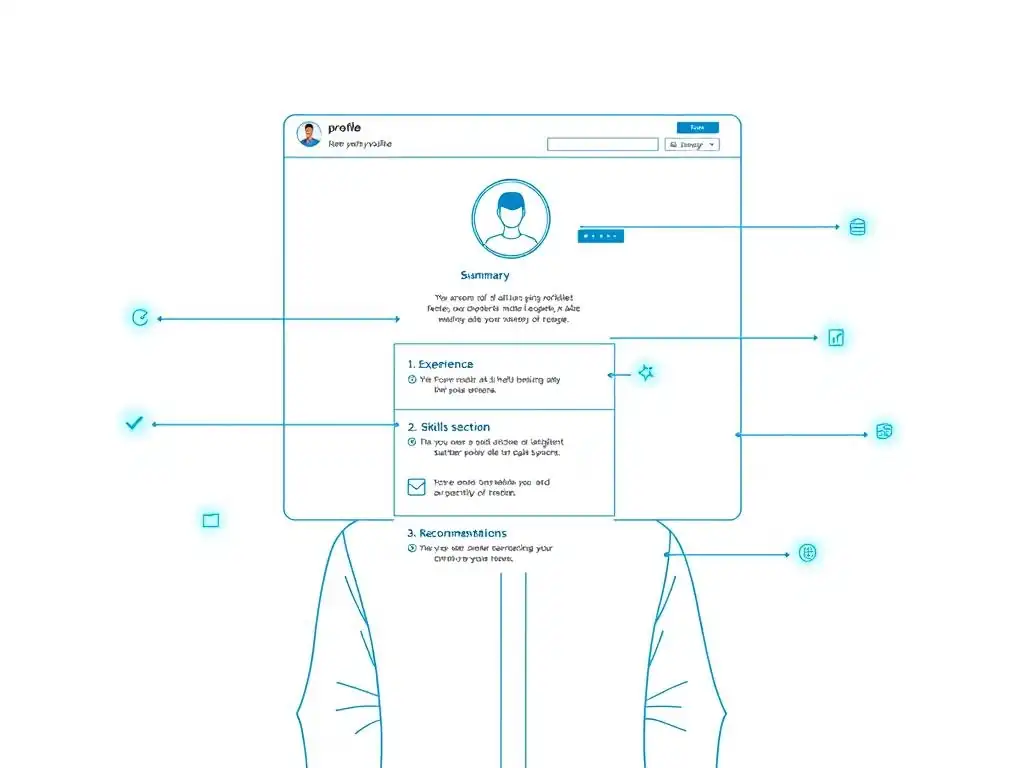
Optimizing your LinkedIn profile for job searching is no longer optional; it's essential. In today's competitive job market, a well-crafted LinkedIn profile acts as your digital resume, a powerful tool capable of significantly increasing your chances of landing your dream job. This comprehensive guide will equip you with the strategic hacks needed to transform your LinkedIn profile from a passive online presence into a dynamic job-hunting magnet. We'll explore practical techniques to optimize your profile for search engines, attract recruiters, and ultimately, secure interviews.
This isn't just about creating a profile; it's about building a brand that resonates with potential employers and showcases your unique value proposition. Get ready to unlock the power of LinkedIn and take control of your career trajectory. 🚀
Crafting a Compelling LinkedIn Headline: Beyond Your Current Job Title
Your LinkedIn headline is the first impression you make. It's the crucial real estate on your profile that recruiters and hiring managers see immediately. Simply stating your current job title is a missed opportunity. Instead, think of your headline as a concise advertisement—a 120-character elevator pitch that highlights your key skills and career aspirations. Instead of "Marketing Manager," consider something more targeted, like "Marketing Manager | Driving Revenue Growth Through Digital Strategies | Proven Track Record in [Industry]."
Consider incorporating relevant keywords related to your target roles. For example, if you're targeting data analyst positions, include keywords like "Data Analysis," "SQL," "Python," or "Business Intelligence." Use this space strategically; a strong headline significantly improves your chances of appearing in relevant searches. Remember, clarity and impact are key. A compelling headline should not only inform but also intrigue potential employers, making them want to learn more about your profile.
Writing a Professional Summary that Showcases Your Value Proposition
Your LinkedIn summary is your chance to tell your professional story. It's where you expand on your headline, providing a more detailed overview of your skills, experience, and career goals. Avoid generic statements; instead, focus on quantifiable achievements and demonstrate your value proposition to potential employers.
Think about the problem you solve for your clients or employers. What unique skills and experiences do you bring to the table? Use strong action verbs and quantify your accomplishments whenever possible. For example, instead of saying "Improved marketing campaigns," say "Increased marketing campaign ROI by 25% in six months through strategic implementation of [specific strategy]." Highlight your key accomplishments using bullet points for better readability. This section should be tailored to the specific types of jobs you are targeting, ensuring your summary keywords align with your desired roles.
Showcasing Your Skills and Endorsements: Keywords and Optimization
Your skills section is another crucial area for optimizing your LinkedIn profile for job searches. This section allows you to list your relevant skills and receive endorsements from colleagues and connections. Think strategically about the skills you include; prioritize those most relevant to the jobs you are targeting. The more endorsements you receive for these skills, the more credible and visible your profile becomes.
Don't just list skills; optimize them! Include a mix of both hard skills (e.g., "Project Management," "Data Analysis," "Programming") and soft skills (e.g., "Communication," "Teamwork," "Problem-Solving"). Use a combination of broad and specific keywords to increase your visibility in searches. Regularly review and update your skills based on job descriptions you're targeting. A well-optimized skills section, complemented by strong endorsements, significantly enhances your profile's visibility and persuasiveness. Remember, a strong profile is a dynamic profile; regular updates are key to maintaining its effectiveness.
Optimizing Your Experience Section for Targeted Keywords
Optimizing your LinkedIn experience section for targeted keywords is crucial for improving your profile's visibility in job searches. Instead of simply listing your job titles and responsibilities, strategically incorporate relevant keywords throughout your descriptions. Think like a recruiter: what terms would they use to search for someone with your skills and experience?
For example, instead of writing "Managed social media accounts," you could write "Developed and executed social media strategies resulting in a 25% increase in engagement and a 15% boost in lead generation using platforms such as Instagram, Facebook, and Twitter." Notice the addition of quantifiable results and specific platform mentions – these are highly valuable keywords.
Another effective technique is to tailor your experience descriptions to specific job applications. If you're applying for a marketing role, emphasize your marketing achievements; if it's a project management role, highlight your project management skills. Don't use a generic description for every role; personalize it to match the requirements of the target job.
This targeted approach significantly improves your chances of appearing in relevant search results. Remember to use a variety of keywords related to the job description, but ensure they are used naturally and not in a way that appears forced or unnatural. Overstuffing keywords can hurt your profile's ranking.
Consider using a thesaurus to find synonyms and related terms for your core skills. This prevents keyword repetition and makes your profile read more smoothly. For instance, instead of repeatedly using "management," you could also incorporate words like "supervision," "leadership," "direction," or "oversight," depending on the context. This subtle variation helps optimize your profile for a broader range of searches while maintaining a natural and professional tone.
Leveraging LinkedIn Recommendations for Credibility Boost
LinkedIn recommendations are powerful social proof, enhancing your credibility and boosting your profile's visibility. They act as endorsements from colleagues, supervisors, clients, or even mentors who can vouch for your skills and work ethic. A strong set of recommendations significantly increases your chances of getting noticed by recruiters.
To maximize the impact of your recommendations, don't just passively wait for them. Proactively request recommendations from individuals who can speak to your key skills and accomplishments. Before requesting a recommendation, provide the person with a detailed list of your accomplishments and key skills you want them to highlight. This will ensure the recommendation is specific, relevant, and impactful. Remember to personalize your request, expressing your gratitude for their time and assistance.
The quality of recommendations matters more than the quantity. One strong, detailed recommendation from a senior manager carries more weight than several generic recommendations from less relevant contacts. Aim for recommendations that are specific, quantifiable, and highlight your unique strengths. A recommendation that simply states "John is a great employee" is far less effective than one that details a specific project where John demonstrated exceptional problem-solving skills and delivered outstanding results.
Furthermore, consider reciprocating. Offering recommendations to your colleagues and connections can increase the likelihood of them recommending you in return. This fosters a mutually beneficial professional network and helps build strong relationships within your industry. Remember to be genuine in your recommendations; only recommend individuals you have worked with and can speak positively about. This creates a cycle of trust and professional support. Think of recommendations as a form of professional currency – the more you give, the more you tend to receive.
Boosting Your LinkedIn Profile Visibility: Advanced Strategies

This section delves into sophisticated techniques to significantly enhance your LinkedIn profile's visibility, moving beyond the basics to attract recruiters and increase your chances of landing your dream job. Optimizing your profile isn't just about filling in the blanks; it's about strategic positioning within LinkedIn's algorithm and leveraging its features to your advantage. Remember, the goal is to optimize your LinkedIn profile for jobs.
Utilizing LinkedIn Groups for Networking and Job Hunting
LinkedIn Groups offer a powerful, often overlooked, avenue for networking and job hunting. Participating actively demonstrates engagement and expertise, boosting your profile's visibility to a targeted audience. Don't just join groups; contribute meaningfully. Share insightful comments, answer questions thoughtfully, and participate in discussions relevant to your field. This showcases your knowledge and establishes you as a valuable member of the community.
Consider joining groups focused on your industry, specific job roles, or even geographic location. For example, a marketing professional might join groups like "Marketing Professionals of [City/Region]", "Digital Marketing Strategies," or "Content Marketing Experts." The key is to select groups with active members and relevant conversations. Avoid groups that are inactive or spam-filled.
Regular participation, even a few well-crafted comments per week, can significantly improve your profile's reach and visibility. The algorithm favors active users, making your profile more likely to appear in search results and recommendations. Think of it as a form of organic SEO for your professional brand. Remember to always maintain a professional demeanor and avoid self-promotion that feels forced or inauthentic.
Optimizing Your LinkedIn Profile URL for Better Search Results
Your LinkedIn profile URL is more than just a link; it's a crucial component of your online professional branding and search engine optimization (SEO). A customized, keyword-rich URL can significantly improve your search engine ranking and make it easier for recruiters to find you. LinkedIn's default URLs are often long and unwieldy, hindering searchability. Fortunately, you can easily personalize this.
By customizing your URL to include relevant keywords, you increase the likelihood of appearing in search results when recruiters or potential employers search for candidates with your skillset. For instance, instead of a generic URL like linkedin.com/in/longstringofnumbers, you could have something like linkedin.com/in/janedoe-marketingmanager. This immediately communicates your expertise and makes your profile easier to find.
This simple optimization process significantly impacts your online presence. It's a quick win that yields considerable long-term benefits in terms of profile visibility and searchability. It’s a crucial step in optimizing your LinkedIn profile for jobs, enhancing your search engine ranking, and making your profile more discoverable. Take the time to personalize your URL; it's a small effort with a substantial return.
Utilizing LinkedIn's Job Search Features Effectively
LinkedIn's built-in job search functionality is a powerful tool often underutilized. Beyond simply searching for keywords, understanding its advanced features can drastically improve your job hunting efficiency. Effective use involves leveraging filters, saving searches, and utilizing job alerts.
Think of LinkedIn's job search as a highly refined search engine specifically designed for professional opportunities. Don't just type in generic terms; utilize the advanced filters to narrow your search based on location, industry, experience level, job type (full-time, part-time, contract), and company size. This precision ensures you're only seeing relevant opportunities.
Saving your searches allows you to easily revisit your list of potential jobs without having to re-enter your search criteria. This is incredibly time-saving, especially when you're actively tracking multiple job openings. Furthermore, setting up job alerts notifies you immediately when new positions matching your criteria are posted. This proactive approach ensures you're among the first to apply for suitable roles, giving you a competitive edge. This strategic use of LinkedIn's job search features is a core component of optimizing your LinkedIn profile for jobs and significantly increases your chances of success.
Building a Strong Professional Network on LinkedIn
Building a robust professional network on LinkedIn is crucial for optimizing your profile for job opportunities. It's not just about accumulating connections; it's about cultivating meaningful relationships with individuals in your industry and beyond. A strong network increases your visibility, exposes you to unadvertised job openings, and provides valuable insights into career paths. Think of your network as a powerful referral engine.
One effective strategy is to engage actively with content relevant to your field. Commenting thoughtfully on posts, sharing insightful articles, and participating in industry discussions demonstrates your expertise and helps you connect with like-minded professionals. Don't just lurk; contribute meaningfully to the conversations. This approach boosts your profile's visibility organically, as your activity is showcased to your connections and their networks. Remember to tailor your comments to showcase your knowledge and perspective; generic comments are less effective.
Beyond engagement, actively seek out connections. Don't be afraid to reach out to people whose work you admire or whose expertise aligns with your career goals. Craft personalized connection requests; avoid generic messages. Highlight a specific aspect of their profile that resonates with you – a shared interest, a similar project, or an achievement you find impressive. This personalized approach significantly improves your chances of acceptance and fosters a more meaningful connection.
Furthermore, nurture your network. Regularly engage with your connections – like their posts, comment on their updates, and congratulate them on their achievements. This consistent engagement keeps you top-of-mind and strengthens your relationships. Consider sending personalized messages to celebrate milestones or offer support. This proactive approach transforms your network from a list of names into a vibrant community of professionals who are more likely to assist you in your job search.
Think of it as relationship building, not just connection collecting. Remember, quality over quantity is key when building a professional network on LinkedIn. A small, engaged network is far more valuable than a large, inactive one. Focus on building genuine connections with people who can offer valuable support and mentorship. This proactive approach will significantly enhance your LinkedIn profile's effectiveness in your job search.
Mastering LinkedIn's Algorithm: Getting Your Profile Seen
Optimizing your LinkedIn profile for jobs isn't just about filling in the blanks; it's about understanding and leveraging LinkedIn's algorithm to maximize your visibility to recruiters and hiring managers. This means strategically crafting your profile to appear higher in search results and attract organic engagement. Think of it as search engine optimization (SEO), but for a professional networking platform. The goal is to optimize your LinkedIn profile for jobs and ultimately land your dream role.
Understanding LinkedIn's Search Algorithm and its Impact on Job Seekers
LinkedIn's algorithm, like most social media platforms, prioritizes content and profiles that are relevant, engaging, and up-to-date. It considers numerous factors, including:
- Keywords: The words and phrases used in your profile headline, summary, experience descriptions, and skills section directly impact your searchability. Using relevant keywords related to your target jobs is crucial. For example, instead of simply stating "Marketing Manager," you might use "Digital Marketing Manager specializing in SEO and Content Strategy." This increases the likelihood that recruiters searching for those specific skills will find you.
- Completeness: A fully completed profile signals to the algorithm that you're an active and serious professional. Filling out every section, including education, recommendations, and volunteer experience (where relevant), significantly boosts your profile's visibility.
- Engagement: The algorithm favors profiles with high levels of engagement. This includes likes, comments, shares, and connections. Actively interacting with others' posts, participating in relevant groups, and sharing insightful content will improve your profile's ranking.
- Recency: Regularly updating your profile with new experiences, skills, and accomplishments keeps your profile fresh and relevant. This signals to the algorithm that you're actively engaged in your career and worth showing to recruiters.
Understanding these factors allows you to proactively enhance your profile and improve your search ranking. Think of your profile as a living document that needs consistent attention and optimization. A static profile is far less likely to attract the attention of recruiters than a dynamic one that shows consistent growth and engagement.
Creating Engaging Content to Attract Recruiters
Simply having a complete profile isn't enough; it needs to be engaging. Recruiters are busy, so your profile must grab their attention quickly. Consider these strategies to create compelling content that resonates:
- Compelling Headline: Go beyond your job title. Use keywords and a brief, impactful statement that highlights your unique value proposition. For instance, instead of "Project Manager," try "Results-Oriented Project Manager | Driving Efficiency & Innovation."
- Strong Summary: This is your elevator pitch. Craft a concise and persuasive summary that showcases your key accomplishments and career aspirations. Use strong action verbs and quantify your achievements whenever possible (e.g., "Increased sales by 20%").
- Keyword-Rich Experience Descriptions: Don't just list your responsibilities; highlight your accomplishments using the STAR method (Situation, Task, Action, Result). Quantify your achievements whenever possible to demonstrate your impact.
- Visual Appeal: A professional headshot and a visually appealing profile design can significantly improve engagement. Keep your profile clean, easy to read, and visually appealing to maximize the impact of your content.
Using LinkedIn Analytics to Track Profile Performance
LinkedIn provides analytics that allow you to monitor your profile's performance. Tracking these metrics provides valuable insights into what's working and what needs improvement. Key metrics to focus on include:
- Profile Views: This shows how many people have viewed your profile. A significant increase indicates your optimization strategies are working.
- Search Appearances: This metric shows how often your profile appears in search results. This helps you understand your visibility and identify areas for improvement in your keyword strategy.
- Engagement: Track likes, comments, and shares on your posts and activity. High engagement levels demonstrate your content's appeal and effectiveness in attracting recruiters.
Regularly reviewing these analytics allows you to refine your strategy, optimize your profile further, and ultimately increase your chances of landing your dream job. Consistent monitoring and adjustment based on data are essential for maximizing your LinkedIn profile's effectiveness in your job search. Remember, the goal is to optimize your LinkedIn profile for jobs – and data-driven decisions are crucial to achieving that goal.
LinkedIn Profile Optimization: Avoid These Common Mistakes
This section details common pitfalls to avoid when optimizing your LinkedIn profile to attract recruiters and land your dream job. Optimizing your LinkedIn profile for jobs requires attention to detail and a strategic approach. Let's delve into some critical areas where many professionals fall short.
Ignoring the Importance of a Professional Profile Picture
A professional headshot is the first impression you make on potential employers. It's the visual equivalent of a firm handshake; it conveys professionalism, confidence, and approachability. Ignoring this crucial element is a significant mistake. A blurry selfie, a picture from a party, or a photo that doesn't clearly show your face can severely hinder your chances of getting noticed.
Consider these points when choosing your profile picture:
- High-quality image: Invest in a professionally taken photograph. The difference is noticeable. A crisp, well-lit image shows you in the best light, literally and figuratively.
- Appropriate attire: Dress as you would for a job interview. Your clothing should reflect the industry you're targeting.
- Positive expression: Smile genuinely and make eye contact with the camera. This conveys warmth and approachability.
- Simple background: Keep the background clean and uncluttered. The focus should be on you.
Remember, your profile picture is often the first thing recruiters see. Make it count! A strong visual representation significantly increases your chances of attracting attention and securing an interview. Don't underestimate the power of a great profile picture in your job search strategy. Think of it as the visual representation of your personal brand; it's an essential part of optimizing your LinkedIn profile for jobs.
Overlooking the Power of Keywords in Your Profile
Keywords are the lifeblood of any successful online presence, and LinkedIn is no exception. Recruiters utilize applicant tracking systems (ATS) that scan profiles for specific keywords related to job descriptions. Overlooking the strategic implementation of relevant keywords drastically reduces your visibility to these systems.
Here's how to effectively incorporate keywords:
- Headline Optimization: Don't just use your job title. Craft a compelling headline that includes relevant keywords. For example, instead of "Marketing Manager," try "Marketing Manager | Digital Strategy | Content Marketing | SEO Optimization".
- Summary Section: This is your elevator pitch. Weave in keywords naturally within a concise and engaging summary of your experience and skills. Don't stuff keywords; focus on creating a readable and persuasive narrative.
- Experience Section: Use keywords throughout your work history descriptions. Highlight accomplishments and quantify your contributions using numbers and data. For instance, instead of "Managed social media accounts," write "Managed social media accounts, resulting in a 25% increase in engagement within six months."
- Skills & Endorsements Section: List relevant skills and actively seek endorsements from colleagues and supervisors. This adds credibility and further boosts your keyword profile.
By strategically using keywords throughout your profile, you significantly improve your chances of being found by recruiters using keyword searches and ATS systems. This is a crucial aspect of optimizing your LinkedIn profile for jobs and increasing your visibility to potential employers.
Failing to Update Your Profile Regularly
A stagnant LinkedIn profile is a missed opportunity. The job market is dynamic, and your profile should reflect your current skills, experience, and career aspirations. Failing to update your profile regularly sends a message of inactivity and lack of commitment.
Here's why regular updates are essential:
- Reflecting Current Skills: Your skillset evolves over time. Regularly update your skills section to reflect your current expertise and any new certifications or training you've completed.
- Highlighting Recent Achievements: Showcase your latest accomplishments and projects. This demonstrates your ongoing professional development and keeps your profile fresh and relevant.
- Staying Top-of-Mind with Recruiters: Regular updates keep your profile at the top of recruiter searches. A regularly updated profile signals proactive career management.
- Showcasing Career Progression: If you've changed jobs or taken on new responsibilities, update your profile immediately. This keeps your information accurate and relevant.
Consider scheduling regular updates to your LinkedIn profile, perhaps quarterly or even monthly, to ensure it accurately reflects your current career trajectory. This proactive approach is vital for optimizing your LinkedIn profile for jobs and maximizing your chances of landing your dream role. Regular updates are an often overlooked yet critical component of a successful LinkedIn strategy.
Frequently Asked Questions
What is the most important aspect of optimizing my LinkedIn profile for job searching?
The most crucial element is creating a compelling headline and summary that highlight your key skills and career goals. Make it easy for recruiters to understand your value proposition at a glance.
How can I use keywords effectively in my LinkedIn profile?
Incorporate relevant keywords throughout your profile, including your headline, summary, experience section, and skills section. Use keywords that recruiters and hiring managers frequently search for in your industry. Don't keyword stuff, however; use them naturally.
Should I include a professional headshot on my LinkedIn profile?
Absolutely! A professional, high-quality headshot is essential. It makes your profile more visually appealing and helps you make a strong first impression on recruiters and potential employers.
How can I leverage recommendations to improve my LinkedIn profile?
Request recommendations from previous managers, colleagues, or clients who can speak to your skills and work ethic. Authentic recommendations add credibility and social proof to your profile.
What are some quick wins for optimizing my LinkedIn profile today?
Update your headline to be more impactful and keyword-rich. Ensure your profile picture is professional. And review your summary to ensure it's concise and compelling, highlighting your key achievements.
Final Reflection: Unlocking Your Career Potential Through LinkedIn
Optimizing your LinkedIn profile is no longer a mere suggestion; it's a necessity in today's competitive job market. A strategically crafted profile isn't just about showcasing your resume; it's about crafting a compelling narrative that resonates with recruiters and hiring managers, ultimately increasing your chances of landing your dream job. The power of a well-optimized LinkedIn profile lies in its ability to transform passive job searching into proactive career building.
The impact of LinkedIn on the professional landscape is undeniable. It has fundamentally shifted how we network, connect with opportunities, and present ourselves to potential employers. The platform's influence continues to grow, demanding a sophisticated understanding of its nuances to truly leverage its potential. Your network is your net worth.
This adage rings truer than ever in the age of LinkedIn, emphasizing the importance of building and nurturing meaningful connections. My own experience in optimizing my profile has been transformative, leading to unexpected opportunities and a renewed sense of purpose in my career journey.
Now, it's your turn. Take the insights shared in this article and actively apply them to your own LinkedIn profile. Don't just passively exist on the platform; actively cultivate your presence, engage with relevant content, and strategically connect with individuals in your field. By investing time and effort in crafting a compelling LinkedIn profile, you're not just optimizing your online presence; you're investing in your future and unlocking the potential for a truly fulfilling career. The journey to your dream job starts with a single, well-crafted profile. Begin today.
Unlock Your Dream Job: Level Up Your LinkedIn Profile Now!
Thanks for exploring these LinkedIn profile optimization tips! You now have the knowledge to significantly improve your profile. Ready to take action and land your dream job?
- Revamp your LinkedIn profile: Immediately implement at least three of the strategies discussed, focusing on optimizing your headline and summary. This is a crucial step toward career advancement.
- Share this article: Help your network improve their profiles by sharing this article on LinkedIn and other social media. Let's build a supportive community!
- Join the discussion: What's one change you'll make to your profile today? Share your plans (or challenges!) in the comments below; let's learn from each other's experiences.
Ready to transform your career? Share your action plan!