Unlock Your Creative Potential: Simple Hacks for a More Imaginative You
😊 Unleash your inner artist! This article reveals boost creativity simple daily hacks to spark imagination and boost productivity. Transform your routine…
Read article

Stuck staring at a blank page or wrestling with a stalled project? Creative blocks aren’t a sign of failure—they’re a signal that your brain needs a fresh angle. These creativity hacks are designed to break the mental gridlock and restart your flow with minimal effort. By applying targeted cognitive efficiency techniques, you can bypass overthinking, rewire your focus, and turn frustration into momentum. From rapid-fire brainstorming and environmental tweaks to strategic “unfocusing” and constraint-based prompts, this collection of practical, science-backed shortcuts will help you outsmart your own mental roadblocks. Whether you’re a writer, designer, or problem-solver, discover how to slash downtime, spark instant inspiration, and make creativity a habit—not a waiting game. Optimize your mental workflow and reclaim hours of lost productivity today.🚀✨
😊 Unleash your inner artist! This article reveals boost creativity simple daily hacks to spark imagination and boost productivity. Transform your routine…
Read article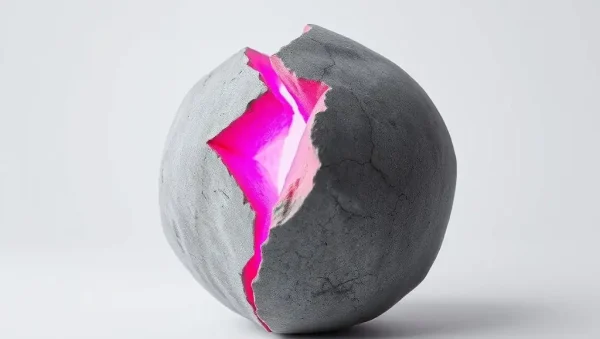
🤔 Feeling creatively blocked? This article reveals a surprising method to break creative ruts fast, boosting productivity and revitalizing your daily routines.…
Read articleStaring at a blank page or an unfinished project is frustrating, but it’s a universal hurdle. In the Cognitive Efficiency category, Creativity Hacks: Overcoming Creative Blocks offers science-backed, actionable methods to break mental gridlock and accelerate idea generation. This subcategory focuses on turning creative stagnation into productive momentum by rewiring your environment, mindset, and habits. Whether you’re a writer, designer, or entrepreneur, these hacks help you reclaim lost time and boost output without burning out. Expect practical, low-effort strategies that integrate seamlessly into your daily routines, making creative flow a default state rather than a rare accident.
When your mind feels cluttered, the fastest path to clarity is a timed, unfiltered brain dump. Set a 10-minute timer and write or type every thought, worry, or half-formed idea—no editing, no judging. This technique works because it empties your working memory, freeing cognitive resources for actual creation. Pair it with a physical break: stand up, stretch, or sip water. This hack is ideal for mornings or before deep work, acting as a mental “reset button.”
After the dump, scan your notes for recurring themes or unexpected gems. Often, the block isn’t a lack of ideas but a bottleneck of anxiety. By externalizing your thoughts, you reduce the brain’s load, making it easier to spot the seed of a viable concept. Use a simple notebook or a note-taking app; the medium doesn’t matter—consistency does. Over time, this ritual trains your brain to enter a creative state faster, turning a blank page into a playground.
Paradoxically, trying to be brilliant can paralyze you. The “Worst Idea First” hack flips this pressure by deliberately generating the most absurd, impractical, or terrible solutions to your project. Write down five awful ideas—for example, if you’re writing an article, imagine it as a pirate-themed rap. This laughter-inducing exercise lowers your standards, unlocking lateral thinking.
Once you have your terrible list, review it for hidden constraints or fresh angles. Often, the “worst” idea contains a novel twist that, when refined, becomes extraordinary. This method works because it bypasses your inner critic, allowing unfiltered neural connections. Use it for brainstorming sessions, design challenges, or even solving workflow bottlenecks. You’ll be surprised how quickly a joke becomes a launchpad for a serious breakthrough.
Standard Pomodoro timers help focus, but they can feel robotic for creative tasks. Upgrade it with an intentional switch: work for 25 minutes on your project, then take a 5-minute break where you do something completely different—like doodling, walking, or listening to instrumental music (no screens). This hybrid forces your subconscious to process the problem in the background.
The key is to avoid any activity that requires high cognitive load during the break, as that defeats the purpose. After two or three cycles, you’ll notice ideas surfacing spontaneously during the rest periods. This hack leverages the brain’s default mode network, which is active during low-focus moments. It’s perfect for stubborn blocks, as it prevents burnout while systematically chipping away at the project. Over a day, you’ll accumulate deep work without the usual resistance.
Your physical environment silently influences your mental state. The Creative Corner hack dedicates a specific spot (a desk corner, a couch, or even a park bench) solely for ideation and creation. Fill it with items that spark you—a plant, colored pens, a vision board, or a trinket from a past success. Using this space consistently creates a conditioned response: when you sit there, your brain shifts into “create mode” automatically.
Also, eliminate friction by having all tools within arm’s reach (charger, notebook, water). For digital blocks, use a dedicated browser profile with only your creative apps open. This reduces the pull of distracting tabs. If you work in a shared space, use noise-canceling headphones or a “do not disturb” sign. Over two weeks, your brain will associate this corner with flow, making it easier to slip into a creative mindset even on low-energy days.
Sometimes blocks stem from a forgotten “why.” The 5-Why Idea Flame method, borrowed from root-cause analysis, asks you to trace your project back to its true motivation. Write “Why am I doing this?” and answer honestly, then ask “why” again for that answer—repeat five times. For example: “Why write this guide?” → “To help others” → “Why?” → “Because I felt stuck once” → “Why?” → “To give back” → “Why?” → “To feel purposeful.”
This exercise reconnects you with your intrinsic drive, which is a powerful antidote to external pressure or procrastination. Once you clarify your “flame,” post it where you’ll see it during work sessions—on a sticky note or as your desktop wallpaper. This emotional anchor reduces resistance and makes the task feel meaningful. Use this hack at the start of a new project or when you’ve been stuck for days; it’s a five-minute ritual that can reignite hours of productive energy.
Yes, most are adaptable. For example, run a group brain dump with each member silently writing, then share. The “Worst Idea First” works brilliantly in team brainstorming—it lowers hesitation and builds camaraderie. Just ensure everyone agrees on the rules and time limits to avoid tangents.
Many people notice immediate relief from blocks after one session, especially the brain dump. However, for lasting change, practice consistently for at least two weeks. The Pomodoro-Creativity Hybrid and the Creative Corner require habit formation, so expect noticeable improvement by day 10–14.
Consider physical factors: sleep, hydration, and exercise are foundational. Also, try switching your medium—if you type, write by hand for 10 minutes. If that fails, take a 24-hour break from the project entirely; sometimes, stepping away is the most effective hack.
They apply universally—from coding bugs to business strategy. The core principles (reducing mental load, lowering standards, and changing context) work for any cognitive challenge. Use them whenever you feel mental friction, not just for “creative” tasks.
No, most require just paper and pen. For the brain dump and 5-Why, a basic notebook works. The Creative Corner can be a cleared desk drawer. If you prefer digital tools, free apps like Notion (for dumps) and a simple timer app suffice. Avoid overcomplicating—simplicity enhances effectiveness.