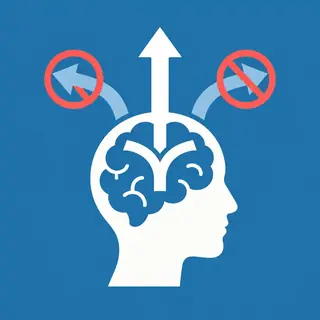
Unlock Your Potential: DecisionMaking Hacks for Optimal Results
🤔 Overwhelmed by choices? Learn fast decision-making hacks for success! This article reveals simple strategies to boost your efficiency, optimize daily routines,…
Read article

Unlock sharper choices with decision-making hacks that streamline your brain’s workflow, cut mental clutter, and boost everyday efficiency. These cognitive shortcuts—from the 2-minute rule to inversion thinking—help you avoid analysis paralysis, prioritize faster, and act with confidence. Perfect for busy professionals, students, or anyone seeking practical productivity tips, these techniques reduce decision fatigue, save precious time, and turn overwhelming options into clear, actionable steps. Optimize your daily routines by automating low-stakes choices, using time-boxing for tough calls, and leveraging mental models that simplify complexity. Whether you’re tackling career moves, personal goals, or daily to-dos, master the art of rapid, effective judgment—no overthinking required. Transform hesitation into momentum with science-backed strategies that align with your values and long-term vision. Start making smarter, faster decisions today and reclaim hours of wasted energy for what truly matters.

🤔 Overwhelmed by choices? Learn fast decision-making hacks for success! This article reveals simple strategies to boost your efficiency, optimize daily routines,…
Read article
🤔 Overwhelmed by choices? Discover the best decision-making frameworks to conquer indecision and boost productivity. Learn proven tools to optimize your daily…
Read article
🤔 Overwhelmed by choices? Simplify daily decision-making with these proven strategies. Learn to prioritize, eliminate distractions, and reclaim your time and energy,…
Read articleWelcome to Decision-Making Hacks, a dedicated subcategory under Cognitive Efficiency at UltimateLifeHacks. Here, we transform overwhelming choices into streamlined, confident actions. You’ll discover science-backed shortcuts, mental models, and practical frameworks to reduce decision fatigue, save hours weekly, and improve the quality of every choice—from trivial daily picks to high-stakes professional calls. Expect actionable strategies that blend psychology, productivity, and real-world testing, all designed to help you decide faster, smarter, and with less stress.
Mastering a few powerful mental models is the fastest way to cut through analysis paralysis. This section introduces you to tools like the Pareto Principle (80/20 rule), Occam’s Razor, and Inversion thinking—each helping you filter noise and focus on what truly matters. Instead of weighing every variable, you’ll learn to identify the 20% of inputs that drive 80% of outcomes, and to reverse-engineer failure to clarify your path forward. These models are not abstract theory; they’re reusable shortcuts that train your brain to spot high-leverage decisions instantly.
Expect practical walkthroughs on applying each model to common scenarios: choosing a software tool, hiring a candidate, or planning a project. You’ll also get tips on when to abandon a model—because rigidity can backfire. By internalizing these frameworks, you reduce cognitive load, boost confidence, and make decisions in minutes that previously took hours. This is cognitive efficiency at its best: less effort, better results.
Every decision, no matter how small, depletes your mental energy. This section reveals routines and batch processing tactics to preserve your willpower for choices that genuinely matter. You’ll learn how to automate recurring decisions—like meals, outfits, and emails—using pre-set templates and defaults. This approach, championed by productivity experts, reduces the daily micro-decisions that silently sap your focus and creativity. The payoff is a clear mind, ready for complex problem-solving when it counts.
We provide step-by-step guides to create your own decision menu for morning routines and work blocks, plus a list of “decision budgets” for high-energy hours. You’ll also discover how to use time-boxing to force quicker conclusions on low-stakes items, and when to delegate or defer entirely. By offloading repetitive choices, you reclaim hours each week and significantly lower stress, making room for more meaningful pursuits.
When time is tight, a structured loop prevents panic and hasty errors. The Rapid Decision Loop (RDCL) is a five-minute, four-step process: clarify the goal, list two or three viable options, apply a weighted scoring (even simple), and commit. This method forces you to define success criteria upfront, eliminating endless comparison. It’s perfect for emails, quick purchases, or last-minute scheduling conflicts. The loop’s genius is its simplicity—you don’t need spreadsheets or apps, just a notepad and self-discipline.
In practice, RDCL reduces anxiety because it gives you a finish line. You’ll learn how to adjust the weights for different contexts (speed vs. accuracy) and how to make “good enough” your default mindset, countering perfectionism. We also include real-life examples where this loop cut decision time by 70% while maintaining satisfaction. After practicing RDCL a few times, you’ll naturally speed up without feeling rushed.
Balancing analytical data with gut instinct is a crucial decision-making skill. This section helps you identify when to rely on quantitative evidence and when your intuitive signals are more reliable. Research shows that intuition excels in familiar, high-repetition scenarios (like reading body language), while data wins in novel or high-uncertainty situations. You’ll receive a simple checklist: if you have >5 relevant data points and time to analyze, go data; if you’re expert and the situation is emotionally charged, lean on intuition but verify.
We also debunk the myth that intuition is “illogical” and show you how to train it through deliberate practice and feedback loops. Learn to separate fear from intuition, and how to run quick “pre-mortems” to test gut reactions. This balanced approach prevents over-analysis and under-analysis, ensuring you make faster, more accurate calls without second-guessing yourself. You’ll finish with a personal decision heuristics cheat sheet.
For those ready to amplify their skills, this section dives into decision journaling and pre-commitment devices. A decision journal helps you track choices, assumptions, and outcomes over time, revealing systematic biases and improving future accuracy. We provide a simple template (date, decision, context, expected outcome, actual result) and tips to review monthly. This turns experience into measurable improvement—a subtle human edge against cognitive blind spots.
Pre-commitment, meanwhile, leverages future self-control by setting rules in advance—like “if I haven’t decided by Friday, I choose the cheapest option” or “I will only make purchases over $100 after a 24-hour wait.” These self-imposed constraints eliminate impulsive errors and reduce decision load because the criteria are pre-set. You’ll learn how to apply these to finances, deadlines, and relationships, and how to pair them with accountability partners. Together, these advanced tactics make decision-making a repeatable, learned skill.
Most users notice reduced decision time and stress within the first week, especially with batch processing and RDCL. However, deep improvement in trust-your-gut accuracy takes about a month of journaling. Start with one hack, practice it daily, then add another.
Yes, but scale them up. Use RDCL for small choices, but for high-stakes decisions, combine mental models, weighted scoring, and a decision journal. Pre-commitment is especially powerful for big purchases—set a waiting period and consult your predefined criteria.
Overwhelm often signals missing information or conflicting values. Use inversion to list what would make a decision wrong, then address those blockers. If you’re still stuck, delegate the choice to a trusted mentor or use a randomness-based tiebreaker—perfectly acceptable for reversibly low-impact decisions.
Absolutely. Batch processing and RDCL work anywhere. For teams, set shared decision criteria and a single decision owner to avoid endless meetings. Decision journaling can be a team tool to build a culture of learning—just share anonymized outcomes.
No, a notebook and timer suffice. For batch processing, a simple calendar or Trello board helps. For journaling, a spreadsheet works. Avoid over-engineering; the goal is to reduce cognitive load, so start with pen and paper and only adopt tools if they genuinely simplify your workflow.