
The Productivity Audit: Hacks to Identify and Eliminate Time Wasters


Ready to reclaim your time and unlock your peak productivity? Welcome to UltimateLifeHacks, your go-to resource for practical strategies to conquer daily chaos. We delve into the heart of efficiency with our latest article, "The Productivity Audit: Hacks to Identify and Eliminate Time Wasters." Discover how a simple audit can reveal hidden time drains, empowering you to reclaim hours lost to unproductive habits. Dive in and uncover the secrets to a more focused and fulfilling life!
- Understanding Your Current Productivity Levels: A Baseline Assessment
- Identifying Your Biggest Time Wasters: The Audit Process
- Strategies to Eliminate Time Wasters: Practical Solutions
- Implementing and Maintaining a Productive Workflow
- Measuring Results and Refining Your Approach: Ongoing Optimization
- Frequently Asked Questions
- Final Reflection: Reclaiming Your Time, Redefining Productivity
- Unleash Your Hidden Productivity Power!
Understanding Your Current Productivity Levels: A Baseline Assessment
Before you can optimize your workflow and eliminate time-wasters, you need a clear understanding of your current productivity landscape. A productivity audit isn't just about identifying problems; it's about establishing a baseline against which you can measure your progress. This initial assessment will serve as the foundation for identifying areas ripe for improvement and implementing effective strategies to maximize your efficiency.
Think of it as a comprehensive health check for your work habits – identifying the strengths and weaknesses to build a stronger, more productive you. This process, while initially time-consuming, will ultimately save you significant time and energy in the long run by focusing your efforts on the most impactful changes. We'll guide you through a structured approach to uncover hidden inefficiencies and unlock your full potential.
The key is to be honest and thorough in your self-assessment; only then can you truly understand and address your unique productivity challenges. This audit focuses on identifying the "Productivity audit time wasters" that plague many professionals, and provides actionable steps to overcome them.
Defining Your Productivity Goals: What Success Looks Like
Before diving into the nitty-gritty of tracking your time, it's crucial to define what "productivity" means to you. What constitutes a successful day or week? Is it completing a specific number of tasks, achieving certain milestones on projects, or perhaps maintaining a consistent level of focused work? Defining your goals provides a clear target for your audit.
For example, instead of a vague goal like "be more productive," consider setting specific, measurable, achievable, relevant, and time-bound (SMART) goals. This could involve:
- Completing three high-priority tasks daily.
- Reducing email response time to an average of 30 minutes per email.
- Dedicating two uninterrupted hours each day to focused work.
- Improving project completion time by 15%.
Clearly defined goals provide a framework for evaluating your progress and determining the effectiveness of your strategies to eliminate "Productivity audit time wasters." This clarity is essential for maintaining motivation and tracking the impact of your changes. Without specific goals, it’s difficult to measure success and identify areas needing improvement.
Tracking Your Daily Activities: Methods and Tools for Accurate Measurement
Now that you have defined your productivity goals, it's time to track your actual activities. This involves meticulously recording how you spend your time over a period of several days – ideally, a full week to capture a representative sample. Several methods can be used:
- Time-tracking apps: Numerous apps are available to monitor your time spent on different tasks and projects. These apps often provide detailed reports and insights into your time allocation.
- Spreadsheet: A simple spreadsheet can be equally effective. Create columns for the task, start time, end time, and total time spent.
- Journaling: Manually logging your activities throughout the day in a journal can be surprisingly insightful, allowing for qualitative observations alongside quantitative data.
Remember to be as detailed as possible. Don't just write "work on project X." Break down tasks into smaller, more specific activities. For instance, instead of "work on project X," log "research for project X," "write report for project X," and "edit report for project X." This level of detail is crucial for identifying where your time is actually going and pinpoint those "Productivity audit time wasters." The more accurate your data, the more effective your audit will be. Consider using a combination of methods to ensure comprehensive data collection.
Analyzing Time Allocation: Where Does Your Time Actually Go?
Once you've collected your time-tracking data, it's time to analyze it. Look for patterns and identify where your time is being spent. Are you spending more time than expected on certain tasks? Are there recurring activities that are consuming excessive amounts of time? This is where you'll uncover the "Productivity audit time wasters" – the activities that are hindering your progress towards your goals.
To facilitate this analysis, create a table summarizing your time allocation. For example:
| Activity | Time Spent (hours) | Percentage of Total Time |
|---|---|---|
| Focused work on Project A | 6 | 30% |
| Unfocused work/Distractions | 8 | 40% |
| Meetings | 4 | 20% |
| 2 | 10% |
Analyzing this data will reveal areas for improvement. For example, the table above clearly shows that "Unfocused work/Distractions" is consuming a significant portion of time (40%). This indicates a need to implement strategies to minimize distractions and improve focus. This analysis is the cornerstone of your productivity improvement plan; it provides the actionable insights needed to eliminate the "Productivity audit time wasters" and boost your overall efficiency. Remember, this is an iterative process; you’ll likely need to refine your strategies over time.
Identifying Your Biggest Time Wasters: The Audit Process
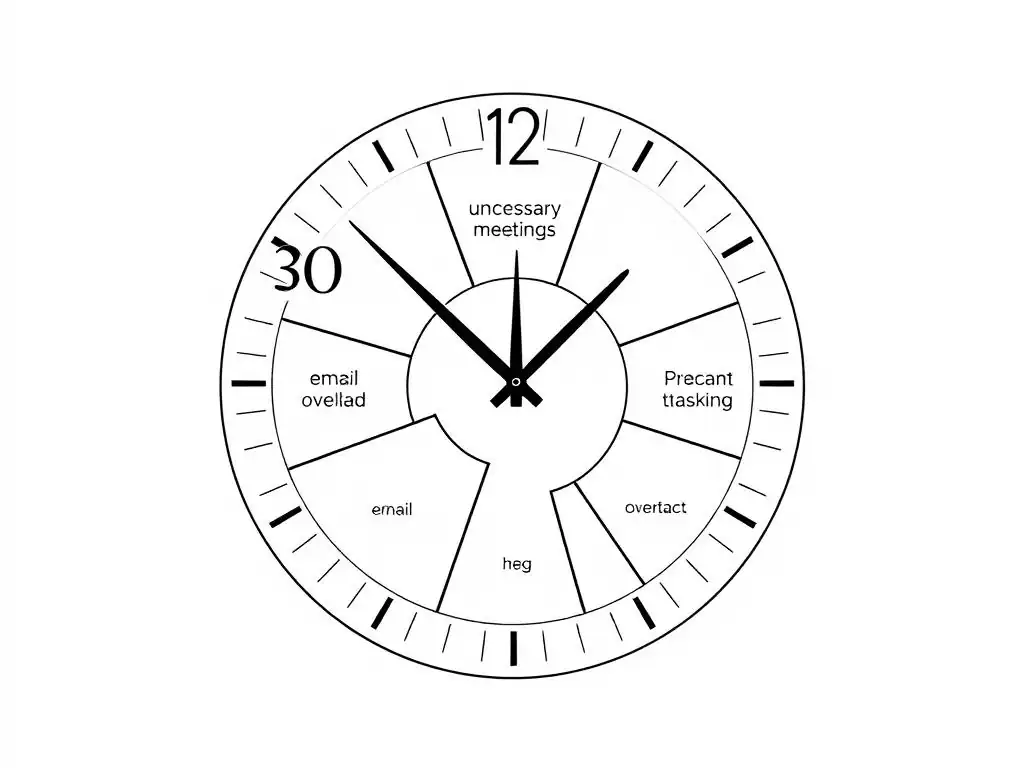
This section details the process of conducting a thorough productivity audit to pinpoint your biggest time-wasting activities. A successful audit requires honest self-assessment and a willingness to confront inefficient habits. The goal isn't self-criticism, but rather a clear understanding of where your time and energy are best allocated for maximum productivity gains. Remember, identifying these time sinks is the crucial first step towards eliminating them. This process is iterative; you may need to refine your audit over time as you identify new patterns.
Common Productivity Killers: Distractions, Multitasking, and Procrastination
Distractions, multitasking, and procrastination are notorious productivity killers. They silently chip away at your focus and efficiency, leading to significant time losses over the course of a week, month, or year. Let's examine each in detail:
- Distractions: These can range from email notifications and social media alerts to noisy colleagues and unexpected interruptions. To quantify the impact, try tracking how often you're interrupted and the time it takes to regain your focus. For example, if you're interrupted 10 times a day, and each interruption costs you 5 minutes to refocus, that's 50 minutes lost daily – a significant portion of your workday! Consider using website blockers or notification silencing strategies during focused work periods.
- Multitasking: Contrary to popular belief, multitasking is actually less efficient than focused single-tasking. The human brain isn't designed to efficiently switch between multiple tasks; context switching incurs a cognitive cost, leading to slower completion times and more errors. A study by the University of London found that multitasking can reduce your efficiency by as much as 40%. Instead, prioritize single-tasking and dedicate uninterrupted blocks of time to each task.
- Procrastination: This often stems from fear, perfectionism, or a lack of clear priorities. Identify your procrastination triggers and develop strategies to overcome them. Breaking down large tasks into smaller, more manageable steps can make them less daunting and easier to start. The Pomodoro Technique, for instance, can be incredibly effective in combating procrastination by using short, focused bursts of work interspersed with short breaks.
Beyond the obvious culprits, many hidden time sinks lurk within our daily routines. These often require a more detailed analysis to uncover. Let's explore some common examples:
- Unnecessary Meetings: Many meetings are unproductive and could be replaced with emails or quick check-ins. Track the time spent in meetings and assess their value. Ask yourself: Could this have been an email? Was my presence truly necessary? If not, advocate for more efficient communication methods.
- Inefficient Processes: Analyze your workflows for bottlenecks and redundancies. Are there steps that could be streamlined or automated? Look for areas where technology could improve efficiency. Could you use project management software to track progress and collaborate more effectively? Could you automate repetitive tasks using macros or scripts?
- Cluttered Workspace: A physical or digital workspace cluttered with unnecessary files and tools can significantly impact productivity. Regularly declutter your workspace, both physically and digitally, to improve focus and efficiency. This seemingly small task can yield surprisingly large time savings in the long run.
The Impact of Technology: Assessing Your Digital Workflow and Tools
Technology, while intended to boost productivity, can ironically become a major time waster if not managed effectively. This section focuses on assessing your digital workflow and tools:
- Email Management: Email is a double-edged sword. It's essential for communication, but unchecked, it can consume hours daily. Implement strategies like setting specific times for checking email, using filters to prioritize important messages, and unsubscribing from unnecessary mailing lists.
- Social Media & Notifications: Social media platforms and constant notifications are significant distractions. Use website blockers, turn off non-essential notifications, or schedule specific times for checking social media to avoid constant interruptions.
- App Usage: Track your app usage to identify time-consuming apps that aren't contributing to your productivity. Consider uninstalling or limiting access to apps that are mostly used for entertainment rather than work. Use app timers or productivity trackers to monitor your usage.
This comprehensive productivity audit, focusing on distractions, hidden time sinks, and the impact of technology, will provide a clear picture of your current time management efficiency and equip you with the knowledge to make significant improvements. Remember, consistency and self-awareness are key to achieving sustainable productivity enhancements.
Strategies to Eliminate Time Wasters: Practical Solutions
This section delves into actionable strategies to identify and eliminate time wasters, directly impacting your productivity. We'll explore proven techniques to reclaim lost time and boost your overall efficiency. Remember, a successful productivity audit isn't just about identifying problems; it's about implementing effective solutions. This is where the real gains in productivity lie.
Prioritization Techniques: Mastering the Art of Focusing on What Matters
Effective prioritization is the cornerstone of productivity. Without it, you risk spending valuable time on low-impact tasks, leaving high-priority items neglected. Several techniques can significantly improve your prioritization skills. The Eisenhower Matrix (Urgent/Important) is a classic method. Categorizing tasks into four quadrants—urgent and important, important but not urgent, urgent but not important, and neither urgent nor important—helps you focus on what truly matters.
For example, responding to a client's urgent request falls into the "urgent and important" quadrant, while planning your next project belongs to the "important but not urgent" quadrant. Tasks like attending unnecessary meetings might be "urgent but not important," while checking social media usually falls into the "neither urgent nor important" category. By consistently applying the Eisenhower Matrix, you can significantly reduce time wasted on less impactful activities. Another powerful technique is the MoSCoW method (Must have, Should have, Could have, Won't have).
This allows for a more nuanced prioritization, particularly useful in project management. It helps you differentiate between essential features and those that can be deferred or eliminated altogether. The key is to consciously choose your priorities and stick to them.
This requires discipline and a willingness to say "no" to tasks that don't align with your goals. Regular review and adjustment of your priorities are also crucial. Your priorities may shift based on changing circumstances and deadlines.
Time Blocking and Scheduling: Optimizing Your Day for Maximum Efficiency
Time blocking is a powerful productivity technique that involves scheduling specific blocks of time for particular tasks. Instead of reacting to incoming requests or tasks, you proactively allocate your time based on your priorities. This approach helps you maintain focus and prevents task-switching, which is a major productivity killer. For example, you might block out two hours in the morning for focused work on a critical project, followed by an hour for responding to emails, and then another block for meetings.
Effective time blocking requires careful planning and realistic time estimates. It's crucial to account for potential interruptions and build in buffer time. Overestimating the time needed for a task is better than underestimating it. This prevents you from feeling rushed and stressed, which can further derail your productivity. Consider using a digital calendar or planner to implement time blocking effectively. Many productivity apps offer features for scheduling and time tracking, providing valuable insights into your time usage.
Regularly review your time blocks and adjust them based on your experiences. What worked well? What didn't? This iterative approach is essential for optimizing your time blocking strategy. Remember, the goal isn't to cram as much as possible into your day, but to work smartly, not just hard.
Batching Similar Tasks: Streamlining Your Workflow for Reduced Context Switching
Context switching—shifting between different tasks—is a significant drain on productivity. Each switch requires your brain to reorient itself, leading to lost time and reduced focus. Batching similar tasks minimizes context switching, allowing you to maintain a flow state and work more efficiently. For instance, instead of alternating between writing emails, making phone calls, and working on a report, batch similar activities together. Dedicate a specific block of time to answering emails, another to making calls, and a third to working on the report.
This approach reduces mental clutter and improves overall efficiency. It also allows you to leverage your momentum and complete tasks faster. Batching can be applied to various tasks, including email responses, phone calls, data entry, errands, and even creative work. The key is to identify tasks that share similar mental processes or require the same tools and resources. By grouping these tasks together, you streamline your workflow and minimize distractions.
Experiment with different batching strategies to find what works best for you. The optimal approach might vary depending on the type of tasks and your personal preferences. However, the fundamental principle—minimizing context switching—remains consistent and highly effective in boosting productivity. Consider using a task management system to categorize and prioritize your tasks, making batching easier and more intuitive.
Implementing and Maintaining a Productive Workflow
This section delves into the practical application of your productivity audit findings, focusing on establishing and sustaining a workflow optimized for efficiency and minimizing time wastage. Remember, a productivity audit isn't just about identifying problems; it's about implementing solutions and continuously refining your approach. The key is to create a system that works for you, not against you. This requires a blend of realistic goal-setting, regular system reviews, and leveraging the right tools.
Setting Realistic Goals and Expectations: Avoiding Overwhelm and Burnout
A common pitfall after conducting a productivity audit is setting overly ambitious goals. This often leads to overwhelm, burnout, and ultimately, a return to unproductive habits. Instead of aiming for immediate, drastic changes, focus on incremental improvements. Start by tackling one or two key areas identified in your audit. For instance, if your audit revealed excessive meeting time as a major time waster, begin by implementing a stricter meeting agenda and time limit. Don't try to overhaul your entire work process overnight.
Consider using the SMART goal framework:
- Specific: Clearly define your goal. Instead of "improve email management," aim for "respond to all high-priority emails within one hour of receipt."
- Measurable: Track your progress. Use a timer, spreadsheet, or productivity app to monitor your email response time.
- Achievable: Set realistic targets based on your current capacity. Don't try to do too much too soon.
- Relevant: Ensure the goal aligns with your overall productivity objectives and contributes to your long-term goals.
- Time-bound: Set a deadline for achieving your goal. This creates a sense of urgency and accountability.
Remember, celebrating small wins along the way is crucial for maintaining motivation and preventing burnout. Acknowledge your progress and reward yourself for achieving milestones. This positive reinforcement helps solidify new habits and keeps you engaged in the process.
Regularly Reviewing and Adjusting Your System: Continuous Improvement
Implementing a productive workflow isn't a one-time event; it's an ongoing process of refinement and adaptation. Regularly review your system (at least monthly, or even weekly depending on your needs) to identify areas for improvement. Ask yourself:
- What's working well? What aspects of my workflow are contributing to my productivity?
- What's not working? Are there any persistent time wasters that I haven't addressed?
- What adjustments can I make to optimize my system further? Are there new tools or techniques I can explore?
This continuous improvement cycle is essential for maintaining long-term productivity. The work environment, priorities, and even your personal circumstances change over time, so your workflow should adapt accordingly. Be flexible and willing to experiment with different approaches until you find what works best for you. Don't be afraid to abandon strategies that aren't yielding positive results. The goal is to create a dynamic and adaptable system that continuously evolves to meet your changing needs and maximize your efficiency.
Tools and Technologies for Enhanced Productivity: Staying Ahead of the Curve
Technology plays a significant role in enhancing productivity. Your productivity audit might have already highlighted areas where specific tools could improve your workflow. Consider these categories:
| Category | Example Tools | Benefits |
|---|---|---|
| Project Management | Trello, Asana, Monday.com | Organize tasks, track progress, collaborate effectively. |
| Time Tracking | Toggl Track, Clockify, RescueTime | Identify time sinks, monitor work habits, improve time allocation. |
| Email Management | SaneBox, Mailstrom, Boomerang | Prioritize emails, automate responses, reduce inbox clutter. |
| Note-Taking | Evernote, OneNote, Bear | Capture ideas, organize information, improve memory and recall. |
| Calendar Management | Google Calendar, Outlook Calendar | Schedule appointments, set reminders, manage deadlines effectively. |
Remember to choose tools that integrate seamlessly with your existing workflow and address your specific needs. Avoid overwhelming yourself with too many tools at once. Start with one or two that address your biggest productivity challenges, and gradually incorporate others as needed. The effective use of technology can significantly reduce time wastage and boost overall productivity. Regularly evaluate the effectiveness of your chosen tools and be prepared to switch to alternatives if necessary. The right tools can be invaluable allies in your quest for enhanced productivity.
Measuring Results and Refining Your Approach: Ongoing Optimization
This section focuses on the crucial post-audit phase: analyzing your findings and iteratively improving your productivity. A productivity audit isn't a one-time event; it's an ongoing process of refinement. Consistent monitoring and adaptation are key to maximizing its long-term benefits and achieving sustainable efficiency. Think of it as a feedback loop, constantly informing and improving your workflow.
Tracking Progress and Identifying Areas for Further Improvement
After implementing changes based on your initial productivity audit of time wasters, consistent tracking is paramount. Don't just assume your new strategies are working. Actively monitor your progress using the same methods you used during the audit phase. This might involve time-tracking apps, spreadsheets, or even a simple notebook.
For instance, if you identified excessive meeting time as a major productivity drain, track the duration and effectiveness of meetings after implementing changes like shorter meeting lengths or stricter agendas. Compare this data to your pre-audit metrics. Did the average meeting time decrease? Did decision-making improve? Quantify the impact of your changes.
Consider using a simple KPI (Key Performance Indicator) system. For example:
| KPI | Pre-Audit Metric | Post-Audit Metric (Target) | Post-Audit Result | Notes |
|---|---|---|---|---|
| Average Meeting Duration | 60 minutes | 45 minutes | 48 minutes | Slightly above target; requires further refinement |
| Tasks Completed Daily | 5 | 7 | 6 | Good progress; maintain current strategies. |
| Email Response Time | 2 hours | 30 minutes | 45 minutes | Needs improvement; revisit email management strategies |
Regularly review this data. Are there any areas where progress is slower than expected? This highlights areas needing further attention and refinement. Perhaps your email management strategy needs tweaking, or you need to delegate certain tasks more effectively. The data provides the evidence you need to make informed decisions.
Adapting Your Strategies Based on Results: Continuous Refinement
The data you collect from tracking your progress isn't just for observation; it's for action. Don't be afraid to adjust your strategies based on the results. If a particular technique isn't yielding the expected improvements, don't be afraid to abandon it and try something else. Flexibility is key to long-term productivity gains.
For example, if you implemented the Pomodoro Technique but found it disruptive to your workflow, consider alternative time management methods like the Eisenhower Matrix (urgent/important) or time blocking. The key is to find what works best for you, not to rigidly adhere to a particular method regardless of its effectiveness. Experimentation is crucial in this continuous refinement process. The goal is to establish a personalized, efficient system that minimizes time wasters and maximizes your output.
Long-Term Productivity Habits: Building Sustainable Efficiency
The ultimate goal of a productivity audit isn't just short-term gains; it's about building sustainable, long-term productivity habits. This requires consistent effort and a commitment to continuous improvement. Think of your productivity audit as the foundation for building a more efficient and fulfilling work life.
Once you've identified and addressed your major time wasters, focus on integrating the positive changes into your daily routine. This might involve setting reminders, using productivity apps to automate tasks, or simply making conscious choices to prioritize important activities. Building these habits takes time and effort, but the payoff—a more productive and less stressful work life—is well worth it. Remember, sustained productivity isn't about quick fixes; it's about establishing a consistent, effective workflow that supports your long-term goals.
The ongoing process of auditing and refining your approach is essential for achieving this sustainable efficiency. Regularly reassess your strategies, and you'll continue to optimize your productivity and minimize those pesky time wasters. 🥂
Frequently Asked Questions
What is a productivity audit?
A productivity audit is a systematic review of your daily routines and tasks to identify time-wasting activities. It helps pinpoint areas where you can improve efficiency and boost productivity.
How long does a productivity audit take?
The time required varies depending on the depth of your audit. A quick overview might take a few hours, while a more thorough analysis could take a few days. Consistency is key, even short daily reflections are beneficial.
What are some common time wasters revealed by a productivity audit?
Common time wasters include unnecessary meetings, procrastination, poor organization, constant email checking, and multitasking. The audit helps highlight your personal biggest culprits.
How can I use the results of my productivity audit?
Use the identified time wasters to create actionable plans. This might involve delegating tasks, improving your organizational system, setting time blocks, or learning better time management techniques. Prioritize the most impactful changes.
Where can I find more productivity hacks and tips to improve my efficiency?
Visit UltimateLifeHacks for more practical life hacks and productivity tips to save time, improve efficiency, and optimize daily routines. We offer many resources to help you eliminate time wasters and boost your productivity.
Final Reflection: Reclaiming Your Time, Redefining Productivity
The relentless pace of modern life demands a conscious approach to productivity, and identifying our time-wasting habits is the crucial first step. Failing to audit our time effectively leaves us feeling overwhelmed, stressed, and ultimately, unfulfilled. This isn't just about squeezing more tasks into the day; it's about creating space for what truly matters.
The impact of unchecked time-wasting extends far beyond individual frustration; it shapes our collective experience. We see it in the pervasive culture of burnout, the constant pressure to "do it all," and the erosion of genuine connection. Time is the most valuable thing a man can spend.
This quote, often attributed to Benjamin Franklin, rings truer than ever in our hyper-connected world. Understanding how we spend our time is not merely a matter of efficiency; it's a fundamental act of self-care and a crucial step towards building a more fulfilling life.
Now, consider your own time audit. What patterns emerged? What surprised you? Don't just passively read this information; actively engage with it. Identify one or two key time-wasters you've uncovered and create a concrete plan to address them. Start small, celebrate your successes, and remember that reclaiming your time is an ongoing journey, not a destination. The power to shape your days, and ultimately your life, rests in your hands.
Thank you for exploring practical strategies to overcome time-consuming tasks! We hope you gained valuable insights to enhance your efficiency. Now, let's put that knowledge into action.
- Prioritize your three biggest time wasters: Identify the most significant obstacles to your productivity and develop a concrete plan to address them this week. This is your top priority!
- Share your key takeaway: What surprising discovery did you make during your productivity assessment? Share your experience and inspire others on our social media channels!
- Try a digital detox weekend: Disconnect from non-essential apps and websites for 48 hours – you might be amazed at how much you accomplish!
What's the first time-wasting habit you're addressing today? Let us know in the comments below!