
The Power of Mnemonics: Unlock Your Memory with These Clever Tricks

Welcome to UltimateLifeHacks, your gateway to a more efficient and fulfilling life! Are you ready to unlock your brain's full potential? We're diving deep into the fascinating world of cognitive enhancement, and our latest article on improving memory with mnemonics reveals simple yet powerful techniques to dramatically boost your recall. Discover how these clever memory tricks can transform your daily life – from acing that next exam to effortlessly remembering names and faces. Prepare to be amazed by what your mind is capable of!
- Understanding Mnemonics: Techniques to Improve Memory with Mnemonics
-
Practical Mnemonic Techniques to Boost Your Memory
- The Method of Loci: Improve Memory Recall Using Visualization
- Acronyms and Acrostics: Mastering Memory Techniques with Wordplay
- Keyword Method: Improve Memory Retention with Association
- Peg System: A Powerful Technique to Improve Your Memory of Lists
- Story Method: Improve Memory with Narrative Techniques
- Number-Shape System: Improve Memory for Numerical Data
- Advanced Mnemonic Strategies for Superior Memory
- Improving Memory with Mnemonics: Real-World Applications
- Frequently Asked Questions
- Final Reflection: Unlocking Your Memory's Potential
- Unleash Your Memory: Put These Mnemonic Tricks to the Test!
Understanding Mnemonics: Techniques to Improve Memory with Mnemonics
Struggling to remember names, dates, or even grocery lists? Feeling overwhelmed by the sheer volume of information you need to retain? You're not alone. In today's fast-paced world, a sharp memory is a valuable asset, impacting everything from academic success and professional performance to personal relationships and overall well-being. This article delves into the powerful world of mnemonics – memory techniques that can significantly improve your ability to remember information.
We'll explore what mnemonics are, how they work, the various types available, and the underlying science that supports their effectiveness. By the end, you'll be equipped with practical strategies to unlock your memory's potential and enhance your cognitive abilities, ultimately improving your daily life. Let's embark on this journey to boost your memory power and conquer information overload! 🎉
What are Mnemonics and How Do They Work?
Mnemonics are memory aids that use techniques to improve the encoding and recall of information. They work by transforming abstract or difficult-to-remember information into something more concrete and memorable. Instead of rote memorization, which often proves ineffective, mnemonics leverage associations, imagery, and other cognitive strategies to create strong memory traces in the brain. This process involves several key steps:
- Encoding: The initial stage where information is transformed into a memorable format using a mnemonic technique. This might involve creating vivid mental images, associating words with rhymes, or constructing stories.
- Storage: The information, now encoded in a memorable form, is stored in long-term memory. The strength of the memory trace depends on the effectiveness of the mnemonic and the effort invested in the encoding process.
- Retrieval: The final stage where the encoded information is accessed and recalled. The mnemonic acts as a retrieval cue, helping you access the stored information more easily.
Think of it like this: your brain is a vast library. Rote memorization is like searching for a book with only its title, often leading to frustration and failure. Mnemonics, however, provide a detailed map, complete with colorful illustrations and clear directions, making the retrieval process significantly easier and more efficient. This results in improved memory recall and overall cognitive performance.
Types of Mnemonic Devices: A Comprehensive Overview
There's a diverse range of mnemonic techniques, each with its strengths and applications. Choosing the right mnemonic depends on the type of information you're trying to remember and your personal learning style. Here are some popular examples:
- Acronyms: Forming a word from the first letters of a series of words. For example, using "ROY G. BIV" to remember the colors of the rainbow (Red, Orange, Yellow, Green, Blue, Indigo, Violet).
- Acrostics: Creating a sentence where the first letter of each word corresponds to the first letter of a series of words to be remembered. This is particularly useful for lists.
- Rhymes and Songs: Using rhythm and melody to make information more memorable. Think of the alphabet song or multiplication tables set to music.
- Method of Loci (Memory Palace): Associating items to be remembered with locations along a familiar route or place. This involves creating a mental "journey" where each item is placed at a specific location.
- Keyword Method: Associating a word with an image and a sound. This is particularly effective for learning foreign languages.
- Peg System: Associating items with a pre-memorized list of rhyming words or numbers. This system provides a framework for organizing and recalling information.
The Science Behind Mnemonics: How They Enhance Memory Encoding and Retrieval
The effectiveness of mnemonics isn't just anecdotal; it's supported by neuroscience. Mnemonics enhance memory by leveraging several cognitive processes:
- Dual Coding Theory: Mnemonics often combine verbal and visual information, creating multiple memory traces. This strengthens the memory trace, making it more resistant to forgetting.
- Elaborative Rehearsal: The process of creating associations and connections between new information and existing knowledge. Mnemonics encourage elaborative rehearsal, making the information more meaningful and easier to remember.
- Chunking: Grouping information into smaller, manageable units. This reduces cognitive load and improves memory capacity. Many mnemonic techniques naturally incorporate chunking.
- Imagery: Visual imagery creates vivid and memorable representations of information. The brain processes visual information more efficiently, contributing to improved memory encoding and retrieval.
By understanding the science behind mnemonics and employing the various techniques effectively, you can significantly improve your memory, making learning easier and more enjoyable. Remember, consistent practice is key to mastering these techniques and reaping their full benefits. So, start experimenting with different mnemonic strategies today and unlock your memory's true potential! 🧠💪
Practical Mnemonic Techniques to Boost Your Memory
This section delves into specific mnemonic techniques you can implement immediately to improve memory recall and retention. These methods leverage the power of association, visualization, and wordplay to transform challenging memorization tasks into engaging mental exercises. Consistent practice is key to mastering these techniques and reaping their long-term benefits for improved memory. Let's explore some powerful strategies to improve memory with mnemonics.
The Method of Loci: Improve Memory Recall Using Visualization
The Method of Loci, also known as the Memory Palace technique, is a powerful visualization-based mnemonic. It involves associating items you need to remember with specific locations in a familiar place, like your home or a regularly traveled route. The more vivid and unusual the associations, the better your recall will be.
Imagine you need to remember a grocery list: milk, eggs, bread, cheese, and apples. Using the Method of Loci, you might visualize:
- A carton of milk spilling on your front doormat.
- A giant egg cracking on your living room floor.
- A loaf of bread perched precariously on your sofa.
- A wheel of cheese rolling down your staircase.
- A basket of apples overflowing in your bathroom sink.
The absurdity of these images helps them stick in your memory. To recall the list, simply mentally "walk" through your house, and the associated images will trigger the items on your list. This technique is particularly effective for remembering sequences of information, such as speeches or historical timelines. Practicing with increasingly complex lists or sequences will gradually improve your memory capacity and ability to improve memory with mnemonics.
Acronyms and Acrostics: Mastering Memory Techniques with Wordplay
Acronyms and acrostics are wordplay techniques that create memorable cues from the first letters of words in a list or phrase. Acronyms form a pronounceable word (e.g., NASA – National Aeronautics and Space Administration), while acrostics use the first letter of each word to create a sentence or phrase (e.g., Every Good Boy Deserves Fudge – a mnemonic for the lines on a musical staff).
For example, to remember the Great Lakes (Superior, Michigan, Huron, Erie, Ontario), you could use the acronym HOMES. This is a simple, yet highly effective way to remember a list of items. Similarly, to remember the colors of the rainbow (Red, Orange, Yellow, Green, Blue, Indigo, Violet), you could use the acrostic " Richard Of York Gave Battle In Vain."
The more creative and memorable you make your acronym or acrostic, the easier it will be to recall the information. Experiment with different word combinations to find what works best for you, and consistently practice to improve memory with mnemonics using this method.
Keyword Method: Improve Memory Retention with Association
The Keyword Method is particularly useful for learning vocabulary in foreign languages or remembering names and faces. It involves associating a new word or concept with a familiar keyword that sounds similar. This creates a bridge between the unfamiliar and the familiar, making it easier to remember.
Let's say you need to remember the Spanish word "gato" (cat). The keyword could be "gate." You might then visualize a cat sitting on a gate. The more bizarre and memorable the image, the better. This method works well because it links the sound of the new word with a visual representation, engaging multiple memory pathways.
This technique can be adapted to various memorization tasks. For instance, to remember a person's name, associate their name with a physical characteristic or a memorable detail about them. Regular practice with this method will significantly improve your ability to improve memory with mnemonics and enhance your vocabulary acquisition. This method is especially effective for remembering names and faces, transforming this often-challenging task into a more manageable one.
Peg System: A Powerful Technique to Improve Your Memory of Lists
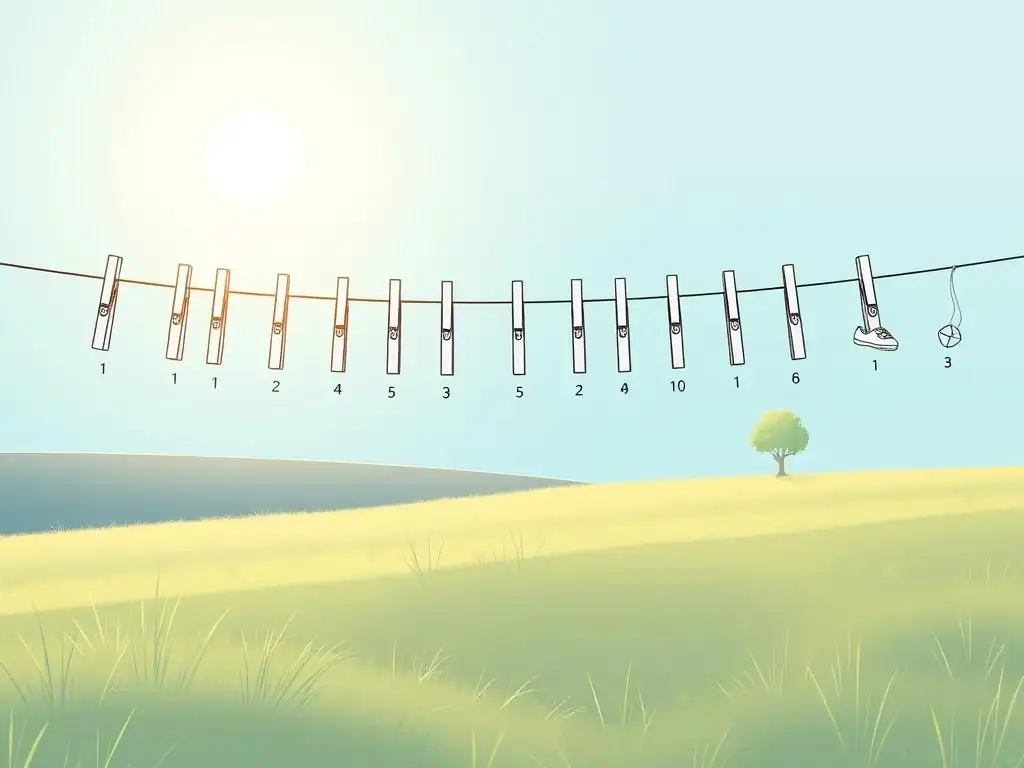
The Peg System is a classic mnemonic technique exceptionally effective for memorizing lists of items in order. It works by associating each item on your list with a pre-memorized "peg" – a rhyming word corresponding to a number. The most common peg system uses the following rhymes: One-bun, two-shoe, three-tree, four-door, five-hive, six-sticks, seven-heaven, eight-gate, nine-wine, ten-hen.
Once you've mastered these pegs, you can link each item on your list to its corresponding peg using vivid imagery. For example, if you need to remember a grocery list: milk, eggs, bread, cheese, and apples, you might visualize a bun swimming in a carton of milk (one-bun), a shoe overflowing with eggs (two-shoe), a tree sprouting loaves of bread (three-tree), a door made of cheese (four-door), and a beehive filled with apples (five-hive). The more bizarre and memorable the image, the better your recall will be.
This method leverages the power of association and visual memory to create a strong, memorable link between the number and the item. Practicing regularly is key; the more familiar you are with your peg words, the faster and more effective the system becomes.
You can expand this system beyond ten items by creating additional rhyming pegs, or by using alternative peg systems available online. Remember, the key is consistent practice and creative imagery.
Story Method: Improve Memory with Narrative Techniques
The Story Method transforms a list of unrelated items into a coherent and memorable narrative. Instead of relying on rote memorization, this technique weaves the items into a bizarre and engaging story. The more unusual and unexpected the story, the better it will stick in your memory. Let's say you need to remember the following items: a bicycle, a banana, a cloud, a book, and a flamingo.
You might create a story like this: "I saw a man riding a bicycle through a field of giant bananas, a cloud suddenly rained down books, and a flamingo emerged from one of the books, looking quite surprised." This seemingly nonsensical story creates a strong association between the items, making them easier to recall in sequence. The success of this method hinges on the creativity and vividness of the story. The more engaging and unusual the details, the easier it will be to remember the sequence of items.
This method is particularly effective for remembering lists of items that are not inherently linked. It’s a fun and engaging way to improve your memory, transforming a tedious task into a creative exercise. Consider adding sensory details to your stories – smells, sounds, and textures – to further enhance memorability.
Number-Shape System: Improve Memory for Numerical Data
The Number-Shape System, also known as the Major System, is ideal for memorizing numbers. It works by associating each digit (0-9) with a consonant sound. A common system uses: 0=s/z, 1=t/d, 2=n, 3=m, 4=r, 5=l, 6=j/sh/ch, 7=k/g, 8=f/v, 9=p/b. Then, you use these consonant sounds to create words or short phrases that you can visualize. For example, the number 1945 might be represented by the consonants TPB R, which could lead to the word "tree bar."
You then create a vivid image of a tree behind a bar. This image acts as a memorable anchor for the number 1945. This system requires some initial memorization of the consonant-digit associations, but once mastered, it allows for the encoding of long strings of numbers into memorable images and narratives. The more creative and bizarre the image, the more effective the memory aid.
You can extend this system by combining it with other mnemonic techniques, such as the story method, to improve memorability further. Regular practice is crucial to build fluency and make this system a valuable tool for remembering complex numerical data. This is a powerful technique for students, researchers, and anyone frequently dealing with numerical information. Remember to choose vivid and memorable images to maximize the effectiveness of this method.
Advanced Mnemonic Strategies for Superior Memory
This section explores advanced mnemonic techniques that go beyond basic memorization strategies, providing you with powerful tools to significantly improve memory with mnemonics. Mastering these techniques will allow you to retain complex information, such as lengthy speeches, intricate diagrams, and even entire books, with remarkable accuracy. We'll delve into methods that leverage the power of association, visualization, and structured recall to elevate your memory capabilities. Remember, consistent practice is key to unlocking the full potential of these strategies.
Combining Mnemonic Techniques for Enhanced Results
The true power of mnemonics lies not just in individual techniques, but in their synergistic combination. By strategically blending different methods, you can create a robust and highly effective memorization system tailored to your specific needs. For instance, consider this scenario: you need to memorize a list of historical events. Instead of relying solely on the method of loci (memory palace), you could combine it with the keyword method.
First, create a vivid memory palace, perhaps your childhood home. Then, for each historical event, create a keyword representing the key details (e.g., "French Revolution" – keyword "Freedom"). Now, place an image representing the keyword within a specific location in your memory palace.
This layered approach dramatically enhances recall. The stronger the association between the image, keyword, and location, the better your memory performance. Experiment with combining techniques like acronyms, rhymes, and the peg system with the method of loci or keyword method to discover the most effective combinations for your learning style.
Memory Palaces: Constructing Elaborate Mental Structures for Superior Recall
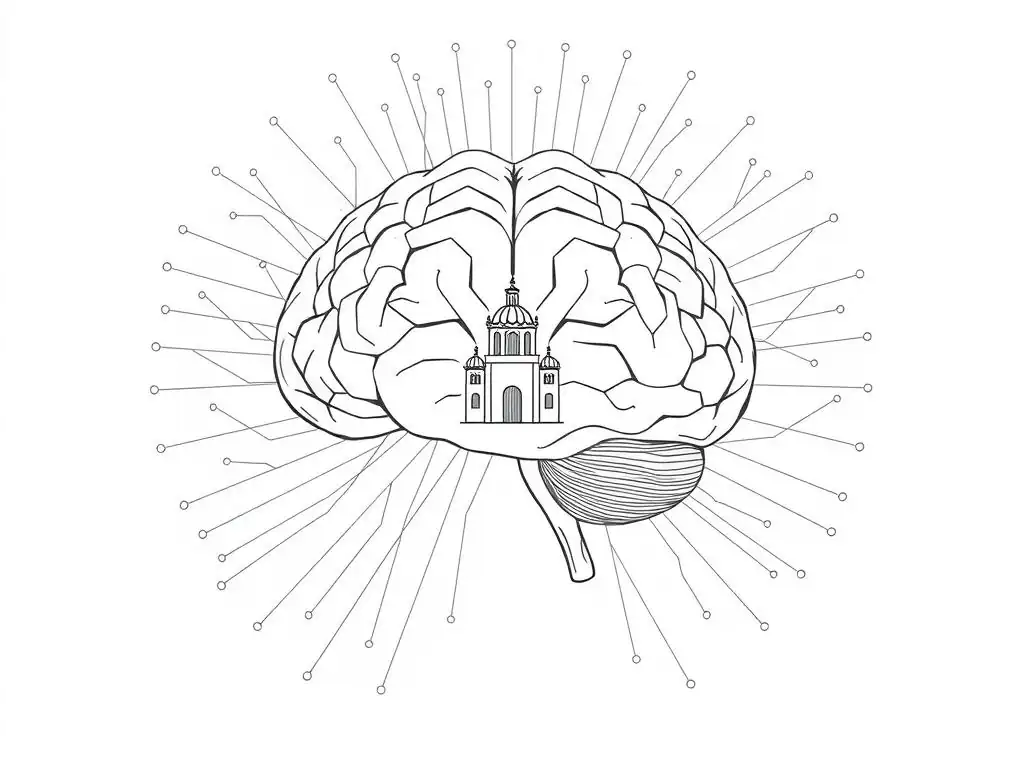
The method of loci, also known as the memory palace technique, involves creating a mental map of a familiar location – your home, a familiar route, or even a fantastical imaginary landscape. Each location within this mental structure serves as a "peg" to which you attach information to be memorized. The more detailed and bizarre the images you associate with each location, the more memorable they become.
For example, to remember a shopping list – milk, eggs, bread, cheese – you might visualize a cow milking itself into a carton of milk in your kitchen (milk), a giant egg hatching a miniature dinosaur in your living room (eggs), a loaf of bread wearing a top hat and dancing in your hallway (bread), and a giant wheel of cheese rolling down your stairs (cheese). The more absurd and vivid the images, the easier they are to recall. This technique is particularly effective for memorizing lists, speeches, or sequences of information.
Start with smaller, simpler memory palaces and gradually increase their complexity as your skills improve. Regular practice is essential to master this powerful memory technique. Consider building multiple memory palaces for different types of information to enhance organization and recall.
Overcoming Common Challenges in Using Mnemonics
While mnemonics are powerful tools for improving memory with mnemonics, some common challenges may arise. One frequent issue is the fading of memories over time. To counter this, regular review is crucial. Spaced repetition, a technique involving reviewing information at increasing intervals, significantly improves long-term retention.
Another challenge is the creation of strong and memorable associations. If the images or keywords you create are weak or unimaginative, recall will be difficult. Focus on creating vivid, unusual, and emotionally charged associations to enhance memorability. Finally, some individuals struggle with visualizing effectively.
If this is the case, focus on developing your visualization skills through dedicated practice. Start with simple objects and gradually work your way up to more complex scenes. Don't be discouraged by initial difficulties; consistent practice and experimentation are key to mastering mnemonic techniques and significantly improving your memory. Remember, the journey to enhanced memory is a process of continuous learning and refinement.
Practicing and Refining Your Mnemonic Skills: Consistent Improvement
Improving your memory with mnemonics isn't a one-time effort; it's a journey of consistent practice and refinement. Think of it like learning a musical instrument – the more you play, the better you become. Initially, you might find the process cumbersome and your recall rate less than perfect. This is perfectly normal. The key is persistent engagement and a willingness to adapt your techniques.
One effective strategy is to start with simple mnemonic devices and gradually increase the complexity. Begin by memorizing short lists of items using basic techniques like the method of loci (memory palace) or peg systems. Once you feel comfortable with these, challenge yourself with longer lists and more complex information. For example, you could start by memorizing a grocery list, then progress to memorizing a deck of cards, and finally, tackling a longer sequence of historical events.
Regular practice is crucial. Dedicate even just 15-20 minutes each day to mnemonic exercises. Consistency is key to building strong neural pathways associated with memory encoding and retrieval. You could use flashcards, create your own mnemonic stories, or even participate in memory games online. The goal is to actively engage your brain and reinforce the learned techniques.
Don't be afraid to experiment with different mnemonic systems. What works for one person might not work for another. Try various methods – acronyms, rhymes, visualizations, keyword methods – and identify the techniques that best suit your learning style and preferences. Keep a journal to track your progress, noting which techniques are most effective and areas where you need further practice. This self-reflection is essential for continuous improvement.
Furthermore, consider incorporating mnemonic exercises into your daily life. For instance, instead of simply reading a list of names, try creating a memorable image or story associated with each name. This active recall strengthens memory consolidation. The more you integrate mnemonics into your daily routine, the more natural and effective they will become. Remember, the journey towards superior memory is a marathon, not a sprint. Embrace the process of continuous learning and refinement, and you'll steadily see improvements in your memory capabilities. Patience and persistence are your greatest allies in this endeavor. 🎉
Improving Memory with Mnemonics: Real-World Applications
Mnemonics, memory aids using imagery and other techniques, are incredibly powerful tools for improving memory retention and recall across various aspects of life. Their effectiveness stems from leveraging our brain's natural inclination towards visual and emotional processing, transforming abstract information into memorable, concrete forms. This section explores how mnemonics can be applied effectively in daily life, boosting both academic and professional success, and sharpening everyday memory skills. Mastering these techniques can significantly improve memory with mnemonics, leading to increased efficiency and reduced cognitive overload.
Boosting Academic Performance with Mnemonic Techniques
Students often struggle with memorizing vast amounts of information for exams. Mnemonics offer a significant advantage, transforming rote learning into an engaging and effective process. For instance, the method of loci, also known as the memory palace technique, involves associating items to be remembered with specific locations in a familiar place, like your home.
Imagine needing to memorize a list of historical dates: You could visualize 1492 (Columbus's voyage) at your front door, 1776 (American Revolution) in your living room, and 1865 (end of the Civil War) in your bedroom. The more vivid and unusual the imagery, the stronger the memory trace.
Another effective technique is acronyms. To remember the Great Lakes (Huron, Ontario, Michigan, Erie, Superior), use the acronym HOMES. This simple strategy converts a list of five items into a single, easily recalled word. Similarly, acrostics use the first letter of each word in a list to form a sentence.
For example, to remember the planets in our solar system (Mercury, Venus, Earth, Mars, Jupiter, Saturn, Uranus, Neptune), you could create a sentence like "My Very Educated Mother Just Served Us Noodles." These methods are particularly useful for remembering sequences, vocabulary, or factual information. Studies have shown that students who utilize mnemonic techniques consistently demonstrate improved test scores and a deeper understanding of the material, effectively improving memory with mnemonics in an academic setting.
Enhancing Professional Skills with Mnemonic Strategies
Beyond academia, mnemonics prove invaluable in professional settings. Sales professionals can use mnemonics to remember client details, product features, or presentation points. Imagine a salesperson needing to remember key features of a new software: Instead of relying on notes, they could use a visual mnemonic, associating each feature with a memorable image. For example, "increased efficiency" could be represented by a speeding bullet train, while "improved collaboration" could be a group of people working harmoniously.
Medical professionals also benefit greatly from mnemonics. Remembering complex medical terminology, drug interactions, or anatomical structures is critical. Using acronyms or acrostics for medical abbreviations or associating symptoms with vivid images can reduce errors and improve patient care. Furthermore, lawyers can use mnemonics to remember case details, witness statements, or legal precedents. The application of mnemonic strategies is vast and adaptable, significantly improving memory with mnemonics and enhancing efficiency across numerous professional fields. The consistent application of these techniques can lead to improved performance reviews and increased job satisfaction.
Improving Everyday Memory: Remembering Names, Appointments, and More
Mnemonics aren't just for students and professionals; they are powerful tools for enhancing everyday memory. Struggling to remember names? Try associating the person's name with a striking physical feature or a memorable detail about them. If you meet someone named "Rose," and she's wearing a red dress, visualize a rose blooming on her dress. This creates a strong visual link, making the name easier to recall.
For appointments, utilize the method of loci again, associating the appointment with a specific location in your daily routine. Need to remember a doctor's appointment at 2 PM? Imagine yourself in your car at 2 PM, driving towards the clinic. The more vivid and specific the imagery, the more effective the mnemonic.
Remembering grocery lists becomes simpler with visual mnemonics. Picture each item in a specific location in your kitchen. These seemingly simple techniques, when practiced consistently, drastically improve memory with mnemonics in everyday situations, freeing up mental space and reducing stress associated with forgetfulness. The key to success lies in consistent practice and adapting the techniques to your individual learning style.
Frequently Asked Questions
What are mnemonics?
Mnemonics are memory techniques that help you improve your ability to remember information. They use memorable patterns or associations to make encoding and recalling information easier. They can take many forms, from acronyms to imagery.
How do mnemonics improve memory?
Mnemonics work by transforming abstract information into something more concrete and memorable. This strengthens the neural pathways associated with the information, making it easier to retrieve later. The key is creating strong associations.
Are mnemonics effective for everyone?
Yes, anyone can learn and use mnemonics to improve their memory. While some people might find certain techniques easier than others, consistent practice is key to mastering them and seeing results. It's about finding the techniques that work best for you.
What are some examples of mnemonic techniques?
Popular techniques include acronyms, like ROY G. BIV for the colors of the rainbow, and visual imagery, where you create a vivid mental picture to associate with information. Keyword methods and storytelling are also effective strategies.
Can mnemonics help me remember things like names and faces?
Absolutely! You can use mnemonics to associate a person's name with a memorable characteristic or create a vivid image connecting their face to a unique detail. The more creative and unusual the association, the better you'll remember.
Final Reflection: Unlocking Your Memory's Potential
The techniques explored in this article—from the ancient art of loci to the modern application of acronyms and keyword methods—aren't just historical curiosities; they are powerful tools for navigating the information age. In a world saturated with data, the ability to effectively encode and retrieve information is no longer a luxury, but a necessity for success in both personal and professional spheres.
The impact of mnemonics extends far beyond simple memorization; they represent a fundamental shift in how we approach learning and knowledge retention. They foster a deeper engagement with the material, transforming passive absorption into active construction of meaning. This active process strengthens neural pathways, improving not only memory but also cognitive flexibility and overall mental agility. As the great philosopher, Seneca, once wisely observed: To remember is to retain; to retain is to learn.
This resonates deeply with the core principle of mnemonics: that true learning is not about rote memorization, but about creating meaningful connections that facilitate recall.
Now, consider how you can integrate these techniques into your daily life. Experiment with different mnemonic strategies, find the methods that resonate most with your learning style, and watch as your memory sharpens and your capacity for learning expands. Don't just passively consume information; actively engage with it, build your own mnemonic palaces, and unlock the extraordinary potential of your own mind. The journey to a sharper, more retentive memory begins with a single step—a single mnemonic. Take that step today.
Unleash Your Memory: Put These Mnemonic Tricks to the Test!
Ready to dramatically improve your memory? You've just learned powerful mnemonic techniques—now it's time to put them to the test!
- Master a new mnemonic technique: Choose one of the methods we covered—the method of loci, the keyword method, or the peg system—and try it out right away. Start by memorizing a short grocery list or a few names. What will you remember first?
- Share your experiences: Tell us in the comments below how it went! What worked well? What surprised you? Sharing your progress helps others and reinforces your learning.
- Introduce a friend to mnemonics: Show a friend or family member how mnemonics can boost memory. Help them learn a technique and watch their recall improve. Who will you impress with your newfound memory skills?
What amazing memory feat will you achieve this week using these techniques?