
Memory and Learning: Powerful Strategies for Effective Information Retention


Welcome to UltimateLifeHacks, your gateway to a more efficient and fulfilling life! Are you struggling to remember important details or master new skills? We understand the frustration. That's why we've compiled powerful Improve memory retention techniques you can immediately implement to boost your cognitive abilities. Discover practical strategies and proven methods in our "Cognitive Hacks" section, unlocking your brain's full potential for better learning and lasting memory. Dive in and unlock the secrets to a sharper, more focused you!
- Understanding Memory and Learning Processes: The Foundation for Improvement
- Proven Techniques to Improve Memory Retention Techniques
- Enhancing Memory Through Lifestyle and Cognitive Strategies
- Advanced Memory Enhancement Techniques for Superior Retention
- Measuring Your Progress and Refining Your Techniques
-
Frequently Asked Questions
- What are some effective techniques to improve memory retention?
- How can I improve my ability to remember names?
- Is there a way to boost memory naturally without medication?
- How can I improve my memory for studying and learning new information?
- What if I think I have a serious memory problem? Should I see a doctor?
- Final Reflection: Unlocking Your Mind's Potential Through Memory Mastery
- Unlock Your Brain's Potential: Master Memory Today!
Understanding Memory and Learning Processes: The Foundation for Improvement
Improving memory retention is a highly sought-after skill in today's fast-paced world. The ability to effectively learn and recall information is crucial for academic success, professional advancement, and even navigating everyday life. This article explores powerful strategies to enhance your memory and learning capabilities, focusing on practical techniques you can implement immediately to improve your information retention.
We will delve into the fundamental processes of memory, exploring how short-term and long-term memory interact, the crucial roles of encoding, storage, and retrieval, and finally, how understanding your individual learning style can unlock significantly improved memory techniques. By understanding these core principles, you'll be equipped to develop a personalized approach to memory enhancement, leading to improved learning and overall cognitive function. This journey into optimizing your cognitive abilities will ultimately lead to increased productivity and a more fulfilling life.
How Short-Term and Long-Term Memory Work Together
Our memory system isn't a monolithic entity; rather, it's a complex interplay of different memory types working in concert. Short-term memory (STM), also known as working memory, acts as a temporary holding space for information. Think of it as the mental scratchpad where you process immediate sensory input. This information is fragile and easily lost unless actively rehearsed or transferred to long-term memory (LTM).
LTM, on the other hand, is the vast repository for information that's been encoded and consolidated over time. It's where memories of past events, facts, and skills are stored, sometimes for a lifetime. The transfer from STM to LTM is crucial for effective memory retention. This process is greatly influenced by factors such as attention, repetition, and the emotional significance of the information.
For instance, remembering a phone number requires focused attention and rehearsal in STM, while remembering a childhood experience involves emotional encoding that strengthens its transfer and storage in LTM. Understanding this dynamic interplay is the first step in improving your memory. The more efficiently you can move information from STM to LTM, the better your overall memory will be. This transition isn't passive; it requires active engagement and strategic memory techniques.
The Role of Encoding, Storage, and Retrieval in Memory Consolidation
Effective memory retention hinges on three key processes: encoding, storage, and retrieval. Encoding is the initial process of transforming sensory information into a format that the brain can store. This involves creating mental representations of information through various sensory modalities (visual, auditory, kinesthetic). Storage refers to the retention of encoded information over time.
The strength and duration of storage depend on various factors, including the depth of processing during encoding and the frequency of retrieval. Finally, retrieval is the process of accessing and bringing stored information back into conscious awareness. The ease of retrieval is influenced by the quality of encoding and the presence of retrieval cues – prompts or associations that aid in recalling the information.
Consider learning a new language: Encoding involves associating words with their meanings and pronunciations; storage involves consolidating this information through repetition and practice; and retrieval involves accessing the learned vocabulary and grammar when speaking or writing. Improving each of these stages—encoding, storage, and retrieval—is key to enhancing memory consolidation and recall. Techniques such as using mnemonics (memory aids), spaced repetition, and active recall can significantly boost the effectiveness of each stage.
Identifying Your Learning Style for Optimized Memory Techniques
Recognizing your preferred learning style is pivotal in tailoring memory techniques for optimal effectiveness. Are you a visual learner, thriving on diagrams, charts, and visual aids? Do you prefer auditory learning, benefiting from lectures, discussions, and audio recordings? Or are you a kinesthetic learner, learning best through hands-on activities and physical engagement?
Understanding your dominant learning style allows you to choose memory techniques that align with your natural strengths. For example, visual learners might benefit from mind maps and flashcards, while auditory learners might find audio recordings and verbal rehearsal effective. Kinesthetic learners might prefer role-playing or building models to reinforce learning. There's no single "best" learning style; the key is to identify yours and leverage techniques that resonate with your cognitive preferences.
This personalized approach ensures that your learning process is efficient and enjoyable, ultimately leading to better memory retention and overall academic or professional success. Experiment with different techniques to determine what works best for you and refine your approach over time. The more you understand your own learning style, the more effectively you can improve your memory.
Proven Techniques to Improve Memory Retention Techniques
This section delves into practical, evidence-based techniques to significantly improve your memory retention. We'll explore methods that move beyond simple memorization, focusing on strategies that engage your brain actively and promote long-term recall. Mastering these techniques will empower you to learn faster, remember more, and ultimately enhance your cognitive performance. Improving memory retention techniques is a journey, not a destination; consistent practice is key.
Spaced Repetition: Mastering the Art of Recall
Spaced repetition is a powerful learning technique based on the psychological principle that the timing of review significantly impacts long-term retention. Instead of cramming information all at once, spaced repetition involves reviewing material at increasing intervals. This combats the forgetting curve, which shows a rapid decline in memory immediately after learning.
The core idea is to revisit information just before you're likely to forget it. Initially, reviews are frequent (e.g., after an hour, then a day), gradually lengthening the intervals as your retention improves. This optimized scheduling ensures that information is consistently reinforced, moving it from short-term to long-term memory.
Several apps and software utilize spaced repetition algorithms, tailoring review schedules to individual learning patterns. These tools can be invaluable for learning vocabulary, mastering new skills, or preparing for exams. Even without dedicated software, you can implement spaced repetition manually by creating a schedule and diligently sticking to it.
For example, if learning a new language, review vocabulary words after 1 hour, then 6 hours, then 24 hours, then 2 days, then 7 days, and so on. The key is to adjust the intervals based on your individual learning curve and the difficulty of the material. Consistent application of spaced repetition demonstrably improves recall significantly over traditional methods.
Active Recall Techniques: Testing Yourself for Better Retention
Passive rereading is notoriously ineffective for long-term memory consolidation. Active recall, on the other hand, forces your brain to actively retrieve information, strengthening memory traces. Instead of simply reviewing material, actively test yourself on it.
This can involve various methods: self-testing using flashcards, writing practice questions and answers, explaining concepts aloud as if teaching someone else, or even attempting to reconstruct information from memory without looking at notes. The effort required to retrieve information strengthens the neural pathways associated with that information, leading to improved retention.
Consider this example: Instead of passively rereading your textbook chapter on the French Revolution, try to write down key events and figures from memory. Then, compare your answers to the text, identifying gaps in your knowledge. This active process reinforces learning far more effectively than simply rereading. Regularly employing active recall, even in short bursts, dramatically improves memory retention for various subjects and information types. The more you engage in active recall, the more resilient your memory becomes.
Mnemonics and Memory Palaces: Creative Memory Aids
Mnemonics are memory techniques that use creative strategies to improve encoding and retrieval. They leverage associations, visualization, and other cognitive processes to make information more memorable. These techniques are particularly useful for remembering lists, sequences, or abstract concepts.
One powerful mnemonic technique is the memory palace (also known as the method of loci). This involves mentally associating items you need to remember with specific locations in a familiar place, such as your house or a route you frequently walk.
For example, to remember a grocery list (milk, eggs, bread, cheese), you might imagine a carton of milk spilling on your front doorstep, eggs cracking on your living room rug, a loaf of bread perched on your kitchen counter, and a giant wheel of cheese in your bathroom shower. The more vivid and unusual the imagery, the better the recall.
Other mnemonic techniques include acronyms (e.g., ROY G. BIV for the colors of the rainbow), acrostics (sentences where the first letter of each word forms a word to be remembered), and keyword methods (linking a new word to a similar-sounding word and creating a visual image). These creative techniques can significantly enhance memory retention, transforming seemingly difficult tasks into engaging mental exercises. Experiment with different mnemonic techniques to find what works best for your learning style and the type of information you need to remember. The key is to make the information meaningful and personally relevant.
Chunking Information: Breaking Down Complex Concepts

Chunking is a powerful memory technique that involves breaking down large pieces of information into smaller, more manageable units. Instead of trying to memorize a long string of numbers, for example, like a phone number (555-123-4567), we naturally chunk it into three smaller groups: 555, 123, and 4567. This makes it significantly easier to remember. The same principle applies to learning complex material. Consider a lengthy historical timeline: instead of trying to memorize the entire sequence of events chronologically, group related events into thematic chunks.
For instance, you could chunk the events of the American Revolution into phases such as: the early tensions, the outbreak of war, major battles, and the eventual signing of the treaty. This method reduces cognitive load and enhances recall. Effective chunking requires thoughtful organization and a clear understanding of the material's structure. It's not just about arbitrarily dividing information; it's about identifying logical groupings that make sense within the context of the subject matter.
For instance, when learning vocabulary, group words by theme or root words to improve retention. Think of it as creating mini-stories within the larger narrative of the information you're trying to learn. This active process of organization solidifies the information in your memory much more effectively than passive memorization. Moreover, regularly reviewing these chunked information sets reinforces the connections between the smaller units, further enhancing long-term retention.
The Power of Elaboration: Connecting New Information to Existing Knowledge
Elaboration is a crucial technique for improving memory retention by actively connecting new information to what you already know. Instead of passively reading or listening, elaboration involves actively processing the information and making meaningful connections. This could involve relating new concepts to personal experiences, creating analogies, or generating examples. For instance, if you are learning about photosynthesis, you might relate the process to the way a solar panel converts sunlight into energy, drawing a parallel between the chloroplasts in plants and the solar cells in a panel. This active engagement transforms passive learning into an active construction of knowledge.
The more connections you forge between new information and your existing knowledge base, the stronger and more durable the memory trace becomes. Elaboration also promotes deeper understanding. By actively relating new information to your existing schemas, you are not simply memorizing facts; you are integrating them into your existing framework of knowledge. This deeper understanding makes the information more meaningful and thus easier to recall. Furthermore, the act of elaborating encourages active recall, a powerful memory technique in itself.
By actively retrieving and applying the information, you strengthen the neural pathways associated with that information, leading to improved retention. Consider using techniques like the Feynman Technique, where you explain a concept as if you were teaching it to someone else. This forces you to clarify your understanding and identify any gaps in your knowledge, leading to more effective elaboration and, subsequently, better memory retention. This process of actively connecting, explaining, and applying makes the learning experience more engaging and far more effective for improving your memory.
Enhancing Memory Through Lifestyle and Cognitive Strategies
This section delves into the crucial role of lifestyle and cognitive strategies in optimizing memory retention. We'll explore how seemingly simple changes to your daily routine can significantly impact your ability to learn and remember new information, effectively improving memory retention techniques. These strategies work synergistically with other techniques, creating a powerful system for enhanced cognitive performance.
The Impact of Sleep on Memory Consolidation
Sleep isn't just about rest; it's a critical period for memory consolidation. During sleep, your brain processes and stores information acquired throughout the day. This process, crucial for long-term memory formation, is significantly impaired by sleep deprivation. Studies consistently demonstrate a correlation between sufficient sleep and improved memory recall. For example, research published in Nature Neuroscience showed that participants who slept after learning a new task performed significantly better on subsequent tests than those who stayed awake.
Insufficient sleep, on the other hand, leads to fragmented memories and reduced learning capacity. Aim for 7-9 hours of quality sleep each night to optimize your brain's ability to consolidate new information. Establishing a consistent sleep schedule, creating a relaxing bedtime routine, and ensuring a dark, quiet sleep environment are all vital aspects of improving sleep quality and consequently, memory retention. The impact of sleep on memory is undeniable; neglecting it directly undermines your efforts to improve memory retention techniques. Prioritizing sleep is a fundamental step in boosting cognitive function.
Nutrition and Brain Health: Fueling Your Memory
Your diet plays a pivotal role in brain health and memory function. Just as a car needs the right fuel to run efficiently, your brain requires specific nutrients to perform optimally. A diet rich in antioxidants, omega-3 fatty acids, and certain vitamins and minerals is essential for supporting memory and cognitive function.
Consider incorporating these brain-boosting foods into your diet:
- Fatty fish (salmon, tuna, mackerel): Excellent sources of omega-3 fatty acids, crucial for brain health and reducing inflammation.
- Berries (blueberries, strawberries, raspberries): Packed with antioxidants that protect brain cells from damage.
- Leafy green vegetables (spinach, kale): Rich in vitamins K and E, vital for cognitive function.
- Nuts and seeds (walnuts, almonds, flaxseeds): Provide healthy fats, vitamin E, and other essential nutrients.
- Dark chocolate: Contains flavonoids, which have been shown to improve blood flow to the brain.
Conversely, a diet high in processed foods, saturated fats, and sugar can negatively impact cognitive function and memory. Adopting a balanced, nutritious diet is a powerful and accessible method for enhancing memory and improving memory retention techniques. Making conscious food choices directly translates to improved brain performance.
Mindfulness and Meditation: Reducing Stress and Improving Focus
Chronic stress significantly impairs memory and cognitive function. The stress hormone cortisol, released during stressful periods, can interfere with the brain's ability to form and retrieve memories. Mindfulness and meditation techniques provide effective tools for managing stress and improving focus, thereby enhancing memory.
Regular mindfulness practice, even for just a few minutes each day, can help reduce stress levels, improve attention span, and enhance cognitive function. Studies have demonstrated that mindfulness meditation increases grey matter in brain regions associated with learning and memory. The practice encourages present moment awareness, reducing mind-wandering and improving concentration – both essential for effective learning and information retention.
By incorporating mindfulness and meditation into your routine, you can actively improve memory retention techniques and cultivate a calmer, more focused mind, significantly boosting your ability to learn and remember. This holistic approach complements other strategies, creating a comprehensive system for enhanced cognitive performance.
Regular Exercise: Boosting Brainpower and Memory
Regular physical activity isn't just beneficial for your physical health; it significantly impacts your cognitive function, including memory retention. Studies have shown a strong correlation between exercise and improved memory performance. This isn't simply about increased blood flow to the brain, although that's certainly a contributing factor. Exercise stimulates the production of brain-derived neurotrophic factor (BDNF), a protein crucial for the growth, survival, and function of neurons. BDNF essentially acts as fertilizer for your brain, promoting the growth of new brain cells and strengthening existing neural connections, which are fundamental to memory formation and recall.
The type of exercise isn't as critical as the consistency. Aim for at least 30 minutes of moderate-intensity exercise most days of the week. This could include brisk walking, jogging, swimming, cycling, or any activity that elevates your heart rate and gets you slightly breathless.
Even short bursts of high-intensity interval training (HIIT) can be highly effective. The key is to find an activity you enjoy and can stick with long-term. Remember, the benefits are cumulative; the more consistently you exercise, the greater the positive impact on your memory and cognitive abilities.
For example, a study published in the journal Neurology found that older adults who engaged in regular aerobic exercise showed significant improvements in their memory and cognitive function compared to their sedentary counterparts. This underscores the importance of incorporating physical activity into your daily routine as a powerful strategy to improve memory retention techniques. The improvements aren't just temporary; consistent exercise leads to lasting enhancements in cognitive performance.
Avoiding Information Overload: Prioritizing and Focusing Your Learning
In today's information-saturated world, it's easy to suffer from information overload, hindering effective memory retention. Our brains aren't designed to efficiently process an endless stream of data; instead, they thrive on focused attention and prioritization. To improve memory retention techniques, you must learn to strategically manage the information you consume. This involves consciously selecting what's truly important and filtering out the noise.
One effective technique is the Pomodoro Technique, which involves working in focused bursts of 25 minutes followed by a 5-minute break. This structured approach helps maintain concentration and prevents mental fatigue, both of which are detrimental to memory consolidation. Furthermore, actively engaging with the material is crucial. Passive consumption, like simply reading or listening, is far less effective than active recall.
Techniques like the Feynman Technique, where you explain the concept in your own words as if teaching it to someone else, forces you to actively process and understand the information, leading to better retention. Another valuable strategy is to space out your learning. Instead of cramming information into one long session, spread your study time over several shorter sessions. This technique, known as spaced repetition, leverages the spacing effect, significantly improving long-term retention.
Finally, prioritize quality over quantity. Focusing on a smaller amount of information and mastering it thoroughly is far more effective than superficially covering a vast amount of material. By employing these strategies, you can effectively combat information overload and optimize your learning for improved memory retention. Remember, mindful consumption and active engagement are key to successful learning and lasting memory.
Advanced Memory Enhancement Techniques for Superior Retention
This section delves into sophisticated strategies to significantly improve memory retention, going beyond basic memorization techniques. We'll explore how technology, efficient reading habits, and strategic note-taking can dramatically enhance your ability to recall information. Mastering these techniques will empower you to improve memory retention techniques and achieve superior cognitive performance.
Memory Training Apps and Software: Utilizing Technology for Improvement
Numerous apps and software programs are designed to enhance memory skills. These tools often employ scientifically-backed methods like spaced repetition, mnemonics, and gamification to make learning engaging and effective. Choosing the right application depends on your learning style and specific goals. Some popular options focus on vocabulary building, while others concentrate on improving memory for numbers, faces, or even entire speeches.
For instance, some apps use flashcards with spaced repetition algorithms. This algorithm ensures you review information at optimal intervals, maximizing retention. This intelligent scheduling combats the forgetting curve, a phenomenon where newly learned information is rapidly lost if not reinforced. Another approach involves gamified learning, transforming the memorization process into an interactive and enjoyable experience. Leaderboards and achievement systems can boost motivation and encourage consistent practice, leading to substantial improvements in memory retention techniques.
Consider factors like user interface, available features, and user reviews when selecting an app. A clean and intuitive interface is crucial for a positive user experience. Features like personalized learning paths, progress tracking, and diverse learning materials can significantly impact your learning journey. Reading reviews from other users can provide valuable insights into the app's effectiveness and potential limitations. Remember, consistent use is key to seeing tangible results.
Speed Reading Techniques: Increasing Information Intake Efficiently
Improving your reading speed can directly impact your ability to retain information. Speed reading isn't about skimming; it's about optimizing your reading process to absorb more information in less time. Techniques such as minimizing subvocalization (the silent pronunciation of words), expanding your visual span (taking in more words per glance), and practicing efficient eye movement patterns can significantly increase your reading speed.
Studies have shown that individuals who actively engage with the text, rather than passively reading, exhibit better retention. This active engagement can involve highlighting key points, taking notes in the margins, or summarizing sections in your own words. Furthermore, incorporating regular breaks during longer reading sessions can prevent mental fatigue and improve comprehension. This mindful approach to reading ensures you are not only reading faster but also understanding and remembering more. The goal is to improve memory retention techniques by efficiently processing and engaging with the material.
Implementing speed reading techniques requires dedicated practice and patience. Start by setting realistic goals and gradually increasing your reading speed over time. Use online resources and practice exercises to hone your skills and track your progress. Consistency is vital; even short, regular practice sessions can yield significant improvements in reading speed and comprehension, directly contributing to better information retention.
Note-Taking Strategies for Enhanced Recall
Effective note-taking is crucial for improved memory retention. Simply transcribing lectures or readings verbatim is often unproductive. Instead, focus on synthesizing information, identifying key concepts, and organizing your notes in a clear and logical manner. Different note-taking methods cater to various learning styles. The Cornell Note-taking system, for example, divides the page into sections for main points, cues, and summaries. Mind mapping, on the other hand, uses visual diagrams to connect ideas and concepts.
The choice of note-taking method depends on personal preference and the nature of the material. Experiment with different methods to find what works best for you. Regardless of the method, several principles contribute to effective note-taking: use abbreviations and symbols to save time, actively engage with the material by summarizing and paraphrasing, and regularly review your notes to reinforce learning. This active recall process strengthens memory traces and improves long-term retention.
Beyond the method itself, the quality of your notes is paramount. Ensure your notes are concise, well-organized, and easily understandable. Use headings, subheadings, and bullet points to structure information logically. Employ visual aids like diagrams or charts to represent complex concepts effectively. Regular review, perhaps using spaced repetition, is crucial for transforming short-term memory into long-term knowledge. By mastering effective note-taking, you are directly improving memory retention techniques and solidifying your understanding of the subject matter.
Mind Mapping: Visualizing and Organizing Information
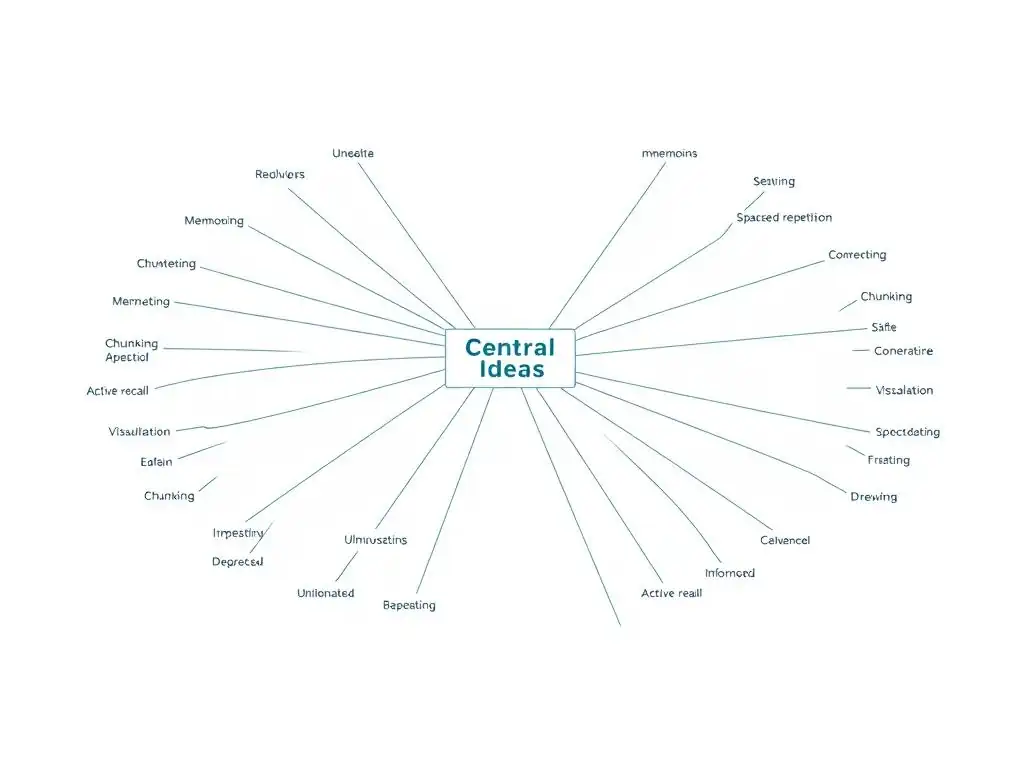
Mind mapping is a powerful technique to improve memory retention techniques by leveraging the brain's natural ability to connect ideas visually. Instead of relying solely on linear note-taking, mind mapping uses a central idea as a starting point, branching out to related concepts and details. This radial structure mirrors how our brains naturally associate and recall information. The visual nature of mind maps makes them exceptionally effective for remembering complex information.
For example, let's say you're trying to remember the key features of a new software program. Instead of writing a list of features, you could create a mind map. The central idea would be the software's name. From there, you could branch out to key features like "User Interface," "Data Management," and "Reporting."
Each of these branches could then further subdivide into specific details. This visual representation not only helps you organize the information but also strengthens memory recall due to the visual cues and interconnectedness of the concepts. The act of creating the mind map itself reinforces learning, as you actively engage with the material and its relationships. Different colors, icons, and images can further enhance the process, making the mind map more memorable and engaging.
Regular practice is key to mastering mind mapping and reaping its benefits for improved memory retention. Experiment with different styles and software to find what works best for you. Numerous apps and online tools are available to facilitate mind mapping, offering features such as collaboration and export options.
Utilizing External Memory Aids: The Power of Organization
Effective organization is crucial for improving memory retention techniques. Our brains are not designed to effortlessly retain vast amounts of information. Relying solely on internal memory can lead to overload and decreased recall. Therefore, strategically using external memory aids is essential. This involves transferring information from your brain to external systems, freeing up mental resources and improving access to information when needed.
This strategy encompasses various techniques. One effective approach is to utilize digital tools like note-taking apps (e.g., Evernote, OneNote) or project management software (e.g., Trello, Asana). These tools allow for organized storage, tagging, and searching of information, making retrieval significantly easier. Another powerful method is the use of physical organizers, such as planners, notebooks, and filing systems.
A well-maintained planner helps schedule tasks and appointments, reducing the cognitive load of remembering them. Similarly, a well-organized filing system allows for quick access to important documents, eliminating the need to search through piles of paper. Furthermore, consider using techniques like color-coding files or using labeled folders to improve the efficiency of your organization system.
The key is to develop a system that aligns with your personal preferences and needs, ensuring that it's easy to use and maintain consistently. The more efficient your external memory system, the less strain on your internal memory, ultimately leading to better overall retention and recall. Regular review and refinement of your external memory aids are crucial for maximizing their effectiveness in your memory improvement journey.
Measuring Your Progress and Refining Your Techniques
Improving memory retention techniques is a journey, not a destination. Consistent effort and strategic adaptation are key. To truly optimize your memory, you need a system for measuring your progress and adjusting your approach accordingly. This section will guide you through effective methods for self-assessment and refining your memory enhancement strategies.
Self-Assessment and Tracking Your Memory Improvement
Regular self-assessment is crucial for understanding your strengths and weaknesses in memory retention. Don't just rely on feeling like your memory is "better." Implement quantifiable methods to track your progress. Here are some approaches:
- Memory Tests: Use standardized memory tests available online or in cognitive assessment books. These often involve recalling lists of words, numbers, or images after a specific time delay. Record your scores over time to monitor improvement. Look for patterns – are you better at remembering visual information or auditory information?
- Personal Challenges: Set personal memory challenges. For example, try to memorize a poem, a deck of cards, or the names of 20 people you meet at an event. Time yourself and track your success rate. This allows for a personalized assessment tailored to your interests.
- Journaling: Keep a journal dedicated to your memory training. Note down the techniques you're using, the materials you're memorizing, and your results. This provides a valuable record of your journey and allows you to identify what works best for you. Include details like the time spent studying, the methods used (e.g., spaced repetition, mnemonic devices), and a self-rating of your performance (e.g., on a scale of 1-10).
- Real-World Applications: Track your memory improvement in real-world scenarios. For instance, if you're working on remembering names, note how many names you remember correctly after meeting new people. Or, if you're focusing on retaining information for work, track your performance on tasks that require remembering details.
The key is not to prioritize what's on your schedule, but to schedule your priorities.
– Stephen Covey. Applying this principle to memory improvement means scheduling regular self-assessment sessions.
Adapting Your Strategies Based on Results
Your self-assessments will reveal areas where you excel and areas needing improvement. This data is invaluable for adapting your memory techniques. For example:
| Weakness | Possible Solutions | Example |
|---|---|---|
| Difficulty remembering names | Use the method of loci, focus on associating features with names | Associate "John Smith" with a tall, imposing oak tree (Smith = imposing) |
| Poor visual memory | Incorporate visual imagery techniques, mind mapping | Create a vivid mental picture of the information you need to remember. |
| Trouble with sequential data | Utilize mnemonic devices like acronyms or rhyming | Use ROY G. BIV to remember the colors of the rainbow. |
| Forgetting appointments | Use calendar reminders, set alarms, and link appointments to visual cues. | Associate a dentist appointment with a bright red toothbrush in your mind. |
Remember, consistent refinement is crucial. Don't be afraid to experiment with different techniques and combinations until you find what works best for you. The most effective strategies are personalized and adapted to your learning style and cognitive strengths.
Maintaining a Consistent Learning Routine for Long-Term Success
Improving memory retention techniques is not a sprint; it's a marathon. Consistency is paramount for long-term success. Consider these strategies to maintain a consistent learning routine:
- Schedule Dedicated Time: Treat memory training like any other important appointment. Schedule specific times for memory exercises and stick to your schedule as much as possible. Even 15-20 minutes a day can make a significant difference.
- Integrate into Daily Life: Incorporate memory exercises into your daily routine. This could involve memorizing your grocery list, learning a new word each day, or practicing mental arithmetic.
- Make it Enjoyable: Choose memory exercises and learning materials that genuinely interest you. This will make the process more engaging and sustainable. Learning should be enjoyable, not a chore! 🧠
- Track Your Progress: Continue monitoring your memory skills. This regular feedback loop will motivate you and highlight your achievements, making the process rewarding and encouraging you to continue. 🎉
By consistently applying these strategies and adapting your approach based on your progress, you can significantly improve your memory retention and unlock your cognitive potential. Remember, even small, consistent improvements over time lead to remarkable results.
The Importance of Continuous Learning and Memory Enhancement
Continuous learning isn't just about acquiring new knowledge; it's a crucial aspect of maintaining and enhancing memory retention. Our brains, much like muscles, require regular exercise to stay strong and efficient. The more we challenge our cognitive abilities by learning new things – be it a new language, a musical instrument, or even a complex recipe – the more we strengthen the neural pathways responsible for memory formation and retrieval.
This constant stimulation creates a positive feedback loop: improved memory leads to greater ease in learning, which in turn further strengthens memory capabilities. This process combats age-related cognitive decline and helps maintain mental sharpness throughout life.
Think of it as a holistic approach to brain health; just as a balanced diet and regular physical activity contribute to overall physical well-being, continuous learning fuels cognitive fitness. Neglecting this aspect can lead to a decline in cognitive function, making it harder to learn and remember new information.
The benefits extend beyond mere information recall. Continuous learning fosters neuroplasticity, the brain's remarkable ability to reorganize itself by forming new neural connections throughout life. This adaptability is key to overcoming challenges and adapting to new situations. For example, someone who consistently engages in activities that challenge their memory, such as memorizing poetry or learning a new skill, will likely find themselves better equipped to handle stressful situations or learn new information quickly.
This enhanced adaptability translates into improved problem-solving skills and a greater sense of cognitive resilience. In essence, the act of improving memory retention techniques is an investment in lifelong cognitive health and well-being. The rewards are far-reaching, impacting not only memory but also overall mental agility and adaptability. The more you learn, the easier learning becomes, creating a virtuous cycle of cognitive enhancement.
Frequently Asked Questions
What are some effective techniques to improve memory retention?
Employing memory palaces, spaced repetition, and active recall are highly effective. These techniques engage different parts of the brain, leading to stronger memory encoding and retrieval. Combine these with mnemonics for optimal results.
How can I improve my ability to remember names?
Focus on actively listening when introduced and repeating the name back immediately. Try to associate the name with a visual feature or a memorable characteristic. Making a conscious effort to connect with the person also helps.
Is there a way to boost memory naturally without medication?
Yes! Regular exercise, a healthy diet, and sufficient sleep are crucial for optimal brain function and memory. Mindfulness and meditation can also improve focus and memory consolidation.
How can I improve my memory for studying and learning new information?
Use active learning techniques, such as summarizing, teaching the material to someone else, and testing yourself regularly. Break down large chunks of information into smaller, manageable pieces, and space out your study sessions.
What if I think I have a serious memory problem? Should I see a doctor?
If you experience significant memory loss impacting daily life, it's vital to seek professional help. Consult a doctor or neurologist for a proper evaluation and diagnosis to rule out any underlying medical conditions.
Final Reflection: Unlocking Your Mind's Potential Through Memory Mastery
The strategies discussed throughout this article are not merely academic exercises; they are vital tools for navigating the complexities of the modern world. In an era of information overload, the ability to effectively learn and retain information is no longer a luxury, but a necessity for personal and professional success. Mastering memory is mastering your own potential.
The impact of effective memory techniques extends far beyond the classroom or workplace; it shapes our personal narratives and relationships. We build our identities through experiences and knowledge, and the ability to recall and process these memories profoundly influences our self-perception and interactions with the world. As the great philosopher, Seneca, once wrote: Every new beginning comes from some other beginning's end.
This applies equally to learning; the ability to effectively retain information allows us to build upon past knowledge, creating a continuous cycle of growth and understanding. This is not just about remembering facts; it's about building a richer, more meaningful life.
Now, consider the power you hold. You have the capacity to enhance your memory, to unlock the vast potential of your mind. Take the time to implement even one of the techniques discussed here – whether it's spaced repetition, active recall, or mind mapping – and witness the transformative effect on your learning and life. Embrace the journey of memory mastery; it is a journey of self-discovery and empowerment, leading to a more fulfilling and successful future.
Unlock Your Brain's Potential: Master Memory Today!
Thank you for exploring memory enhancement techniques! We hope you've discovered powerful strategies to improve your learning and retention. Ready to put your new knowledge into practice?
- Start with one memory technique: Choose the method that resonated most with you—spaced repetition, mind mapping, or active recall—and use it consistently for a week. Track your progress and observe the results!
- Share your key insights: What was the most surprising or helpful tip you learned today? Share it with friends or colleagues who might find it beneficial.
- Challenge yourself: Apply a new technique to a completely different area, such as memorizing a poem or learning a new language. See how far you can expand your mental capabilities!
Ready to transform your learning? Which memory technique will you try first?