
The TimeCrunched Pro's Secret: Quick & Effective Workout Routines


Feeling overwhelmed by your to-do list and struggling to find time for fitness? At UltimateLifeHacks, we understand the struggle of the busy professional. That's why we're diving deep into Quick workout routines for busy professionals, offering practical strategies to boost your health and well-being without sacrificing precious time. Discover how even short, effective workouts can significantly impact your energy levels and productivity. Ready to unlock your peak performance? Let's get started!
- Understanding the Needs of Busy Professionals: Quick Workout Routines for Time Optimization
- Designing Your Perfect Quick Workout Routine: A Step-by-Step Guide
- Sample Quick Workout Routines for Busy Professionals: Ready-to-Go Plans
- Maximizing Your Results: Tips and Tricks for Quick Workouts
- Overcoming Common Obstacles: Addressing Barriers to Quick Workouts
- The Long-Term Benefits of Consistent Quick Workouts: Investing in Your Health
- Frequently Asked Questions
- Final Reflection: Reclaiming Your Time, Reclaiming Your Health
- Unlock Your Inner Athlete: Conquer Your Fitness Goals Today!
Understanding the Needs of Busy Professionals: Quick Workout Routines for Time Optimization
Juggling a demanding career, family responsibilities, and a social life leaves many professionals feeling perpetually time-crunched. Finding time for a dedicated workout often falls to the bottom of the priority list, leading to feelings of guilt and a decline in overall well-being. This article addresses the specific needs of busy professionals seeking to incorporate effective fitness routines into their already packed schedules.
We'll explore practical, time-efficient workout strategies designed to maximize results with minimal time commitment, helping you achieve your fitness goals without sacrificing your professional or personal life. We'll delve into the challenges faced by busy professionals in maintaining a healthy fitness regimen and present effective solutions – specifically, short, high-intensity workouts that deliver significant benefits.
By the end of this article, you'll be equipped with the knowledge and tools to seamlessly integrate fitness into your daily routine, enhancing both your physical and mental well-being. Let's get started on your journey to a healthier, more balanced lifestyle!
The Challenge: Balancing Work, Life, and Fitness
The modern professional faces a significant hurdle: achieving a satisfactory work-life balance while prioritizing health and fitness. Many find themselves working long hours, commuting extensively, and managing various personal responsibilities. This leaves little time for traditional, hour-long gym sessions.
Furthermore, the mental and physical exhaustion experienced after a long workday can make the prospect of a strenuous workout feel daunting. The lack of time and energy often leads to neglecting physical activity, resulting in potential health risks and decreased overall productivity. This is particularly true for those in high-pressure, demanding careers where consistent effort and energy are crucial for success.
The consequences of neglecting physical health can manifest as decreased energy levels, increased stress, difficulty concentrating, and a higher susceptibility to illness. This vicious cycle can impact not only personal well-being but also professional performance. Therefore, a strategic approach to fitness is essential for busy professionals to maintain both physical and mental well-being.
The Solution: Short, High-Intensity Interval Training (HIIT) for Maximum Results
The answer to the time crunch dilemma for busy professionals lies in efficient workout strategies. Short, high-intensity interval training (HIIT) offers a powerful solution. HIIT workouts involve short bursts of intense exercise followed by brief recovery periods. This approach maximizes calorie burn and improves cardiovascular fitness in a significantly shorter timeframe compared to traditional steady-state cardio.
For example, a 20-minute HIIT workout can be just as effective, if not more so, than a 60-minute moderate-intensity workout. The benefits extend beyond cardiovascular health. HIIT has been shown to improve muscle strength and endurance, boost metabolism, and even enhance cognitive function. Moreover, the brevity of HIIT workouts makes them easily adaptable to busy schedules, fitting seamlessly into lunch breaks, early mornings, or even late evenings.
The flexibility and effectiveness of HIIT make it an ideal solution for professionals seeking to prioritize their fitness without sacrificing valuable time. We'll explore specific HIIT workout examples tailored to different fitness levels and available equipment in the following sections. This will empower you to design a personalized routine that aligns perfectly with your schedule and goals. Let's unlock the secret to a healthier, more productive you!
Designing Your Perfect Quick Workout Routine: A Step-by-Step Guide

This section guides busy professionals through crafting efficient and effective quick workout routines, tailored to individual needs and time constraints. We'll cover assessing your fitness level, selecting appropriate exercises, and constructing personalized workout schedules of 15, 20, or 30 minutes. Remember, consistency is key – even short, high-intensity workouts deliver significant benefits for your physical and mental well-being. This is crucial for maximizing your time and achieving your fitness objectives as a busy professional.
Step 1: Assess Your Fitness Level and Goals
Before diving into exercise selection, honestly evaluate your current fitness level. Are you a complete beginner, moderately active, or already quite fit? This assessment is crucial for choosing exercises that are both challenging and safe. Consider using a simple fitness test, such as a 1-minute plank or a short distance run to gauge your baseline.
Next, define your fitness goals. Are you aiming to lose weight, build muscle, improve cardiovascular health, or simply increase energy levels? Your goals will significantly influence the type of exercises you choose and the intensity of your workouts. For example, someone aiming for weight loss might prioritize high-intensity interval training (HIIT), while someone focusing on muscle building might opt for strength training exercises. Being clear about your "quick workout routines busy professionals" goals ensures you create a plan that works for you.
Consider using the following table to self-assess:
| Fitness Level | Description | Sample Quick Workout Duration |
|---|---|---|
| Beginner | Little to no regular exercise; may experience fatigue easily. | 10-15 minutes |
| Moderately Active | Exercises regularly (1-3 times per week); comfortable with moderate intensity. | 15-20 minutes |
| Advanced/Very Active | Exercises regularly (4+ times per week); comfortable with high intensity. | 20-30 minutes or more |
Remember to consult your physician before starting any new workout routine, especially if you have pre-existing health conditions.
Step 2: Choosing the Right Exercises for Quick Workouts
Selecting the right exercises is paramount for maximizing your limited workout time. Focus on compound exercises – movements that work multiple muscle groups simultaneously – to achieve the most efficient results. These exercises are superior for quick workouts because they burn more calories and build more muscle in less time.
Here are some examples of effective compound exercises ideal for quick workout routines for busy professionals:
- Squats: Works legs, glutes, and core.
- Push-ups: Works chest, shoulders, and triceps.
- Lunges: Works legs and glutes.
- Burpees: A full-body exercise incorporating cardio and strength training.
- Rows (using resistance bands or bodyweight): Works back and biceps.
- Plank: Strengthens core muscles.
For cardio, incorporate high-intensity interval training (HIIT). HIIT involves short bursts of intense exercise followed by brief recovery periods. This method is highly efficient for burning calories and improving cardiovascular fitness in a short amount of time. A sample HIIT routine might include 30 seconds of burpees followed by 30 seconds of rest, repeated for 10-15 minutes.
Step 3: Building Your 15-Minute, 20-Minute, or 30-Minute Workout Schedule
Now, let's create sample workout schedules based on different time constraints:
15-Minute Workout:
- Warm-up (2 minutes): Jumping jacks, high knees, arm circles.
- Circuit Training (10 minutes): 30 seconds of each exercise, minimal rest between exercises. Example: Squats, push-ups, lunges, plank (repeat circuit 2-3 times).
- Cool-down (3 minutes): Static stretches (holding each stretch for 30 seconds).
20-Minute Workout:
- Warm-up (2 minutes): Dynamic stretches like leg swings and torso twists.
- HIIT (10 minutes): Example: 30 seconds of burpees, 30 seconds rest; 30 seconds of mountain climbers, 30 seconds rest. Repeat the sequence 3-4 times.
- Strength Training (5 minutes): Focus on 2-3 compound exercises (e.g., squats, push-ups, rows). Perform 3 sets of 10-12 repetitions for each exercise.
- Cool-down (3 minutes): Static stretches.
30-Minute Workout:
- Warm-up (3 minutes): Dynamic stretching and light cardio.
- Strength Training (15 minutes): Include 3-4 compound exercises, performing 3 sets of 10-12 repetitions for each. Consider incorporating variations to challenge different muscle groups.
- HIIT (7 minutes): Choose 2-3 exercises and perform them in a high-intensity circuit.
- Cool-down (5 minutes): Thorough static stretching.
Remember to adjust the intensity and duration of your workouts based on your fitness level and progress. Listen to your body and don't push yourself too hard, especially when starting. Consistency is key to achieving your fitness goals, even with quick workout routines. Prioritize regular exercise, even if it's just a few minutes each day, to reap the significant benefits for your physical and mental well-being as a busy professional.
Step 4: Incorporating Variety to Avoid Plateaus
Avoiding exercise plateaus is crucial for maintaining motivation and seeing continuous improvement in your fitness journey. A plateau occurs when your body adapts to your workout routine, resulting in a standstill in progress. To combat this, variety is key. Your body thrives on novelty; constantly challenging it with new exercises and workout structures prevents adaptation and keeps your progress moving forward.
One effective strategy is to cycle through different types of workouts. For example, you might dedicate Monday to high-intensity interval training (HIIT), Tuesday to strength training focusing on upper body, Wednesday to a yoga or Pilates session for flexibility and core strength, Thursday to a lower-body strength training routine, and Friday to a brisk walk or jog. This cyclical approach ensures that you're consistently targeting different muscle groups and energy systems, preventing your body from becoming accustomed to a single type of exercise.
Furthermore, consider varying the intensity and duration of your workouts. If you typically perform 30-minute sessions, try increasing the intensity for a shorter period (e.g., 20 minutes of intense HIIT) or extending the duration with a lower intensity (e.g., a 45-minute leisurely bike ride). This flexibility prevents your body from becoming overly comfortable with a specific level of exertion. Remember, the goal is to constantly challenge your physical capabilities to stimulate growth and avoid stagnation.
Don't underestimate the power of small changes. Switching up the order of exercises, altering the weight or resistance used, or even trying a new variation of a familiar exercise can significantly impact your results. For instance, if you regularly perform push-ups, try incline push-ups, decline push-ups, or even plyometric push-ups to challenge your muscles in different ways. This principle applies to all exercises, from squats and lunges to rows and bicep curls. The key is to consistently introduce minor modifications to keep your workouts fresh and challenging.
Finally, remember to listen to your body. While variety is important, it shouldn't come at the expense of proper form and rest. If you experience pain, don't push through it. Adjust your routine as needed, and don't hesitate to take rest days when your body requires them. A well-rounded approach that balances intensity, variety, and rest is the most sustainable path to long-term fitness success for busy professionals seeking quick and effective workout routines. This approach ensures that you are maximizing your time and energy while preventing burnout.
Sample Quick Workout Routines for Busy Professionals: Ready-to-Go Plans
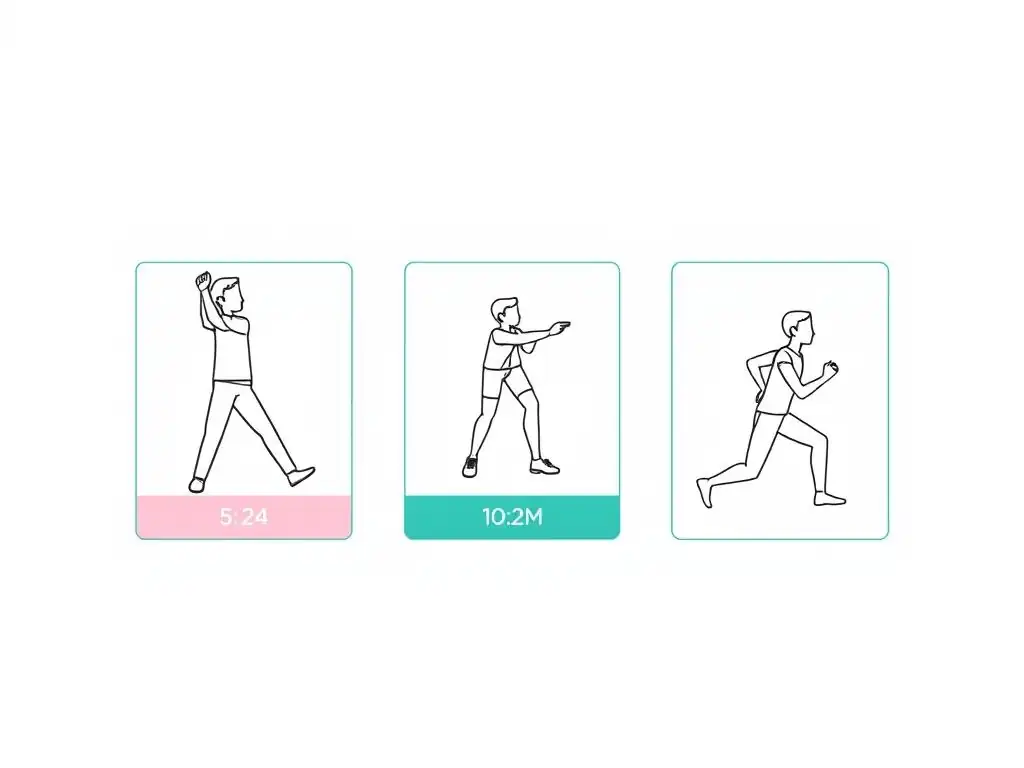
This section provides three sample workout routines designed for busy professionals who want to maximize their fitness gains in minimal time. These routines prioritize efficiency and can be adapted to your fitness level and available equipment. Remember to consult your doctor before starting any new workout program. Prioritizing quick workout routines for busy professionals is key to maintaining a healthy lifestyle despite a demanding schedule.
A 15-Minute Bodyweight Blast for Maximum Calorie Burn
This high-intensity interval training (HIIT) routine requires no equipment and can be performed anywhere. It focuses on compound movements that work multiple muscle groups simultaneously, maximizing calorie burn and muscle engagement in a short period.
The key to this routine is intensity. Push yourself to your limits during the work periods, aiming for near-maximal effort. Rest periods are crucial for recovery, allowing you to maintain intensity throughout the workout.
Here's the plan:
| Exercise | Sets | Reps/Duration | Rest (seconds) |
|---|---|---|---|
| Burpees | 3 | 10 | 60 |
| Mountain Climbers | 3 | 30 seconds | 60 |
| Jumping Jacks | 3 | 30 seconds | 60 |
| Squats | 3 | 15 | 60 |
| Push-ups | 3 | As many as possible (AMRAP) | 60 |
| Plank | 3 | 30 seconds | 60 |
Remember to warm up for 5 minutes before starting with light cardio like jogging in place or jumping jacks, and cool down for 5 minutes afterward with stretching. This 15-minute bodyweight blast is a fantastic way to incorporate quick workout routines for busy professionals into your daily life. Consistency is key! Even a short, intense workout is better than no workout at all.
A 20-Minute Cardio and Strength Fusion Workout
This routine combines cardio and strength training for a full-body workout. It requires minimal equipment – just a set of dumbbells (or water bottles as substitutes). This balanced approach ensures both cardiovascular health and muscle strength development, making it an ideal quick workout routine for busy professionals.
This workout utilizes a circuit training approach. Perform each exercise for the specified time, then move immediately to the next. Complete the entire circuit twice.
| Exercise | Time (seconds) | Equipment |
|---|---|---|
| Jumping Jacks | 30 | None |
| Dumbbell Rows | 30 | Dumbbells |
| High Knees | 30 | None |
| Dumbbell Bicep Curls | 30 | Dumbbells |
| Butt Kicks | 30 | None |
| Dumbbell Shoulder Press | 30 | Dumbbells |
| Burpees | 30 | None |
| Plank | 30 | None |
Remember to incorporate a 5-minute warm-up and cool-down period. This routine provides a fantastic balance of cardio and strength training, making it a highly effective quick workout routine for busy professionals. Adjust the weights to suit your fitness level.
A 30-Minute Full-Body Workout Using Minimal Equipment
This workout uses a combination of bodyweight exercises and light equipment (dumbbells or resistance bands) for a comprehensive full-body workout. It's structured to target all major muscle groups and improve both strength and endurance. This is a more advanced option among quick workout routines for busy professionals, suitable for those with some prior fitness experience.
This workout is divided into three 10-minute sections, each focusing on a different area of the body:
Section 1: Legs & Core (10 minutes)
- Squats: 3 sets of 12-15 reps
- Lunges: 3 sets of 10-12 reps per leg
- Plank: 3 sets, hold for 30-60 seconds
- Crunches: 3 sets of 15-20 reps
Section 2: Upper Body (10 minutes)
- Dumbbell Bench Press (or Push-ups): 3 sets of 10-12 reps
- Dumbbell Rows: 3 sets of 10-12 reps per arm
- Overhead Press: 3 sets of 10-12 reps
- Bicep Curls: 3 sets of 12-15 reps
Section 3: Cardio & Cool-Down (10 minutes)
- Jumping Jacks: 2 minutes
- High Knees: 2 minutes
- Butt Kicks: 2 minutes
- Stretching: 4 minutes (focus on major muscle groups worked)
Remember to adjust the weight and intensity to match your fitness level. This 30-minute full-body workout is a comprehensive option amongst quick workout routines for busy professionals, providing a solid fitness foundation without requiring extensive time commitment. Prioritize proper form over speed to avoid injury.
Maximizing Your Results: Tips and Tricks for Quick Workouts
Quick workout routines for busy professionals are all about efficiency. It's not just about squeezing in a few exercises; it's about maximizing the impact of your limited time. This section delves into strategies to amplify your results and ensure your quick workouts are truly effective, even when time is scarce. We'll explore the importance of proper warm-up and cool-down, the role of nutrition and hydration, and methods for tracking progress and maintaining motivation. Remember, consistency is key, and even short, effective workouts done regularly will yield significant improvements in your fitness and overall well-being.
The Importance of Proper Warm-up and Cool-down
A proper warm-up is crucial before any workout, especially short, intense ones. Skipping this step increases your risk of injury. A dynamic warm-up, lasting around 5-10 minutes, prepares your body for exercise by increasing blood flow and muscle temperature. Think dynamic stretches like arm circles, leg swings, and torso twists – movements that mimic the workout's motions. This improves range of motion and reduces the chance of muscle pulls or strains.
Equally important is the cool-down. This 5-10 minute period allows your heart rate and breathing to return to normal, preventing dizziness and promoting muscle recovery. Static stretches, holding each stretch for 20-30 seconds, are ideal. Focus on major muscle groups worked during your workout. Examples include hamstring stretches, quad stretches, and tricep stretches. A consistent warm-up and cool-down routine significantly enhances the effectiveness and safety of your quick workout routines for busy professionals.
Nutrition and Hydration Strategies for Optimal Performance
Fueling your body correctly is paramount for maximizing results from your quick workout routines. Busy professionals often neglect proper nutrition, but even small changes can make a big difference. Prioritizing protein intake is vital for muscle repair and growth. Aim to include a source of lean protein in every meal, such as chicken breast, fish, beans, or Greek yogurt.
Hydration is equally crucial. Dehydration significantly impacts performance and can lead to fatigue and muscle cramps. Keep a water bottle readily available and sip throughout the day, especially before, during, and after your workout. Consider adding electrolytes, particularly during longer or more intense sessions, to replenish what you lose through sweat. Proper nutrition and hydration are integral components of any successful quick workout routine for busy professionals, leading to better energy levels and improved results.
Tracking Your Progress and Staying Motivated
Tracking your progress is essential for staying motivated and seeing the results of your efforts. This doesn't require complex equipment or extensive journaling. A simple method is to use a fitness tracker or a notebook to record your workout dates, duration, and intensity. Note how you feel before, during, and after each workout. You might also track metrics like weight, body measurements, or strength improvements.
Staying motivated requires a multifaceted approach. Set realistic, achievable goals. Start small and gradually increase the intensity or duration of your workouts. Reward yourself for milestones achieved, but focus on the intrinsic rewards of feeling healthier and stronger. Consider finding a workout buddy for accountability and mutual support. Remember, consistency is more important than intensity, and even small improvements are significant steps towards achieving your fitness goals. Tracking your progress and staying motivated are key to making your quick workout routines a sustainable and rewarding part of your busy life.
Integrating Quick Workouts into Your Existing Schedule
Integrating short, effective workouts into a busy professional's schedule requires strategic planning and commitment. The key is to treat your workout like any other important meeting – schedule it and protect that time fiercely. Many professionals find success by scheduling their workout first thing in the morning, before the day's demands encroach. This approach leverages the increased energy levels of the morning and sets a positive tone for the day.
Another effective strategy is to incorporate short workout sessions during lunch breaks. Even a 20-minute high-intensity interval training (HIIT) session can be incredibly beneficial. This requires careful planning to account for travel time to and from the gym or designated workout space. For those who prefer to workout after work, consider utilizing a nearby gym or park to minimize commute time.
Remember, consistency is key. Don't aim for perfection; aim for progress. Missing a day or two shouldn't derail your entire fitness plan. Instead, view setbacks as temporary interruptions and get right back on track.
Consider using a workout tracking app to monitor your progress and maintain motivation. These apps can also help you visualize your fitness journey, providing a sense of accomplishment and reinforcing your commitment. Furthermore, integrating quick workouts into your routine often requires flexibility. Be prepared to adjust your schedule as needed to accommodate unexpected events.
The goal is to find a sustainable routine that fits seamlessly into your life, rather than one that creates additional stress. The more adaptable your plan, the more likely you are to stick with it long-term. Explore various workout times and locations to discover what works best for your unique circumstances. Remember, even small bursts of activity are better than none at all.
Ultimately, integrating quick workouts into your busy schedule is about making a conscious decision to prioritize your health and well-being. By strategically planning your workouts and treating them with the same level of importance as other crucial tasks, you can successfully incorporate fitness into even the most demanding professional life. This commitment will not only enhance your physical health but will also positively impact your mental clarity and overall productivity throughout the day. Remember that even small, consistent efforts accumulate over time, leading to significant improvements in your physical fitness and overall well-being.
Overcoming Common Obstacles: Addressing Barriers to Quick Workouts

Busy professionals often face significant hurdles when trying to incorporate exercise into their already packed schedules. This section addresses three common obstacles – lack of time, lack of energy, and lack of motivation – and offers practical strategies to overcome them, enabling you to stick to your quick workout routines. Remember, even short, effective workouts are better than none at all! Consistency is key for long-term fitness success for busy professionals seeking quick workout routines.
Lack of Time: Strategies for Finding Quick Workout Windows
The most frequently cited barrier to exercise is simply a lack of time. However, with a little planning and creativity, even the busiest professional can carve out time for a quick workout. The key is to integrate exercise into your existing routine, rather than treating it as a separate, stand-alone activity.
Here are some practical strategies:
- Wake up earlier: Adding just 30 minutes to your morning routine can provide ample time for a quick, effective workout before the workday begins. This allows you to start your day feeling energized and accomplished.
- Lunchtime workouts: Many gyms offer lunchtime classes, or you can utilize your lunch break for a brisk walk or a bodyweight circuit in a nearby park. This is a great way to break up the workday and improve afternoon productivity.
- Workout during commutes: If your commute involves public transport or walking/cycling, consider extending your travel time slightly to incorporate some extra physical activity. Even small increases in daily steps can contribute significantly to your overall fitness.
- Multitask: Combine activities. Listen to podcasts or audiobooks while you walk or cycle. This transforms what might seem like a chore into an opportunity for both fitness and personal development.
- Short, intense bursts: High-Intensity Interval Training (HIIT) is ideal for busy professionals. HIIT workouts can be completed in as little as 10-15 minutes and are incredibly effective at improving cardiovascular fitness and burning calories. A sample HIIT routine might include 30 seconds of burpees followed by 30 seconds of rest, repeated for 10-15 minutes.
Lack of Energy: Boosting Energy Levels for Effective Workouts
Feeling drained after a long workday is a common experience. However, paradoxically, regular exercise can actually increase your energy levels. The key is to prioritize proper nutrition and rest to support your workouts.
Here’s how to boost your energy:
- Hydration is crucial: Dehydration can significantly impact energy levels. Carry a water bottle throughout the day and sip regularly.
- Prioritize sleep: Aim for 7-8 hours of quality sleep each night. Adequate sleep is essential for physical and mental recovery.
- Fuel your body: Consume a balanced diet rich in fruits, vegetables, and lean protein. Avoid excessive sugar and processed foods. A small, healthy snack before your workout can provide the necessary energy boost.
- Pre-workout snacks: Consider a small, easily digestible snack like a banana or a handful of nuts 30-60 minutes before your workout. This will prevent energy crashes during your exercise.
- Listen to your body: If you're feeling exceptionally fatigued, don't push yourself too hard. Rest is just as important as exercise. A lighter workout or a complete rest day is perfectly acceptable.
Lack of Motivation: Staying Committed to Your Fitness Goals
Maintaining motivation can be challenging, especially when life gets busy. To stay committed, try these strategies:
- Set realistic goals: Don't try to do too much too soon. Start with small, achievable goals and gradually increase the intensity and duration of your workouts. For example, aim for 3 quick workouts per week initially, then gradually increase to 4 or 5 as you build stamina and confidence.
- Find a workout buddy: Working out with a friend or colleague can provide accountability and support. This shared commitment can make it easier to stay on track, especially on days when motivation is low.
- Track your progress: Monitor your workouts and celebrate your achievements. This can help you stay motivated and see how far you've come. Use a fitness tracker or a simple journal to record your progress. Seeing tangible results is highly motivating.
- Reward yourself: Set small rewards for achieving your fitness goals. This could be anything from a relaxing bath to a new piece of workout gear. Positive reinforcement is key to long-term success.
- Make it enjoyable: Choose activities you enjoy. If you dread your workouts, you're less likely to stick with them. Experiment with different types of exercise until you find something you genuinely like. This could be anything from dancing to swimming to hiking. The key is to find activities that you find fun and engaging. 🏋️♀️
Remember, consistency is key. Even small, regular efforts will yield significant results over time. The benefits of regular exercise far outweigh the challenges, especially for busy professionals seeking quick workout routines.
The Long-Term Benefits of Consistent Quick Workouts: Investing in Your Health
Even with a jam-packed schedule, prioritizing quick workout routines offers substantial long-term advantages for busy professionals. The cumulative effect of short, regular exercise sessions significantly outweighs the perceived inconvenience, leading to a healthier, more productive life. This isn't just about aesthetics; it's about making a strategic investment in your overall well-being. Consistent effort translates to tangible improvements across various aspects of your life.
Improved Physical Health and Well-being
Regular, even brief, exercise sessions contribute significantly to improved physical health. Quick workout routines for busy professionals combat sedentary lifestyles, a major contributor to various health issues. Studies consistently show that individuals engaging in even 15-20 minutes of moderate-intensity activity most days of the week experience notable reductions in the risk of chronic diseases. These include, but are not limited to:
- Cardiovascular disease: Quick workouts elevate heart rate, strengthening the cardiovascular system and lowering blood pressure.
- Type 2 diabetes: Regular exercise improves insulin sensitivity, aiding in blood sugar regulation.
- Obesity: Burning calories through even short bursts of activity helps maintain a healthy weight.
- Certain cancers: Physical activity is linked to a reduced risk of several types of cancer.
- Osteoporosis: Weight-bearing exercises, even if short, help maintain bone density, crucial for preventing osteoporosis, particularly important as we age.
The benefits extend beyond disease prevention. Improved muscle strength and endurance resulting from consistent quick workouts translate to better posture, reduced back pain, and increased overall mobility, all contributing to a higher quality of life. This is especially important for professionals who spend long hours sitting at a desk.
Enhanced Mental Clarity and Focus
The connection between physical activity and mental well-being is undeniable. Quick workout routines for busy professionals aren't just about physical fitness; they're a powerful tool for boosting cognitive function. Exercise triggers the release of endorphins, natural mood elevators that reduce stress and improve mental clarity. This translates to:
- Reduced stress and anxiety: Physical activity provides a healthy outlet for stress, helping to manage anxiety levels. Even a short, intense workout can be incredibly effective in alleviating stress hormones.
- Improved mood: The release of endorphins contributes to a more positive and optimistic outlook.
- Sharpened focus and concentration: Regular exercise enhances cognitive function, leading to improved concentration and productivity during work hours. Think of it as a mental reset button.
- Better sleep: Regular physical activity contributes to better sleep quality, further enhancing mental clarity and reducing daytime fatigue. This is crucial for maintaining peak performance throughout the day.
Increased Energy Levels and Productivity Throughout the Day
Counterintuitively, investing time in a quick workout can actually increase your energy levels and productivity. While it might seem like you're taking time away from work, the benefits far outweigh the initial time commitment. The increased blood flow and oxygenation resulting from exercise energize the body and mind, leading to:
- Improved stamina: Regular physical activity builds stamina, making it easier to sustain energy levels throughout the day.
- Enhanced concentration and focus: As mentioned earlier, exercise improves cognitive function, leading to increased concentration and reduced mental fatigue.
- Better overall mood: A positive mood translates to increased motivation and productivity. A quick workout can be a powerful mood booster, setting a positive tone for the rest of the day.
- Reduced procrastination: Feeling energized and focused makes it easier to tackle tasks and avoid procrastination. This is a significant advantage for busy professionals who often face time constraints.
Incorporating quick workout routines into your daily schedule as a busy professional is an investment in your long-term health, well-being, and productivity. The cumulative benefits far outweigh the short-term time commitment, leading to a healthier, happier, and more successful life. Prioritize your well-being; your future self will thank you.
Frequently Asked Questions
How can busy professionals find time for exercise?
Even busy professionals can incorporate short, effective workouts into their day. Prioritize even 15-20 minutes of exercise, and schedule it like any other important meeting. Consistency is key!
What are some examples of quick workout routines?
Try bodyweight circuits (push-ups, squats, lunges), high-intensity interval training (HIIT), or short yoga or Pilates sessions. Focus on compound exercises that work multiple muscle groups simultaneously.
Are quick workouts really effective?
Yes! Short, intense workouts can be surprisingly effective at building strength, improving cardiovascular health, and boosting energy levels. Consistency is more important than workout duration.
What equipment do I need for a quick workout?
You don't need much! Bodyweight exercises require no equipment at all. Minimalist options include resistance bands or a jump rope for added intensity. Adaptability is key to working out anywhere.
How can I stay motivated to stick to a quick workout routine?
Find activities you enjoy, set realistic goals, and reward yourself for progress. Consider working out with a friend or joining a fitness community for additional support and accountability.
Final Reflection: Reclaiming Your Time, Reclaiming Your Health
The relentless demands of modern professional life often leave little room for self-care, yet maintaining physical and mental well-being is not a luxury, but a necessity. Ignoring this fundamental truth can lead to burnout, decreased productivity, and a diminished quality of life. This article has explored the power of short, effective workout routines as a crucial tool for busy professionals to combat these challenges and prioritize their health.
The impact of prioritizing fitness, even in small increments, is profound. It's not just about physical strength; it's about cultivating mental resilience, boosting energy levels, and fostering a sense of accomplishment that spills over into other areas of life. The body achieves what the mind believes.
This simple statement encapsulates the transformative power of believing in your ability to make time for yourself, even amidst the chaos of a demanding career. The shift in perspective – from viewing exercise as an impossible task to seeing it as a vital component of a successful and fulfilling life – is key to sustaining a healthy lifestyle.
You now hold the knowledge and the tools to reclaim your time and your health. Don't let the pressures of your professional life dictate your well-being. Start small, choose a routine that fits your schedule, and commit to it. Remember, even 15 minutes of dedicated exercise can make a world of difference. Embrace the power of consistency, celebrate your progress, and watch as your energy, focus, and overall quality of life transform. Your future self will thank you for it.
Unlock Your Inner Athlete: Conquer Your Fitness Goals Today!
Thank you for exploring quick and effective workout strategies! We hope you've gained valuable insights to help you incorporate fitness into your busy life. Now, let's put those insights into action.
- Prioritize your first workout: Schedule your most important workout this week—even just 15 minutes—and commit to it. This is the first step towards a more active lifestyle.
- Try something new: Explore a fitness activity you haven't tried before—a short high-intensity interval training (HIIT) session, a brisk walk in nature, or even a fun dance class. The key is to find something you enjoy.
- Share your success: Tell us about your first workout! Share your experience and inspire others in the comments below.
What's your biggest obstacle to consistent exercise, and how will you overcome it this week?