
Never Miss a Deadline Again: The Power of the Eisenhower Matrix

Feeling overwhelmed by deadlines and struggling to prioritize effectively? Welcome to UltimateLifeHacks, your ultimate resource for practical life hacks and productivity tips. Discover how to conquer your to-do list and regain control of your time with the Eisenhower Matrix, a powerful technique that will revolutionize your approach to deadline management and boost your overall productivity. Learn how to master this essential tool and never miss a deadline again – read on to unlock its secrets!
- Understanding the Eisenhower Matrix for Deadline Productivity
- Applying the Eisenhower Matrix to Beat Deadlines
- Mastering the Eisenhower Matrix for Enhanced Productivity
- Boosting Productivity with the Eisenhower Matrix: Real-World Applications
- Overcoming Common Challenges with the Eisenhower Matrix
- Frequently Asked Questions
- Final Reflection: Mastering Time, Mastering Life
- Unlock Your Productivity: Conquer Your To-Do List!
Understanding the Eisenhower Matrix for Deadline Productivity
Never miss another deadline again! This comprehensive guide explores the Eisenhower Matrix, a powerful time management tool that helps you prioritize tasks effectively, boosting your productivity and ensuring you consistently meet your deadlines. We'll delve into the core principles of the Eisenhower Matrix, demonstrating how to identify and categorize your tasks to maximize efficiency and minimize stress. By understanding and applying this simple yet profoundly effective method, you'll transform your approach to time management, achieving more in less time and dramatically reducing the anxiety associated with looming deadlines.
This article will equip you with the knowledge and strategies to conquer your to-do list and consistently achieve your goals. Mastering the Eisenhower Matrix is a key step towards unlocking your full potential and achieving peak productivity. Let's get started!
What is the Eisenhower Matrix and How Does it Work?
The Eisenhower Matrix, also known as the Urgent-Important Matrix, is a simple yet incredibly effective decision-making tool developed by former President Dwight D. Eisenhower. It's based on the principle of prioritizing tasks based on their urgency and importance. This helps you focus your energy on what truly matters, avoiding the trap of constantly reacting to urgent but less important tasks.
The matrix is visually represented as a 2x2 grid, categorizing tasks into four quadrants:
| Quadrant | Description | Example |
|---|---|---|
| I | Urgent and Important | Crisis management, impending deadlines |
| II | Important but Not Urgent | Planning, relationship building, exercise |
| III | Urgent but Not Important | Interruptions, some meetings, emails |
| IV | Neither Urgent nor Important | Time-wasting activities, busywork |
The key to successful use lies in accurately assessing the urgency and importance of each task. This requires honest self-reflection and a clear understanding of your goals. By consistently applying this method, you'll find yourself significantly more productive and less stressed. The Eisenhower Matrix empowers you to proactively manage your time instead of being controlled by it.
Identifying Tasks: Urgent vs. Important
Accurately classifying tasks into the four quadrants is crucial for the effectiveness of the Eisenhower Matrix. Often, the line between urgent and important can be blurry. Consider these distinctions:
- Urgent: Requires immediate attention; often involves deadlines or crises. Think of a burning deadline or a sudden critical issue that needs immediate resolution.
- Important: Contributes to your long-term goals and overall well-being. Examples include strategic planning, strengthening relationships, or activities that improve your health and skills. These tasks often don't have immediate deadlines but are crucial for your future success.
Let's use a real-world example: Imagine you have a presentation due tomorrow (urgent and important – Quadrant I), need to plan your next quarter's marketing strategy (important but not urgent – Quadrant II), constantly receive emails that can wait until later (urgent but not important – Quadrant III), and spend time scrolling social media (neither urgent nor important – Quadrant IV). Understanding these distinctions allows you to effectively prioritize. Remember, the goal is to minimize time spent in Quadrants III and IV, and to proactively schedule time for Quadrant II tasks to prevent them from becoming Quadrant I emergencies.
The Four Quadrants: Prioritization Strategies
Once you've categorized your tasks, you can employ specific strategies for each quadrant:
- Quadrant I (Urgent and Important): These tasks demand immediate action. Focus on effective and efficient execution. Consider delegating if possible.
- Quadrant II (Important but Not Urgent): This is where true productivity happens! Schedule dedicated time for these tasks. Proactive planning in this quadrant prevents tasks from escalating to Quadrant I. This is where you should spend the majority of your time.
- Quadrant III (Urgent but Not Important): Delegate these tasks whenever possible. Learn to say "no" to requests that don't align with your priorities. If you must handle them yourself, aim for quick and efficient execution.
- Quadrant IV (Neither Urgent nor Important): Eliminate these tasks completely. They are time-wasters and contribute nothing to your goals. Learn to identify and proactively avoid these activities. This might involve setting boundaries, saying no to distractions, and consciously choosing activities that contribute to your well-being and goals.
By consistently applying the Eisenhower Matrix and focusing on the appropriate strategies for each quadrant, you'll find yourself better equipped to manage your time, meet deadlines consistently, and reduce stress. Remember, the key is proactive planning and strategic prioritization – not just reacting to what's in front of you. 🎉
Applying the Eisenhower Matrix to Beat Deadlines
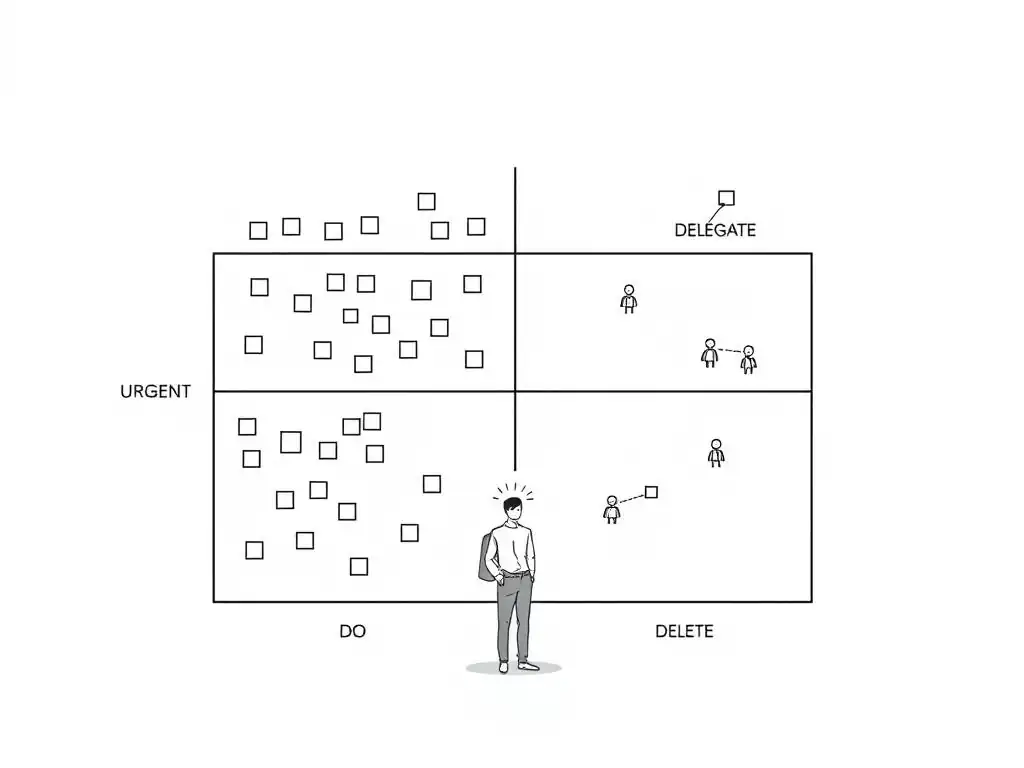
This section delves into the practical application of the Eisenhower Matrix, also known as the Urgent-Important Matrix, for conquering deadlines and boosting your overall productivity. We'll explore how to categorize tasks effectively and manage them strategically to prevent last-minute rushes and maximize your time. Remember, mastering the Eisenhower Matrix is about proactive deadline management, not just reactive firefighting. The key to success lies in understanding the nuances of each quadrant and consistently applying the appropriate strategies.
Quadrant 1: Urgent and Important Tasks – Deadline Focused Action
Quadrant 1 houses the tasks that are both urgent and important. These are the deadlines looming large, demanding immediate attention. Ignoring these will have significant negative consequences. Think of a critical report due tomorrow, a crucial client meeting scheduled for this afternoon, or a critical system failure that requires immediate resolution. These are the tasks that directly impact your deadlines and require your focused attention right now.
For tasks in this quadrant, immediate action is key. Procrastination is simply not an option. Your focus should be on efficient execution, not meticulous planning. Prioritize tasks within this quadrant based on their impact and urgency.
For example, if you have two tasks, one with a potentially larger impact but a slightly later deadline, and another with a smaller impact but an immediate deadline, prioritize the latter. This often requires a degree of ruthless prioritization and a willingness to say "no" to less important tasks to make time for what truly matters. The goal is to efficiently complete these tasks and minimize further time pressure.
Quadrant 2: Important but Not Urgent Tasks – Proactive Deadline Management
Quadrant 2 is where the magic of proactive deadline management truly happens. This quadrant contains tasks that are important to your goals and success but aren't currently urgent. These are the tasks that, if neglected, will become urgent and eventually land in Quadrant 1, causing stress and potentially missed deadlines. Examples include: planning a major project, scheduling regular maintenance on crucial equipment, networking with key stakeholders, or proactively researching solutions to potential problems.
The key to maximizing your productivity using the Eisenhower Matrix lies in dedicating sufficient time to Quadrant 2 tasks. By proactively addressing these, you prevent them from snowballing into urgent crises. Effective time blocking and scheduling techniques are essential here. Regularly reviewing your Quadrant 2 tasks and allocating specific time slots for their completion is crucial.
This proactive approach minimizes future stress, improves your overall efficiency, and prevents those last-minute deadline scrambles that often lead to subpar work. Think of it as investing in your future self. Consistent work in this quadrant contributes significantly to long-term success and ensures you're never caught off guard by looming deadlines.
Quadrant 3: Urgent but Not Important Tasks – Delegation and Elimination
Quadrant 3 contains tasks that are urgent but not particularly important to your overall goals. These tasks often create a false sense of urgency, distracting you from more important matters. They are time-consuming busywork that, while demanding immediate attention, rarely contribute significantly to your long-term objectives. Examples include: attending unnecessary meetings, responding to non-critical emails, or handling minor interruptions.
The best strategy for handling Quadrant 3 tasks is to either delegate them to someone else or eliminate them entirely. Learn to say "no" to requests that don't align with your priorities. For tasks that can't be eliminated, explore delegation options. This frees up your time to focus on more important and impactful activities.
Efficient email management, setting boundaries, and learning to politely decline non-essential requests are crucial skills for mastering this quadrant. By effectively managing Quadrant 3, you reclaim valuable time and energy, improving your focus on higher-priority, deadline-related tasks. This strategic approach prevents you from getting bogged down in unimportant urgencies, allowing you to maintain a clear path towards meeting your deadlines effectively.
Quadrant 4: Neither Urgent Nor Important Tasks – Time Waster Elimination
Quadrant 4 represents the realm of time-wasting activities – those tasks that are neither urgent nor important. These are the activities that often creep into our days, subtly stealing precious time and energy that could be better allocated. Identifying and eliminating these activities is crucial for effective deadline management and overall productivity. Procrastination, excessive social media scrolling, aimless internet browsing, and endless email checking are prime examples of Quadrant 4 tasks. These activities offer little to no value in the long run and often contribute to stress and feelings of being overwhelmed.
The first step to conquering Quadrant 4 is honest self-reflection. Take some time to meticulously track your daily activities for a week. Use a notebook, a spreadsheet, or a dedicated time-tracking app. Be brutally honest with yourself; don't sugarcoat how you spend your time. Once you have a clear picture of your daily routine, identify the recurring activities that fall into Quadrant 4. You might be surprised by the amount of time consumed by seemingly insignificant actions.
Once identified, the next step is strategic elimination. This isn't about simply stopping these activities cold turkey; it's about a gradual and mindful process. For example, if excessive social media use is a significant time waster, consider setting time limits using the built-in features of your apps or installing productivity apps that block access to distracting websites during work hours.
Similarly, if aimless internet browsing is a problem, try replacing it with short, focused breaks involving activities like stretching, mindfulness exercises, or a quick walk. The key is to replace unproductive habits with healthier, more constructive ones that contribute to your well-being and productivity.
Remember, eliminating Quadrant 4 activities isn't about depriving yourself of enjoyment. It's about consciously choosing how you spend your time to maximize your effectiveness and reduce stress. By strategically managing your time and eliminating these time-wasting activities, you free up valuable time and mental energy to focus on more important tasks, ultimately improving your ability to meet deadlines consistently and efficiently. This conscious effort to eliminate distractions directly contributes to improved "Eisenhower Matrix deadline productivity." The increased focus and efficiency translate to a more relaxed approach to deadlines, reducing stress and enhancing your overall well-being.
Mastering the Eisenhower Matrix for Enhanced Productivity
This section delves into the practical application of the Eisenhower Matrix, moving beyond the theoretical understanding to demonstrate how it can become an integral part of your daily workflow for improved deadline management and overall productivity. We'll explore strategies to maximize its effectiveness, ensuring you consistently meet your deadlines and achieve your goals. The key to success lies not just in understanding the matrix, but in mastering its implementation.
This requires a disciplined approach and consistent effort, but the rewards – significantly reduced stress and increased efficiency – are well worth the investment. The Eisenhower Matrix, when used effectively, becomes a powerful tool in your arsenal for conquering the challenges of deadline-driven tasks. It's a journey towards achieving a state of proactive, rather than reactive, work management.
Time Blocking and Scheduling
Effective use of the Eisenhower Matrix is inextricably linked to robust time blocking and scheduling. Simply categorizing tasks isn't enough; you must allocate specific time slots for their completion. This is where the power of the Eisenhower Matrix truly shines.
For instance, imagine you've categorized a project proposal (Urgent and Important) as a "Do" task. Instead of vaguely planning to work on it "sometime this week," you should schedule specific blocks of time – perhaps 2 hours on Monday morning and another hour on Wednesday afternoon. This structured approach eliminates procrastination and ensures that high-priority items receive the focused attention they deserve.
Consider incorporating timeboxing techniques. This involves allocating a fixed amount of time to a task, regardless of whether it's completed or not. This prevents tasks from expanding to fill all available time (Parkinson's Law). If a task within a time block remains unfinished, it's either re-evaluated in the next matrix review, or broken down into smaller, more manageable chunks.
Consistent time blocking, coupled with the Eisenhower Matrix, provides a clear roadmap for your day and allows you to track your progress efficiently. This method also helps to identify potential bottlenecks and allows for proactive adjustment of your schedule, minimizing the risk of missing deadlines. The more you practice this, the better you become at estimating the time needed for each task, enhancing your overall productivity and deadline adherence.
Setting Realistic Deadlines
A crucial aspect of effective Eisenhower Matrix usage involves setting realistic deadlines. Overly ambitious deadlines often lead to stress, poor quality work, and ultimately, missed deadlines. The process of assigning deadlines should be deliberate and informed. For tasks categorized as "Important but Not Urgent," consider setting deadlines that align with your long-term goals and available resources. Break down larger tasks into smaller, more manageable sub-tasks, each with its own realistic deadline. This creates a sense of accomplishment as you complete each sub-task, maintaining momentum and preventing feelings of overwhelm.
For "Urgent and Important" tasks, accurate deadline estimation is paramount. Consider using techniques like the Pomodoro Technique (25-minute work intervals with short breaks) to manage time effectively. Account for potential delays and unforeseen circumstances. Always build in a buffer period to mitigate unexpected issues.
Remember, a slightly conservative deadline is preferable to one that is overly optimistic and likely to be missed. Regularly review and adjust deadlines as needed; flexibility is key to preventing missed deadlines and maintaining a healthy work-life balance. The goal is not to cram everything in, but to achieve a sustainable workflow that consistently delivers results.
Regularly Reviewing and Adjusting the Matrix
The Eisenhower Matrix isn't a static tool; it requires regular review and adjustment to remain effective. A weekly review is a good starting point, allowing you to assess your progress, re-evaluate task priorities, and adapt to changing circumstances. This process involves re-categorizing tasks based on their current urgency and importance. A task that was "Important but Not Urgent" last week might have become "Urgent and Important" this week, necessitating a shift in priority. This dynamic nature of the matrix is what makes it so powerful.
During the review, consider the following: Are there tasks that need to be delegated? Can any tasks be eliminated altogether? Are there any recurring tasks that could be automated or streamlined to free up time for higher-priority items?
The review process should be more than just a check-in; it should be a strategic opportunity to optimize your workflow and enhance your productivity. Consistent review and adjustment will significantly enhance the effectiveness of the Eisenhower Matrix, ensuring that it remains a valuable tool in your pursuit of deadline mastery and enhanced productivity. Remember, the effectiveness of the Eisenhower Matrix is directly proportional to the frequency and thoroughness of its review.
Integrating the Eisenhower Matrix into Your Daily Routine
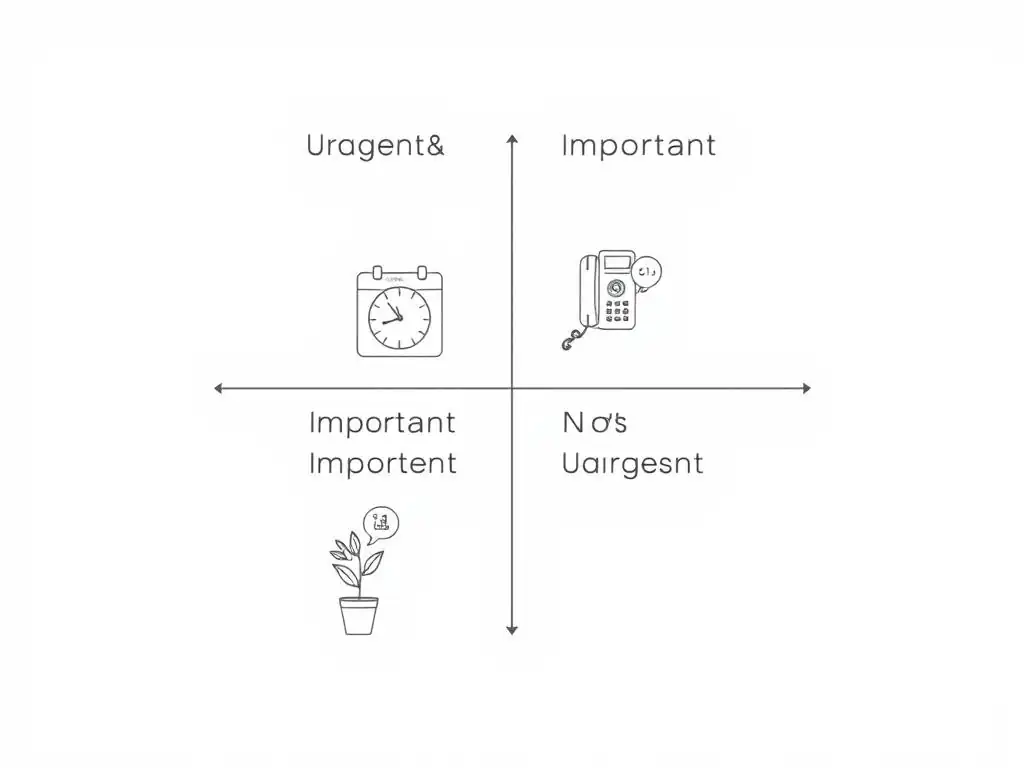
Integrating the Eisenhower Matrix into your daily workflow doesn't require a complete overhaul of your existing system. Instead, it's about a gradual adoption and refinement. Start by dedicating a specific time each day, perhaps first thing in the morning or at the end of the workday, to review your tasks and categorize them using the Urgent/Important framework. A simple notebook, a digital task management app, or even a whiteboard can serve as your Eisenhower Matrix. The key is consistency.
Make it a habit to revisit your matrix throughout the day, adjusting priorities as new tasks arise or circumstances change. Don't be afraid to experiment with different times of day to find what works best for your personal rhythm and energy levels. For example, some find that a quick review during their lunch break helps them refocus and re-prioritize for the afternoon. Others prefer to dedicate a solid 15-20 minutes at the start of each day to plan their attack.
Remember, the goal is to make the Eisenhower Matrix a seamless part of your daily routine, not an added burden. The more consistently you use it, the more effective it will become in helping you manage your time and meet your deadlines. Over time, you'll notice a marked improvement in your productivity and a reduction in stress caused by missed deadlines. Consider setting reminders on your phone or computer to ensure you dedicate time to your Eisenhower Matrix review each day.
Aligning Tasks with Objectives
The true power of the Eisenhower Matrix lies not just in task prioritization, but in its ability to align your daily actions with your overarching goals. Before categorizing tasks, take a moment to reflect on your larger objectives. What are your key priorities for the week, month, or even year? How do individual tasks contribute to these bigger goals?
This process of aligning tasks with objectives is crucial for ensuring that you're spending your time on activities that truly matter. For instance, if your overarching objective is to finish writing a book by the end of the year, then tasks like "research chapter 3" or "write 500 words" become far more meaningful when viewed through the lens of that larger goal. By regularly reviewing your objectives and connecting them to your daily tasks using the Eisenhower Matrix, you can avoid getting bogged down in less important activities and stay focused on what truly drives progress towards your aspirations. This connection between daily actions and long-term objectives enhances focus and motivation, leading to increased productivity and a greater sense of accomplishment.
Moreover, this approach allows for a more effective delegation of tasks. Understanding how a task contributes to the overall objective makes it easier to assign it to someone else if appropriate. This is particularly helpful for tasks that are important but not urgent, allowing you to free up your time for those that require your immediate attention.
Boosting Productivity with the Eisenhower Matrix: Real-World Applications
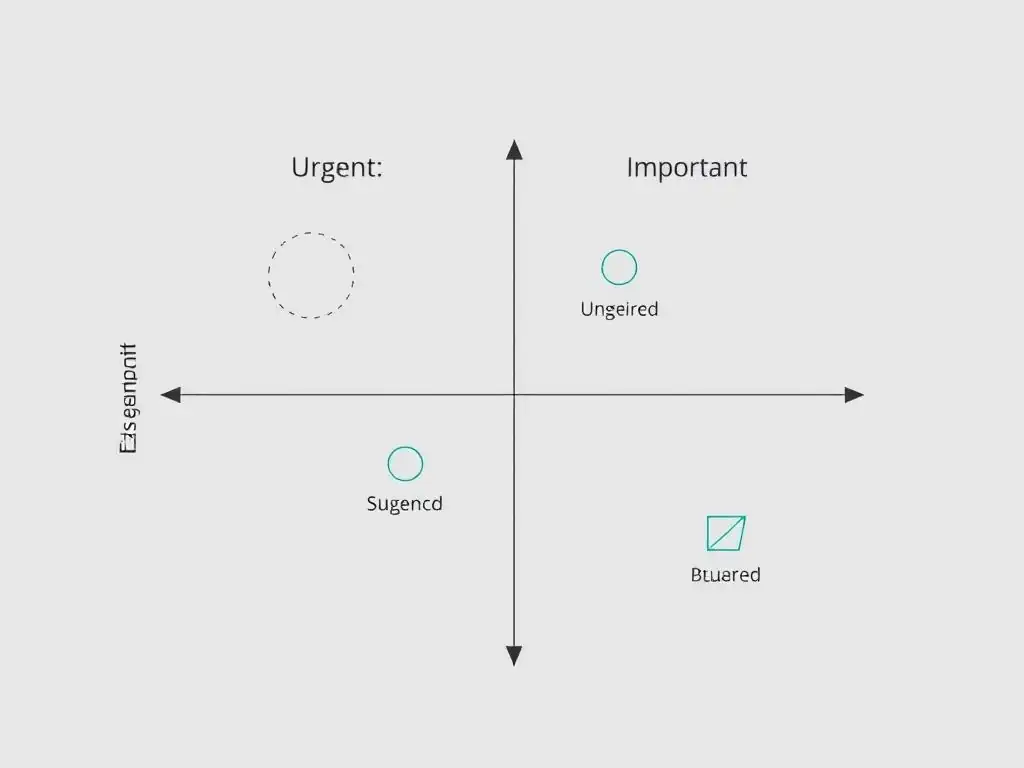
This section explores practical applications of the Eisenhower Matrix, demonstrating its effectiveness in diverse scenarios. We'll examine real-world case studies showcasing how prioritizing tasks using the Urgent/Important framework can lead to significant improvements in productivity and deadline adherence. Remember, mastering the Eisenhower Matrix is not just about ticking off tasks; it's about strategically managing your time and energy to achieve your most important goals. Effective use of the Eisenhower Matrix improves your "Eisenhower Matrix deadline productivity".
Case Study 1: Project Completion Using the Eisenhower Matrix
Imagine a software developer facing a critical project deadline. The project, encompassing multiple modules, is complex and demanding. Let's analyze how applying the Eisenhower Matrix could have helped:
- Urgent and Important: Bug fixes impacting core functionality, client presentations, and final code integration. These tasks demand immediate attention and directly contribute to project success. The developer dedicates the majority of their time to these items.
- Important but Not Urgent: Refactoring code for maintainability, writing comprehensive documentation, and planning for future updates. While not immediately time-sensitive, these are crucial for long-term project health and future efficiency. The developer schedules dedicated blocks of time for these tasks, avoiding the trap of constant firefighting.
- Urgent but Not Important: Responding to low-priority emails, attending unnecessary meetings, and dealing with minor distractions. These tasks are time-consuming but don't significantly impact the project's success. The developer learns to delegate, decline, or quickly address these, minimizing time spent.
- Neither Urgent nor Important: Checking social media, engaging in non-work-related browsing, and attending to personal errands during work hours. These activities are eliminated or significantly reduced to maximize focus on crucial tasks.
The result? By strategically prioritizing tasks using the Eisenhower Matrix, the developer successfully completed the project on time and to a high standard. They achieved a better work-life balance and minimized stress by focusing their energy on what truly mattered. This highlights the power of the Eisenhower Matrix in managing complex projects and meeting tight deadlines, significantly enhancing "Eisenhower Matrix deadline productivity".
Case Study 2: Overcoming Procrastination
Procrastination is a common productivity killer. Let's consider a student facing multiple assignments with approaching deadlines. The Eisenhower Matrix provides a framework to combat this:
The student initially feels overwhelmed by the sheer volume of tasks. However, by categorizing each assignment using the Urgent/Important framework, a clear path emerges:
- Urgent and Important: An essay due the next day, a crucial exam, and a presentation with an imminent deadline. These tasks require immediate attention and dedicated focus. The student prioritizes these, working diligently to complete them.
- Important but Not Urgent: Research papers, long-term projects, and studying for future exams. These tasks are scheduled into the student's calendar, ensuring dedicated time slots for focused work. This prevents last-minute cramming and reduces stress.
- Urgent but Not Important: Responding to non-essential emails, attending social gatherings that could be postponed, and watching TV. These activities are minimized, ensuring the student's time is not wasted on less important tasks.
- Neither Urgent nor Important: Mindless scrolling through social media, playing video games excessively, and other time-wasting activities are identified and deliberately eliminated.
By consciously applying the Eisenhower Matrix, the student systematically addresses their assignments, overcoming procrastination and achieving a sense of accomplishment. This demonstrates how the Eisenhower Matrix can be a powerful tool for self-management, leading to improved academic performance and reduced stress. Effective use of the matrix directly improves "Eisenhower Matrix deadline productivity" and reduces procrastination. The improved time management and focus translates into better academic results and overall well-being.
Overcoming Common Challenges with the Eisenhower Matrix
The Eisenhower Matrix, while a powerful tool for prioritizing tasks and boosting productivity, isn't a magic bullet. Successfully implementing it requires understanding and overcoming common hurdles. Many users initially struggle with accurate categorization and consistent application. This section addresses these challenges and offers practical solutions to maximize the Eisenhower Matrix's effectiveness for achieving "Eisenhower Matrix deadline productivity."
Addressing Overwhelm and Prioritization Paralysis
Feeling overwhelmed is a common experience, particularly when facing a long list of to-dos. This often leads to prioritization paralysis – the inability to even begin because the task seems too daunting. The Eisenhower Matrix can actually exacerbate this feeling if not applied correctly. The key is to break down the process.
Instead of attempting to categorize every single item at once, start by focusing on the most pressing tasks. Identify the tasks with the most immediate deadlines and the highest potential impact. These will likely fall into the "Do First" quadrant. Then, move onto the "Decide" quadrant. Schedule specific times for planning and decision-making to prevent these tasks from becoming overwhelming.
Consider using a visual aid like a whiteboard or digital Kanban board to represent your matrix. This provides a clear overview of your workload, making it easier to manage and prevents feeling lost in a sea of tasks. Remember, the goal isn't perfection; it's progress. Even small steps forward contribute to improved "Eisenhower Matrix deadline productivity".
"The key is not to prioritize what's on your schedule, but to schedule your priorities." – Stephen Covey
Here's a practical example: Imagine you're a project manager with several deadlines looming. Instead of feeling overwhelmed by the entire project, start by identifying the single most critical task that directly impacts the project's success and has the closest deadline. That becomes your "Do First" task. Then, schedule time to decide on delegation for tasks that aren't urgent but are important to the project’s long-term success. This strategic approach minimizes overwhelm and allows for focused action.
Adapting to Different Workloads and Schedules
The effectiveness of the Eisenhower Matrix hinges on its adaptability. What works for a slow week might not be suitable for a period of intense activity. The core principle remains constant – prioritizing tasks based on urgency and importance – but the application needs to be flexible.
For instance, during periods of high workload, you might need to dedicate more time to the "Do First" quadrant, potentially reducing time allocated to "Schedule" tasks temporarily. Conversely, during less demanding periods, you might have more capacity to focus on long-term planning and strategic initiatives in the "Decide" quadrant, fostering future "Eisenhower Matrix deadline productivity".
Regularly reviewing and adjusting your matrix is crucial. This might involve reassigning tasks between quadrants as priorities shift or deadlines approach. Consider using a time-blocking technique in conjunction with the Eisenhower Matrix to allocate specific time slots for each task category. This ensures you're not just prioritizing tasks, but also scheduling dedicated time to work on them. This improves focus and reduces the risk of important tasks getting overlooked.
Self-Reflection and Continuous Improvement
The Eisenhower Matrix is a tool for continuous improvement, not a static system. Regular self-reflection is key to optimizing its usage and maximizing its benefits for your "Eisenhower Matrix deadline productivity". Ask yourself these questions:
- Am I accurately categorizing tasks? Honest self-assessment is crucial. Are you inadvertently delaying important tasks by misjudging their urgency or importance?
- Am I allocating sufficient time to each quadrant? Are you neglecting long-term planning (Decide) or letting less important tasks (Delegate/Eliminate) consume too much time?
- Is the matrix helping me achieve my goals? Track your progress and adjust your approach as needed. Are you consistently meeting deadlines? Is your overall productivity improving?
By regularly reflecting on your use of the Eisenhower Matrix and adapting your approach based on your observations, you can continuously refine your time management skills and achieve greater efficiency. This iterative process ensures the matrix remains a powerful tool in your productivity arsenal, consistently contributing to increased efficiency and the achievement of your goals. Remember, the ultimate aim is to achieve a sustainable system for managing your time and responsibilities, leading to lasting improvements in your "Eisenhower Matrix deadline productivity".
Frequently Asked Questions
What is the Eisenhower Matrix?
The Eisenhower Matrix, also known as the Urgent-Important Matrix, is a time management tool that helps you prioritize tasks based on their urgency and importance. It categorizes tasks into four quadrants to help you focus on what truly matters.
How does the Eisenhower Matrix improve productivity?
By prioritizing tasks based on urgency and importance, the Eisenhower Matrix helps you avoid procrastination and focus your energy on high-impact activities. This leads to increased efficiency and better time management.
What are the four quadrants of the Eisenhower Matrix?
The four quadrants are: Do, Decide, Delegate, and Delete. This framework helps you systematically tackle tasks based on their urgency and importance, maximizing your time.
How can I use the Eisenhower Matrix to meet deadlines?
By identifying important but not urgent tasks related to upcoming deadlines and scheduling them proactively, you can avoid last-minute rushes and successfully meet your deadlines. Prioritize these tasks and schedule time for them.
Is the Eisenhower Matrix suitable for everyone?
While generally beneficial, the Eisenhower Matrix's effectiveness depends on individual needs and work styles. Experiment with it to see if it improves your deadline management and productivity. Adapt the system to suit your personal preferences.
Final Reflection: Mastering Time, Mastering Life
The Eisenhower Matrix isn't just a productivity hack; it's a framework for reclaiming control over your time and, ultimately, your life. In a world saturated with demands and distractions, the ability to prioritize effectively is no longer a luxury, but a necessity for success and well-being. The consistent application of this simple yet powerful tool can dramatically alter your relationship with deadlines, transforming stress into accomplishment.
The impact of the Eisenhower Matrix extends far beyond mere task management; it's a reflection of our broader societal struggle with time scarcity. We live in a culture that often glorifies busyness, but true productivity lies not in doing more, but in doing the right things. This matrix forces a crucial self-assessment, compelling us to confront our tendency to overcommit and to delegate or eliminate less important tasks. What is important is seldom urgent and what is urgent is seldom important.
This quote perfectly encapsulates the core principle of the Eisenhower Matrix, reminding us to focus our energy where it truly matters.
Now, consider how you can integrate this powerful tool into your own life. Identify your own "urgent and important" tasks, and commit to tackling them with focused intention. Then, strategically delegate, schedule, or eliminate the rest. Don't just read about the Eisenhower Matrix; live it. Embrace the clarity and control it offers, and watch as your productivity soars, your stress diminishes, and your sense of accomplishment grows. The power to master your deadlines is within your grasp; seize it.
Unlock Your Productivity: Conquer Your To-Do List!
We're thrilled you explored the Eisenhower Matrix! We hope you discovered valuable insights into prioritizing tasks and regaining control of your time. Now, let's put that knowledge to work.
Here's how to boost your productivity today:
- Start using the Eisenhower Matrix: Choose one area of your life—work, personal life, or even a specific project—and apply the Urgent/Important framework to your to-do list. You'll immediately notice the difference!
- Share your experience: Tell us about your first time using the Eisenhower Matrix. What worked well? What surprised you? Let's learn from each other's successes and challenges.
- Encourage a friend: Suggest the Eisenhower Matrix to a friend or colleague. A friendly competition might be just the motivation you both need to improve your productivity!
Ready to experience the transformative power of focused productivity? What's the first task you'll prioritize using the Eisenhower Matrix?