
DecisionMaking Frameworks: Tools to Make the Right Call Every Time


Welcome to UltimateLifeHacks, your destination for practical strategies to conquer daily challenges and unlock your full potential. Are you tired of making suboptimal decisions that cost you time and energy? Then dive into our insightful exploration of Best Decision Making Frameworks, a crucial element of cognitive efficiency. Discover the tools and techniques that will transform your decision-making process, empowering you to make the right call every time. Let's unlock your path to a more productive and fulfilling life – explore more now!
- Understanding the Importance of Effective Decision-Making Frameworks
-
Best Decision Making Frameworks for Different Scenarios
- The Eisenhower Matrix (Urgent/Important): Prioritizing Tasks Effectively
- Cost-Benefit Analysis: Weighing Pros and Cons for Informed Choices
- Decision Trees: Visualizing Potential Outcomes and Paths
- The Pugh Matrix: Comparative Analysis for Choosing the Best Option
- Six Thinking Hats: Exploring Multiple Perspectives for Balanced Decisions
- Pareto Analysis (80/20 Rule): Focusing on High-Impact Decisions
- How to Choose the Right Decision-Making Framework
- Implementing Decision-Making Frameworks in Your Daily Life
- Advanced Decision-Making Techniques and Frameworks
- Frequently Asked Questions
- Final Reflection: Mastering the Art of Decisive Action
- Unlock Your Decision-Making Power Today!
Understanding the Importance of Effective Decision-Making Frameworks
Making sound decisions is the bedrock of a productive and fulfilling life. From choosing a career path to selecting a grocery store, the decisions we make daily cumulatively shape our experiences. However, navigating the complexities of life often leaves us overwhelmed and prone to making suboptimal choices.
This is where effective decision-making frameworks come into play. These structured approaches provide a systematic process to analyze information, weigh options, and arrive at informed conclusions. This article explores some of the best decision-making frameworks, offering practical tools and techniques to enhance your decision-making process, ultimately boosting your productivity and improving your overall well-being.
Mastering these frameworks isn't just about making better choices; it's about gaining control over your life and achieving your goals with greater efficiency and confidence. We’ll delve into how understanding your personal decision-making style interacts with these frameworks, helping you choose the right tool for the job and avoid common pitfalls that often lead to poor choices. Ultimately, learning to leverage these powerful tools will transform your approach to decision-making, leading to better outcomes and a more streamlined, successful life.
Why Choosing the Right Framework Matters for Productivity
The right decision-making framework can significantly impact your productivity. Imagine facing a complex project with multiple variables. Without a structured approach, you might feel overwhelmed, leading to procrastination or impulsive choices. However, using a framework like the Prioritization Matrix (Eisenhower Matrix), which categorizes tasks by urgency and importance, allows for a clear prioritization process. This directly translates to increased efficiency by focusing your energy on high-impact activities first. Similarly, using a framework like Cost-Benefit Analysis for financial decisions ensures you're making choices aligned with your long-term goals, preventing wasted resources and maximizing returns. The choice of framework depends heavily on the context – a quick decision might benefit from a simple pros and cons list, while a strategic, long-term choice might require a more elaborate model like a Decision Tree. Choosing the best decision making frameworks for your specific needs is crucial for optimizing your time and achieving maximum productivity.
Identifying Your Decision-Making Style: A Self-Assessment
Understanding your personal decision-making style is the first step towards leveraging frameworks effectively. Are you a decisive individual who jumps into action quickly, or do you prefer a more analytical approach, meticulously weighing all options? Some individuals are intuitive, relying on gut feeling, while others are highly data-driven. There's no single "right" style; each has its strengths and weaknesses. A self-assessment can help clarify your preferences. Consider these questions:
- Do you typically make quick decisions or take your time?
- Do you rely heavily on data or intuition?
- How comfortable are you with uncertainty and risk?
- Do you seek input from others, or prefer to make decisions independently?
Answering these questions will shed light on your natural tendencies. Recognizing your style enables you to select frameworks that complement and enhance your strengths, while mitigating your weaknesses. For example, if you tend to be impulsive, a framework requiring careful consideration of alternatives can provide valuable structure. Conversely, if you overanalyze, a simpler framework might prevent decision paralysis. This self-awareness is key to maximizing the effectiveness of any decision-making framework.
Common Pitfalls in Decision-Making and How Frameworks Help
Many common pitfalls hinder effective decision-making. These include:
- Confirmation Bias: Seeking out information that confirms pre-existing beliefs, ignoring contradictory evidence.
- Anchoring Bias: Over-relying on the first piece of information received.
- Availability Heuristic: Overestimating the likelihood of events that are easily recalled.
- Emotional Decision-Making: Letting emotions cloud judgment.
Decision-making frameworks act as safeguards against these biases. By providing a structured process, they encourage a more objective and rational approach. For instance, a framework like the Paired Comparison Analysis helps mitigate anchoring bias by systematically comparing options, reducing the influence of initial impressions.
Similarly, using a checklist or scoring system within a framework can reduce the impact of emotional biases by focusing on objective criteria. By consciously employing these frameworks, you can minimize the negative impact of cognitive biases, leading to more informed and effective decisions. The use of frameworks helps to introduce a layer of objectivity into the process, ultimately leading to better outcomes.
Best Decision Making Frameworks for Different Scenarios
Choosing the right decision-making framework is crucial for effective decision-making. The "best" framework depends heavily on the context – the complexity of the decision, the available information, and the time constraints involved. This section explores several powerful frameworks, highlighting their strengths and weaknesses to help you select the optimal tool for your specific needs.
Mastering these frameworks will significantly improve your ability to make sound judgments and achieve your goals. This section aims to equip you with the knowledge to become a more decisive and effective individual, ultimately improving your productivity and overall well-being. Finding the best decision-making framework for you is a journey of self-discovery and refinement; experimentation is key.
The Eisenhower Matrix (Urgent/Important): Prioritizing Tasks Effectively
The Eisenhower Matrix, also known as the Urgent-Important Matrix, is a simple yet powerful time management tool that aids in effective decision-making by prioritizing tasks. It categorizes tasks based on two criteria: urgency and importance. This framework helps you focus your energy on high-impact activities while delegating or eliminating less crucial ones.
This matrix is particularly useful when facing a large number of tasks or decisions with varying levels of importance and urgency. By systematically categorizing tasks, you avoid feeling overwhelmed and ensure you're focusing on what truly matters.
Here's a breakdown of the four quadrants:
| Quadrant | Description | Example | Action |
|---|---|---|---|
| I | Urgent and Important | Crisis, deadline approaching, important meeting | Do it immediately |
| II | Important, but Not Urgent | Planning, relationship building, exercise | Schedule it |
| III | Urgent, but Not Important | Interruptions, some emails, some meetings | Delegate it or eliminate it |
| IV | Neither Urgent nor Important | Time wasters, busywork, social media | Eliminate it completely |
Using the Eisenhower Matrix consistently leads to better time management and improved decision-making. It allows for a clearer understanding of priorities, reducing stress and improving overall productivity. The key is to proactively schedule important but not urgent tasks to prevent them from becoming urgent later. This proactive approach is a hallmark of effective decision-making and time management.
Cost-Benefit Analysis: Weighing Pros and Cons for Informed Choices
Cost-benefit analysis (CBA) is a systematic approach to decision-making that compares the costs and benefits of different options. This framework is particularly useful for evaluating financial decisions, but its principles can be applied to a wide range of choices. The goal is to select the option with the highest net benefit – the difference between total benefits and total costs.
For example, consider choosing between two different marketing campaigns. Campaign A costs $10,000 and is projected to generate $25,000 in revenue. Campaign B costs $5,000 and is projected to generate $12,000 in revenue. A simple CBA shows Campaign A has a net benefit of $15,000, while Campaign B has a net benefit of $7,000. Therefore, from a purely financial perspective, Campaign A is the better choice.
However, CBA isn't always straightforward. Quantifying benefits and costs can be challenging, especially when dealing with intangible factors such as brand reputation or employee morale. In such cases, assigning numerical values might require estimations and subjective judgments. Despite these limitations, CBA provides a structured framework for evaluating options and making more informed decisions. It encourages a thorough examination of both positive and negative consequences, leading to more thoughtful and rational choices.
Decision Trees: Visualizing Potential Outcomes and Paths
Decision trees are visual tools that map out potential outcomes and paths for a decision. They are particularly useful for complex decisions with multiple stages and uncertain outcomes. The tree starts with a central decision point, branching out to represent different choices and their potential consequences. Each branch leads to further decision points or end points representing the final outcomes.
For example, imagine deciding whether to launch a new product. The initial decision point would be "Launch Product?" One branch could lead to "Successful Launch," with further branches representing different levels of success. Another branch could lead to "Unsuccessful Launch," with branches showing the potential losses and corrective actions.
A well-constructed decision tree helps visualize the potential consequences of each choice and allows for a more thorough evaluation of the risks and rewards involved. This visual representation of the decision-making process facilitates better communication and collaboration among stakeholders. The inherent visual nature of decision trees makes complex scenarios significantly easier to understand and analyze, ultimately leading to more informed and strategic decisions. Probabilities can even be assigned to each branch to quantify the likelihood of each outcome, further enhancing the decision-making process.
The Pugh Matrix: Comparative Analysis for Choosing the Best Option
The Pugh Matrix, a simple yet powerful decision-making tool, excels at comparing multiple options against a benchmark. It's particularly useful when choosing between several alternatives with various pros and cons. Instead of relying solely on intuition, the Pugh Matrix provides a structured approach, leading to more objective and data-driven decisions. The process begins by selecting a baseline or reference design – this is your current situation or a readily available option.
Then, list all other potential solutions alongside the baseline. Next, identify key criteria for evaluating each option. These criteria should directly reflect your goals and priorities. For example, if you're choosing a new software, criteria might include cost, ease of use, functionality, and integration with existing systems.
After establishing your criteria, you systematically compare each option against the baseline for every criterion. A simple scoring system is used: "+," for better than the baseline; "–," for worse; and "0" for no significant difference. This comparative analysis quickly highlights the strengths and weaknesses of each option relative to the others. The final step involves summarizing the scores for each option and selecting the one with the most positive assessments.
This method minimizes bias by forcing a structured comparison, making it ideal for complex choices involving many factors. For instance, a company choosing a new manufacturing process could utilize a Pugh Matrix to compare different techniques based on factors like cost, speed, quality, and environmental impact, leading to a more informed and justifiable decision. The clear visual representation of the matrix also facilitates easy communication and understanding among stakeholders.
Six Thinking Hats: Exploring Multiple Perspectives for Balanced Decisions
The Six Thinking Hats methodology, developed by Edward de Bono, encourages a holistic approach to decision-making by considering multiple perspectives simultaneously. Instead of getting bogged down in emotional arguments or biases, this framework promotes objective analysis by separating thinking processes into six distinct "hats":
- White Hat: Focuses on objective facts and data available. What information do we have? What are the known facts? This hat emphasizes neutral observation and data analysis.
- Red Hat: Represents emotions, intuitions, and feelings. What is your gut feeling about this? How does this make you feel? This hat allows for the expression of emotions without judgment.
- Black Hat: Embraces critical thinking and identifies potential risks and drawbacks. What are the potential problems? What could go wrong? This hat highlights potential downsides and challenges.
- Yellow Hat: Concentrates on optimism, benefits, and positive aspects. What are the advantages? What are the potential upsides? This hat focuses on exploring positive possibilities.
- Green Hat: Encourages creativity, brainstorming, and new ideas. What are some alternative solutions? How can we improve this? This hat fosters innovative thinking and exploration of new possibilities.
- Blue Hat: Acts as the process manager, overseeing the thinking process and ensuring all hats are considered. This hat is responsible for guiding the discussion and ensuring a balanced perspective.
By systematically wearing each hat, individuals and teams can thoroughly explore a decision from various angles, leading to more informed and well-rounded choices. For example, a team deciding on a new marketing campaign could utilize the Six Thinking Hats to examine the campaign from every perspective, considering potential risks (Black Hat), positive aspects (Yellow Hat), emotional responses (Red Hat), and creative solutions (Green Hat), ultimately leading to a more robust and successful campaign.
Pareto Analysis (80/20 Rule): Focusing on High-Impact Decisions
The Pareto Principle, also known as the 80/20 rule, suggests that roughly 80% of effects come from 20% of causes. In decision-making, this translates to identifying the 20% of decisions that yield 80% of the results. By focusing on these high-impact decisions, you can maximize your efficiency and achieve significant improvements with minimal effort. Applying the Pareto Analysis involves identifying all relevant factors or decisions contributing to a specific outcome. Then, rank these factors based on their impact, usually using data or estimations. This ranking helps to pinpoint the vital few that significantly influence the final result.
A simple bar chart or Pareto chart can visually represent this data, clearly showing the disproportionate impact of a small number of factors. For example, in project management, a Pareto Analysis might reveal that 20% of tasks contribute to 80% of the project's delays. Focusing resources on addressing these critical tasks would significantly improve project completion times. Similarly, a business might find that 20% of its customers generate 80% of its revenue.
Understanding this allows for better resource allocation and targeted marketing efforts towards high-value customers. By prioritizing the vital few and delegating or simplifying the trivial many, you can significantly improve your decision-making process and achieve better outcomes with greater efficiency. This principle encourages strategic focus, maximizing impact while minimizing wasted effort.
How to Choose the Right Decision-Making Framework

Choosing the best decision-making framework isn't about finding a one-size-fits-all solution. The optimal approach depends heavily on the specific context of your decision. Ignoring this crucial aspect can lead to wasted time and suboptimal outcomes. This section will guide you through the key factors to consider when selecting a framework, ensuring you select the most effective tool for the job.
We'll explore how to match frameworks to your decision type, assess time constraints and information availability, and evaluate the level of risk involved. Mastering this selection process is crucial for consistently making sound judgments and maximizing your efficiency. This is key to becoming a more effective decision-maker and improving your overall productivity. The goal is to find the best decision making frameworks for your needs.
Matching Frameworks to Your Decision Type: Simple vs. Complex Choices
The first step in selecting a decision-making framework is to categorize the decision itself. Is it a simple, low-stakes choice, or a complex, high-stakes one? Simple decisions, like choosing what to have for lunch, often benefit from intuitive approaches or quick heuristics. You might simply choose the option that immediately appeals to you, or use a simple cost-benefit analysis. For these, a complex framework might be overkill and inefficient.
However, complex decisions – such as choosing a career path, buying a house, or launching a new business – require more structured frameworks. These decisions often involve numerous factors, potential risks, and long-term consequences. For these scenarios, a more robust framework like the Decision Matrix, the Cost-Benefit Analysis, or even a Decision Tree becomes necessary to systematically evaluate options and weigh different aspects. Choosing the right framework depends entirely on the complexity inherent in the decision.
Considering Time Constraints and Available Information
Time is often a critical factor in decision-making. Some decisions require immediate action, while others allow for more deliberation. The availability of information also plays a crucial role. Do you have access to all the necessary data, or are you working with limited information?
- Time-sensitive decisions: In situations where time is of the essence, frameworks like the Paired Comparison Analysis or even a simple Pros and Cons list can be highly effective. These methods allow for quick evaluation and selection without extensive analysis.
- Information-rich decisions: Conversely, if you have ample time and access to extensive information, more comprehensive frameworks, such as the Multi-Criteria Decision Analysis (MCDA) or the Analytic Hierarchy Process (AHP), are better suited. These frameworks systematically incorporate multiple factors and data points for a more thorough assessment.
Evaluating the Level of Risk Involved in Your Decision
The level of risk associated with a decision significantly influences the choice of framework. High-stakes decisions, where the potential consequences are severe, require a more cautious and thorough approach. Conversely, low-stakes decisions can tolerate a quicker, less rigorous process.
| Risk Level | Suitable Frameworks | Considerations |
|---|---|---|
| Low | Pros and Cons list, Simple Decision Matrix | Speed and ease of use are prioritized. |
| Moderate | Cost-Benefit Analysis, Decision Tree | Balance between speed and thoroughness is necessary. |
| High | Multi-Criteria Decision Analysis (MCDA), Scenario Planning | Thorough evaluation and risk mitigation are paramount. Consider expert opinions. |
The selection of the best decision making frameworks is not arbitrary. It's a strategic choice that should be tailored to the unique circumstances of each decision. By carefully considering the decision type, time constraints, information availability, and risk involved, you can significantly increase your chances of making the right call every time. This strategic approach to framework selection is a key element of effective decision-making and a significant boost to personal productivity. Remember, the right framework empowers you to make better decisions, consistently.
Implementing Decision-Making Frameworks in Your Daily Life
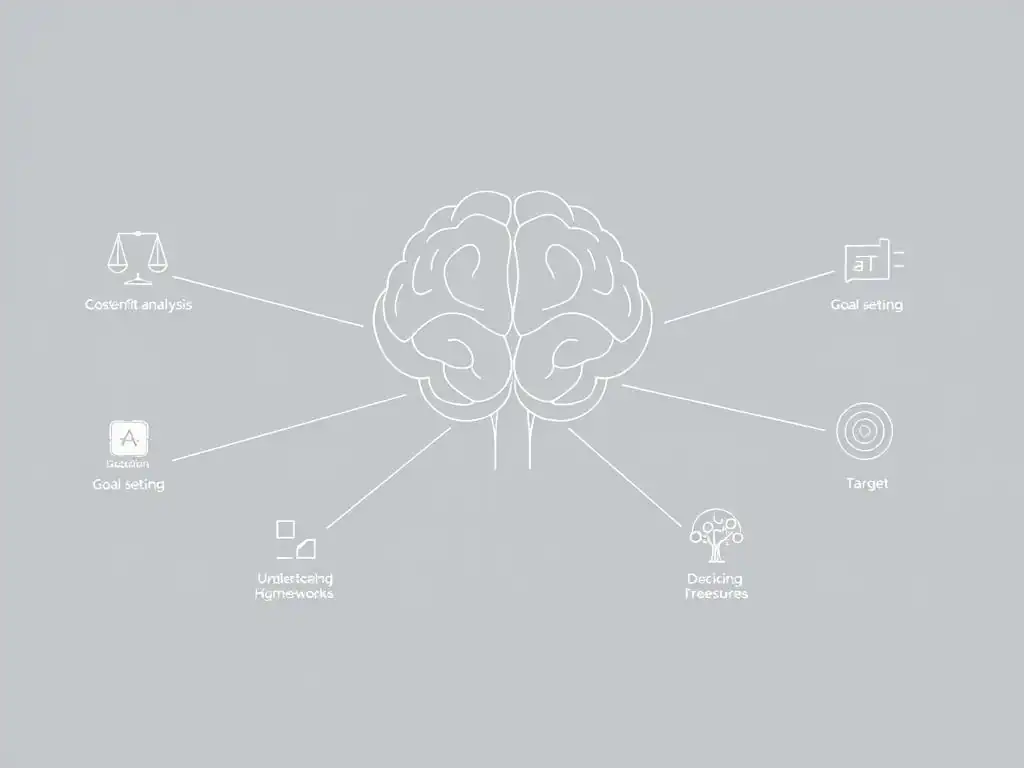
This section explores how to seamlessly integrate decision-making frameworks into your daily routines, transforming the way you approach choices, big or small. The key is not to rigidly apply a framework to every decision, but to strategically select the appropriate tool for the task at hand. Over time, you'll develop an intuitive sense of which framework best suits the context and complexity of your decision.
Integrating Frameworks into Your Workflow and Routine
Successfully implementing a decision-making framework requires more than just understanding the theory; it demands integration into your existing workflow and daily habits. This isn't about adding another task to your to-do list; it's about subtly weaving the framework's principles into your existing routines.
For example, if you've chosen the Eisenhower Matrix (urgent/important), you could dedicate a few minutes each morning to reviewing your tasks and categorizing them accordingly. This could be done alongside checking your emails or planning your day. Similarly, if you prefer the Cost-Benefit Analysis, you might create a simple spreadsheet or use a note-taking app to quickly jot down the pros and cons of significant decisions before making a commitment. The goal is to make the process as frictionless as possible, ensuring it becomes second nature.
Consider using visual aids. A whiteboard in your home office, a dedicated notebook, or even colorful sticky notes can help you visualize the decision-making process, making it more engaging and less daunting. The more accessible your chosen method, the more likely you are to consistently utilize it. Remember, consistency is key to reaping the benefits of any decision-making framework. Small, consistent efforts yield far greater results than sporadic, intense bursts of activity.
Utilizing Technology and Tools to Support Your Chosen Framework
Technology can significantly enhance the effectiveness of your chosen decision-making framework. Several apps and software programs are specifically designed to streamline the process, offering features that range from simple task management to sophisticated data analysis.
For instance, if you utilize the Decision Matrix, numerous spreadsheet programs (like Google Sheets or Microsoft Excel) allow for easy creation and management of weighted scoring systems. These tools automate calculations, allowing you to focus on the qualitative aspects of your decision. Similarly, project management software can be adapted to support frameworks like the Pareto Principle (80/20 rule) by prioritizing tasks based on their estimated impact.
Beyond spreadsheets, dedicated decision-making apps offer user-friendly interfaces and features tailored to specific frameworks. Some apps provide templates for various frameworks, helping you structure your thoughts efficiently. Remember to select tools that align with your preferred framework and your personal technological proficiency. Overly complex tools can become counterproductive, hindering rather than helping your decision-making process. The best tools are those that seamlessly integrate into your existing workflow without adding unnecessary friction.
Tracking Your Decisions and Analyzing Outcomes for Improvement
Continuous improvement is fundamental to effective decision-making. Tracking your decisions and analyzing the outcomes allows you to refine your approach, identifying what works and what doesn't. This iterative process is crucial for optimizing your use of any decision-making framework and developing a more intuitive and effective decision-making style.
Start by maintaining a log of your decisions. Note the framework used, the context of the decision, the factors considered, and, most importantly, the outcome. This detailed record provides invaluable data for future analysis. You can use a simple journal, a spreadsheet, or a dedicated app for this purpose.
After a period of time (e.g., a month or a quarter), review your decision log. Identify patterns and trends. Did a particular framework consistently lead to better outcomes? Were there instances where a different approach might have been more effective?
This retrospective analysis allows you to fine-tune your strategy, optimizing your framework selection and application. Remember, the goal is not perfect decision-making, but continuous improvement – learning from past experiences to make better choices in the future. This iterative process of tracking, analyzing, and adapting is what truly transforms your decision-making capabilities. The best "best decision making frameworks" are those that you consistently refine and improve based on your own unique experiences.
Refining Your Decision-Making Process Over Time
Refining your decision-making process is an ongoing journey, not a destination. What works brilliantly for one decision might be completely unsuitable for another. The key is continuous improvement and adaptation. This involves regular self-reflection and a willingness to adjust your approach based on outcomes. Don't be afraid to experiment with different frameworks and techniques to find the best fit for your personal style and the specific context of your decisions.
One effective strategy is to keep a decision journal. After making significant choices, document the process: the framework used, the information gathered, the potential options considered, the chosen path, and, crucially, the outcome. Analyzing these entries over time reveals patterns in your decision-making. You might discover biases you hadn't recognized, identify areas where you consistently gather insufficient information, or pinpoint frameworks that consistently lead to better results. This data-driven approach allows for personalized optimization.
Furthermore, seeking feedback is invaluable. After making a decision that impacts others, solicit their perspectives on the process and the outcome. Constructive criticism, even if initially uncomfortable, can highlight blind spots and areas for improvement. Were your assumptions accurate? Did you adequately consider all stakeholders' viewpoints? Did the chosen framework effectively weigh the various factors involved? Honest feedback provides external validation and helps refine your approach.
Remember, the goal isn't to eliminate mistakes entirely – that's unrealistic. Instead, aim to learn from each decision, both successful and unsuccessful. By systematically analyzing your choices and incorporating feedback, you can progressively hone your skills, making better and more informed decisions over time. This iterative process of learning and refinement is the cornerstone of effective and efficient decision-making. The best decision-making frameworks are those that you continuously adapt and improve upon, based on your unique experiences and learnings. This iterative process transforms decision-making from a daunting task into a skill honed through experience and self-awareness.
Advanced Decision-Making Techniques and Frameworks
This section delves into sophisticated decision-making frameworks that go beyond simple pros and cons lists. These techniques offer structured approaches to complex choices, enhancing your ability to make consistently sound judgments, even under pressure. Mastering these frameworks can significantly improve your cognitive efficiency and lead to better outcomes in both your personal and professional life. We’ll explore several powerful methods, focusing on their practical application and illustrating their benefits with real-world examples. This will equip you with the tools to become a truly effective and decisive individual, optimizing your decision-making processes and ultimately, achieving your goals faster.
Scenario Planning: Preparing for Multiple Possible Futures
Scenario planning is a powerful proactive approach that moves beyond simple prediction. Instead of focusing on a single likely outcome, it encourages you to envision multiple potential futures – both positive and negative – and develop strategies to address each. This approach is particularly useful in situations with high uncertainty, such as launching a new business, investing in a volatile market, or navigating complex geopolitical events.
The process typically involves:
- Identifying Key Drivers: Pinpointing the crucial factors that will shape the future. For example, for a new tech startup, key drivers might include market competition, technological advancements, and regulatory changes.
- Developing Scenarios: Creating plausible narratives based on different combinations of these key drivers. A tech startup might envision scenarios like "rapid market adoption," "slow market penetration," or "disruptive technological shift."
- Analyzing Scenarios: Assessing the potential impact of each scenario on the desired outcome. This might involve quantitative analysis (e.g., financial modeling) or qualitative assessment (e.g., expert interviews).
- Developing Strategies: Formulating flexible strategies that can adapt to different scenarios. The startup might develop different marketing approaches, product development plans, or funding strategies for each scenario.
- Monitoring and Adapting: Continuously monitoring the unfolding events and adjusting strategies as needed.
By preparing for various possibilities, scenario planning drastically reduces the impact of unexpected events and improves your ability to navigate uncertainty. For instance, a company using scenario planning might have a contingency plan in place for a sudden economic downturn, allowing them to weather the storm more effectively than their competitors who only considered a single, optimistic forecast.
Game Theory: Strategic Decision-Making in Competitive Environments
Game theory provides a framework for analyzing strategic interactions between multiple decision-makers. It helps understand how rational actors will behave in competitive situations, considering the actions and potential reactions of others. This is invaluable in negotiations, competitive bidding, or any situation where your choices are influenced by the actions of others.
Key concepts in game theory include:
- The Prisoner's Dilemma: A classic example illustrating the tension between individual rationality and collective well-being.
- Nash Equilibrium: A state where no player can improve their outcome by unilaterally changing their strategy, given the strategies of other players.
- Zero-Sum Games: Situations where one player's gain is exactly balanced by another player's loss.
- Non-Zero-Sum Games: Situations where the total gains and losses of all players do not necessarily sum to zero.
Understanding game theory allows you to anticipate the actions of competitors, make informed strategic choices, and increase your chances of success. For example, in a negotiation, understanding game theory can help you anticipate your counterpart's likely moves and develop a strategy that maximizes your outcome. A company launching a new product might use game theory to predict the competitive response and adjust its pricing and marketing strategies accordingly.
Bayesian Decision Making: Utilizing Probabilities for Informed Choices
Bayesian decision making uses probabilities to update beliefs and make informed choices in the face of uncertainty. It's a powerful tool for refining your decision-making process by incorporating new information as it becomes available. This iterative approach allows for continuous improvement and adaptation, leading to more robust and accurate conclusions.
The core of Bayesian decision making lies in Bayes' theorem:
P(A|B) = [P(B|A) * P(A)] / P(B)
Where:
- P(A|B) is the posterior probability of event A given event B.
- P(B|A) is the likelihood of event B given event A.
- P(A) is the prior probability of event A.
- P(B) is the prior probability of event B.
In simpler terms, Bayesian decision making starts with a prior belief (a guess), updates it with new evidence, and arrives at a refined posterior belief. For example, a doctor might start with a prior probability of a patient having a specific disease based on symptoms. After conducting tests (new evidence), they update their belief using Bayes' theorem to arrive at a more accurate diagnosis.
This approach is applicable across various fields, from medical diagnostics to financial forecasting, enhancing the accuracy and reliability of decision-making processes. The iterative nature of Bayesian updating allows for continuous learning and improvement, leading to more informed choices over time. This framework empowers you to make better decisions by quantifying uncertainty and systematically incorporating new information.
Frequently Asked Questions
What are decision-making frameworks?
Decision-making frameworks are structured approaches to help you make better choices. They provide a systematic way to analyze problems, evaluate options, and select the best course of action, ultimately improving your decision-making process. They help you avoid emotional biases and ensure a more rational outcome.
Why are decision-making frameworks important?
Frameworks are crucial because they bring clarity and objectivity to potentially complex situations. They reduce the likelihood of making impulsive or poorly-informed decisions, leading to better outcomes in both your personal and professional life. Using them increases your chances of success and reduces regrets.
Which decision-making framework is best for me?
The "best" framework depends on your specific needs and the complexity of the decision. Some popular options include the Cost-Benefit Analysis, Decision Matrix, and Eisenhower Matrix. Experiment to find what works best for your decision-making style.
How do I use a decision-making framework effectively?
Start by clearly defining the problem or decision. Then, gather relevant information, identify potential solutions, evaluate them using your chosen framework, and finally, select and implement the best option. Remember to monitor the results and adjust your approach as needed.
Where can I find more information on decision-making frameworks?
UltimateLifeHacks offers many resources on various decision-making frameworks. We provide practical guides and examples to help you implement these frameworks effectively in your daily life. Explore our website for more in-depth articles and tutorials!
Final Reflection: Mastering the Art of Decisive Action
The ability to make sound, informed decisions is not merely a skill; it's the cornerstone of a successful and fulfilling life. In a world overflowing with information and choices, the frameworks explored in this article provide a crucial roadmap for navigating complexity and achieving desired outcomes. These tools, far from being academic exercises, are practical instruments that can be immediately applied to enhance personal and professional lives.
The impact of effective decision-making extends far beyond individual success; it shapes our communities and the world around us. From the boardroom to the family dinner table, the choices we make ripple outwards, influencing everything from economic growth to social justice. As the saying goes, The quality of our lives is determined by the quality of our decisions.
This simple truth underscores the profound importance of developing and refining our decision-making processes, continually striving for greater clarity and understanding in our choices. The frameworks discussed here offer a starting point on this journey, a pathway towards more conscious and effective action.
Now, consider your own decision-making process. Are you relying on intuition alone, or are you employing strategies that leverage logic and critical thinking? This article has equipped you with several powerful tools; the next step is to actively integrate them into your life. Experiment with different frameworks, identify which resonates most with your personal style, and consciously apply these techniques to the decisions you face, both big and small. Embrace the power of informed choice, and watch as your ability to navigate life's complexities transforms into a source of strength and accomplishment.
Unlock Your Decision-Making Power Today!
Thank you for exploring the world of sharper decision-making! We hope you discovered valuable tools and insights to approach life's choices with greater confidence. Ready to apply your new knowledge?
- Put your favorite technique into practice immediately: Choose one technique from the article that resonates most with you and try it on a small decision today. Notice the difference!
- Share your results: Tell us (and others!) which technique worked best and how it affected your decision-making. Share your success story in the comments below!
- Challenge yourself further: This week, consciously apply a different technique to a significant decision. What new perspectives did you gain?
What decision will you tackle with newfound clarity today?