The Secret Language of Your Stress: Decoding Your Body's Signals for Relief
🤔 Learn to recognize your body's unique stress relief body signals—from muscle tension to rapid heartbeat—to proactively manage stress and boost productivity.…
Read article
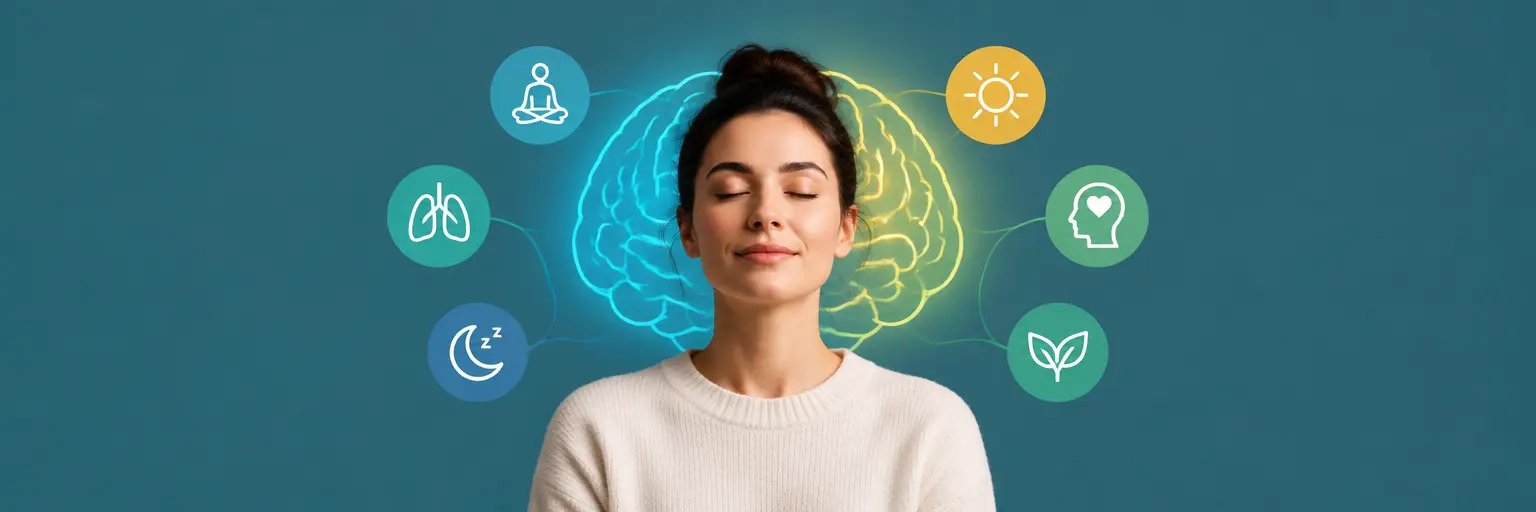
Unlock a calmer, sharper mind with psychological life hacks designed to slash stress and boost cognitive efficiency. These science-backed techniques go beyond surface-level advice, offering practical, actionable strategies to rewire your brain’s response to pressure. From quick breathing resets and cognitive reframing to sensory grounding and micro-meditation, you’ll learn how to lower cortisol, enhance focus, and reclaim mental clarity—even on chaotic days. Perfect for busy professionals, students, or anyone tired of feeling overwhelmed, these hacks integrate seamlessly into your routine, turning stressful moments into opportunities for emotional resilience and peak productivity. Transform your daily grind into a flow state, reduce burnout, and train your brain to stay calm under pressure—all while saving time and mental energy. Start mastering your inner world today.
🤔 Learn to recognize your body's unique stress relief body signals—from muscle tension to rapid heartbeat—to proactively manage stress and boost productivity.…
Read article
😊 Overwhelmed? Learn to reduce stress fast with psychology techniques beyond simple breathing exercises. This article reveals advanced mental strategies for immediate…
Read article
🤔 Drowning in endless thoughts? Learn effective stop overthinking anxiety techniques in our guide. Discover psychological tools to quiet your anxious mind,…
Read articleWelcome to the Psychological Life Hacks: Stress Reduction Techniques subcategory, part of our Cognitive Efficiency hub at UltimateLifeHacks. Here, we transform the science of calm into actionable, everyday micro-strategies. These aren’t just breathing exercises; they are cognitive reframes, environmental tweaks, and neural rewiring hacks designed to lower your cortisol spikes, sharpen focus, and reclaim mental bandwidth. Expect practical, evidence-based methods you can deploy in under five minutes, whether you’re stuck in traffic, facing a deadline, or lying awake at 2 AM. Let’s make stress a smaller part of your story.
Your body’s stress response peaks and chemically clears within about 90 seconds. The hack? Don’t fight the wave—ride it out with deliberate physiological signals. Instead of ruminating on the trigger, shift your attention to a single, boring physical anchor: your exhale. Place one hand on your chest, the other on your belly. Inhale for 4 counts, hold for 2, then exhale for 6 counts, pressing gently on your belly. Repeat this cycle exactly three times. This activates the vagus nerve, which sends a "safety" signal to your brain, effectively flipping the parasympathetic switch.
What you’ll gain from this technique is a reduction in perceived threat and a rapid drop in heart rate variability spikes. It’s not about eliminating stress but about shortening its half-life. Expect to feel a subtle lightness within 90 seconds, making it ideal for high-stakes meetings or before difficult conversations. The key is consistency: practice this daily for a week, and your baseline anxiety will noticeably lower because your brain learns that you have a reliable off-switch.
Stress often comes from how we label an event—not the event itself. The hack is a two-step linguistic reframe: swap “I am overwhelmed” for “I have a high-stakes problem to solve”, and swap “This is too much” for “This is a complex puzzle that rewards focus.” Neuroimaging shows that labeling an emotion with a single word (like “anxiety” or “pressure”) reduces amygdala activity by up to 30%. So, write down your stressor in one sentence, then rewrite it as a challenge statement: “I am nervous about the presentation” becomes “I am excited to share my findings with a curious audience.”
Expect this to feel awkward at first—your brain prefers the familiar groove of doom. But within two or three uses, you’ll notice a shift in energy from freeze to flow. This psychological hack works because it reallocates cognitive resources from threat-detection to problem-solving. Use it before a difficult email, a workout, or a creative block. The lasting benefit is that you train your default mode network to interpret ambiguity as opportunity, not danger, which is a core component of cognitive efficiency.
You don’t need a meditation cushion to reduce stress. The hack is to attach a mindfulness anchor to a high-frequency action: washing hands, waiting for a coffee brew, or unlocking your phone. When you perform that action, do it with full sensory focus. For example, while waiting for your morning coffee, feel the warmth of the mug, listen to the drip, and smell the beans for exactly 15 seconds. This interrupts the default mode network responsible for rumination. Another anchor is the "5-4-3-2-1" ground: name 5 things you see, 4 you can touch, 3 you hear, 2 you smell, and 1 you taste.
By doing this, you train your brain to break the autopilot stress loop. Each anchor acts as a circuit breaker between a stress trigger and your habitual reaction. Expect greater emotional regulation within a week, especially if you use anchors during transitions—from work to home, or from bed to standing. The beauty is its invisibility: no one knows you’re de-escalating your nervous system while you’re just staring at a wall. Over time, these micro-pauses compound, lowering your baseline cortisol and making you less reactive to external chaos.
Constant notifications are cortisol machines. The hack is to create asynchronous tech boundaries that reduce passive stress. Start with the "phone on airplane mode during meals and the first/last 30 minutes of sleep" rule. Next, batch-check emails and messages only three times a day (e.g., 10 AM, 2 PM, 5 PM). Disable all non-human notifications (news, social likes) and keep your phone face-down with grayscale display. This lowers visual stimulation, which is a direct stressor. Use a dedicated physical timer for work blocks instead of your phone’s clock.
Expect a significant reduction in fragmented attention, which is a primary driver of chronic stress. You’ll also notice fewer "false alarms" that spike your sympathetic nervous system. The key is to make these boundaries non-negotiable for a 21-day cycle. After that, your brain associates checking your phone with intentional choice, not compulsive urge. This hack doesn’t just reduce stress; it frees up cognitive capacity for deep work, directly improving your overall efficiency and mood stability.
Stress often stems from poor sleep, and poor sleep worsens stress. The hack is to stack three calming cues 45 minutes before bed: dim lights to 30% brightness, lower your room temperature to 65°F (18°C), and engage in a 5-minute "brain dump" journaling session. Write down every worry, task, or idea that’s swirling in your mind. Then, close the notebook and place it outside your bedroom. This signals your brain that the "open loops" are safely stored for tomorrow. Pair this with a warm shower (which drops your core temperature after) and a consistent sleep-wake time.
Expect to fall asleep faster and experience deeper slow-wave sleep, which is your brain’s reset button for cortisol. This hack works because it removes the cognitive load of unfinished tasks and aligns your circadian rhythm. Within three days, you’ll notice less evening anxiety. Within two weeks, your morning stress will decrease because your sleep architecture is repaired. The cumulative effect is a more resilient nervous system, making daytime stress less sticky and easier to release.
Immediate physiological shifts (like lower heart rate) happen in 90 seconds to 5 minutes. However, for baseline anxiety reduction, expect 3–7 days of consistent practice. For lasting neural rewiring, commit to 21 days. The 90-second flush gives instant relief, while digital boundaries show noticeable calm within a week.
No. Pick one or two that resonate most. The 90-second cortisol flush and the pre-bed brain dump offer the highest return on effort. You can rotate others weekly. Consistency matters more than quantity—even one daily micro-habit rewires your stress response.
No, they are complementary, not replacements. If you have chronic anxiety, panic attacks, or depression, consult a licensed professional. These hacks help manage everyday stress and enhance coping but do not address underlying clinical conditions. Use them as part of a broader self-care toolkit.
That’s normal. The goal isn’t perfection. When you realize you’re stressed, do one slow exhale longer than your inhale. That single breath can interrupt the cycle enough to buy you time to find a quiet corner. Over time, remembering becomes more automatic.
Absolutely. The micro-mindfulness anchors and brain dump are particularly kid-friendly. For parents, the digital boundary hack (airplane mode during family meals) reduces household stress. Teens can benefit from the challenge reframe before exams. All techniques require no special tools and under 5 minutes, making them ideal for chaotic schedules.