Deep Work for Beginners: A StepbyStep Guide to Enhanced Concentration
🤔 Unlock your focus with our beginner's guide to deep work! This step-by-step guide provides practical techniques to enhance concentration and boost…
Read article
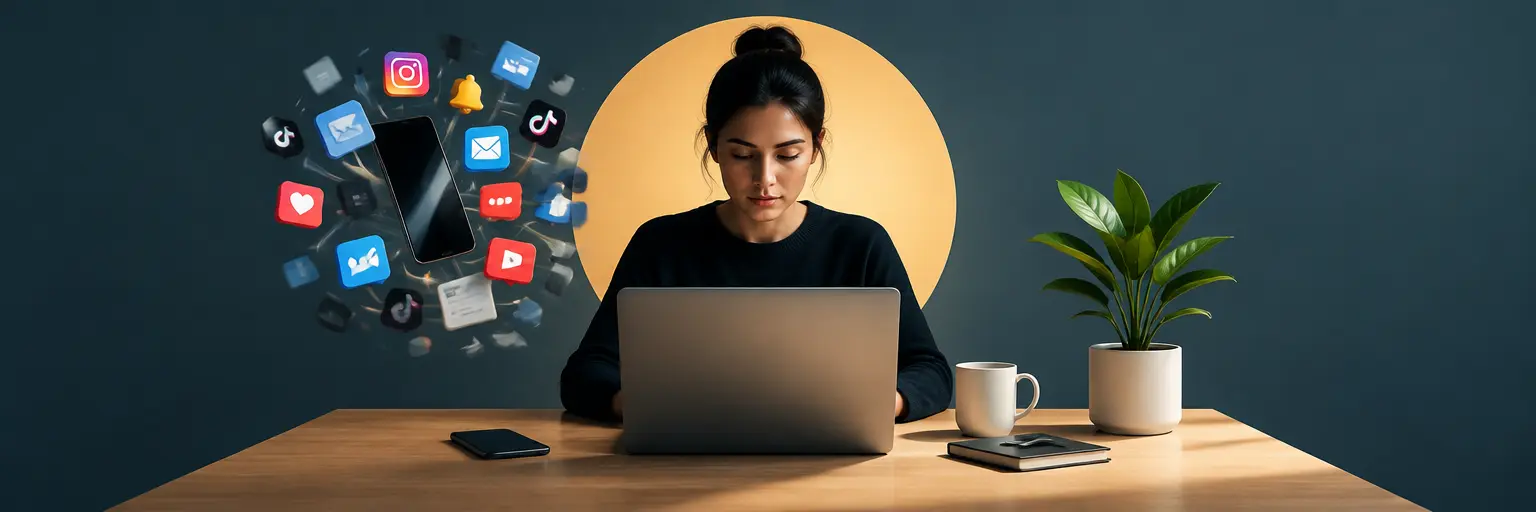
In an era of endless notifications, infinite tabs, and relentless pings, deep work has become a rare superpower. If you’ve ever felt your attention span shrinking or your best hours swallowed by scrolling, you’re not alone. The art of focus isn’t about willpower; it’s about strategy. Digital minimalism isn’t just decluttering your apps—it’s reclaiming your cognitive space. By adopting deep work strategies, you can train your brain to enter a state of flow, shut out digital noise, and produce higher-quality results in less time. This means setting strict boundaries for device use, batch-checking emails, and designing distraction-free zones that protect your mental energy. Whether you’re a remote worker, student, or creative, mastering sustained attention boosts both productivity and inner calm. Stop fighting your environment and start structuring it—because every notification you silence is a step toward sharper thinking and more intentional living. Your brain deserves a break from the buzz. Dive into these focus-boosting hacks and turn your scattered minutes into meaningful breakthroughs. 🧠⚡
🤔 Unlock your focus with our beginner's guide to deep work! This step-by-step guide provides practical techniques to enhance concentration and boost…
Read article
🤔 Drowning in tasks? Unlock unparalleled productivity with proven deep work productivity techniques. This article reveals how focused, uninterrupted work dramatically boosts…
Read articleIn an era of endless notifications, infinite scrolling, and constant digital interruptions, maintaining deep focus has become one of the most valuable—and rare—skills. This subcategory of Digital Minimalism at UltimateLifeHacks is dedicated to helping you reclaim your attention span and master the art of deep work. Here, you’ll find science-backed strategies, practical routines, and intentional tech habits to eliminate distractions, boost cognitive performance, and achieve meaningful output in less time. Whether you’re a remote worker, student, or creative professional, these insights will transform how you approach your most demanding tasks. Get ready to silence the noise and unlock your brain’s full potential.
Understanding the neurological mechanics behind distraction is your first step toward regaining control. Every ping, pop-up, or tab switch triggers a small release of dopamine, the brain’s reward chemical, reinforcing the habit of checking. This subcategory dives into research on attention residue—the mental cost of switching tasks—and explains why multitasking is a myth that drains efficiency by up to 40%. You’ll learn about the prefrontal cortex’s limited capacity and how digital noise exhausts it, leaving you feeling busy but unproductive.
By seeing distraction as a biological response rather than a personal failure, you can design environments that reduce temptation. We provide actionable techniques like single-tasking blocks, notification fasting, and cognitive load management to rewire your habits. Expect practical experiments to measure your current attention baseline, then apply targeted fixes—like moving your phone to another room or using grayscale mode—to cut interruption frequency in half within just one week. These insights are the foundation for every deep work strategy that follows.
A deep work ritual is a repeatable, structured routine that signals your brain it’s time to enter a state of flow. This subcategory guides you step-by-step through creating your own personalized ritual—from choosing a consistent time and place to setting a clear, defined objective for each session. You’ll learn about the 90-minute ultradian rhythm and why breaking work into focused sprints with intentional rest is more sustainable than marathon sessions. We also cover the importance of a warm-up activity (like journaling or a short meditation) to transition your mind away from casual browsing.
Your ritual must also include digital boundaries: turning off Wi-Fi, using a dedicated distraction-free writing app, and blocking social media sites via browser extensions. We provide sample rituals for various personality types—whether you thrive on morning silence or late-night quiet. You’ll also find a checklist to audit your current workspace for visual and auditory clutter. By committing to a ritual for 14 days, you’ll train your brain to associate certain cues with deep concentration, making it easier to dive into complex tasks without internal resistance or external pushes.
Not all digital tools are enemies of focus. This subcategory helps you distinguish between constructive and destructive technology, curating a shortlist of apps and extensions that actively support deep work. For instance, we recommend Freedom or Cold Turkey to block distracting sites, Forest to gamify focus sessions, and Notion or Obsidian for distraction-free note-taking. You’ll also learn how to configure your phone’s Focus Mode on iOS or Digital Wellbeing on Android to silence non-essential alerts during work hours, ensuring only priority contacts break through.
Beyond blocking, we explore ambient sound apps (like brain.fm or Noisli) that use binaural beats or white noise to enhance concentration, and time-tracking tools (like Toggl or RescueTime) to give you data on where your hours actually go. We also warn you against “productivity” apps that create more friction than value. Each recommendation includes setup steps, cost-free alternatives, and integration tips with your existing workflow. By using these tools intentionally—rather than endlessly searching for a magic fix—you’ll create a sustainable digital environment that protects your attention instead of fragmenting it.
Deep work isn’t just about external environment; it’s also about internal mental training. This subcategory introduces cognitive strategies to strengthen your executive function and enter flow states more frequently. You’ll learn about the Attention Residue Reduction technique—writing down lingering thoughts before starting a task—to clear mental RAM. We also cover the Pomodoro 2.0 method, which adapts the classic 25-minute sprints to your personal concentration curve, and the “worst-first” approach, where you tackle your most demanding task at your peak energy hour.
Meditation, even as little as five minutes daily, is proven to increase grey matter density in attention-related brain regions. We provide guided mini-meditations specifically designed for busy professionals, along with mindful breathing exercises to reset after every interruption. Additionally, you’ll understand how to use implementation intentions—if-then plans like “If I feel the urge to check email, I will take three deep breaths instead”—to break automatic distraction loops. These mental hacks compound over time, making deep focus your default state rather than a forced effort, and they sync perfectly with your digital minimalism journey.
A deep work strategy fails without a deliberate schedule. This subcategory teaches you how to audit your energy levels across the day and align difficult tasks with your biological peaks—whether you’re an early bird or a night owl. You’ll learn the time-blocking method, where you reserve 2-3 “deep work” blocks on your calendar (e.g., 9-11 AM and 4-6 PM) and treat them as unmissable appointments. We show you how to communicate these blocks to colleagues and family, using tools like shared calendars and status indicators to minimize interruptions even in open-office settings.
You’ll also discover the art of strategic laziness: scheduling rest, daydreaming, and shallow tasks (like emails or admin) in between deep blocks to prevent burnout. We provide templates for weekly planning that allocate 20-30% of your time to deep work, which many experts consider the sweet spot for high output. Additionally, we cover the concept of shutdown rituals—like making a to-do list for tomorrow—so you can mentally disconnect after work hours. By intentionally carving out protected windows and respecting them, you turn deep work from a rare accident into a reliable daily habit that transforms your productivity and satisfaction.
Deep work refers to undistracted, cognitively demanding tasks that push your abilities to create new value, like writing a report or coding a feature. Normal focus involves lighter tasks like replying to emails or organizing files, which don’t require sustained concentration. Deep work is rarer and more draining, but it produces higher-quality output and often leads to a flow state.
Most experts recommend 60 to 90 minutes per session, aligning with your body’s ultradian rhythms. Beginners may start with 25-30 minutes using a Pomodoro timer, gradually increasing as your attention span strengthens. Always include a 10-15 minute break after each session to consolidate learning and prevent mental fatigue. Consistency matters more than marathon length.
Yes, but choose wisely. Lyrics can interfere with language-based tasks, so use instrumental music, ambient sounds, or binaural beats. Some people thrive in complete silence, while others benefit from café-style noise (like coffee shop loops). Experiment to find what matches your task type and personal preferences. The key is that the noise remains constant and non-disruptive.
Set your phone to Do Not Disturb or Focus mode, and let trusted contacts know your deep work schedule via an auto-reply. For truly urgent matters, place your phone face-down but within reach, and schedule a “check-in” break every 90 minutes. Most interruptions are not truly urgent—they can wait. If you fear missing something critical, use a second device or a shared calendar for emergencies.
Not necessarily. Digital minimalism advocates for intentional, schedule-based use rather than total abstinence. You can keep social media if it adds value, but limit it to specific times (e.g., 30 minutes in the evening) and turn off all push notifications. The goal is to reduce passive scrolling and reclaim your attention for deep work. Many users find that a short “digital detox” period helps reset cravings.