The Pomodoro Technique: A Powerful Tool for Enhanced Focus
🤔 Boost your focus and conquer procrastination with the Pomodoro Technique! This powerful time management method, structured around focused work intervals and…
Read article
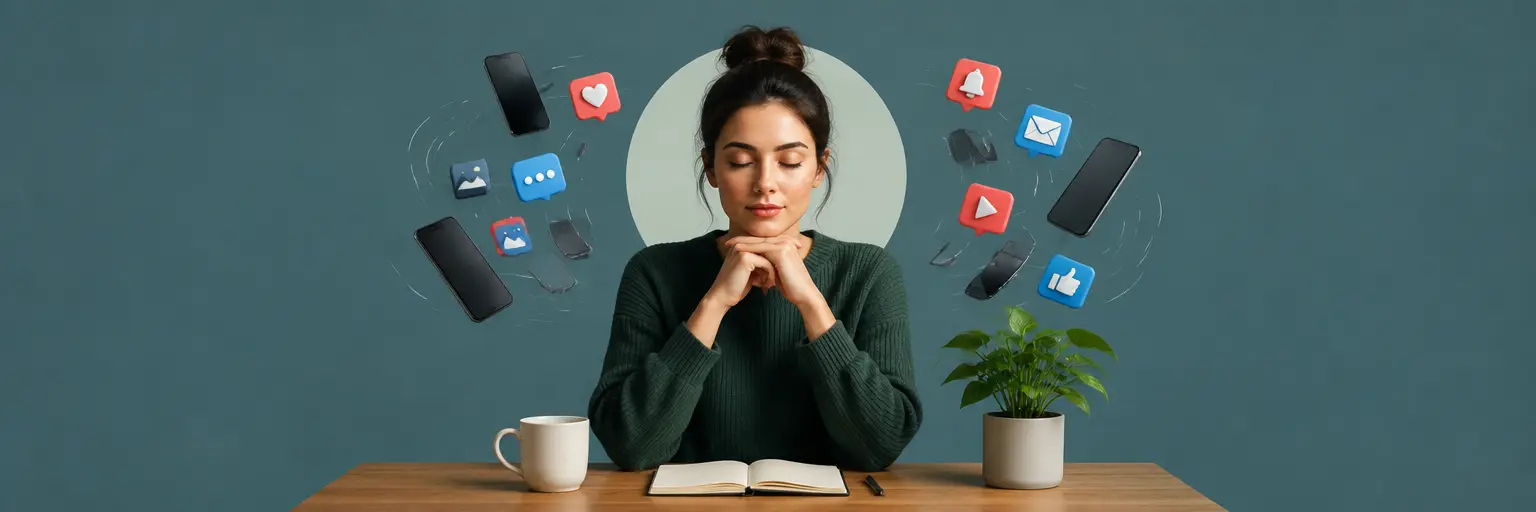
In a world buzzing with endless notifications, infinite scrolls, and constant digital noise, reclaiming your focus has become the ultimate productivity superpower. 🧠✨ This guide dives deep into the science and practical strategies of attention management, helping you break free from distraction loops and train your brain for deep, meaningful work. Learn how to master your environment, use technology as a tool—not a master—and implement simple yet powerful digital minimalism techniques that boost concentration, reduce mental fatigue, and restore your ability to stay present. Whether you’re battling social media pulls, email pings, or multitasking traps, these actionable insights will help you build a sustainable, calm, and highly efficient workflow in our hyperconnected era. Say goodbye to scattered thoughts and hello to laser-sharp clarity. 🚀💡

🤔 Boost your focus and conquer procrastination with the Pomodoro Technique! This powerful time management method, structured around focused work intervals and…
Read article
🤔 Conquer procrastination and boost productivity with this simple timer hack! Strategic timeboxing, detailed in this article, helps you focus your energy…
Read article
🤔 Reclaim your focus! This article unveils powerful techniques to conquer distractions and significantly improve focus, boosting productivity and optimizing your daily…
Read article
🤔 Stop wasting time now by eliminating constant context switching. Multitasking is a myth; focused attention on single tasks dramatically boosts productivity…
Read article
🤔 Conquer digital distractions and reclaim your productivity! This guide provides practical strategies to master digital age focus, boosting efficiency and optimizing…
Read articleIn an era of endless notifications, infinite scroll, and constant digital interruptions, your ability to focus has become your most valuable competitive advantage. This subcategory of Digital Minimalism on UltimateLifeHacks dives deep into the science and practical strategies for reclaiming your attention from the grip of smartphones, social media, and algorithmic feeds. You’ll learn actionable life hacks to build deep work rituals, reduce digital noise, and train your brain for sustained concentration—turning your scattered attention into a laser-focused productivity tool.
Understanding the biological basis of distraction is the first step toward overcoming it. Your brain is wired to seek novelty and instant rewards—a mechanism that apps and platforms exploit through variable reward schedules. Every notification triggers a small dopamine spike, reinforcing the urge to check your phone, even when you know it’s unproductive. This constant switching between tasks fatigues your prefrontal cortex, impairing working memory and decision-making.
By recognizing these neural patterns, you can begin to design your environment to reduce temptation. Simple life hacks like turning off non-essential alerts, using grayscale mode on your phone, or blocking distracting websites during work hours help your brain rewire itself for deeper focus. Over time, you’ll notice a significant drop in mental fatigue and a rise in your ability to enter flow states, where tasks feel effortless and highly productive.
A cluttered digital environment mirrors a cluttered mind. Start by auditing your apps, email subscriptions, and social media follows—unsubscribe from anything that doesn’t add tangible value to your life. This is not about total abstinence, but strategic curation. Move essential apps off your home screen, group similar ones into folders, and delete any app that you haven’t used in the past month. This reduces visual noise and makes your device a tool, not a distraction.
Next, implement a “notification quarantine.” Set specific times during the day to check emails and messages, and disable all push notifications except for true emergencies. Use website blockers like Freedom or Cold Turkey during deep work sessions. By aggressively reducing digital clutter, you free up mental bandwidth for more meaningful activities, improving both your professional output and personal well-being. This is a foundational life hack that supports every other productivity strategy you use.
Deep work—the ability to focus without distraction on cognitively demanding tasks—is a superpower in today’s economy. To cultivate it, create a daily ritual that signals your brain it’s time to enter deep work mode. This could include a physical trigger like closing your office door, putting on noise-cancelling headphones, or brewing a specific type of tea. Time-block your calendar for 60–90 minute sessions, treating them as non-negotiable appointments with yourself, not with your email inbox.
During these blocks, work on a single, well-defined task. Use a physical timer or a digital app to track your progress, and take short breaks between sessions to recharge. Adopt the “rule of three” for your daily priorities: choose three outcomes you absolutely must achieve, and dedicate your most alert hours to them. This eliminates decision fatigue and ensures that your attention goes where it matters most, transforming your daily routine from reactive to proactive.
Your attention is a finite resource, and just like a muscle, it needs regular recovery. The Attention Restoration Theory (ART) suggests that spending time in nature or engaging in soft fascination activities—like walking, gardening, or listening to ambient music—allows your directed attention to rest and replenish. Incorporate micro-breaks into your workday, stepping away from screens every 90 minutes for five minutes of quiet gazing or simple stretching.
Additionally, practice intentional boredom. Allow yourself to wait in line or ride public transport without reaching for your phone. This trains your mind to tolerate mental stillness, reducing the urge to seek constant stimulation. You’ll find that these short periods of boredom often become fertile ground for creative problem-solving and spontaneous insights, making them a valuable life hack for anyone looking to boost both focus and innovation.
What gets measured gets managed. Use digital wellbeing tools like Apple’s Screen Time, Android’s Digital Wellbeing, or third-party apps like RescueTime to gain objective data on your phone and computer usage. Track metrics such as daily pickups, hours spent on social media, and the number of distractions you encounter. Set weekly goals to reduce these numbers by 10–20%, and celebrate your wins, no matter how small.
Beyond passive tracking, keep a focus journal where you note your energy levels, task completion rates, and moments of peak concentration. Over time, you’ll identify patterns—for example, that you focus best in the morning or after exercise. Use this data to schedule high-value tasks during your personal peak times. This evidence-based approach turns the abstract goal of “being more focused” into a concrete, achievable process, empowering you to take full control of your attention in the digital age.
It generally takes about 2 to 4 weeks of consistent practice to notice significant improvements in your attention span. Your brain needs time to form new habits and weaken old neural pathways. Start with small digital decluttering steps, like turning off notifications for 2 hours daily, and gradually increase the duration. Consistency is more important than intensity—even 20 minutes of deep work daily will yield noticeable benefits within a month.
Yes, meditation is one of the most effective training tools for attention. Even 10 minutes of daily mindfulness meditation strengthens your prefrontal cortex and improves your ability to notice when your mind wanders, allowing you to redirect it faster. This translates directly to digital focus—you’ll catch yourself reaching for your phone and pause, returning to the task at hand. It’s a low-cost, high-return life hack that complements all other digital minimalism strategies.
No, complete deletion is not required. The goal is to reduce friction and reclaim intentionality. Keep only the platforms that genuinely serve your personal or professional life, and access them via a web browser instead of the app to add an extra step. Additionally, set a daily time limit (e.g., 20 minutes) using your phone’s built-in app timers. This way, you stay connected without letting social media hijack your attention throughout the day.
The single most effective trick is to keep your phone out of sight and out of reach during focused work. Place it in another room, a drawer, or a locking bag for the duration of your deep work session. Research shows that even the mere presence of your phone, even if it’s off, reduces your cognitive capacity. By physically distancing yourself from the device, you eliminate the trigger for impulsive checks, enabling far deeper concentration.
Communicate your focus times clearly with colleagues using shared calendars or status indicators like “In deep work, email replies at 2 PM.” Batch all internal messaging checks to specific times, and use an auto-responder for emails and chat apps. If interruptions are truly urgent, schedule a brief 5-minute check-in every hour, but ensure that the majority of your workday belongs to your predefined focus blocks. This proactive approach turns chaos into a structured, manageable flow.