Escape the Digital Noise: A Guide to Finding Peace Through a Tech Detox
😊 Overwhelmed by digital distractions? This practical guide offers a proven digital detox plan to reclaim your peace and boost productivity. Discover…
Read article
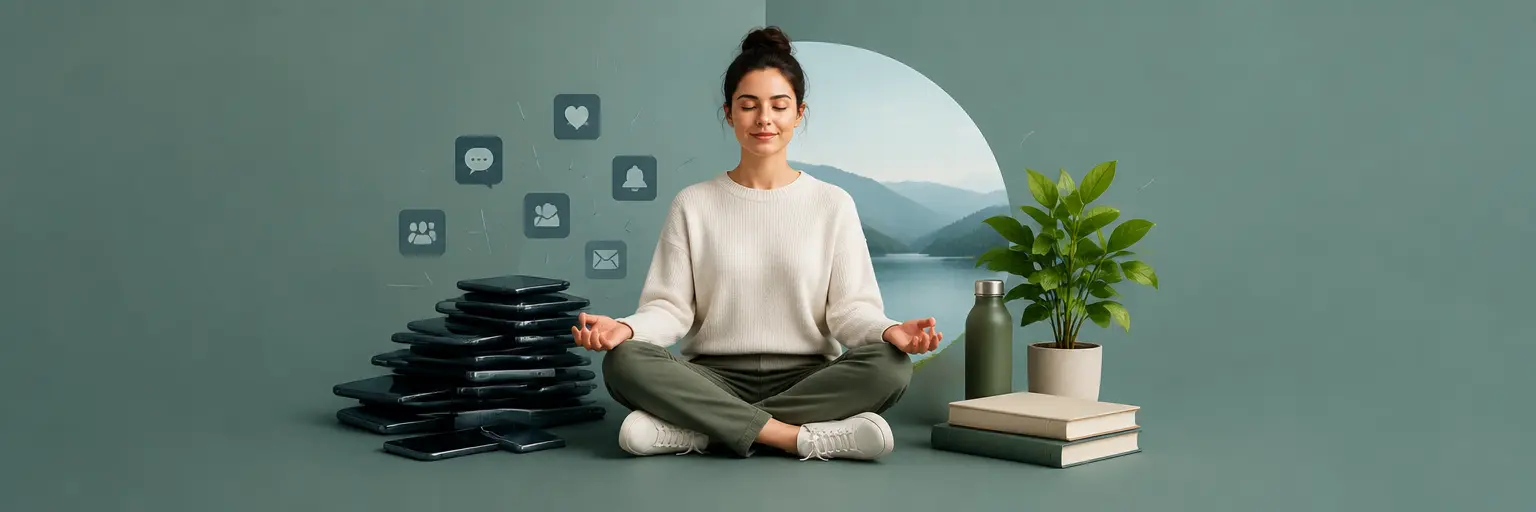
Escape the digital noise and reclaim your focus with proven Tech Detox Strategies that cut through constant notifications, endless scrolling, and screen fatigue. In a world built for distraction, these actionable techniques help you reset your attention span, reduce mental clutter, and boost real-world productivity. From screen-free mornings to app-blocking routines and digital sunset rituals, you’ll learn how to intentionally use technology—without letting it use you. Perfect for busy professionals, students, or anyone feeling overwhelmed by their devices, these strategies are designed to restore balance, improve sleep quality, and sharpen your decision-making. Discover how small, consistent changes—like notification batching or phone-free zones—can lead to massive gains in time and energy. Start your digital declutter today and turn your screens from a source of stress into a tool for success. ✨📵

😊 Overwhelmed by digital distractions? This practical guide offers a proven digital detox plan to reclaim your peace and boost productivity. Discover…
Read article
🤔 Reclaim your focus and mental clarity! This article reveals practical techniques to reduce digital distractions, boosting mind focus and productivity through…
Read article
😊 Escape the digital deluge! A tech detox can dramatically improve wellbeing. Rediscover focus, reduce stress, and boost productivity by unplugging and…
Read article
😊 Reclaim your time and mental energy! This article reveals practical strategies to declutter your digital life efficiently, eliminating unnecessary apps, files,…
Read article
🤔 Escape the digital whirlwind! Our guide explores how a tech detox cultivates self-awareness, boosting introspection and revealing hidden potential. Discover the…
Read article
😊 Reclaim your time and focus! Our curated guide provides essential tech detox app recommendations and resources to help you disconnect and…
Read article
😊 Escape the digital frenzy and rediscover focus! My personal digital detox revealed surprising productivity gains. Unplugging significantly boosted concentration and efficiency,…
Read articleIn our hyper-connected world, constant notifications, infinite scrolling, and digital overload can silently erode your productivity, sleep, and mental clarity. Tech detox strategies are deliberate, actionable methods to reduce screen time, break compulsive phone checking, and create healthier boundaries with devices. This subcategory within Digital Minimalism on UltimateLifeHacks focuses on practical, time-efficient steps you can implement today—without going off-grid or losing professional connectivity. Whether you aim to reclaim mornings, improve deep work sessions, or simply feel less anxious, these strategies are designed to integrate seamlessly into your busy routine. Expect science-backed approaches, quick wins, and sustainable habits that optimize your daily energy and attention span.
A full digital sabbath may sound impossible, but a structured 24-hour micro-detox is your most effective starting point. This strategy involves scheduling one day (or even just 12 hours) where you put your phone in a drawer, use a physical alarm clock, and pre-plan analog activities like hiking, cooking, or reading a paperback. The key is to inform close contacts in advance and replace screen time with high-sensory, offline activities that naturally fill your hands and mind. During this period, you will likely experience initial boredom—that is the detox working. Afterward, you’ll notice a dramatic drop in the urge to check social media, making it easier to implement daily limits.
For maximum success, prepare by downloading entertainment to a separate device (e.g., an e-reader without notifications) or print a day’s itinerary. Avoid using this micro-detox as a “productivity catch-up” day—instead, focus on rest and play, as the goal is to reset your dopamine baseline. Many users report better sleep the following night and a 30% increase in morning focus. If a full day feels too big, try a 4-hour “no screen before noon” rule on a weekend. Consistency beats intensity: one micro-detox per week builds a sustainable habit without creating schedule chaos.
Willpower is a finite resource, so the smartest tech detox strategy is to remove friction from distractions and add friction to temptations. Start by turning off all non-essential notifications—keep only calls and messages from key people (family, direct boss). Then, use built-in screen time controls or apps like Freedom, OneSec, or Opal to block social media, news, and email during your deep work hours (e.g., 8 AM to 6 PM). Set up “allowlist” apps (calendar, maps, messaging) and make every other app require an extra step to open, such as a 10-second wait or typing a phrase. This small delay disrupts the autopilot habit loop of checking Instagram or Reddit.
Go further by deleting the most addictive apps entirely from your phone and accessing them only via a tablet or desktop browser. For instance, remove YouTube and Twitter from your mobile, keeping them on a device that stays in another room. Schedule two “notification windows” per day—mid-morning and late afternoon—where you batch-check all non-urgent apps. Within one week, most users report a 40% reduction in daily pickups and a significant drop in “phantom vibration” syndrome. The goal is not to eliminate all tech but to train your brain that your device is a tool, not an entertainment center.
Dopamine fasting, popularized by Silicon Valley executives, involves intentionally avoiding high-reward digital inputs (social media, video games, news, even music) for a set period—typically a few hours each morning or one full day weekly. The scientific premise is that constant novelty and variable rewards desensitize your dopamine receptors, making boring but essential tasks—like writing reports or cleaning—feel painfully dull. By fasting from these stimuli, you reset your reward sensitivity, so monotasking and deep work become naturally satisfying. A practical starting point: keep your phone in airplane mode from dinner until breakfast, and do not listen to podcasts while commuting—instead, sit in silence and observe your thoughts.
You don’t need a full 24-hour fast to see benefits. Try a “low-dopamine morning” routine: wake up, drink water, stretch, and tackle your hardest task for 90 minutes before any screen time. Avoid checking email or social media until that deep work block is complete. Many users report feeling more bored initially, but by day three, they regain pleasure in simple activities like walking or cooking. Pair dopamine fasting with a gratitude log or a short meditation to fill the void. Over time, this strategy not only reduces screen hours but also improves your ability to delay gratification, a cornerstone of productivity and time optimization.
Scrolling late at night is arguably the most damaging tech habit, as blue light suppresses melatonin and alerting content keeps your mind racing. A robust tech detox strategy is to establish a digital sunset—a fixed time (e.g., 9 PM) when all screens are turned off or put into “do not disturb” mode until the next morning. Use this window to wind down with analog rituals: gentle stretching, journaling, reading a paper book under a warm light, or preparing the next day’s outfit. Charge your phone outside the bedroom—buy a dedicated alarm clock and keep a notepad by your bed for intrusive thoughts. If you must use a device, switch to grayscale mode and dim the brightness to the lowest setting.
This boundary does more than improve sleep; it dramatically reduces early-morning anxiety spikes. Without that first “scroll hit,” you’ll avoid starting your day with other people’s opinions and news. To make the transition easier, set a reminder on your phone 15 minutes before sunset that says “Begin shutdown ritual.” After two weeks, most people report falling asleep 20-30 minutes faster and waking up more refreshed. For extra effectiveness, physically relocate your router or use a timer plug to cut Wi-Fi to non-essential devices at night. This is a low-effort, high-yield habit that directly supports your productivity and mental clarity the next day.
Your phone’s home screen is a doorway to anxiety—every icon is a tiny distraction waiting to happen. Start a digital declutter by moving all social media, news, and shopping apps into a folder named “crack” and place it on the second home screen. Then, switch your phone to grayscale mode (Settings → Accessibility → Display). Removing color makes apps visually unappealing, cutting the time you spend in them by up to 50%. Next, purge unused apps, unsubscribe from promotional emails, and turn off website notifications for everything except critical alerts. The goal is to make your device a pure function provider—camera, maps, messaging, calendar—not a casino of red dots and badges.
Beyond your phone, extend this to your laptop: hide desktop icons, bookmark toolbars, and browser extensions that block distracting sites (e.g., LeechBlock or WasteNoTime). Use a single-tab rule for all work tasks to prevent tab-switching chaos. Once your digital environment is visually flat, your brain stops expecting novelty, and you’ll feel an odd but pleasant calm. Many users find that grayscale plus decluttering reduces total screen time by 30-40% within one week, without any conscious willpower. Combine this with a weekly “digital trash day” (10 minutes every Sunday) to prune new subscriptions and archives.
Even a single 24-hour detox can reset sleep and reduce compulsive checking. For lasting changes in focus and anxiety, aim for at least three consecutive days once a month, or practice daily micro-boundaries like no screens after 9 PM. Neuroplasticity suggests that three weeks of consistent rules will rewire your habits, making the detox feel effortless. Start with one weekend and evaluate—most people notice a 40% drop in stress within 48 hours.
No, if you communicate clearly. Set up “emergency bypass” in your phone settings to allow calls from trusted contacts (e.g., spouse, boss, children’s school) even during detox periods. For work, use an autoplay or auto-response email that says you’re currently offline and will reply within X hours. Keep a backup device (like a dumb phone or basic tablet) for calls and texts. Being transparent with colleagues reduces anxiety and proves that most digital interactions are not urgent.
Beginners should start with three instant wins: turn on grayscale mode, delete the top 3 most-used apps from your phone, and move your charger out of the bedroom. Then, schedule one 2-hour “no-screen block” each day, preferably during your most productive morning hours. Track your screen time on Day 1 and Day 7 to see the difference. These micro-actions require no planning and deliver immediate results, building confidence for more advanced strategies like weekend detoxes.
Podcasts and audiobooks are acceptable if they are not your primary distraction and don’t trigger endless browsing. However, for pure dopamine reset, replace them with silence or nature sounds during walks and commutes. If you must listen, use a dedicated music app and pre-download episodes so you don’t open cluster apps. The key is to avoid algorithms that suggest endless related content. A good rule: consume only pre-saved content, and never use a podcast app while performing other screen tasks.
Motivation fades because you’re focusing on restriction rather than gains. Keep a simple “detox journal” listing three concrete wins each day—e.g., “read 10 pages,” “focused 2 hours without checking email,” “felt less jittery.” Also, pair your detox with a fun offline hobby (puzzles, gardening, sketching) that you only allow during detox periods. Use an accountability partner or a habit tracker to maintain streaks. Remind yourself that digital minimalism isn’t about missing out—it’s about being more present for the life you actually want.