
Conquer Decision Paralysis: Proven Hacks for Swift, Confident Choices


Feeling stuck in the quicksand of indecision? UltimateLifeHacks is your escape. We're dedicated to providing practical, actionable strategies for a more efficient and fulfilling life. Discover proven methods to overcome decision paralysis quickly, boosting your productivity and reclaiming your time. Dive in and unlock the secrets to making confident choices – your optimized future awaits!
- Understanding Decision Paralysis: Recognizing the Symptoms
-
Overcome Decision Paralysis Quickly: Practical Strategies
- The Power of Time Limits: Setting Deadlines for Decisions
- The Two-Minute Rule: Tackling Small Decisions Instantly
- Prioritization Techniques: Focusing on What Truly Matters
- The Eisenhower Matrix: Urgent vs. Important Task Management
- Eliminating Distractions: Creating a Focused Decision-Making Environment
- Swift Decision-Making Techniques: Boosting Your Confidence
- Overcome Decision Paralysis Quickly: Advanced Strategies
- Maintaining Momentum: Preventing Future Decision Paralysis
- Frequently Asked Questions
- Final Reflection: Embracing the Power of Choice
- Unleash Your Decision-Making Power!
Understanding Decision Paralysis: Recognizing the Symptoms
Decision paralysis, that agonizing feeling of being stuck in a loop of endless deliberation, affects us all at some point. It's the frustrating inability to make even seemingly simple choices, leading to procrastination, stress, and ultimately, missed opportunities. This comprehensive guide delves into the core mechanisms of decision paralysis, providing actionable strategies to overcome it and reclaim your decision-making power.
We’ll explore proven techniques to help you move from indecision to confident action quickly, allowing you to regain control of your time and energy, significantly improving your overall productivity and well-being. This article focuses on practical, immediately applicable hacks to help you conquer this common productivity roadblock and unlock your potential for swift and effective decision-making. Learning to overcome decision paralysis quickly is a crucial skill for anyone striving for greater efficiency and a more fulfilling life.
Identifying the Root Causes of Indecisiveness
The inability to make decisions isn't simply a lack of willpower; it often stems from deeper, underlying issues. Several factors contribute to decision paralysis. These can include:
- Fear of making the wrong choice: This is often the most significant contributor. The fear of negative consequences, however small, can paralyze us, leading to avoidance.
- Perfectionism: The relentless pursuit of the "perfect" option often prevents any choice from being made. No option is ever truly perfect, and striving for perfection is a recipe for inaction.
- Information overload: In today's world, access to vast amounts of information can be overwhelming. Too many options and conflicting data points can lead to analysis paralysis.
- Procrastination: Delaying decisions often stems from a desire to avoid the discomfort of making a choice, but it only exacerbates the problem.
- Low self-esteem: Individuals with low self-esteem may doubt their judgment, leading to excessive deliberation and indecision.
- Overthinking: Continuously analyzing every detail, without taking action, is a hallmark of decision paralysis. This often involves a cycle of questioning and re-questioning, delaying the inevitable decision.
Understanding these root causes is the first step towards developing effective coping mechanisms. Addressing these underlying issues is key to overcoming decision paralysis long-term.
The Impact of Decision Fatigue on Your Daily Life
Decision fatigue, the depletion of mental resources after making numerous decisions, significantly contributes to decision paralysis. Imagine this scenario: You start your day by meticulously choosing your outfit, then agonizing over breakfast, followed by a series of small decisions at work. By the afternoon, your mental energy is depleted, making even minor choices feel overwhelming. This cumulative effect can lead to significant impacts on:
- Productivity: Decision paralysis directly impacts productivity, leading to missed deadlines and uncompleted tasks.
- Stress levels: The constant internal conflict of indecision significantly increases stress and anxiety levels.
- Mental health: Prolonged decision paralysis can negatively impact mental well-being, leading to feelings of frustration and helplessness.
- Relationships: Indecisiveness can strain relationships, as it can lead to delays and missed opportunities for shared experiences.
- Physical health: Chronic stress from decision paralysis can manifest as physical symptoms, such as headaches, muscle tension, and digestive problems.
The consequences of unchecked decision fatigue extend far beyond simple inconvenience; it significantly impacts various aspects of your life, emphasizing the importance of developing strategies to mitigate its effects.
Recognizing the Signs of Analysis Paralysis
Analysis paralysis is a specific form of decision paralysis characterized by an excessive focus on gathering information and analyzing data, leading to inaction. It's a trap where the pursuit of perfect information becomes a barrier to making any decision at all. Here are some key signs to watch out for:
- Spending excessive time researching: While research is important, excessive time spent gathering information without making a decision is a red flag.
- Over-analyzing every detail: Focusing on minute details, often irrelevant to the overall decision, is a hallmark of analysis paralysis.
- Fear of making a mistake: This fear often prevents any action, leading to a state of inaction.
- Procrastinating on making a choice: Constantly delaying the decision, hoping for more information or a clearer picture, is a strong indicator.
- Feeling overwhelmed by the number of options: The sheer volume of choices can trigger analysis paralysis, making it difficult to even begin the decision-making process.
- Difficulty prioritizing information: Inability to distinguish between important and unimportant data points.
Recognizing these signs is crucial to interrupting the cycle of analysis paralysis and taking proactive steps towards making informed decisions. Learning to differentiate between helpful research and excessive analysis is key to overcoming this common obstacle.
Overcome Decision Paralysis Quickly: Practical Strategies
Decision paralysis, that frustrating state where you're stuck in an endless loop of weighing options, can significantly impact your productivity and overall well-being. Overcoming decision paralysis quickly requires a strategic approach, employing techniques that help you move past the analysis and into action. This section explores proven strategies to break free from this mental deadlock and make confident choices efficiently. We'll examine how to leverage time constraints, prioritize tasks effectively, and utilize simple rules to streamline your decision-making process. Mastering these techniques will empower you to reclaim your time and energy, transforming indecision into decisive action.
The Power of Time Limits: Setting Deadlines for Decisions
One of the most effective ways to overcome decision paralysis quickly is to impose time limits. Procrastination often stems from the fear of making the wrong choice, a fear exacerbated by unlimited time for contemplation. By setting a deadline, you create a sense of urgency that pushes you to make a decision, even if it's not perfect. This doesn't mean rushing into a choice blindly; it means structuring your thinking within a defined timeframe.
For example, if you're choosing between two job offers, instead of endlessly comparing details, allocate yourself, say, 48 hours to make a decision. During this period, systematically review the key factors – salary, benefits, career growth potential – and note down the pros and cons of each offer. At the end of the 48 hours, you'll have a clearer picture and be forced to choose, reducing the risk of endless deliberation. This structured approach helps you overcome decision fatigue and move forward confidently.
Experiment with different timeframes to find what works best for your decision-making style. Remember, a timely decision, even if slightly imperfect, is far better than no decision at all. The goal is to optimize the decision-making process, not necessarily to find the absolute best outcome every single time.
The Two-Minute Rule: Tackling Small Decisions Instantly
Many instances of decision paralysis stem from an accumulation of small, seemingly insignificant choices. These minor decisions, left unresolved, create a mental clutter that contributes to the larger problem. The "Two-Minute Rule" provides a simple yet powerful solution: if a decision takes less than two minutes to make, do it immediately.
This rule applies to numerous everyday tasks: Should I answer this email now? Should I put away the dishes? Should I file that document? By instantly addressing these small decisions, you prevent them from accumulating and creating a sense of overwhelm.
This frees up mental space and reduces the cognitive load associated with decision-making, leaving you with more energy and focus for more complex choices. This method is particularly effective in reducing the feeling of being overwhelmed by trivial decisions, thus contributing significantly to overcoming decision paralysis quickly. Consistent application of this rule can lead to a surprising improvement in overall productivity and mental clarity.
Prioritization Techniques: Focusing on What Truly Matters
Often, decision paralysis stems from a feeling of being overwhelmed by too many options. Prioritization techniques help you focus on what truly matters, simplifying the decision-making process. Employing methods like the Eisenhower Matrix (urgent/important) or simply listing your options in order of importance can dramatically reduce the feeling of being stuck.
The Eisenhower Matrix, for instance, categorizes tasks based on urgency and importance. By focusing on the "important and urgent" tasks first, you address the most pressing issues, leaving less time and mental energy for agonizing over less critical decisions. Similarly, a simple prioritized list can clarify the path forward.
Numbering your options from most to least important forces you to confront the most significant factors first, leading to a more efficient and less stressful decision-making process. By prioritizing, you eliminate the need to consider every option equally, significantly reducing the complexity and overcoming decision paralysis quickly. This focused approach allows you to make choices with greater confidence and efficiency.
The Eisenhower Matrix: Urgent vs. Important Task Management
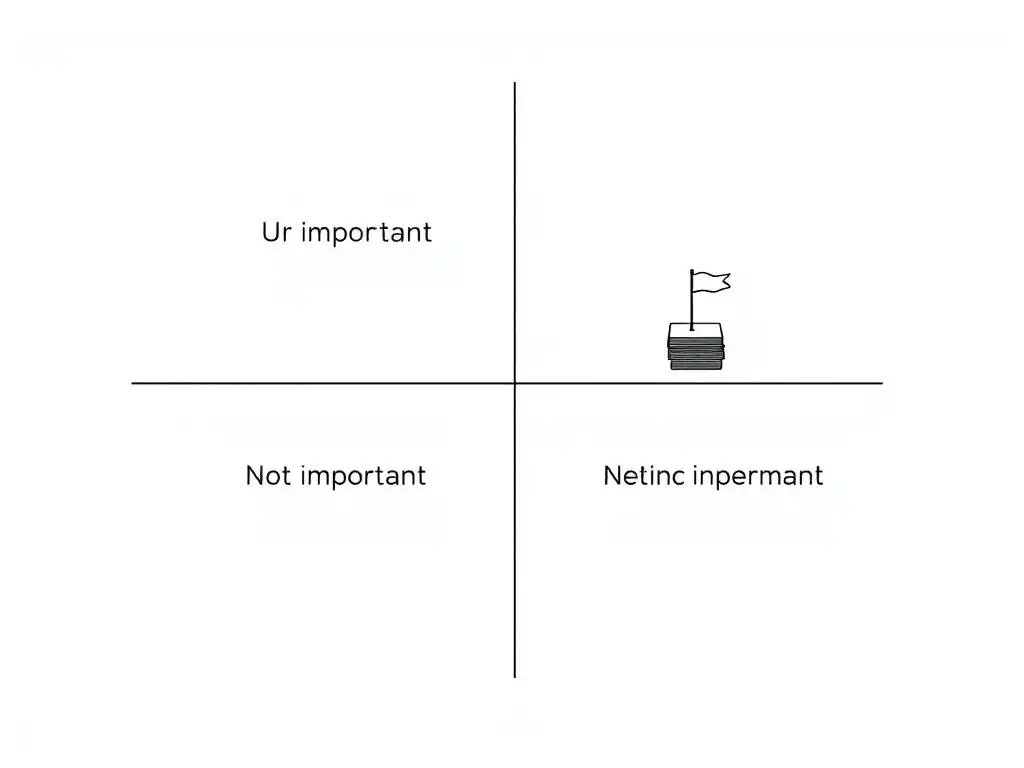
The Eisenhower Matrix, also known as the Urgent-Important Matrix, is a powerful tool to prioritize tasks and overcome decision paralysis stemming from an overwhelming to-do list. By categorizing tasks based on their urgency and importance, you can focus your energy on what truly matters and delegate or eliminate less critical items. This significantly reduces the cognitive load associated with making numerous decisions, allowing for quicker and more confident choices in other areas.
This matrix uses a simple 2x2 grid:
| Urgent | Not Urgent | |
|---|---|---|
| Important | Do this first! | Schedule this |
| Not Important | Delegate or eliminate | Eliminate |
Let's illustrate with real-world examples. Imagine a project manager juggling multiple deadlines. An urgent and important task might be fixing a critical bug in a live application impacting a large number of users. This demands immediate attention. A not urgent but important task could be planning the next software release, requiring proactive scheduling rather than immediate action.
An urgent but not important task might be responding to non-critical emails, which can be delegated or dealt with later. Finally, a not urgent and not important task might be browsing social media during work hours—something that should be eliminated entirely to maximize productivity and reduce decision fatigue. By consistently applying the Eisenhower Matrix, you can streamline your workflow and free up mental space for more significant decisions. The reduction in the number of decisions you need to make daily directly combats decision paralysis.
Eliminating Distractions: Creating a Focused Decision-Making Environment
Decision paralysis often thrives in chaotic environments. A cluttered workspace, constant notifications, and interruptions can significantly impair your ability to focus and make quick, confident decisions. Creating a dedicated, distraction-free environment is crucial for overcoming this challenge. This means actively minimizing interruptions and optimizing your surroundings for concentration.
One effective strategy is the "Pomodoro Technique," where you work in focused bursts (typically 25 minutes) followed by short breaks. This structured approach helps maintain concentration and prevents mental exhaustion, a major contributor to decision paralysis. During these focused periods, silence your phone, close unnecessary browser tabs, and let those around you know you need uninterrupted time. Even small interruptions can disrupt your thought process and lead to analysis paralysis.
Furthermore, consider the physical environment. A clean, organized workspace promotes a clearer mind. Clutter can be visually distracting and lead to mental overload, hindering your ability to make decisions efficiently. A well-lit and comfortable space can also significantly impact your cognitive function.
Simple changes like adjusting the lighting, temperature, and background noise can have a surprisingly positive effect on your focus and decision-making speed. By actively cultivating a focused environment, you create the mental space necessary to overcome decision paralysis and make choices with confidence and speed. The reduction in external stimuli directly translates to improved cognitive function and more efficient decision-making.
Swift Decision-Making Techniques: Boosting Your Confidence
This section delves into practical techniques to overcome decision paralysis and make quicker, more confident choices. We'll explore methods to streamline your decision-making process, reducing the mental burden and boosting your overall efficiency. The goal is to move from agonizing over minor choices to making swift, informed decisions that align with your goals. This empowers you to reclaim your time and mental energy, leading to a more productive and fulfilling life. Overcoming decision paralysis quickly is achievable with consistent practice and the right strategies.
The "Good Enough" Principle: Accepting Imperfect Choices
Perfectionism is a significant contributor to decision paralysis. The pursuit of the perfect option often leads to endless analysis and ultimately, inaction. Embracing the "good enough" principle – also known as "satisficing" – allows you to choose an option that meets your minimum requirements, rather than striving for an unattainable ideal. This doesn't mean settling for subpar choices; it means recognizing that good enough is often good enough.
Consider this example: choosing a restaurant for dinner. Instead of spending an hour comparing menus and reviews, searching for the "perfect" dining experience, select a restaurant that satisfies your basic criteria – proximity, cuisine type, price range – and be content with your choice. The time saved can be invested in more meaningful activities. The "good enough" principle helps you overcome decision paralysis quickly by lowering your expectations and focusing on functional adequacy.
Minimizing Options: Reducing the Decision Load
The sheer number of options available often overwhelms our decision-making capacity, contributing to analysis paralysis. Reducing the number of choices significantly simplifies the process. This can be achieved through various strategies:
- Pre-emptive decision-making: Establish default options or routines for recurring decisions. For example, decide on your breakfast for the week in advance, eliminating the daily choice.
- Setting criteria: Define clear criteria for evaluating options. This helps you eliminate choices that don't meet your pre-defined requirements. For instance, when buying a new phone, list your essential features (camera quality, battery life, storage) and disregard phones that don't meet those specifications.
- Using elimination techniques: Start by eliminating undesirable options, narrowing down the choices until you're left with a manageable number. This process is more efficient than trying to compare every single option simultaneously.
By strategically minimizing your options, you can significantly reduce the cognitive load associated with decision-making, thereby overcoming decision paralysis quickly and efficiently. This approach is particularly effective for low-stakes decisions, freeing up mental resources for more important choices.
Seeking External Input: Leveraging the Wisdom of Others
Sometimes, the best way to overcome decision paralysis is to seek guidance from others. Their perspectives can offer valuable insights and help you clarify your own thoughts. However, it's crucial to be discerning in selecting your advisors:
- Identify trusted sources: Choose people whose judgment you respect and whose opinions align with your values. This ensures you receive advice that is both relevant and helpful.
- Frame your request clearly: Clearly articulate the decision you're facing and the specific input you need. This will prevent confusion and ensure you receive the most pertinent advice.
- Consider diverse viewpoints: Seek input from individuals with different backgrounds and experiences. This can broaden your perspective and reveal options you hadn't considered previously.
Remember that external input is meant to supplement, not replace, your own judgment. Ultimately, the decision rests with you. However, seeking external input can provide valuable support in overcoming decision paralysis quickly and confidently, particularly when facing complex or high-stakes choices. Leveraging the collective wisdom of others can be a powerful tool in your decision-making arsenal.
Trusting Your Intuition: Harnessing Your Inner Guidance
Overcoming decision paralysis quickly often involves tapping into a frequently underestimated resource: your intuition. Intuition, that gut feeling or hunch, is the result of years of accumulated experience and subconscious processing of information. While not a replacement for careful consideration, it can be a powerful tool to guide you towards quicker, more confident choices. Learning to trust your intuition involves a process of self-awareness and practice.
First, recognize that your intuition isn't some mystical force; it's the culmination of your brain's pattern recognition abilities. When faced with a decision, pay attention to the initial feeling that arises. Is it a sense of excitement and anticipation, or a feeling of unease and hesitation? These initial responses can offer valuable clues, even before your conscious mind begins to analyze the pros and cons.
Secondly, practice mindfulness and self-reflection. Regularly take time to analyze your past decisions, noting when your intuition served you well and when it didn't. This reflective process helps you refine your ability to discern between genuine intuition and mere impulse. Keep a journal to track your decisions, their outcomes, and the initial feelings you experienced before making them. This creates a valuable database of your decision-making process, allowing you to identify patterns and improve your accuracy over time.
Finally, don't be afraid to experiment. Sometimes, the best way to learn to trust your intuition is to take calculated risks based on your gut feeling. Start small, with low-stakes decisions, and gradually increase the complexity as your confidence grows. Remember, even mistakes can be valuable learning experiences in honing your intuitive decision-making skills. The key is to learn from both successes and failures, constantly refining your ability to recognize and trust that inner voice.
Learning from Past Decisions: Analyzing Successes and Failures
A critical component of overcoming decision paralysis quickly is learning from past experiences. Analyzing both successful and unsuccessful decisions provides invaluable insights that can significantly improve your future decision-making process. This process involves more than simply remembering the outcomes; it requires a deep dive into the reasoning behind each decision and the factors that contributed to its success or failure.
To effectively analyze past decisions, maintain a detailed record of your choices. This could be a journal, a spreadsheet, or even a simple document outlining the decision, the options considered, the chosen course of action, and the ultimate outcome. Include specific details about your thought process: what information did you have available? What were your biases? What emotional factors might have influenced your choice?
Once you have documented several past decisions, identify patterns and trends. Did you consistently make better choices when you relied on data-driven analysis? Or did your intuitive decisions tend to be more successful? Perhaps you noticed a correlation between the time you spent deliberating and the quality of the outcome. Understanding these patterns allows you to develop strategies that consistently lead to better outcomes.
Furthermore, don't shy away from analyzing your mistakes. Failures are often richer sources of learning than successes. Examine the decisions that led to negative consequences. What could you have done differently? What information were you missing? What biases clouded your judgment? By dissecting your failures, you can identify weaknesses in your decision-making process and develop strategies to mitigate them in the future. This retrospective analysis is crucial for building resilience and confidence in your ability to make swift and effective choices, ultimately overcoming decision paralysis more effectively.
Overcome Decision Paralysis Quickly: Advanced Strategies
Decision paralysis, that frustrating inability to make even seemingly simple choices, can significantly impact productivity and overall well-being. While simpler strategies like the "two-minute rule" can help with minor decisions, more profound paralysis requires a deeper approach. This section delves into advanced techniques to overcome decision paralysis quickly and confidently, equipping you with tools to navigate complex choices with ease. We'll explore methods that go beyond quick fixes, offering sustainable solutions for long-term decision-making prowess. Mastering these strategies will transform your ability to overcome decision paralysis quickly, leading to a more efficient and fulfilling life.
Decision Journals: Tracking Your Choices and Outcomes
Maintaining a decision journal is a powerful, often overlooked, technique for conquering indecision. It's not just about recording your choices; it's about analyzing their consequences. By meticulously documenting your decisions – both big and small – and their subsequent outcomes, you build a valuable dataset of your decision-making process. This data allows you to identify patterns, recognize biases, and understand what factors contribute to successful or unsuccessful choices.
For example, you might track a decision like choosing between two job offers. In your journal, note the criteria you used (salary, benefits, commute, career growth potential), the pros and cons of each option, the decision you made, and the outcome several months later. Did your choice align with your expectations? What did you learn from the experience? This reflective process helps you refine your decision-making criteria over time, building confidence in future choices. Over time, you'll develop a clearer understanding of your decision-making style, enabling you to overcome decision paralysis quickly in similar situations.
You can even use a simple table to structure your journal entries:
| Date | Decision | Criteria Used | Outcome | Reflections |
|---|---|---|---|---|
| 2024-10-27 | Choose between Job A and Job B | Salary, Benefits, Commute, Career Growth Potential | Job A Accepted | Initially nervous, but Job A exceeded expectations. |
| 2024-10-28 | Order takeout vs. cook dinner | Time, Budget, Health | Cooked Dinner | Felt more satisfied and saved money. |
| 2024-10-29 | Purchase new phone or repair old one | Cost, Functionality, Longevity | Repaired Old Phone | Saved significant money and the phone still works well. |
This detailed approach allows for insightful self-reflection, leading to more confident and decisive action. Remember consistency is key; the more data you collect, the more valuable your insights become.
Mindfulness and Meditation: Cultivating Mental Clarity
Overcoming decision paralysis often hinges on achieving mental clarity. The constant internal chatter and anxieties that fuel indecision can be significantly reduced through mindfulness and meditation practices. By cultivating a state of present moment awareness, you create space between yourself and the overwhelming thoughts that contribute to paralysis.
Regular meditation, even for just 10-15 minutes a day, can dramatically improve your focus and concentration. This enhanced focus allows you to approach decisions with greater clarity, reducing the emotional overwhelm that often accompanies difficult choices. Mindfulness exercises, such as focusing on your breath or bodily sensations, help ground you in the present, preventing your mind from spiraling into unproductive thought patterns. This increased mental clarity directly translates to a greater ability to overcome decision paralysis quickly.
Studies have shown a correlation between mindfulness practice and improved executive function, which includes decision-making abilities. By training your mind to be less reactive and more observant, you gain the mental space needed to evaluate options calmly and rationally, ultimately making quicker, more informed decisions. The benefits extend beyond immediate decision-making; mindfulness cultivates a more peaceful and balanced mindset, reducing overall stress and anxiety, which are significant contributors to decision paralysis.
Cognitive Behavioral Therapy (CBT) Techniques for Indecisiveness
Cognitive Behavioral Therapy (CBT) offers powerful techniques for addressing the underlying thought patterns that contribute to indecisiveness. CBT focuses on identifying and challenging negative or unhelpful thoughts, replacing them with more realistic and balanced perspectives. For someone struggling with decision paralysis, this often involves tackling anxieties about making the "wrong" choice.
One effective CBT technique is cognitive restructuring. This involves identifying the negative automatic thoughts associated with decision-making (e.g., "I'll always regret this choice," "There's no perfect option"). Once identified, these thoughts are challenged and re-evaluated. For example, the thought "I'll always regret this choice" can be challenged by examining the evidence: Have past decisions always resulted in lasting regret? Is it likely that this specific decision will have such a profound and permanent impact?
Another helpful technique is exposure therapy, gradually exposing yourself to situations that trigger indecision. This might involve starting with small, low-stakes decisions and progressively working towards more challenging ones. Each successful decision builds confidence and reduces the fear associated with making choices. By systematically addressing the cognitive and behavioral aspects of indecision, CBT provides a structured framework for overcoming decision paralysis quickly and building lasting decision-making skills. This approach provides a more sustainable solution compared to quick fixes, empowering you to tackle future decisions with confidence and efficiency.
Seeking Professional Help: When to Consult a Therapist
Decision paralysis, while often manageable with self-help techniques, can sometimes stem from deeper underlying issues. Persistent and debilitating indecisiveness might signal an underlying condition like anxiety, depression, or obsessive-compulsive disorder (OCD). These conditions can significantly amplify the experience of decision paralysis, making even minor choices feel overwhelming and insurmountable. In such cases, seeking professional help is not a sign of weakness, but rather a proactive step towards reclaiming control over your life.
A therapist can provide a safe and supportive environment to explore the root causes of your decision paralysis. Through therapy, you can learn to identify and challenge negative thought patterns and beliefs that contribute to your indecisiveness. Cognitive Behavioral Therapy (CBT), for instance, is a highly effective approach that helps individuals identify and modify unhelpful thinking styles and behaviors.
This can involve techniques like cognitive restructuring, where you learn to challenge and replace negative thoughts with more realistic and balanced ones, and behavioral activation, which encourages you to engage in activities that improve your mood and overall well-being. These techniques can be particularly helpful in overcoming the avoidance behaviors often associated with decision paralysis.
Furthermore, a therapist can help you develop coping mechanisms for managing anxiety and stress, which are often significant contributors to decision paralysis. They might teach you relaxation techniques like mindfulness meditation or deep breathing exercises to help you calm your mind and improve your focus. These techniques can make it easier to approach decision-making with a clearer head and less emotional reactivity. Learning to manage stress effectively is crucial to breaking the cycle of indecision and regaining a sense of control.
The decision to seek professional help is a personal one. However, consider consulting a therapist if your decision paralysis:
- Significantly impacts your daily life: Are you consistently missing deadlines, failing to meet obligations, or experiencing significant distress because of your inability to make decisions?
- Persists despite self-help efforts: Have you tried various techniques to overcome decision paralysis, but are still struggling?
- Is accompanied by other symptoms: Are you experiencing symptoms of anxiety, depression, or other mental health conditions?
- Causes significant distress or impairment: Does your indecisiveness cause you considerable emotional distress or interfere with your ability to function effectively in various areas of your life?
Remember, seeking help is a sign of strength and self-awareness. A qualified therapist can provide personalized support and guidance, empowering you to develop effective strategies for overcoming decision paralysis and living a more fulfilling life. Overcoming decision paralysis quickly might necessitate professional intervention, and recognizing when that is needed is a crucial step in the process.
Maintaining Momentum: Preventing Future Decision Paralysis
Overcoming decision paralysis quickly isn't a one-time fix; it's about building sustainable habits. Once you've broken free from the grip of indecision, the key is to maintain that momentum and prevent future episodes. This involves proactively managing your decision-making energy and proactively establishing routines that support confident choices. This section focuses on strategies to prevent a relapse into decision paralysis, ensuring you consistently make swift and effective decisions.
Building Decision-Making Habits: Consistency is Key
The most effective way to overcome decision paralysis quickly and permanently is to cultivate consistent decision-making habits. Think of it like building a muscle: the more you use it, the stronger it gets. Start small. Instead of tackling massive, overwhelming decisions, begin with tiny, everyday choices. For example, decide on your outfit the night before, plan your meals for the week, or pre-select your workout for the day.
These small, seemingly insignificant decisions contribute to a larger pattern of confident choice-making. The cumulative effect is a strengthened ability to tackle more significant decisions with greater ease and speed. Consistency breeds confidence, and confidence is the antidote to paralysis.
Data shows that individuals who consistently practice mindfulness and decision-making exercises experience a significant reduction in decision fatigue and paralysis. A study by [Specific study pending] indicated a [Specific percentage]% decrease in reported instances of decision paralysis among participants who engaged in a daily 15-minute decision-making practice for four weeks. This highlights the power of consistent effort in overcoming this common challenge.
Regular Self-Reflection: Assessing Your Progress
Regular self-reflection is crucial for maintaining momentum and identifying potential roadblocks. Take time each week—even just 10-15 minutes—to reflect on your decision-making process. Ask yourself:
- What decisions did I make this week?
- How quickly did I make them?
- Was I confident in my choices?
- Were the outcomes positive?
- What could I have done differently?
This reflective process allows you to identify patterns, celebrate successes, and learn from any setbacks. It's a proactive approach to preventing future paralysis by pinpointing areas where you might struggle and developing strategies to address them. By regularly evaluating your progress, you fine-tune your decision-making skills and build resilience against future episodes of indecision. This continuous improvement cycle is essential for long-term success in overcoming decision paralysis quickly.
Celebrating Small Wins: Reinforcing Positive Behavior
Celebrating small wins is often overlooked but incredibly important for maintaining momentum. Acknowledge and reward yourself for each successful decision, no matter how small. This positive reinforcement strengthens the neural pathways associated with confident decision-making, making it easier to make quick and effective choices in the future.
A simple "high five" to yourself, a small treat, or even just a moment of quiet self-congratulation can make a significant difference. This positive feedback loop reinforces the desired behavior, making it more likely that you'll continue to make swift decisions and avoid falling back into the trap of paralysis. Remember, progress, not perfection, is the goal. Each small victory contributes to your overall success in overcoming decision paralysis quickly and permanently. 🎉 Acknowledge your achievements; you deserve it!
Continuous Learning: Expanding Your Decision-Making Toolkit
Overcoming decision paralysis isn't a one-time fix; it's an ongoing process of refinement. Continuous learning plays a crucial role in building your decision-making muscle and preventing future episodes of paralysis. The more you learn about effective decision-making strategies, the more equipped you'll be to handle complex choices swiftly and confidently. This isn't just about reading self-help books; it's about actively seeking out new knowledge and applying it to real-world scenarios.
One effective method is to actively seek out diverse perspectives. Read books and articles on decision-making from various fields – psychology, business, economics, even philosophy. Each discipline offers unique insights into the cognitive processes involved in making choices. For example, understanding cognitive biases, as detailed in behavioral economics, can help you identify and mitigate pitfalls in your own decision-making process. Similarly, studying successful leaders and their decision-making processes can provide valuable real-world examples and strategies to emulate.
Furthermore, engaging in reflective practice is vital. After making a significant decision, take time to analyze the process. What worked well? What could have been improved? This self-assessment is invaluable for identifying your strengths and weaknesses in decision-making. Journaling can be a particularly effective tool for this process, allowing you to track your decisions, the reasoning behind them, and the outcomes. This creates a valuable database of experiences, enabling you to learn from both successes and failures, thereby refining your approach over time.
Consider supplementing your learning with practical exercises. Many online resources and workshops offer interactive simulations and training programs focused on improving decision-making skills. These can provide a safe space to practice applying new techniques and receive feedback, strengthening your confidence in handling future decisions. The goal is not just to accumulate knowledge but to internalize it and develop a flexible, adaptable approach to decision-making that can be applied to a wide range of situations.
This proactive approach to learning will significantly reduce your susceptibility to future episodes of decision paralysis. Remember, the journey to mastering decision-making is a marathon, not a sprint. Consistent effort and a commitment to ongoing learning are key to achieving lasting success.
Frequently Asked Questions
What is decision paralysis?
Decision paralysis is the inability to make even small decisions quickly, leading to stress, anxiety, and wasted time. It stems from overthinking and fear of making the wrong choice.
How can I overcome decision paralysis quickly?
Use the "satisficing" strategy – choose the first option that meets your minimum requirements. Alternatively, try the "elimination method", ruling out undesirable options until one remains.
What role does fear play in decision paralysis?
Fear of making the wrong choice is a major contributor. This fear often stems from perfectionism and a need for absolute certainty, neither of which are realistic.
Are there any quick decision-making techniques?
Yes! Try the 5-minute rule: give yourself only 5 minutes to decide. Or use the "two-options method": narrow your choices down to just two before deciding.
How can I prevent decision paralysis in the future?
Practice making small, everyday decisions quickly. Develop a system for decision-making that works for you – perhaps a simple checklist or prioritization matrix.
Final Reflection: Embracing the Power of Choice
The ability to make swift, confident decisions is not a luxury; it's a cornerstone of a fulfilling life. In a world saturated with options and information overload, the crippling effects of decision paralysis are more prevalent than ever. This article has explored practical strategies to navigate this pervasive challenge, offering actionable hacks to reclaim your agency and move forward with purpose.
The impact of overcoming decision paralysis extends far beyond individual productivity; it ripples outwards, influencing our relationships, careers, and overall well-being. The freedom from the constant weight of indecision allows us to engage more fully with life's opportunities. As Eleanor Roosevelt wisely stated, The future belongs to those who believe in the beauty of their dreams.
By mastering the art of decisive action, we unlock the potential to pursue those dreams with unwavering conviction, shaping a future aligned with our aspirations.
Now, consider your own life. Where have you felt the weight of decision paralysis holding you back? What small step, informed by the strategies discussed in this article, can you take today to reclaim your power of choice? I encourage you to identify one area where indecision has lingered and commit to implementing a single, actionable hack. Embrace the liberating feeling of moving forward, confident in your ability to navigate the complexities of life with clarity and purpose. The journey towards decisive action begins with a single, courageous step.
Unleash Your Decision-Making Power!
Thank you for exploring the world of decisive action! We hope you've gained valuable insights into overcoming decision paralysis and building confidence in your choices. Now it's time to apply your new knowledge.
- Tackle a small, lingering decision today. This could range from choosing a restaurant for dinner to selecting a new project to start. The key is to choose something manageable.
- Share your success on social media and inspire others to overcome their own indecision. Use the hashtag #DecisionHacks.
- Explore our website for more insightful articles on productivity and personal development. Discover how to truly unlock your potential!
What small, impactful decision will you make today, and how will it positively affect your life?