
Beyond the Basics: Beginner's Guide to Real Estate Investing Terms


Dive into the world of UltimateLifeHacks and unlock the secrets to a more efficient and productive you! Are you ready to conquer your daily routines and achieve your financial goals? Then you've come to the right place. Our expert guide on Real Estate Investing Terms for Beginners will demystify the jargon and empower you to take control of your financial future. Ready to discover the hidden pathways to success? Let's explore the exciting world of real estate investing together.
-
Understanding Key Real Estate Investing Terms for Beginners
- Decoding "Appreciation" in Real Estate Investments: Growth and Value Increase
- Mastering the Meaning of "Capital Gains" in Your Real Estate Portfolio
- What is "Depreciation" and How Does it Affect Real Estate Tax Strategies?
- Understanding "Equity" in Real Estate: Building Wealth Through Ownership
- Navigating "Leverage" in Real Estate: Using Debt to Your Advantage
-
Essential Real Estate Investment Terminology for New Investors
- Defining "Net Operating Income (NOI)" for Profitability Analysis
- The Importance of "Cash Flow" in Real Estate Investments: Positive vs. Negative
- Understanding "Return on Investment (ROI)" in Real Estate: Measuring Success
- Decoding "Cap Rate": Calculating Potential Returns on Investment Properties
- What is a "Property Management Company" and Why You Might Need One?
-
Analyzing Real Estate Investment Opportunities: Essential Metrics and Tools
- Using "Comparable Market Analysis (CMA)" to Determine Property Value: A Step-by-Step Guide
- Understanding "Due Diligence" in Real Estate: Protecting Your Investment
- The Role of "Real Estate Agents" and "Brokers" in the Buying Process: Finding the Right Professionals
- Utilizing Online Real Estate Investment Calculators for ROI and Cash Flow Projections
- Minimizing Risks in Real Estate Investing: Strategies for Beginners
-
Advanced Real Estate Investing Terms for Intermediate Learners
- Understanding "Syndication" in Real Estate: Pooling Resources for Larger Investments
- Exploring the World of Real Estate Investment Trusts (REITs): Diversification and Passive Income
- Delving into "1031 Exchanges": Tax-Deferred Property Swaps for Growth
- The Power of "Joint Ventures" in Real Estate: Collaborating for Success
- Resources for Continued Learning in Real Estate Investing
-
Frequently Asked Questions
- What are some essential real estate investing terms beginners should know?
- How is the capitalization rate (Cap Rate) calculated, and what does it tell an investor?
- What's the difference between appreciation and depreciation in real estate?
- How does leverage work in real estate investing?
- What resources are available to help beginners learn more about real estate investing terms?
- Final Reflection: Unlocking the Language of Real Estate Success
- Unlock Your Real Estate Potential: Take the Next Step
Understanding Key Real Estate Investing Terms for Beginners
Real estate investing can seem daunting, especially for beginners. The sheer volume of jargon and specialized terminology can quickly overwhelm newcomers, making it difficult to navigate the world of property acquisition, management, and profit. This beginner's guide aims to demystify some of the most crucial real estate investing terms, empowering you to make informed decisions and confidently embark on your investment journey. We'll explore key concepts that are fundamental to understanding real estate's financial dynamics, focusing on practical applications and avoiding overly technical explanations.
This guide is your first step towards building a successful and lucrative real estate portfolio, providing you with the essential vocabulary to navigate the market with confidence. Let's dive into the terms every beginner needs to know to succeed in real estate investing. 🚀
Decoding "Appreciation" in Real Estate Investments: Growth and Value Increase
Appreciation, in the context of real estate, refers to the increase in the value of a property over time. This increase isn't always linear; it's influenced by various market factors, including location, economic conditions, and property improvements. Think of it like this: you buy a house for $200,000, and five years later, its market value rises to $250,000. That $50,000 increase is appreciation.
Several factors contribute to appreciation. Strong local economies, desirable neighborhoods, and renovations all play a role. However, it's important to note that appreciation isn't guaranteed; market fluctuations can lead to periods of stagnation or even depreciation.
Understanding appreciation is crucial for long-term investment strategies, allowing you to project potential returns and make informed decisions about buying and selling properties. For example, a property in a rapidly growing city center is more likely to appreciate significantly compared to one in a rural area with slow population growth. Analyzing market trends and location-specific data is key to identifying properties with high appreciation potential.
Mastering the Meaning of "Capital Gains" in Your Real Estate Portfolio
Capital gains represent the profit you make when you sell an asset—in this case, a real estate property—for more than you paid for it. It's the difference between the selling price and your original cost basis (the purchase price plus any expenses incurred, such as closing costs and improvements). For instance, if you bought a property for $150,000 and sold it for $220,000 after accounting for all expenses, your capital gain would be $70,000.
It's important to note that capital gains are taxable income in most jurisdictions. The tax rate on capital gains varies depending on factors like your income bracket and how long you owned the property (long-term vs. short-term capital gains). Understanding capital gains is vital for tax planning and maximizing your investment returns.
Effective tax strategies, such as utilizing depreciation (explained in the next section), can help minimize your tax liability on capital gains. Proper record-keeping of all expenses related to your investment property is crucial for accurate capital gains calculations at tax time.
What is "Depreciation" and How Does it Affect Real Estate Tax Strategies?
Unlike appreciation, depreciation is a non-cash expense that reduces the taxable income from your rental property. It's an accounting method that allows you to deduct a portion of the property's value each year over a specified period (usually 27.5 years for residential properties and 39 years for commercial properties). This deduction lowers your taxable income, effectively reducing your tax liability.
For example, if your property is valued at $300,000, the annual depreciation deduction would be approximately $10,909 ($300,000 / 27.5 years). This deduction doesn't represent an actual decrease in the property's value, but rather a way to offset your rental income for tax purposes. It's a powerful tool for real estate investors, allowing them to defer taxes and potentially reinvest more of their profits.
However, it's important to understand the rules and regulations surrounding depreciation, as they can be complex. Consulting with a tax professional is highly recommended to ensure you're taking full advantage of this valuable tax strategy. Properly understanding and utilizing depreciation can significantly impact your overall real estate investment profitability and long-term financial success.
Understanding "Equity" in Real Estate: Building Wealth Through Ownership
Equity represents your ownership stake in a property. It's the difference between the current market value of your real estate investment and the amount you still owe on the mortgage (or any other outstanding loans secured against the property). Think of it as the portion of the property you truly own outright. As you make mortgage payments, your equity gradually increases. This is because you're paying down the principal loan amount, reducing your debt and increasing the portion of the property you own.
For example, imagine you bought a house for $300,000 with a $60,000 down payment and a $240,000 mortgage. Initially, your equity is $60,000. After several years of consistent payments, if the property's market value appreciates to $330,000 and you've paid down $40,000 of your mortgage, your equity has grown to $100,000 ($330,000 - $230,000 = $100,000).
This increase in equity is a significant part of building wealth through real estate investing. It's important to note that equity can also fluctuate based on market conditions; a decrease in property value can temporarily reduce your equity, even if your mortgage balance remains the same. Understanding this dynamic is crucial for informed decision-making in real estate.
Building substantial equity over time is a primary goal for many real estate investors, providing a solid foundation for future investment opportunities and financial security. Careful property selection and consistent mortgage payments are key to maximizing equity growth.
Leverage in real estate investing refers to the strategic use of borrowed money (debt) to amplify your returns. It's essentially using other people's money to finance your investments. While it sounds risky, when managed properly, leverage can significantly boost your potential profits. The idea is to acquire a property with a loan, and the appreciation in the property's value (plus rental income, if applicable) surpasses the cost of borrowing.
For instance, let's say you invest $100,000 in a property, but only put down 20%, or $20,000, of your own money. The remaining $80,000 is financed by a mortgage. If the property's value increases by 10%, that's a $30,000 gain. Your return on your initial $20,000 investment is a remarkable 150% ($30,000 / $20,000 = 1.5). Without leverage, your return would have been a much smaller 10%. However, leverage also magnifies losses.
If the property value decreases, your losses are also amplified. Therefore, careful financial planning and risk assessment are essential before employing leverage. Understanding your debt-to-income ratio, interest rates, and potential market fluctuations is paramount to effectively utilizing leverage and mitigating potential risks. Responsible leverage can be a powerful tool for building wealth, but it demands a clear understanding of its implications and careful management.
Essential Real Estate Investment Terminology for New Investors
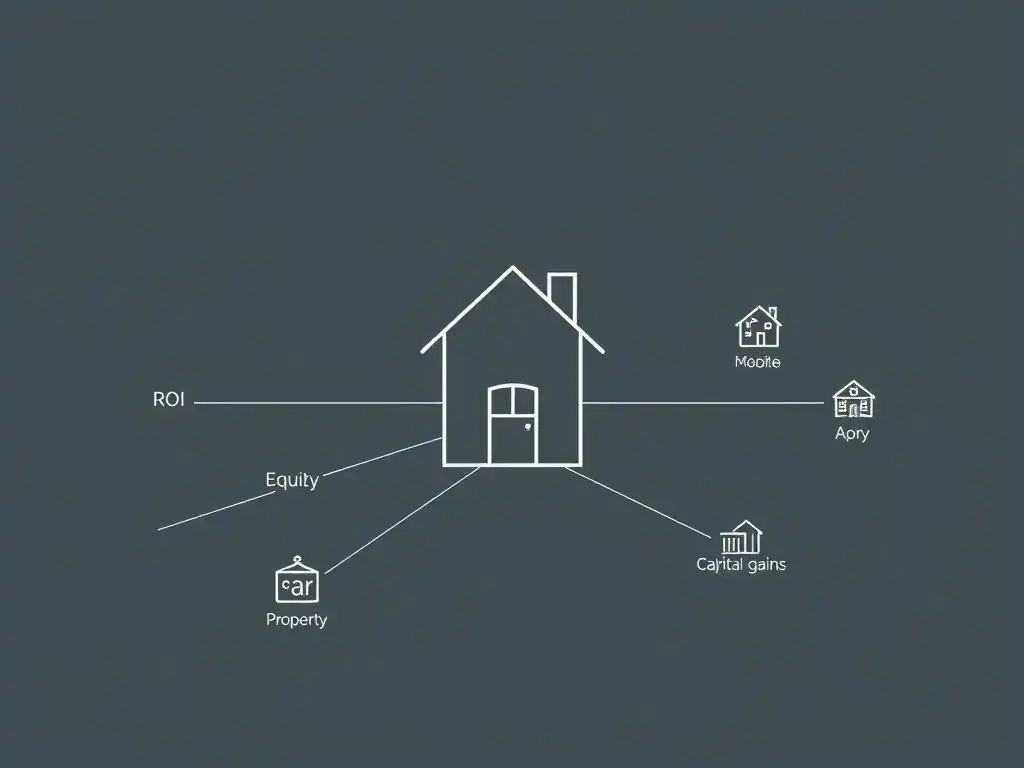
This section dives into crucial real estate investing terms that every beginner should master. Understanding these concepts is fundamental to making informed decisions and achieving success in the real estate market. We'll explore key metrics used to assess profitability and the overall return on your investment. Learning these "real estate investing terms beginners" need to know is the first step towards building a strong foundation in this exciting field.
Defining "Net Operating Income (NOI)" for Profitability Analysis
Net Operating Income (NOI) is a crucial metric in real estate investment analysis. It represents the property's profitability after deducting operating expenses but before accounting for debt service (mortgage payments, interest, and principal). A higher NOI indicates a more profitable property. Calculating NOI provides a clear picture of a property's ability to generate income from its operations alone.
Calculating NOI involves subtracting all operating expenses from the property's gross operating income (GOI). GOI is the total revenue generated by the property, typically from rental income. Operating expenses include property taxes, insurance, utilities (if paid by the landlord), repairs and maintenance, and property management fees. It does not include mortgage payments, depreciation, or capital expenditures (like roof replacements).
For example: Let's say a rental property generates $60,000 in annual rental income (GOI). The annual operating expenses total $15,000. Therefore, the NOI is $60,000 - $15,000 = $45,000. This $45,000 represents the property's potential profit from its operations. Analyzing NOI helps investors compare the profitability of different properties, regardless of their financing structures. Remember, a higher NOI generally translates to a more attractive investment opportunity.
The Importance of "Cash Flow" in Real Estate Investments: Positive vs. Negative
Cash flow is the difference between the cash coming into a real estate investment and the cash going out. It’s a critical indicator of an investment's financial health and your ability to cover expenses and generate profit. Unlike NOI, cash flow considers all cash inflows and outflows, including debt service (mortgage payments).
Positive cash flow means your rental income exceeds all expenses, including mortgage payments. This allows you to pocket extra money each month, providing financial flexibility and building wealth. A positive cash flow is generally a desirable outcome for real estate investors.
Negative cash flow, on the other hand, signifies that your expenses (including mortgage payments) surpass your rental income. This means you're losing money each month. While negative cash flow isn't always a bad thing (especially in the early stages of appreciation-focused investments), it requires careful planning and a clear understanding of your long-term strategy. You need to ensure you have sufficient funds to cover the shortfall until the investment becomes profitable. This might involve drawing from savings, other income streams, or refinancing strategies. Understanding cash flow is essential for managing your financial resources effectively.
Understanding "Return on Investment (ROI)" in Real Estate: Measuring Success
Return on Investment (ROI) is a fundamental metric used to evaluate the profitability of an investment. In real estate, it measures the percentage return you receive on your investment relative to the initial cost. A higher ROI indicates a more successful investment. Calculating ROI allows investors to compare the performance of different real estate investments and determine which ones offer the greatest potential returns.
The ROI calculation is straightforward: (Net Profit / Total Investment Cost) x 100%. Net profit is the total profit after all expenses, including the initial investment cost, are deducted. Total investment cost includes not only the purchase price but also closing costs, renovation expenses, and any other upfront costs.
For instance, if you invest $100,000 in a property and after a year, your net profit (after deducting all expenses) is $15,000, your ROI is ($15,000 / $100,000) x 100% = 15%. This means your investment generated a 15% return in one year. However, remember that ROI is just one factor to consider. Other factors, like cash flow and appreciation potential, should also be evaluated before making investment decisions. Analyzing ROI helps you assess the overall success and efficiency of your real estate investments. Tracking your ROI over time provides valuable insights into your investment strategy's performance.
Decoding "Cap Rate": Calculating Potential Returns on Investment Properties
The capitalization rate, or cap rate, is a crucial metric for real estate investors, especially beginners navigating the world of "real estate investing terms beginners." It's a simple yet powerful tool that helps you quickly assess the potential return on investment (ROI) of an income-producing property. Understanding the cap rate allows you to compare different investment opportunities and make informed decisions. Essentially, it tells you how much income a property is generating relative to its purchase price.
The formula for calculating the cap rate is straightforward:
Cap Rate = Net Operating Income (NOI) / Property Value
Let's break down each component:
- Net Operating Income (NOI): This is the property's annual income after deducting all operating expenses, but before accounting for debt service (mortgage payments). Calculating NOI involves subtracting expenses like property taxes, insurance, maintenance, and management fees from the gross operating income (the total rental income). For example, if a property generates $50,000 in annual rental income and has operating expenses of $15,000, the NOI is $35,000.
- Property Value: This refers to the current market value of the property. This is often determined through a professional appraisal, comparable property sales analysis, or other valuation methods. It's crucial to use an accurate property value for a reliable cap rate calculation. Using an inflated or deflated value will skew your results.
Example: Let's say a property has an NOI of $35,000 and a market value of $350,000. The cap rate would be:
Cap Rate = $35,000 / $350,000 = 0.10 or 10%
A 10% cap rate suggests a 10% potential return on your investment before considering financing costs. Remember, a higher cap rate generally indicates a potentially more lucrative investment, all other factors being equal. However, always consider the risks associated with higher cap rates; they might signal higher vacancy rates or other underlying issues.
Thorough due diligence is essential. Keep in mind that the cap rate is just one factor to consider; you'll need to analyze other financial aspects before making any investment decision. Understanding the nuances of "real estate investing terms beginners" like cap rate is a crucial first step in successful real estate investing.
What is a "Property Management Company" and Why You Might Need One?
A property management company is a third-party business that handles the day-to-day operations of rental properties on behalf of the owner. This can significantly reduce the workload for busy investors, especially those managing multiple properties or who live far from their investments. For beginners navigating the complex world of "real estate investing terms beginners", understanding the role of a property management company is essential.
These companies offer a wide array of services, including:
- Tenant Screening and Selection: They conduct thorough background checks and credit reports to ensure responsible tenants are placed in the property, minimizing the risk of late rent payments or property damage.
- Rent Collection: They collect rent payments from tenants and handle late rent situations, ensuring timely payment to the property owner.
- Maintenance and Repairs: They coordinate and oversee repairs and maintenance, often having pre-negotiated rates with contractors, saving the owner time and money.
- Marketing and Advertising: They handle the marketing and advertising of vacant units, attracting qualified tenants efficiently.
- Legal Compliance: They ensure compliance with all relevant landlord-tenant laws and regulations, protecting the owner from potential legal issues.
Why you might need a property management company:
- Time constraints: Managing properties can be time-consuming, requiring significant effort for tasks like marketing, tenant communication, and maintenance coordination. A property management company frees up your time to focus on other aspects of your life or business.
- Geographic distance: If your investment properties are located far from your residence, a property management company provides on-site management and reduces the inconvenience of travel for routine tasks.
- Lack of experience: For beginner real estate investors, a property management company offers valuable expertise and guidance in navigating the complexities of property management.
- Minimizing risk: Professional property managers are skilled in handling tenant issues, reducing the risk of legal disputes or property damage.
While using a property management company incurs fees (typically a percentage of the monthly rent), the benefits often outweigh the costs, particularly for investors with multiple properties or limited time. It's a crucial element to consider when learning the ropes of "real estate investing terms beginners" and building a successful real estate portfolio. Choosing a reputable and experienced property management company is a wise investment in the long-term success of your real estate ventures.
Analyzing Real Estate Investment Opportunities: Essential Metrics and Tools

Real estate investing, while potentially lucrative, demands a keen understanding of key financial metrics to evaluate opportunities effectively. Ignoring these crucial calculations can lead to poor investment decisions and significant financial losses. This section focuses on equipping beginner real estate investors with the tools and knowledge necessary to analyze potential properties. We'll delve into essential metrics and demonstrate how to use them practically.
Using "Comparable Market Analysis (CMA)" to Determine Property Value: A Step-by-Step Guide
Determining a property's fair market value is paramount in real estate investing. A crucial tool for this is the Comparable Market Analysis (CMA). A CMA isn't an appraisal, but rather an analysis of recently sold properties (comparables) with similar characteristics to the subject property. This helps estimate its market value. Here's a step-by-step guide:
- Identify Comparables: Find at least three, ideally five, properties that recently sold within a one-mile radius, and are similar in size, age, features (number of bedrooms, bathrooms, lot size, etc. ), and condition. Consider location proximity as a major factor.
- Analyze the Comparables: Carefully review each comparable's features and sale price. Note any differences between the comparables and the subject property, such as updated kitchens or bathrooms, and adjust the comparable prices accordingly. This involves making positive adjustments for superior features in the comparable and negative adjustments for inferior features.
- Calculate the Adjusted Price: After accounting for differences, you'll have adjusted sale prices for each comparable.
- Determine the Average Adjusted Price: Average the adjusted prices of the comparables to arrive at a preliminary estimate of the subject property's market value.
- Consider Market Trends: Research current market trends in the area. Is the market appreciating or depreciating? This information can further refine your valuation.
Let's illustrate with an example: Suppose you're analyzing a three-bedroom, two-bathroom house. Three comparables sold recently: one for $300,000 (needs a $10,000 kitchen renovation – negative adjustment), one for $320,000 (has a finished basement – positive adjustment of $20,000), and one for $310,000 (similar condition). The adjusted prices would be $310,000, $300,000, and $310,000 respectively. The average suggests a market value around $306,667. Remember, this is an estimate, and professional appraisal is recommended for significant investments.
Understanding "Due Diligence" in Real Estate: Protecting Your Investment
Due diligence is the critical process of investigating a property thoroughly before making an offer. It involves verifying all aspects of the property and its legal status to minimize potential risks. Neglecting due diligence can lead to costly surprises after purchasing a property. Key aspects include:
- Property Inspection: A professional home inspection identifies any structural, mechanical, or other issues.
- Title Search: This verifies the seller's ownership and identifies any liens, encumbrances, or other claims on the property.
- Survey: A land survey confirms the property boundaries and ensures no encroachments exist.
- Environmental Review: This checks for environmental hazards such as asbestos, lead paint, or radon.
- Review of Disclosures: Carefully examine all seller disclosures for any potential problems.
Thorough due diligence protects your investment by revealing potential problems before you commit to the purchase. The cost of due diligence is far less than the cost of dealing with unexpected problems after closing. Think of it as an insurance policy for your investment.
The Role of "Real Estate Agents" and "Brokers" in the Buying Process: Finding the Right Professionals
Navigating the real estate market, especially for beginners, can be complex. Real estate agents and brokers are invaluable resources during this process. Agents represent buyers or sellers, while brokers oversee agents. Finding the right professional is essential for a smooth and successful transaction.
Consider these factors when choosing a real estate agent:
- Experience: Choose an agent with substantial experience in the specific type of property you're targeting (residential, commercial, etc.) and within your desired market area.
- Market Knowledge: A good agent possesses in-depth knowledge of local market trends, pricing, and inventory levels.
- Communication Skills: Effective communication is key. Your agent should be readily available to answer your questions and keep you informed throughout the process.
- Negotiation Skills: Strong negotiation skills are vital in securing favorable terms.
- References: Check references and reviews to gauge the agent's reputation and client satisfaction.
Selecting a skilled and trustworthy real estate professional can significantly improve your chances of a successful real estate investment. They provide invaluable expertise, guidance, and support throughout the entire process, from finding suitable properties to closing the deal. Don't underestimate the value of their expertise, especially when starting in real estate investing.
Utilizing Online Real Estate Investment Calculators for ROI and Cash Flow Projections
Online real estate investment calculators are invaluable tools for beginners navigating the complexities of property analysis. These calculators automate much of the tedious number-crunching, allowing you to quickly assess the potential profitability of different investment properties. They typically require you to input key data points, such as purchase price, down payment, closing costs, estimated rental income, property taxes, insurance, and potential vacancy rates. From this information, the calculator then projects key metrics like Return on Investment (ROI) and cash flow.
Understanding the nuances of these calculations is crucial. ROI, for instance, represents the percentage return on your investment over a specific period. A higher ROI generally indicates a more profitable investment. However, it's important to remember that ROI doesn't always tell the whole story. It doesn't account for factors like the time value of money or the potential for appreciation.
Cash flow, on the other hand, represents the net income generated by a rental property after all expenses are deducted from rental income. Positive cash flow is a highly desirable trait in real estate investing, indicating that the property is generating more money than it costs to maintain. Many successful real estate investors prioritize properties with strong positive cash flow, even if the ROI might be slightly lower compared to other options. This is because consistent positive cash flow provides financial stability and allows for reinvestment into other opportunities.
The accuracy of these projections heavily relies on the quality of the input data. Using overly optimistic estimates for rental income or underestimating expenses can lead to inaccurate and potentially misleading results. Therefore, it's crucial to conduct thorough due diligence and utilize realistic figures based on market research and comparable properties. Don't just rely on a single calculator; compare results from several different tools to ensure consistency and identify potential biases in any individual calculator's algorithms.
Remember, these calculators are tools to aid your decision-making process, not replacements for sound judgment and careful analysis. Always cross-reference the calculator's outputs with your own independent research. Using multiple calculators and comparing results is a best practice for real estate investing beginners. This helps mitigate the risk of inaccurate projections based on flawed assumptions or programming within a single tool.
Minimizing Risks in Real Estate Investing: Strategies for Beginners
Real estate investing, while potentially lucrative, carries inherent risks. For beginners venturing into this field, understanding and mitigating these risks is crucial for long-term success and financial security. This section explores key risk areas and provides practical strategies to navigate them effectively. Mastering risk management is a significant component of successful real estate investing for beginners, allowing you to build wealth steadily and confidently. Let's delve into specific risk mitigation techniques.
Understanding "Market Risk" and How to Mitigate It
Market risk, also known as systematic risk, refers to the potential for losses due to broader economic fluctuations impacting the real estate market. These fluctuations can stem from various factors including interest rate changes, economic recessions, or shifts in local demographics. For example, a sudden economic downturn could lead to decreased property values and reduced rental demand, impacting your investment's profitability.
To mitigate market risk, diversification is key. Instead of concentrating your investments in a single property or geographical area, consider spreading your portfolio across different property types (e.g., residential, commercial), locations, and even asset classes (e.g., REITs alongside physical properties). Thorough market research, including analyzing local economic trends and future development plans, is also essential.
Understanding the long-term potential of a specific area is critical to minimizing the impact of short-term market volatility. Furthermore, focusing on properties with strong fundamental value – those with solid rental history and potential for appreciation – helps buffer against market downturns. Remember, a well-researched investment is less susceptible to market fluctuations.
Protecting Yourself From "Interest Rate Risk": Strategies for Fixed-Rate Mortgages
Interest rate risk arises from fluctuations in interest rates affecting mortgage payments and the overall cost of borrowing. Rising interest rates can significantly increase your monthly mortgage payments, reducing your cash flow and profitability. Conversely, falling rates present an opportunity to refinance at a lower rate, but this benefit is not always guaranteed.
For beginners, opting for a fixed-rate mortgage is a primary strategy to mitigate interest rate risk. A fixed-rate mortgage locks in your interest rate for the loan's duration, protecting you from unpredictable rate hikes. While fixed-rate mortgages might have slightly higher initial interest rates compared to adjustable-rate mortgages (ARMs), the predictability offers greater financial stability, especially valuable during periods of economic uncertainty.
Careful budgeting and financial planning are also crucial to ensure you can comfortably manage your mortgage payments even with potential unexpected expenses. Consider building a financial cushion to cover unforeseen circumstances that may impact your ability to make on-time payments. This proactive approach minimizes the risk of default and its associated financial repercussions.
Assessing "Vacancy Risk" and Implementing Mitigation Strategies
Vacancy risk represents the possibility of your rental property remaining unoccupied for extended periods, leading to lost rental income. This risk is particularly relevant in competitive rental markets or during economic downturns where tenant demand might decrease. Factors such as property condition, location, and market competition all influence vacancy rates. A poorly maintained property in a less desirable location is more likely to experience higher vacancy rates compared to a well-maintained property in a sought-after area.
Effective mitigation strategies include ensuring your property is well-maintained and attractively presented to prospective tenants. Competitive rental rates, a streamlined application process, and a proactive approach to tenant management are crucial. Consider establishing a strong online presence to attract tenants, and having a reliable property management company can greatly reduce vacancy periods by promptly addressing maintenance issues and finding suitable replacements.
Building a strong relationship with tenants by offering good service also reduces turnover and the likelihood of extended vacancy periods. Moreover, diversifying your rental portfolio across different locations and property types can help mitigate the impact of vacancy in a single property. Thorough tenant screening is also paramount; this reduces the risk of problematic tenants who may lead to higher vacancy rates due to evictions or property damage.
Insurance and Risk Management in Real Estate: Protecting Your Investment
Protecting your investment in real estate requires a proactive approach to risk management. Insurance plays a crucial role in this, acting as a financial safety net against unforeseen circumstances. For beginners, understanding the different types of insurance and their importance is paramount to mitigating potential losses. Neglecting proper insurance coverage can expose your investment to significant financial vulnerabilities.
One of the most fundamental forms of insurance for real estate investors is property insurance. This covers damage to the property itself, such as from fire, storms, vandalism, or other unforeseen events. The coverage amount should accurately reflect the property's current market value, ensuring you're adequately protected against significant losses. It's crucial to regularly review your policy and adjust the coverage as the property's value fluctuates or as improvements are made. Failing to do so could leave you underinsured in the event of a major incident.
Beyond property insurance, liability insurance is equally vital. This protects you from financial responsibility resulting from injuries or damages sustained by others on your property. For example, if someone slips and falls on your property and suffers an injury, liability insurance would cover the resulting medical expenses and legal fees.
The level of coverage needed depends on factors such as the type of property (residential, commercial), the number of tenants (if applicable), and the level of risk associated with the property's use. Ignoring liability insurance could lead to devastating financial consequences, potentially far exceeding the value of the property itself.
Furthermore, consider specialized insurance policies depending on the nature of your investment. For instance, if you're involved in rental properties, landlord insurance provides additional coverage for tenant-related issues such as property damage caused by renters or legal disputes. Similarly, if you're investing in commercial properties, you'll need insurance tailored to the specific risks associated with commercial operations. Failing to research and secure the appropriate specialized insurance can leave significant gaps in your risk management strategy.
Effective risk management isn't solely reliant on insurance. Conducting thorough due diligence before purchasing a property is critical. This involves a comprehensive inspection to identify potential problems, reviewing property records for any legal issues or encumbrances, and researching the neighborhood's stability and potential for future appreciation. Proactive due diligence helps minimize the likelihood of unexpected problems and reduces the need for extensive insurance coverage. This proactive approach, combined with comprehensive insurance, forms a robust risk management strategy that safeguards your real estate investment. Remember, a well-informed and insured investment is a secure investment.
Advanced Real Estate Investing Terms for Intermediate Learners

This section dives deeper into some more complex terminology frequently encountered in real estate investing, moving beyond the basics for those looking to expand their knowledge. Understanding these terms will significantly enhance your ability to navigate the intricacies of the real estate market and make informed investment decisions. We'll explore concepts crucial for intermediate-level real estate investors, focusing on strategies to maximize returns and minimize risks.
Real estate syndication is a powerful strategy that allows multiple investors to pool their capital to purchase larger, more lucrative properties than any single investor could afford alone. This collaborative approach significantly reduces the financial burden on each participant while maximizing buying power. The process typically involves a general partner (GP), who manages the investment, and limited partners (LPs), who provide capital and share in the profits.
The GP is responsible for identifying and acquiring properties, managing the operations, and overseeing the overall strategy. They typically receive a larger share of the profits in exchange for their expertise and management efforts. LPs, on the other hand, contribute capital and benefit from the potential appreciation and cash flow generated by the property. The exact terms of the partnership are outlined in a detailed private placement memorandum (PPM), a legal document that describes the investment opportunity and the rights and responsibilities of each party.
Syndications offer several advantages, including:
- Access to larger deals: Pooling resources opens doors to larger, more profitable properties that would be unattainable for individual investors.
- Diversification: Participation in a syndication diversifies your investment portfolio across multiple properties and reduces overall risk.
- Passive income potential: LPs can enjoy passive income streams without the burden of active property management.
- Shared expertise: Benefit from the experience and knowledge of the GP in navigating the complexities of real estate investment.
However, it's crucial to remember that syndications also carry risks. Thorough due diligence on the GP's track record and the investment opportunity itself is paramount. Understanding the PPM and the terms of the partnership is essential before committing capital. It's also important to consider the potential conflicts of interest and the level of transparency provided by the GP.
Exploring the World of Real Estate Investment Trusts (REITs): Diversification and Passive Income
Real Estate Investment Trusts (REITs) offer a relatively simple way to gain exposure to the real estate market without directly owning physical properties. REITs are companies that own or finance income-producing real estate across a range of property types, including apartments, office buildings, shopping centers, and hotels. They are required by law to distribute a significant portion of their taxable income to shareholders as dividends, making them attractive for passive income generation.
REITs offer several key benefits for investors:
- Diversification: Investing in REITs provides diversification across various property types and geographic locations, reducing the risk associated with investing in a single property.
- Liquidity: REITs trade on major stock exchanges, offering greater liquidity compared to direct real estate investments.
- Passive income: REITs typically pay regular dividends, providing a steady stream of passive income.
- Professional management: REITs are managed by experienced professionals who handle all aspects of property management and investment strategy.
There are different types of REITs, including equity REITs (which own properties), mortgage REITs (which finance real estate), and hybrid REITs (which combine both). The choice of REIT will depend on your individual investment goals and risk tolerance. As with any investment, it’s crucial to conduct thorough research and understand the risks before investing in REITs. Analyzing financial statements, understanding the management team's track record, and assessing market conditions are essential steps before making an investment.
Delving into "1031 Exchanges": Tax-Deferred Property Swaps for Growth
A 1031 exchange, also known as a like-kind exchange, is a powerful tax-deferral strategy that allows investors to postpone paying capital gains taxes when selling a property and reinvesting the proceeds into a similar property of equal or greater value. This strategy is particularly beneficial for investors who want to upgrade their properties or move into different markets without incurring immediate tax liabilities.
The process involves adhering to strict IRS guidelines, including identifying a replacement property within a specific timeframe, completing the sale of the relinquished property, and reinvesting the proceeds into the replacement property within a designated period. Failure to comply with these regulations can result in significant tax penalties.
Key aspects of a 1031 exchange include:
- Like-kind property: The replacement property must be of a similar nature or character to the relinquished property. This generally means that both properties must be used for investment or business purposes.
- Qualified intermediary: A neutral third party, known as a qualified intermediary, is required to manage the exchange process to ensure compliance with IRS rules.
- Time constraints: Strict deadlines must be met throughout the exchange process, including identifying replacement properties and completing the sale and purchase transactions.
The 1031 exchange is a sophisticated tax strategy that requires careful planning and execution. Consulting with a tax advisor and a real estate attorney experienced in 1031 exchanges is crucial to ensure compliance with all IRS regulations and to maximize the tax benefits. Understanding the intricacies of this strategy is vital for experienced real estate investors seeking to optimize their long-term investment growth while minimizing tax burdens. Improper execution can lead to significant tax liabilities, highlighting the need for expert guidance.
The Power of "Joint Ventures" in Real Estate: Collaborating for Success
Joint ventures (JVs) represent a powerful strategy in real estate investing, particularly for beginners seeking to overcome capital limitations or expand their expertise. A JV involves partnering with another individual or entity to pool resources, knowledge, and effort on a specific real estate project. This collaborative approach mitigates risk and amplifies potential returns. Imagine two investors: one with extensive experience in property renovation but limited capital, and another with significant funds but lacking renovation expertise. A joint venture allows them to leverage each other's strengths, creating a synergy that surpasses what either could achieve independently.
The success of a JV hinges on a well-defined agreement outlining each partner's contributions (financial, expertise, time), responsibilities, and profit-sharing structure. A poorly structured agreement can lead to disputes and jeopardize the entire venture. Therefore, seeking legal counsel to draft a comprehensive and legally sound agreement is crucial. This agreement should clearly delineate decision-making processes, particularly in scenarios involving disagreements. For instance, it should specify how major decisions like property acquisition or renovation choices will be made – perhaps through majority vote or a pre-agreed consultation process.
Beyond the legal aspects, effective communication and trust are paramount. Regular meetings, transparent financial reporting, and open dialogue are essential to maintain a healthy working relationship. A successful JV is built on mutual respect and a shared vision for the project.
Consider the example of a JV where one partner manages the construction and the other handles marketing and sales. Regular check-ins and collaborative problem-solving ensure the project stays on track and within budget. This collaborative approach not only reduces individual burdens but also fosters a more efficient and effective workflow, potentially leading to faster project completion and increased profitability.
Furthermore, the shared risk reduces the pressure on individual investors, making real estate investing more accessible to beginners who may otherwise be hesitant to take on large projects alone. The networking opportunities inherent in JVs also provide invaluable access to a wider network of industry professionals, accelerating learning and providing access to future investment opportunities.
Resources for Continued Learning in Real Estate Investing
This section provides a curated list of resources to further your understanding of real estate investing terms and concepts beyond the basics covered in this beginner's guide. We've categorized the resources to make it easier for you to find what best suits your learning style. Remember, continuous learning is crucial for success in real estate investing. The more you understand the terminology and strategies, the better equipped you'll be to make informed decisions and navigate the complexities of the market.
Top Websites and Blogs for Real Estate Investment Education
Navigating the world of real estate investing can feel overwhelming, especially for beginners. Luckily, numerous online resources offer valuable insights and practical advice. Here are some of the top websites and blogs that consistently provide high-quality content for real estate investors of all levels, focusing on clear explanations of key real estate investing terms:
Many websites cater specifically to beginners, offering simplified explanations of complex concepts. Look for blogs and websites that break down complex topics into easily digestible pieces, using plenty of examples. For instance, a blog post explaining "cap rate" might use a real-world example of a property calculation to illustrate the concept. This hands-on approach helps solidify your understanding of essential real estate investing terms.
Another key feature to look for is a strong community aspect. A website with active forums or comment sections allows you to engage with other investors, ask questions, and learn from their experiences. This interactive learning environment can be incredibly valuable in your journey. Remember to always critically evaluate the information you find online and cross-reference it with multiple sources.
Here's a table summarizing some key characteristics to look for in reputable websites and blogs:
| Feature | Description | Importance |
|---|---|---|
| Beginner Focus | Clear, concise explanations tailored to newcomers. | Essential for understanding fundamental real estate investing terms without getting bogged down in jargon. |
| Real-World Examples | Practical applications of concepts with real-life case studies. | Helps solidify theoretical knowledge and makes learning more engaging. |
| Active Community | Forums, comment sections, or other interactive features that foster discussion and knowledge sharing. | Provides opportunities for networking and learning from experienced investors. |
| Credibility | Authors with proven experience in real estate investing, backed by verifiable credentials or accomplishments. | Ensures the information is reliable and trustworthy. |
Recommended Books on Real Estate Investing for Beginners
While online resources are readily available, books offer a more in-depth and structured learning experience. Many excellent books provide a comprehensive introduction to real estate investing, explaining key terms and concepts in detail. These books often provide a historical context, case studies, and practical strategies that can't always be found in short online articles. Choosing the right book can significantly impact your learning journey, making complex topics more accessible and understandable.
When selecting books, consider the author's credibility and the book's overall approach. Look for books that emphasize practical application and offer real-world examples to illustrate key concepts. Beginner-friendly language and clear explanations of real estate investing terms are essential for a smooth learning curve. Don't be afraid to browse reviews and compare different books before making a decision.
A well-structured book will typically cover a range of topics including:
- Understanding different investment strategies (e.g., buy-and-hold, flipping)
- Analyzing property values and market trends
- Financing options and mortgage calculations
- Legal and tax implications of real estate investments
- Risk management and due diligence processes
Choosing books that cover these aspects will provide you with a solid foundation in real estate investing. Remember that reading a book is just the first step; actively applying the knowledge you gain is crucial for success.
Online Courses and Certifications in Real Estate Investing
For a more structured and guided learning experience, consider enrolling in online courses or pursuing certifications in real estate investing. These programs often offer a comprehensive curriculum covering various aspects of real estate investment, including detailed explanations of essential real estate investing terms, practical exercises, and opportunities for interaction with instructors and fellow students.
Many platforms offer online courses catering to different experience levels. Some courses focus on specific niches within real estate investing, such as multi-family properties or commercial real estate, while others provide a broader overview of the field. Before enrolling, check the course curriculum carefully to ensure it aligns with your learning goals and covers the specific real estate investing terms you want to master.
When choosing a course, look for these key elements:
- Instructor Expertise: Check the instructor's credentials and experience in the field.
- Curriculum Depth: Ensure the course covers a wide range of relevant topics.
- Interactive Elements: Look for courses that include quizzes, assignments, and opportunities for interaction with the instructor and other students.
- Accreditation (if applicable): If a certification is offered, investigate the accrediting body's reputation.
Remember that investing in your education is an investment in your future success. By dedicating time and resources to learning, you'll be better prepared to navigate the complexities of the real estate market and achieve your investment goals. The right course can significantly accelerate your learning and provide you with the skills and knowledge necessary to thrive in this dynamic field.
Frequently Asked Questions
What are some essential real estate investing terms beginners should know?
Understanding key terms is crucial. Beginners should familiarize themselves with capitalization rate (Cap Rate), return on investment (ROI), equity, appreciation, and depreciation. These are fundamental to evaluating investment opportunities.
How is the capitalization rate (Cap Rate) calculated, and what does it tell an investor?
The Cap Rate is calculated by dividing the net operating income (NOI) by the property's value. It indicates the potential rate of return on a real estate investment based on its income, not considering financing.
What's the difference between appreciation and depreciation in real estate?
Appreciation refers to the increase in a property's value over time, while depreciation is a decrease in value, often due to wear and tear or market conditions. Both significantly impact your investment's overall profitability.
How does leverage work in real estate investing?
Leverage involves using borrowed money (loans) to finance a real estate purchase. It amplifies both profits and losses, making it a powerful but risky tool for experienced investors. Beginners should proceed with caution.
What resources are available to help beginners learn more about real estate investing terms?
Numerous resources exist! Explore online courses, books, and real estate investing websites like UltimateLifeHacks for comprehensive guides and practical tips to build a strong foundation in real estate terminology.
Final Reflection: Unlocking the Language of Real Estate Success
Understanding the language of real estate investing is not just about memorizing terms; it's about unlocking a world of opportunity. The seemingly complex jargon surrounding real estate can feel intimidating to beginners, but as we've explored, mastering these key terms is the first step towards building wealth and achieving financial freedom. This knowledge empowers you to navigate the market with confidence and make informed decisions.
The impact of financial literacy, particularly in the realm of real estate, cannot be overstated. It's a tool that levels the playing field, allowing individuals from all backgrounds to participate in a market that has historically been shrouded in mystery. As we've seen, understanding terms like "appreciation," "capital gains," and "due diligence" is crucial for success. The key is not to prioritize what's on your schedule, but to schedule your priorities.
– Stephen Covey. This quote highlights the importance of proactive learning and strategic planning in achieving your real estate goals. It's about prioritizing education and taking the necessary steps to build your knowledge base.
Now, it's your turn. Take what you've learned here, not just as a list of definitions, but as a springboard to further exploration. Research specific investment strategies, network with experienced investors, and most importantly, start small. Don't let the complexity of the terminology discourage you; embrace the challenge, and watch as your understanding – and your portfolio – grows. The journey to real estate success begins with a single step, and you've just taken a significant one.
Unlock Your Real Estate Potential: Take the Next Step
Thanks for exploring the world of real estate investing! We hope this guide provided you with the foundational knowledge to confidently understand industry terminology. Now it's time to put that knowledge into action.
- Begin your property search today! Browse local listings, explore different property types, and start identifying potential investment opportunities that align with your financial goals. This is the crucial first step towards building a successful real estate portfolio.
- Share your key takeaway from this article on social media—let's build a community of aspiring real estate investors! Tag #UltimateLifeHacksRealEstate.
- Consider attending a local real estate investing seminar or workshop to network with experienced professionals and learn advanced investment strategies.
What's your next step towards building your dream real estate portfolio?