
Divergent Thinking: Expanding Your Options for Creative Solutions


Ready to unlock your creative potential and conquer everyday challenges? At UltimateLifeHacks, we provide practical strategies to streamline your life and boost your productivity. This week, delve into the power of divergent thinking—a revolutionary approach to problem-solving that will expand your options and lead to innovative solutions. Discover how to unleash your imagination and transform the way you approach challenges. Let's explore how to Boost Creativity with Divergent Thinking and unlock a world of possibilities.
- Understanding Divergent Thinking: A Foundation for Creative Problem Solving
- Boost Creativity with Divergent Thinking Techniques
- Practical Applications of Divergent Thinking for Problem Solving
- Overcoming Barriers to Divergent Thinking
- Cultivating a Creative Mindset: Fostering Innovation
- Enhancing Your Creative Problem-Solving Skills Through Practice
- Divergent Thinking Exercises to Enhance Creativity
- Measuring the Effectiveness of Your Divergent Thinking Strategies
- Frequently Asked Questions
- Final Reflection: Unleashing the Power of Divergent Thought
- Unleash Your Creative Powerhouse: Expand Your Thinking Today!
Understanding Divergent Thinking: A Foundation for Creative Problem Solving
Boosting your creativity is a crucial skill in today's fast-paced world, impacting everything from professional success to personal fulfillment. This article delves into divergent thinking, a powerful cognitive process that unlocks innovative solutions and helps you overcome challenges with fresh perspectives. We'll explore what divergent thinking is, how it differs from convergent thinking, and how to identify and leverage your personal strengths in this area. Mastering divergent thinking is key to unlocking your creative potential and significantly improving your problem-solving abilities. It's a practical life hack that can transform how you approach challenges and generate truly unique, effective solutions – a vital tool for anyone looking to improve their efficiency and optimize their daily routines. This technique is particularly valuable for those seeking to boost creativity with divergent thinking .
What is Divergent Thinking and Why is it Important?
Divergent thinking is a thought process or method used to generate creative ideas by exploring many possible solutions. It's about expanding your options, brainstorming widely, and considering unusual approaches. Unlike convergent thinking (which focuses on finding a single, "correct" answer), divergent thinking embraces multiple possibilities. Think of it as a mental exploration, a journey through a landscape of ideas, rather than a direct path to a single destination.
Why is it important? Because it's the engine of innovation. In a world that demands fresh solutions to complex problems, the ability to generate a wide range of ideas is invaluable. Divergent thinking allows you to:
- Break free from conventional thinking: It encourages you to challenge assumptions and explore unconventional approaches.
- Increase your problem-solving skills: By generating numerous possibilities, you increase the likelihood of finding a truly effective solution.
- Enhance your creativity: It helps you tap into your imagination and develop novel ideas.
- Improve decision-making: A broader range of options leads to more informed and effective decisions.
- Foster collaboration: It's a fantastic tool for brainstorming sessions, encouraging diverse perspectives and collaborative idea generation.
The benefits of divergent thinking extend far beyond the workplace. It can help you solve everyday problems more effectively, approach personal challenges with greater flexibility, and even boost your overall sense of creativity and well-being.
Divergent Thinking vs. Convergent Thinking: Key Differences
To fully grasp the power of divergent thinking, it's helpful to understand how it differs from convergent thinking. While both are crucial cognitive processes, they serve distinct purposes:
| Feature | Divergent Thinking | Convergent Thinking |
|---|---|---|
| Goal | Generate multiple ideas and solutions | Find the single best solution |
| Process | Brainstorming, free association, lateral thinking | Logical reasoning, analysis, critical evaluation |
| Outcome | Wide range of diverse ideas | Single, optimal solution |
| Characteristics | Fluency, flexibility, originality, elaboration | Accuracy, precision, logic, efficiency |
| Example | Brainstorming ideas for a new marketing campaign | Selecting the most effective marketing strategy |
Convergent thinking is essential for refining ideas and making decisions, but divergent thinking is the catalyst for generating the initial pool of possibilities. They are complementary processes, each playing a crucial role in the problem-solving journey. Mastering both is key to achieving optimal results.
Identifying Your Divergent Thinking Strengths and Weaknesses
Understanding your own divergent thinking strengths and weaknesses is crucial for maximizing its effectiveness. Some individuals naturally excel at generating a wide range of ideas, while others might find it more challenging. Self-awareness is the first step towards improvement.
To identify your strengths:
- Reflect on past successes: When have you been most creative? What triggered those moments of innovation?
- Seek feedback: Ask colleagues, friends, or family for their perspectives on your creative problem-solving abilities.
- Experiment with different techniques: Try brainstorming, mind mapping, or free writing to see which methods work best for you.
To address weaknesses:
- Practice regularly: Like any skill, divergent thinking improves with practice. Make a conscious effort to engage in creative activities regularly.
- Challenge your assumptions: Actively seek out alternative perspectives and challenge your own biases.
- Embrace failure: Don't be afraid to generate "bad" ideas. They can often lead to unexpected breakthroughs.
- Seek inspiration: Expose yourself to new ideas and perspectives through books, art, music, and travel.
By understanding and honing your divergent thinking skills, you can unlock a world of creative possibilities and significantly enhance your ability to tackle challenges effectively. Remember, the journey towards improved creativity is a continuous process of learning, experimentation, and self-reflection.
Boost Creativity with Divergent Thinking Techniques
Divergent thinking, the ability to generate multiple solutions to a single problem, is a crucial skill for boosting creativity and achieving breakthroughs. It's about exploring a wide range of possibilities, embracing unconventional approaches, and challenging the status quo. This section delves into practical techniques to cultivate this vital cognitive process and unlock your creative potential. Mastering these methods will significantly enhance your ability to Boost creativity with divergent thinking.
Brainstorming: Unleashing a Flood of Ideas
Brainstorming is a cornerstone of divergent thinking. It's a group or individual process designed to generate a large number of ideas in a short period. The key is to suspend judgment; no idea is too wild or impractical at this stage. The goal is quantity over quality initially. Effective brainstorming sessions require a facilitator to guide the process and ensure everyone feels comfortable contributing.
Here's a structured approach to effective brainstorming:
- Define the Problem: Clearly articulate the challenge you're trying to solve. Be specific and avoid ambiguity. For example, instead of "Improve marketing," try "Increase website traffic by 20% in the next quarter."
- Set a Time Limit: A focused timeframe (e.g., 15-20 minutes) keeps the energy high and prevents brainstorming from dragging on.
- Encourage Wild Ideas: Explicitly state that all ideas are welcome, regardless of feasibility. The more unconventional, the better!
- Build on Each Other's Ideas: Participants should actively listen and build upon the suggestions of others. This "piggybacking" often leads to unexpected and innovative solutions.
- Record All Ideas: Use a whiteboard, flip chart, or digital document to capture every idea generated. This visual record is essential for later analysis and refinement.
Consider this example: Let's say the problem is "How to increase employee engagement?" A brainstorming session might yield ideas like: flexible work arrangements, team-building activities, skill development workshops, improved communication channels, employee recognition programs, and profit-sharing schemes. The sheer volume of ideas, even seemingly disparate ones, fuels further creative exploration. This process directly helps you Boost creativity with divergent thinking.
Mind Mapping: Visualizing Connections and Expanding Thoughts
Mind mapping is a visual brainstorming technique that uses diagrams to represent ideas and their relationships. It's particularly effective for complex problems requiring multifaceted solutions. The central idea is placed in the middle, and related concepts branch out, creating a visual representation of the thought process. This visual organization facilitates the identification of connections and patterns that might be missed in linear brainstorming.
Effective mind mapping involves:
- Central Idea: Start with the core problem or topic in the center.
- Branching: Develop key themes as main branches radiating outward.
- Sub-branches: Further subdivide main branches into more specific ideas and details.
- Keywords: Use concise keywords and phrases to label each branch and sub-branch.
- Visual Cues: Utilize colors, images, and symbols to enhance the visual appeal and memorability of the map.
For instance, if you're mind mapping "How to improve productivity," the central idea would be "Productivity." Main branches might include "Time Management," "Prioritization," "Organization," and "Focus." Each of these would further branch out into more specific strategies and tactics. This visual approach enhances your ability to Boost creativity with divergent thinking by revealing hidden connections and fostering a more holistic understanding of the problem.
SCAMPER: A Structured Approach to Generating Novel Ideas
SCAMPER is a checklist-based technique that prompts you to consider various ways to modify or improve an existing product, service, or process. It's a structured approach to divergent thinking, ensuring a thorough exploration of possibilities. The acronym stands for:
- Substitute: What can be substituted? (materials, processes, people)
- Combine: What can be combined? (ideas, products, services)
- Adapt: What can be adapted? (from other industries, contexts)
- Modify/Magnify: What can be magnified, minimized, or altered? (size, scale, features)
- Put to other uses: What other uses can be found for it? ( repurposing, new applications)
- Eliminate: What can be eliminated? (unnecessary features, steps)
- Reverse/Rearrange: What can be reversed or rearranged? (processes, sequences)
Applying SCAMPER to the problem of "improving customer service," we might consider:
- Substitute: Replacing phone calls with chatbots for initial inquiries.
- Combine: Integrating customer service with sales to provide a seamless experience.
- Adapt: Adopting best practices from hospitality to enhance customer interactions.
- Modify/Magnify: Expanding customer service hours or offering personalized service options.
- Put to other uses: Using customer feedback to improve product design.
- Eliminate: Removing unnecessary steps in the complaint process.
- Reverse/Rearrange: Re-ordering the steps in the onboarding process for new customers.
SCAMPER's structured approach helps you systematically explore various avenues for improvement, directly contributing to your capacity to Boost creativity with divergent thinking. It's a powerful tool for generating innovative solutions and maximizing your creative potential.
Lateral Thinking: Challenging Assumptions and Exploring Alternatives
Lateral thinking, a cornerstone of divergent thinking, encourages us to move beyond linear, conventional approaches to problem-solving. It's about questioning ingrained assumptions and exploring unconventional paths to reach creative solutions. Instead of focusing solely on the obvious, lateral thinking prompts us to consider alternative perspectives and possibilities, often leading to innovative breakthroughs. This technique is particularly effective when facing complex problems with seemingly limited solutions. The core of lateral thinking lies in its ability to break free from established patterns of thought, allowing for a wider range of ideas to emerge.
One practical application of lateral thinking involves reframing a problem. For instance, consider a company struggling with declining sales. A traditional approach might focus on lowering prices or increasing advertising. Lateral thinking, however, might suggest exploring the underlying reasons for the decline – perhaps changing consumer preferences, the emergence of a competitor, or even a shift in market trends. By questioning the core assumptions about the problem itself, the company might discover a completely new solution, such as developing a new product line or targeting a different demographic.
Furthermore, lateral thinking often involves generating a multitude of seemingly unrelated ideas before connecting them in unexpected ways. This process of brainstorming and idea association is crucial for uncovering innovative solutions. For example, imagine you need to design a more efficient transportation system for a congested city. Instead of immediately focusing on improving existing systems (buses, trains, etc. ), lateral thinking could lead to considering completely different approaches, such as utilizing drones for package delivery or creating underground pedestrian tunnels. The seemingly unrelated ideas are then combined and adapted to create a novel solution.
The effectiveness of lateral thinking is significantly enhanced by techniques like the "provocation" method, where you intentionally introduce a contradictory or absurd idea to challenge existing assumptions. This deliberate disruption of the status quo can spark unexpected insights and open up new avenues for exploration. By actively challenging our own thinking and embracing seemingly illogical ideas, we can unlock a wealth of creative potential and find solutions that would otherwise remain hidden.
Mastering lateral thinking is a powerful tool for anyone seeking to boost creativity and solve problems in innovative ways. It's a skill that can be honed with practice and conscious effort, leading to significant improvements in problem-solving abilities and overall creative output.
Practical Applications of Divergent Thinking for Problem Solving

Divergent thinking, the ability to generate multiple solutions to a single problem, is a powerful tool for boosting creativity and achieving breakthroughs in various aspects of life. This section will explore practical applications of this cognitive skill, demonstrating how to leverage its potential for enhanced problem-solving across different domains. By actively employing divergent thinking techniques, you can significantly improve your ability to navigate challenges and find innovative solutions. This approach is crucial for anyone looking to boost creativity with divergent thinking and unlock their full potential.
Using Divergent Thinking in Everyday Life: Problem-Solving in Personal Relationships
Relationship conflicts often arise from rigid thinking patterns and a limited perspective. Divergent thinking offers a pathway to resolving these conflicts constructively. Instead of focusing solely on one's own viewpoint, divergent thinking encourages exploring multiple perspectives and potential solutions. For instance, consider a disagreement about household chores. A convergent thinker might only see two options: either one partner does all the chores or they split them 50/50. A divergent thinker, however, might brainstorm a wider range of solutions:
- Creating a chore chart with flexible assignments.
- Hiring a cleaning service for specific tasks.
- Negotiating a system based on individual strengths and preferences.
- Alternating weeks of responsibility for different chores.
- Using a points system to track contributions.
This broadened perspective fosters empathy and understanding, leading to more collaborative and satisfying resolutions. The key is to actively challenge assumptions and embrace unconventional ideas. Remember, there's rarely just one "right" way to handle a relationship issue; divergent thinking helps you discover a solution that works best for both parties. This approach significantly boosts your ability to navigate the complexities of interpersonal relationships and foster stronger bonds.
Boosting Creativity at Work: Improving Team Brainstorming Sessions
Team brainstorming sessions often suffer from a lack of diverse ideas. Convergent thinking, while valuable for decision-making, can stifle creativity during the initial brainstorming phase. Divergent thinking, on the other hand, is essential for generating a wide array of potential solutions. To maximize the effectiveness of brainstorming sessions, implement techniques that encourage divergent thinking:
- Time Limits for Idea Generation: Allocate a specific timeframe solely for generating ideas, without judgment or evaluation. This prevents premature closure and encourages a free flow of thoughts.
- Round Robin Technique: Have each team member contribute one idea at a time, going around the circle. This ensures everyone participates and prevents dominant voices from overshadowing others.
- Mind Mapping: Visually represent ideas and their connections, fostering a more expansive and interconnected approach to problem-solving.
- "What if...?" Scenarios: Encourage exploring unconventional and even seemingly impractical ideas. These "out-of-the-box" thoughts can spark unexpected breakthroughs.
By consciously applying these techniques, teams can generate a richer pool of ideas, leading to more innovative and effective solutions. The resulting increase in creative output directly contributes to improved productivity and a more dynamic work environment. The application of divergent thinking in this context is a demonstrable way to boost creativity with divergent thinking in a professional setting.
Improving Decision-Making with Divergent Thinking: Developing Marketing Strategies
In the competitive landscape of marketing, standing out requires innovative strategies. Divergent thinking plays a crucial role in developing unique and effective marketing campaigns. Instead of relying on conventional approaches, divergent thinking encourages exploring a broader range of possibilities. For example, consider launching a new product:
| Conventional Approach | Divergent Thinking Approach |
|---|---|
| Traditional advertising (TV, print, radio) | Guerrilla marketing, viral campaigns, interactive installations |
| Targeting broad demographics | Identifying niche markets and tailoring campaigns accordingly |
| Focusing on product features | Emphasizing emotional connection and brand storytelling |
| Sales-focused messaging | Content marketing, thought leadership, community building |
By embracing a divergent approach, marketers can uncover unique selling propositions, develop innovative campaigns, and achieve greater market penetration. Divergent thinking helps to boost creativity with divergent thinking by pushing past limitations and exploring uncharted territory. This ultimately leads to more impactful and memorable marketing strategies. The ability to generate multiple marketing approaches allows for a more robust and adaptable marketing plan, better equipped to navigate unforeseen challenges and changes in market dynamics.
Overcoming Barriers to Divergent Thinking
Divergent thinking, the ability to generate multiple solutions to a single problem, is a powerful tool for boosting creativity. However, several internal and external barriers can hinder its effectiveness. Understanding and addressing these obstacles is crucial for unlocking your creative potential and truly leveraging the power of divergent thinking to boost creativity. Let's explore some common impediments.
Identifying and Addressing Mental Blocks
Mental blocks are significant hurdles to divergent thinking. They manifest as ingrained patterns of thought that limit our ability to explore unconventional ideas. These blocks often stem from ingrained assumptions, fear of failure, or a rigid adherence to established norms.
One common mental block is functional fixedness, the tendency to perceive objects only in their conventional uses. For example, someone might struggle to use a brick as a makeshift hammer because they only see it as a building material. Overcoming this involves actively challenging our pre-conceived notions and exploring alternative applications for familiar objects or concepts.
Another significant barrier is fear of judgment. The worry about generating "bad" ideas can stifle creativity. To combat this, cultivate a safe and supportive environment where experimentation is encouraged, and mistakes are seen as opportunities for learning. Techniques like brainstorming sessions with trusted colleagues or using anonymous feedback mechanisms can help alleviate this fear.
Finally, conformity bias can restrict divergent thinking by prioritizing established solutions over innovative ones. We may unconsciously favor ideas that align with prevailing opinions or trends, even if they're not the most effective or creative solutions. Actively seeking diverse perspectives and challenging the status quo can help overcome this bias. Remember, embracing unconventional ideas is key to boosting creativity with divergent thinking.
Cultivating a Creative Mindset: Fostering Innovation
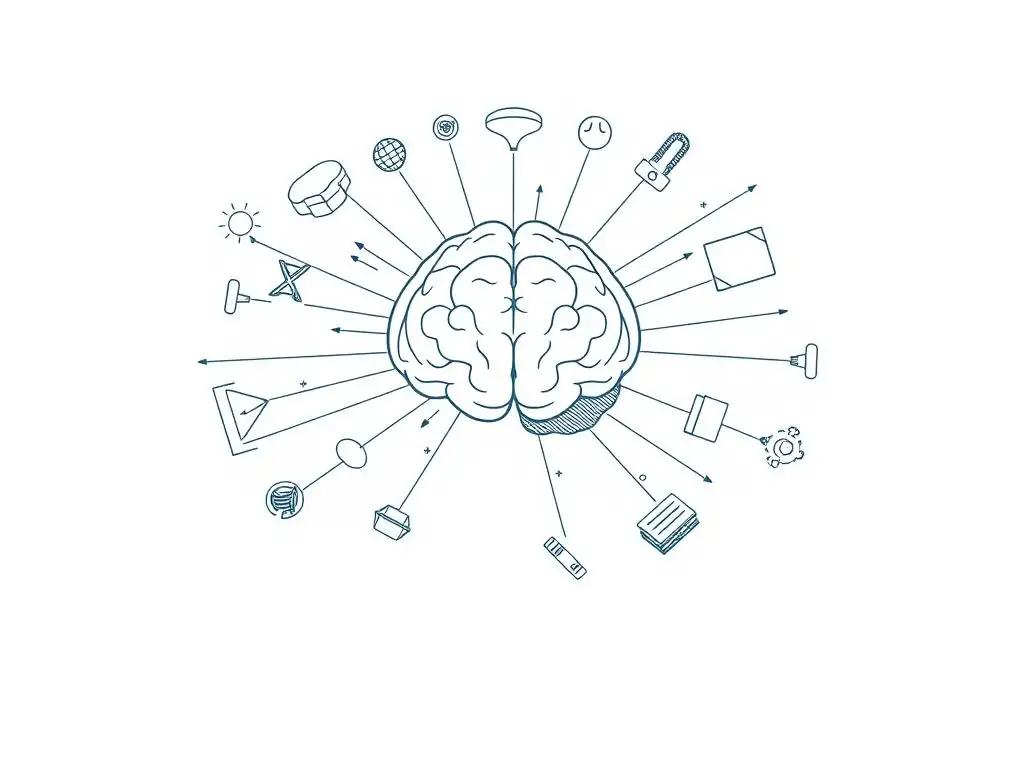
A crucial aspect of boosting creativity with divergent thinking lies in nurturing a mindset conducive to innovation. This involves actively cultivating specific habits and attitudes that encourage the generation of diverse ideas and solutions.
Cultivating a Creative Mindset: Fostering Innovation
This isn't just about passively waiting for inspiration to strike; it's about proactively creating the conditions for creative breakthroughs. Consider these strategies:
- Embrace Curiosity: Ask "what if?" questions constantly. Explore different perspectives and challenge assumptions. Curiosity fuels the exploration of unconventional paths, leading to unique solutions. This active questioning is a cornerstone of boosting creativity with divergent thinking.
- Practice Mindfulness: Mindfulness techniques, such as meditation, can help quiet the mental chatter and improve focus, creating space for innovative ideas to emerge. By reducing mental clutter, you create room for more expansive and creative thinking.
- Seek Inspiration: Engage with diverse sources of inspiration, such as art, music, nature, and other fields unrelated to your current challenge. Exposure to new ideas and perspectives can spark unexpected connections and lead to innovative solutions. This cross-pollination of ideas is a powerful method for boosting creativity with divergent thinking.
- Embrace Failure: See failures not as setbacks, but as valuable learning experiences. Analyze what went wrong and use this knowledge to refine your approach. This iterative process is essential for fostering resilience and promoting continuous improvement in your creative problem-solving skills.
Enhancing Your Creative Problem-Solving Skills Through Practice
Consistent practice is essential for honing your divergent thinking skills and boosting creativity. Just like any other skill, divergent thinking improves with deliberate and focused effort.
Enhancing Your Creative Problem-Solving Skills Through Practice
Here are practical strategies to enhance your skills:
- Regular Brainstorming Sessions: Dedicate time to regular brainstorming sessions, either individually or with a group. Set a timer and focus on generating as many ideas as possible, without judgment or self-criticism. Quantity over quality in the initial stages is key.
- SCAMPER Technique: Use the SCAMPER checklist (Substitute, Combine, Adapt, Modify, Put to other uses, Eliminate, Reverse) as a framework for generating new ideas. This structured approach can help you systematically explore different avenues for problem-solving.
- Mind Mapping: Visually organize your ideas using mind maps. This technique helps to identify connections between seemingly disparate concepts and fosters more expansive thinking.
- Role-Playing: Try adopting different perspectives and roles to understand the problem from various viewpoints. This can unlock new insights and creative solutions.
By consistently practicing these techniques, you'll significantly improve your ability to generate creative solutions and boost creativity with divergent thinking, leading to more innovative and effective problem-solving. Remember, the more you practice, the more naturally divergent thinking will become a part of your problem-solving process.
Divergent Thinking Exercises to Enhance Creativity

Divergent thinking, the ability to generate multiple solutions to a single problem, is a crucial skill for boosting creativity. It's about expanding your options, exploring possibilities, and thinking outside the box. This section will explore practical exercises to cultivate this vital skill, moving from simple daily practices to more in-depth explorations. Remember, the key to mastering divergent thinking is consistent practice and a willingness to embrace unconventional ideas. The more you practice, the more naturally your mind will begin to generate a wider range of creative solutions.
Quick Divergent Thinking Exercises for Daily Use
Incorporating quick, daily exercises can significantly boost your divergent thinking capabilities. These are easily integrated into your routine and require minimal time commitment. Even a few minutes a day can make a noticeable difference in your creative problem-solving abilities.
- The "SCAMPER" Technique: This mnemonic device prompts you to consider different ways to improve or modify an existing concept. Ask yourself: Substitute, Combine, Adapt, Modify/Magnify, Put to other uses, Eliminate, and Reverse. For example, if you're trying to boost creativity with divergent thinking, apply SCAMPER to a typical brainstorming session: Substitute traditional brainstorming with a mind map; Combine brainstorming with a walk in nature; Adapt a problem-solving technique from another field.
- Random Word Association: Select a random word (from a dictionary, a magazine, or even a random word generator). Then, spend 5-10 minutes listing everything that comes to mind when you think about that word. Don't censor yourself; let your thoughts flow freely. This helps to break free from habitual thought patterns and fosters unexpected connections.
- "What If...?" Scenarios: Take a familiar object or situation and ask yourself, "What if...?" For instance, "What if gravity suddenly disappeared?" or "What if cars ran on water?" This exercise forces your mind to consider unusual possibilities and challenge assumptions. This simple yet effective method allows for the generation of novel ideas, directly impacting your ability to boost creativity with divergent thinking.
More Advanced Divergent Thinking Exercises for Deeper Exploration
These exercises require a more significant time commitment and encourage a deeper dive into the creative process. They're ideal for tackling more complex problems or when you need to generate a wider range of innovative solutions.
- Mind Mapping: Begin with your central problem or idea in the center of a page. Then, branch out from the center, adding related ideas, concepts, and solutions. Use different colors, images, and keywords to make the map visually engaging and stimulating. This visual approach facilitates the generation of a broader spectrum of ideas compared to linear methods.
- Role-Playing: Imagine you're someone else—a child, an expert in a different field, or even a fictional character. How would they approach the problem? This shift in perspective can unlock new insights and creative solutions you might not have considered otherwise. This technique is particularly useful for overcoming mental blocks and expanding your perspective when attempting to boost creativity with divergent thinking.
- Reverse Brainstorming: Instead of looking for solutions, focus on identifying potential problems or obstacles. Then, brainstorm ways to avoid those problems. This approach can lead to unexpected solutions by forcing you to think critically about potential challenges. This technique is excellent for identifying potential pitfalls and mitigating risks associated with novel solutions.
Tools and Resources to Support Divergent Thinking
While practice is key, certain tools and resources can significantly enhance your divergent thinking abilities.
| Tool/Resource | Description | Benefits |
|---|---|---|
| Mind Mapping Software | Digital tools for creating and organizing mind maps. | Enhanced visualization, easier collaboration, and improved organization of ideas. |
| Random Word Generators | Online tools that generate random words for association exercises. | Provides fresh, unexpected starting points for creative thinking. |
| Idea Management Platforms | Platforms for capturing, organizing, and sharing ideas. | Centralized repository for ideas, facilitating collaboration and tracking progress. |
| Books on Creativity & Innovation | Numerous books offer techniques and strategies for enhancing creative problem-solving. | Provides structured approaches and diverse perspectives on fostering divergent thinking. |
Remember, consistently practicing these exercises and utilizing available resources will significantly improve your ability to boost creativity with divergent thinking. Embrace the unexpected, challenge assumptions, and enjoy the process of exploring numerous solutions.
Measuring the Effectiveness of Your Divergent Thinking Strategies
Boosting your creativity with divergent thinking isn't just about brainstorming; it's about strategically generating diverse ideas and then evaluating their potential. Measuring the effectiveness of your divergent thinking strategies is crucial for continuous improvement. This involves tracking your progress, identifying areas needing refinement, and ultimately maximizing your creative output. Without a system for measuring results, you're essentially navigating in the dark, potentially missing opportunities for significant breakthroughs.
Tracking Your Progress and Identifying Areas for Improvement
Tracking your progress in divergent thinking requires a structured approach. Simply noting down ideas isn't enough; you need to analyze the quality and quantity of those ideas, and how effectively they contribute to problem-solving. Consider these methods:
- Idea Quantity: Keep a log of the number of ideas generated during each brainstorming session. This provides a baseline measure of your ideation fluency. For example, if you consistently generate fewer than 10 ideas in a 30-minute session, you might need to explore techniques to enhance your idea generation process. Aim for a steady increase in quantity over time.
- Idea Quality: This is more subjective but equally important. Use a rating system (e.g., 1-5 stars) to assess the novelty, feasibility, and potential impact of each idea. Factors to consider include: originality (how unique is the idea? ), practicality (how easily could it be implemented? ), and impact (how significant would the solution be?). Regularly reviewing these ratings will help pinpoint strengths and weaknesses in your approach.
- Implementation Rate: Don't just generate ideas; track how many you actually implement. This metric reveals the gap between ideation and action. A low implementation rate might indicate issues with idea selection, feasibility assessment, or a lack of follow-through. Analyzing this data can highlight areas for improvement in your decision-making process.
- Time Tracking: Monitor the time spent on each stage of the divergent thinking process—from initial problem definition to idea generation and evaluation. This helps identify bottlenecks and optimize your workflow. For instance, if you spend an excessive amount of time evaluating ideas, you might need to streamline that process.
The key is not to prioritize what's on your schedule, but to schedule your priorities.
– Stephen Covey. This applies equally to divergent thinking. Prioritizing the right ideas for implementation is critical.
Consider using a simple spreadsheet or a dedicated project management tool to track these metrics. Regularly reviewing this data will provide valuable insights into your strengths and weaknesses, allowing you to refine your strategies for optimal results. The goal isn’t perfection, but continuous improvement.
Refining Your Approach for Optimal Results
Once you've tracked your progress and identified areas for improvement, the next step is to refine your approach. This involves strategically adjusting your techniques and processes based on the data you've collected. Here are some strategies:
- Technique Diversification: If your idea generation is consistently low, experiment with different brainstorming techniques. Explore methods like SCAMPER, mind mapping, or lateral thinking puzzles. Variety stimulates creativity and can lead to unexpected breakthroughs.
- Environmental Optimization: Your environment significantly impacts creative output. Experiment with different settings—a quiet room, a bustling café, or even a walk in nature—to determine which environment best fosters your divergent thinking.
- Targeted Skill Development: If you consistently struggle with evaluating the feasibility of your ideas, focus on improving your critical thinking skills. This could involve taking courses, reading relevant literature, or seeking mentorship.
- Collaboration and Feedback: Seek feedback from others on your ideas. A fresh perspective can identify flaws or hidden potential that you might have overlooked. Collaborative brainstorming sessions can also spark new ideas and improve the overall quality of your output.
| Improvement Area | Strategy | Example |
|---|---|---|
| Low Idea Quantity | Use SCAMPER, Mind Mapping | Apply SCAMPER to a product design challenge |
| Poor Idea Quality | Seek external feedback, refine criteria | Present ideas to a colleague for evaluation |
| Low Implementation Rate | Prioritize ideas based on impact, feasibility | Focus on the top 3 most impactful ideas |
By consistently tracking your progress, analyzing your results, and refining your approach, you can significantly boost your creativity with divergent thinking and unlock your full problem-solving potential. Remember, the process is iterative; continuous improvement is key to maximizing the effectiveness of your creative strategies. Embrace experimentation and don't be afraid to adjust your approach as needed. The more you practice and refine your techniques, the more proficient you'll become at generating innovative and effective solutions.
Frequently Asked Questions
What is divergent thinking?
Divergent thinking is a thought process used to generate creative ideas by exploring many possible solutions. It's about brainstorming and expanding your options, rather than focusing on a single answer. It's crucial for innovation.
How does divergent thinking boost creativity?
By exploring multiple possibilities, divergent thinking helps you break free from conventional thinking, leading to unconventional and innovative solutions. It encourages lateral thinking and "out-of-the-box" ideas.
What are some techniques to improve divergent thinking?
Techniques include brainstorming, mind mapping, freewriting, and SCAMPER (Substitute, Combine, Adapt, Modify, Put to other uses, Eliminate, Reverse). Practice and persistence are key to improvement.
How can I use divergent thinking in my daily life?
Apply it to problem-solving, decision-making, and even simple tasks. For example, brainstorm multiple ways to organize your workspace or plan your day to increase efficiency and productivity.
How is divergent thinking different from convergent thinking?
Convergent thinking focuses on finding one correct answer, while divergent thinking aims to generate many possible solutions. They are complementary processes, both vital for effective problem-solving.
Final Reflection: Unleashing the Power of Divergent Thought
The ability to think divergently is no longer a desirable skill; it's a necessity for navigating the complexities of the 21st century. In a world saturated with information and demanding innovative solutions, the capacity to generate multiple, original ideas is the key to unlocking breakthroughs in every field, from scientific discovery to artistic expression. This capacity is not innate; it's a muscle that can be strengthened and honed, leading to a richer, more fulfilling life.
Divergent thinking has profoundly shaped the cultural landscape, influencing everything from the technological advancements that define our era to the artistic movements that challenge our perspectives. It's the driving force behind progress, constantly pushing the boundaries of what's possible. As Edward de Bono famously stated, The greatest barrier to problem-solving is the inability to see the problem.
Divergent thinking dismantles these barriers, allowing us to approach challenges from unexpected angles and uncover solutions we might never have considered otherwise. This resonates deeply with me, as I've witnessed firsthand the transformative power of embracing diverse perspectives and challenging assumptions.
Now, consider your own creative potential. What challenges are you facing that could benefit from a burst of divergent thinking? I invite you to actively cultivate this crucial skill. Start by practicing brainstorming techniques, embracing failure as a learning opportunity, and actively seeking out diverse perspectives. The world needs your unique ideas, your innovative solutions, and your ability to see beyond the obvious. Embrace the power of divergent thinking and unlock a future brimming with possibilities.
Unleash Your Creative Powerhouse: Expand Your Thinking Today!
Thank you for exploring the power of divergent thinking! You've gained valuable tools to approach challenges with fresh perspectives. Ready to apply these insights?
- Start a Brainstorming Session: Dedicate 15 minutes today to tackling a current problem using the divergent thinking techniques discussed. Imagine at least five wildly different solutions, no matter how unconventional!
- Share Your Breakthrough: Let us know in the comments what surprising solution emerged from your brainstorming. Inspire others with your creative insights!
- Try a Reverse Challenge: Instead of directly solving a problem, identify a limiting factor, and then brainstorm many ways to overcome it.
What unexpected solutions will you discover by embracing the full power of divergent thinking?