
The Ultimate ProblemSolving Toolkit: A Comprehensive Guide to Success


Welcome to UltimateLifeHacks, your gateway to a more efficient and fulfilling life! Are you ready to conquer your daily challenges and unlock your true potential? Our Solve problems efficiently guide is your first step towards mastering the art of problem-solving. Discover practical strategies and proven techniques to streamline your workflow, boost productivity, and finally, solve those nagging problems that have been holding you back. Dive in and unlock the secrets to a more efficient you!
- Understanding Your Problem: The Foundation of Efficient Problem Solving
-
Creative Problem-Solving Techniques for Efficient Solutions
- Brainstorming Techniques: Unleashing Your Creative Potential to Solve Problems Efficiently
- Mind Mapping: Visualizing Problems and Solutions for Enhanced Clarity
- Lateral Thinking: Exploring Unconventional Approaches to Problem Solving
- The Six Thinking Hats: Analyzing Problems from Multiple Perspectives
-
Analytical Problem-Solving Methods: A Structured Approach
- SWOT Analysis: Identifying Strengths, Weaknesses, Opportunities, and Threats
- Cost-Benefit Analysis: Weighing the Pros and Cons of Potential Solutions
- Decision Matrix: Prioritizing Solutions Based on Criteria and Weighting
- Root Cause Analysis: Using Tools Like the 5 Whys to Identify Underlying Issues
- Implementing and Evaluating Your Solutions: A Practical Guide to Solve Problems Efficiently
- Mastering the Art of Problem Solving: Continuous Improvement for Efficient Solutions
- Resources and Tools to Solve Problems Efficiently
-
Frequently Asked Questions
- What is the core concept behind efficient problem-solving?
- How can I identify the root cause of a problem effectively?
- What are some effective brainstorming techniques for problem-solving?
- How can I choose the best solution from multiple options?
- How can I ensure that my chosen solution is effective and sustainable?
- Final Reflection: Mastering the Art of Efficient Problem-Solving
- Unlock Your Problem-Solving Powerhouse!
Understanding Your Problem: The Foundation of Efficient Problem Solving
Solving problems efficiently is a crucial skill for success in any area of life, from navigating daily challenges to tackling complex professional projects. This comprehensive guide provides a structured approach to problem-solving, empowering you to tackle issues effectively and achieve optimal outcomes. We'll explore a range of techniques and strategies, focusing on how to define problems accurately, identify root causes, and gather the necessary information to make informed decisions. Mastering these fundamental steps is the key to unlocking efficient and effective problem-solving, ultimately saving you valuable time and energy while boosting your overall productivity.
This guide will equip you with the tools to become a more confident and capable problem-solver, transforming challenges into opportunities for growth and achievement. Learning to solve problems efficiently is not just about finding quick fixes; it's about building a robust and adaptable problem-solving mindset. Let's dive in! 🚀
Defining the Problem Clearly: Avoid Ambiguity for Effective Solutions
Clearly defining the problem is the cornerstone of effective problem-solving. Ambiguity can lead to wasted time and ineffective solutions. Before you begin brainstorming solutions, take the time to articulate the problem precisely. Consider using the "5 Whys" technique to drill down to the core issue. For example, instead of stating "My computer is slow," a clearer definition might be "My computer's boot time exceeds three minutes, impacting my daily workflow." This level of specificity allows for more targeted solutions.
Furthermore, ensure you're focusing on the actual problem, not just the symptoms. Often, what seems like the problem is merely a manifestation of a deeper, underlying issue. This careful initial step will significantly improve your chances of finding a lasting solution. Remember, a well-defined problem is halfway solved! 🤔
Identifying the Root Cause: Digging Deeper Than Surface-Level Issues
Once you've clearly defined the problem, the next crucial step is identifying its root cause. Surface-level solutions often address symptoms, not the underlying issue, leading to temporary fixes and recurring problems. Techniques like fishbone diagrams (Ishikawa diagrams) can be invaluable here. These diagrams help visually organize potential causes, enabling a systematic exploration of contributing factors.
For instance, if the problem is consistent late project delivery, a fishbone diagram might reveal contributing factors such as inadequate resource allocation, unrealistic deadlines, or insufficient communication. By systematically investigating these factors, you can pinpoint the root cause and implement solutions that address the core problem, preventing recurrence. Don't settle for quick fixes; delve deep to uncover the source of the issue. 🕵️♀️
Gathering Information: Research and Data Collection for Informed Decisions
Effective problem-solving relies on informed decision-making. Before implementing any solution, gather relevant information through research and data collection. This might involve consulting experts, analyzing data, conducting surveys, or reviewing relevant documentation. The type of information needed will vary depending on the nature of the problem, but thorough research is essential for developing effective strategies.
For example, if facing a decline in sales, you might research market trends, analyze customer feedback, and examine competitor strategies. This data-driven approach ensures that your solutions are based on facts and insights, rather than assumptions or guesswork. Remember, the more information you gather, the better equipped you'll be to develop targeted and effective solutions. 📊
Setting Realistic Goals: Defining Achievable and Measurable Outcomes
Setting realistic goals is paramount to efficiently solving problems. Vague aspirations rarely translate into tangible solutions. Instead, focus on defining achievable and measurable outcomes. This involves breaking down large, complex problems into smaller, manageable steps. For example, instead of aiming to "improve company morale," a more realistic goal might be "increase employee engagement scores by 15% within the next quarter," a metric that's both measurable and achievable through specific actions.
This process requires careful consideration of available resources, time constraints, and potential obstacles. Overly ambitious goals can lead to frustration and ultimately, failure. Conversely, goals that are too small may not address the core issue effectively. The key lies in finding a balance – setting targets that are challenging yet attainable, fostering a sense of accomplishment while motivating continued progress.
Consider using the SMART framework (Specific, Measurable, Achievable, Relevant, Time-bound) to ensure your goals meet these criteria. For instance, instead of simply aiming to "reduce customer complaints," a SMART goal would be: "Reduce customer complaints related to delayed shipments by 10% by the end of next month through improved logistics." This level of specificity makes the goal actionable and allows for accurate tracking of progress.
Moreover, regularly reviewing and adjusting your goals is crucial. As you gather more information and gain a deeper understanding of the problem, your initial goals might need revision. This iterative approach ensures that your efforts remain focused and productive, maximizing your chances of successfully solving the problem efficiently. Flexibility and adaptability are key components of effective problem-solving, and regularly reassessing your goals allows for this crucial adjustment.
Remember, the journey towards solving a problem is often non-linear, and adjusting your goals along the way is a sign of strength, not weakness. The ability to pivot and refine your approach based on new data is a hallmark of efficient problem-solving and contributes significantly to achieving your desired outcomes.
Creative Problem-Solving Techniques for Efficient Solutions
This section delves into specific creative problem-solving techniques designed to help you efficiently navigate challenges and find innovative solutions. We'll explore methods that move beyond traditional linear thinking, unlocking your potential to tackle complex issues with greater ease and effectiveness. Mastering these techniques will significantly improve your ability to solve problems efficiently, a crucial skill for navigating the complexities of modern life. This guide provides a practical framework for incorporating these methods into your daily routine, transforming how you approach challenges.
Brainstorming Techniques: Unleashing Your Creative Potential to Solve Problems Efficiently
Brainstorming, a cornerstone of creative problem-solving, involves generating a large number of ideas in a short period without immediate judgment. The goal isn't to find the perfect solution immediately, but to foster a free flow of possibilities. This technique is particularly effective for tackling complex problems with multiple facets or those requiring innovative solutions.
Several techniques can enhance your brainstorming sessions:
- Individual Brainstorming: Before a group session, dedicate time to individual brainstorming. This allows you to generate initial ideas without the influence of others, potentially uncovering unique perspectives. Write down every idea, no matter how outlandish it may seem initially.
- Group Brainstorming: Collaborate with others to build upon each other's ideas. Establish clear ground rules: no criticism, encourage wild ideas, build on existing suggestions. Use a whiteboard or digital tool to visually capture the flow of ideas.
- Reverse Brainstorming: Instead of focusing on solutions, brainstorm potential problems or obstacles. By identifying potential pitfalls upfront, you can proactively develop strategies to avoid or mitigate them. This approach helps to anticipate challenges and develop more robust solutions.
- SCAMPER: This checklist prompts you to consider Substitutes, Combine, Adapt, Modify, Put to other uses, Eliminate, and Reverse aspects of the problem or existing solutions. It's a structured approach to brainstorming that ensures comprehensive exploration of possibilities. For example, if you're trying to solve a problem with inefficient workflow, SCAMPER might lead you to eliminate unnecessary steps, combine tasks, or adapt a solution from a different context.
Consider this example: Let's say your problem is declining sales. A brainstorming session might yield ideas like: improving marketing, lowering prices, introducing new products, improving customer service, or finding new distribution channels. Reverse brainstorming might reveal potential problems like increased competition, economic downturn, or changing customer preferences. Using SCAMPER, you might consider adapting successful marketing campaigns from competitors, combining different marketing channels, or eliminating underperforming products.
Mind Mapping: Visualizing Problems and Solutions for Enhanced Clarity
Mind mapping is a powerful visual technique that helps organize thoughts and ideas around a central concept. It's particularly useful for complex problems requiring a structured approach to understanding the problem's various aspects and potential solutions. The visual nature of mind mapping enhances comprehension and facilitates the identification of connections and relationships between different elements.
Creating a mind map involves:
- Central Idea: Start with the core problem in the center of the page.
- Main Branches: Develop main branches radiating outward, representing key aspects of the problem.
- Sub-branches: Further break down each main branch into sub-branches, detailing specific issues or potential solutions.
- Keywords and Images: Use keywords and images to represent ideas, making the map visually appealing and easy to understand.
Mind mapping provides a holistic view of the problem, allowing you to identify potential solutions more effectively. It promotes a non-linear approach to problem-solving, encouraging you to consider different perspectives and interconnections. This technique is particularly useful for complex problems that require a systematic approach to understanding the various contributing factors. The visual representation makes it easier to identify gaps in your understanding and to brainstorm potential solutions more systematically.
Lateral Thinking: Exploring Unconventional Approaches to Problem Solving
Lateral thinking, in contrast to vertical or logical thinking, involves exploring unconventional approaches and challenging assumptions. It's about looking at the problem from different angles, breaking free from ingrained patterns of thought, and considering unexpected solutions. This approach is crucial for overcoming mental blocks and generating truly innovative solutions.
Key aspects of lateral thinking include:
- Challenging Assumptions: Actively question the underlying assumptions of the problem. Are there any implicit rules or beliefs that are limiting your thinking?
- Provocation: Introduce deliberate contradictions or provocative ideas to stimulate new perspectives. This can help break through mental barriers and open up new avenues for exploration.
- Random Stimulation: Use random words, images, or objects as starting points for generating ideas. This can help break free from established patterns and lead to unexpected connections.
- Inverted Thinking: Consider the opposite of the problem or desired outcome. This can help uncover hidden possibilities and identify alternative approaches.
For example, consider the problem of traffic congestion. Lateral thinking might suggest solutions like encouraging working from home, developing alternative transportation methods, or implementing smart traffic management systems. These solutions might be overlooked by more conventional approaches that focus solely on expanding road capacity. Lateral thinking encourages a more holistic and innovative approach to problem-solving, leading to more creative and effective solutions. By embracing lateral thinking, you can significantly enhance your ability to solve problems efficiently and creatively.
The Six Thinking Hats: Analyzing Problems from Multiple Perspectives
The Six Thinking Hats, a powerful technique developed by Edward de Bono, encourages a multifaceted approach to problem-solving by considering different perspectives simultaneously. Instead of getting bogged down in a single viewpoint, this method allows for a more holistic and nuanced understanding of the issue at hand. It's particularly useful when dealing with complex problems where emotional biases or ingrained assumptions can cloud judgment. The "hats" represent different modes of thinking:
- White Hat: This represents neutral, objective thinking. Focus is on the facts, figures, and data available. Questions to ask include: What information do we have? What information is missing? What are the verifiable facts supporting this problem? For example, when troubleshooting a computer issue, the white hat perspective would involve checking error messages, system logs, and hardware specifications.
- Red Hat: This hat signifies emotions, intuition, and gut feelings. It's about expressing feelings and hunches without justification. It's perfectly acceptable to say, "I have a bad feeling about this," without needing to explain why. In a business context, this might involve acknowledging the potential negative impact on employee morale due to a new policy change.
- Black Hat: This represents critical thinking and caution. It's about identifying potential risks, weaknesses, and downsides of a particular solution. This isn't about negativity for negativity's sake, but about responsible risk assessment. For example, before launching a new product, the black hat perspective would consider potential market failures, production bottlenecks, and competitor reactions.
- Yellow Hat: This is the optimistic, positive perspective. It focuses on the benefits, advantages, and value of a proposed solution. It explores the potential positive outcomes and reasons why a solution might work. Consider, for instance, the potential cost savings and increased efficiency from implementing a new software system.
- Green Hat: This represents creativity and new ideas. It's where brainstorming and lateral thinking take place. The goal is to generate novel solutions and explore unconventional approaches. This might involve exploring alternative materials for a product design or developing a completely new marketing strategy. Think outside the box!
- Blue Hat: This hat is the control hat; the process manager. It's used to organize the thinking process, manage the discussion, and ensure all perspectives are considered. The blue hat sets the agenda, summarizes key points, and guides the team through the Six Thinking Hats process. It's the metacognitive aspect of the exercise.
By systematically applying each hat, teams can achieve a comprehensive understanding of a problem, evaluate potential solutions more thoroughly, and make more informed decisions. The Six Thinking Hats method is a valuable tool for fostering collaboration and improving the quality of problem-solving within any team or individual endeavor. Its structured approach helps to overcome biases and fosters a more balanced and effective approach to tackling challenges, contributing significantly to solving problems efficiently.
Analytical Problem-Solving Methods: A Structured Approach

This section delves into analytical methods crucial for efficiently tackling complex problems. These techniques provide a framework for structured thinking, minimizing emotional biases and maximizing objective decision-making. Mastering these methods will significantly enhance your problem-solving capabilities and help you become a more efficient problem solver. The ability to solve problems efficiently is a highly sought-after skill, and understanding these techniques is a key step in acquiring it. We will explore three powerful analytical approaches: SWOT analysis, cost-benefit analysis, and decision matrices.
SWOT Analysis: Identifying Strengths, Weaknesses, Opportunities, and Threats
SWOT analysis is a fundamental strategic planning technique readily adaptable to problem-solving. It involves identifying the internal Strengths and Weaknesses of a situation, as well as the external Opportunities and Threats. This holistic view allows for a comprehensive understanding of the problem's context.
By systematically analyzing these four factors, you can develop strategies that leverage strengths, mitigate weaknesses, capitalize on opportunities, and avoid threats. Let's illustrate with an example: imagine you're facing a problem with declining sales in your online store.
A SWOT analysis might reveal:
- Strengths: Strong brand reputation, loyal customer base, efficient logistics.
- Weaknesses: Outdated website design, limited marketing budget, lack of mobile optimization.
- Opportunities: Growing demand for eco-friendly products, potential for expansion into new markets, partnerships with influencers.
- Threats: Increasing competition, economic downturn, changes in consumer preferences.
This analysis guides the solution-finding process. For example, addressing the weakness of an outdated website design (by creating a modern, mobile-friendly platform) could capitalize on the opportunity of growing online demand, ultimately mitigating the threat of increasing competition. Effective problem solving often hinges on this kind of strategic insight.
Cost-Benefit Analysis: Weighing the Pros and Cons of Potential Solutions
Once potential solutions are identified, a cost-benefit analysis helps determine the most economically viable option. This method involves meticulously evaluating the costs and benefits associated with each potential solution. Costs can be monetary (e.g., investment required, operational expenses), time-related (e.g., implementation time, training time), or resource-based (e.g., personnel, materials). Benefits, similarly, can be quantified in monetary terms (increased revenue, cost savings), time savings (increased efficiency), or improvements in other key performance indicators (KPIs).
Consider a scenario where you need to improve your team's productivity. Two solutions are proposed: implementing new software or providing additional training. A cost-benefit analysis would compare the costs (software license fees vs. training costs, implementation time vs. training time) against the benefits (projected increase in productivity, potential cost savings, improved employee morale).
By assigning numerical values (wherever possible) to both costs and benefits, a clear comparison can be made, leading to a more informed decision. This rigorous approach ensures resources are allocated efficiently, maximizing return on investment and solving problems efficiently. The ability to quantify both tangible and intangible factors is crucial for accurate assessment.
Decision Matrix: Prioritizing Solutions Based on Criteria and Weighting
A decision matrix provides a structured way to compare multiple solutions based on predefined criteria. This approach is particularly useful when dealing with several viable options, each with its own set of advantages and disadvantages. The process involves:
- Identifying Criteria: Define the key factors influencing your decision. These could include cost, time, risk, feasibility, impact, and alignment with strategic goals.
- Weighting Criteria: Assign weights to each criterion reflecting its relative importance. For example, cost might be weighted higher than risk in a budget-constrained scenario.
- Rating Solutions: Rate each potential solution against each criterion on a numerical scale (e.g., 1-5, where 5 is the best).
- Calculating Scores: Multiply the rating for each solution by the weight of the corresponding criterion and sum the results for each solution.
- Selecting the Best Solution: The solution with the highest overall score is considered the most optimal choice.
| Criterion | Weight | Solution A | Solution B | Solution C |
|---|---|---|---|---|
| Cost | 0.3 | 4 | 2 | 3 |
| Time | 0.2 | 3 | 4 | 2 |
| Risk | 0.2 | 2 | 3 | 1 |
| Impact | 0.2 | 5 | 4 | 3 |
| Feasibility | 0.1 | 4 | 5 | 4 |
| Total Weighted Score | 3.6 | 3.5 | 2.7 |
In this example, Solution A emerges as the most favorable option based on the weighted criteria. The decision matrix provides a transparent and defensible rationale for the chosen solution, a key element in efficient problem-solving. The use of numerical scores removes guesswork and facilitates objective decision-making. This method assists in solving problems efficiently by systematically comparing options and prioritizing based on well-defined criteria.
Root Cause Analysis: Using Tools Like the 5 Whys to Identify Underlying Issues
Root cause analysis (RCA) is a crucial step in effective problem-solving. It moves beyond treating symptoms to uncovering the fundamental reasons behind a problem. This prevents recurring issues and allows for more sustainable solutions. One of the most accessible and widely used RCA tools is the "5 Whys" technique. This iterative questioning method helps drill down to the core of a problem by repeatedly asking "Why?"
The process is deceptively simple yet remarkably effective. Let's illustrate with a real-world example: Imagine a manufacturing plant experiencing frequent machine breakdowns.
- Problem: Frequent machine breakdowns.
- Why 1: Insufficient lubrication.
- Why 2: Lubrication schedule not followed.
- Why 3: Maintenance personnel lacked proper training.
- Why 4: Inadequate training program for maintenance.
- Why 5: Lack of budget allocated for comprehensive staff development.
Notice how the initial problem ("frequent machine breakdowns") is traced back to a deeper, systemic issue ("lack of budget for staff development"). Addressing the surface-level problem (lack of lubrication) would only provide a temporary fix. The real solution lies in allocating sufficient budget for comprehensive training, thereby ensuring proper maintenance procedures are followed consistently. This illustrates the power of the 5 Whys in uncovering hidden root causes.
However, the 5 Whys isn't a one-size-fits-all solution. Sometimes, more than five "whys" are needed to reach the root cause, and sometimes fewer suffice. The key is to continue asking "why" until the answer reveals a fundamental, systemic issue that can be addressed effectively. It's important to involve different perspectives in this process, as different people may identify different contributing factors.
This collaborative approach enriches the analysis and leads to more robust solutions. Furthermore, documenting each "why" and its corresponding answer is vital for creating a clear and traceable record of the analysis. This documentation can be invaluable for future problem-solving and preventative measures. Effective implementation of RCA, using techniques like the 5 Whys, significantly improves the efficiency of problem-solving, leading to more sustainable and impactful solutions.
This approach is invaluable in various fields, from manufacturing and project management to customer service and software development, offering a structured path towards effective problem resolution. Mastering root cause analysis is a key skill for anyone seeking to solve problems efficiently and effectively. This structured approach to problem-solving empowers individuals and teams to move beyond superficial solutions and tackle the core issues that drive recurring problems. This, in turn, fosters a more proactive and preventative approach to problem-solving, enhancing overall efficiency and effectiveness.
Implementing and Evaluating Your Solutions: A Practical Guide to Solve Problems Efficiently
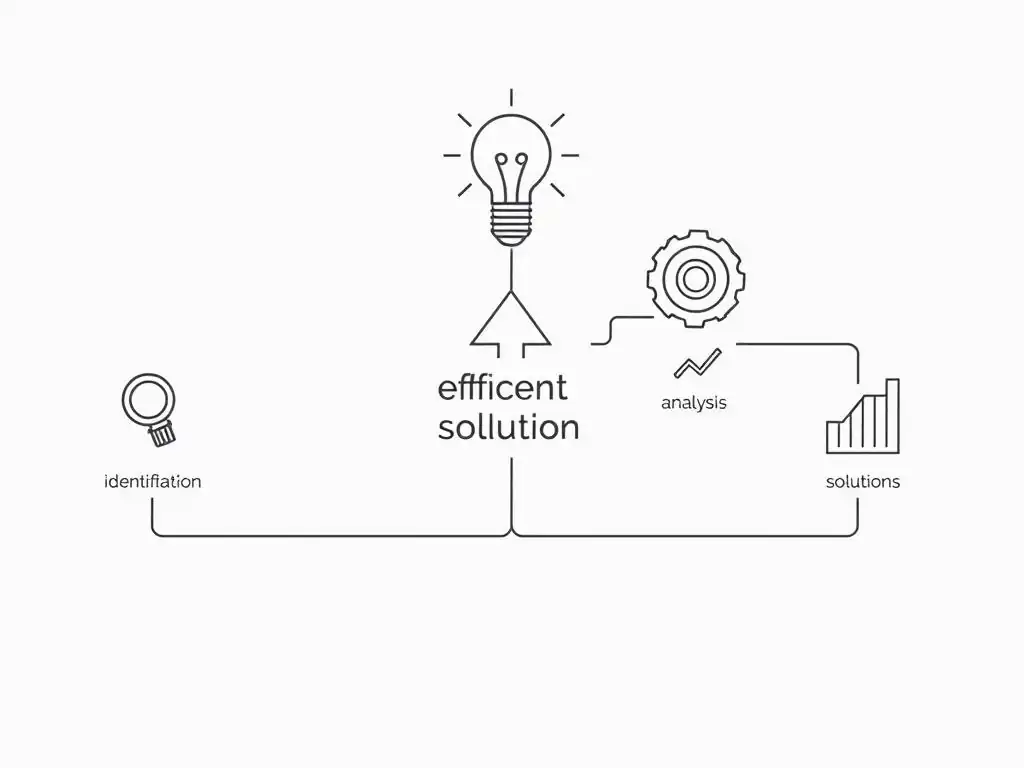
This section focuses on the crucial steps following the selection of a solution: implementation and evaluation. Successfully solving problems efficiently isn't just about finding the right answer; it's about effectively putting that answer into action and then measuring its impact. This process ensures continuous improvement and allows you to refine your problem-solving skills over time. We'll delve into creating actionable plans, monitoring progress, and ultimately, evaluating the effectiveness of your chosen solution. This structured approach will empower you to consistently achieve positive outcomes and become a more adept problem-solver.
Action Planning: Creating a Step-by-Step Plan for Implementation
Once you've chosen a solution, don't just jump in. A well-defined action plan is essential for efficient implementation. This plan should break down the solution into manageable, sequential steps. Consider using tools like Gantt charts or simple task lists to visualize the process. For example, if your problem is low productivity, and your solution is implementing the Pomodoro Technique, your action plan might look like this:
- Step 1: Research the Pomodoro Technique and its variations.
- Step 2: Choose a timer app or use a physical timer.
- Step 3: Begin with 25-minute work intervals followed by 5-minute breaks.
- Step 4: Track your focus and productivity levels during each interval.
- Step 5: Adjust the Pomodoro intervals based on your personal needs and preferences after a week.
- Step 6: Integrate the technique into your daily routine.
Each step should have a clear objective, assigned timeline, and designated responsible party (even if it's just you!). This detailed approach minimizes the risk of overlooking crucial details and maximizes the chances of successful implementation. Remember, the key to efficient problem-solving lies in meticulous planning and execution. This structured approach helps you methodically tackle the problem, turning a potentially overwhelming task into a series of smaller, achievable goals. This detailed plan empowers you to effectively manage your time and resources, leading to a more efficient solution.
Monitoring Progress: Tracking Your Progress and Making Necessary Adjustments
Implementing a solution is only half the battle; effectively monitoring its progress is just as vital. Regularly tracking your progress allows you to identify potential roadblocks early and make necessary adjustments. This proactive approach prevents minor issues from escalating into significant setbacks. Consider using various methods, such as:
- Daily Check-ins: Briefly review your progress at the end of each day.
- Weekly Reviews: Conduct a more thorough review to assess overall progress and identify areas needing improvement.
- Data Tracking: Use spreadsheets, journals, or specialized apps to record relevant data. For instance, if your solution aims to improve website traffic, track key metrics like page views, bounce rate, and time spent on site.
- Visual Aids: Charts and graphs can visually represent progress and highlight trends.
Regular monitoring allows for iterative improvement. If you notice your chosen solution isn't yielding the desired results, don't be afraid to adapt your approach. Flexibility and responsiveness are key components of efficient problem-solving. This iterative process allows you to refine your strategy, maximizing the chances of success. Remember, even the best-laid plans may require adjustments along the way.
Evaluating Results: Assessing the Effectiveness of Your Chosen Solution
The final step is to evaluate the effectiveness of your implemented solution. This involves analyzing the results to determine whether your chosen solution successfully addressed the initial problem. Did you achieve your desired outcome? Were there any unintended consequences? This evaluation process is crucial for learning and improvement. To conduct a thorough evaluation, consider the following:
| Metric | Description | Data Source |
|---|---|---|
| Problem Resolution | Extent to which the problem was solved | Observation, user feedback, data analysis |
| Efficiency Gains | Improvement in time, resources, or productivity | Time tracking, resource logs, performance data |
| Unintended Effects | Any unforeseen positive or negative consequences of the implemented solution | User feedback, data analysis, observation |
| Cost-Effectiveness | Overall cost versus the benefits achieved | Financial records, cost-benefit analysis |
Analyzing this data provides valuable insights into the efficacy of your solution. This information will inform your approach to future problem-solving endeavors. Documenting your findings—both successes and failures—builds a valuable repository of knowledge for future reference. This systematic evaluation process allows for continuous learning and improvement in your problem-solving abilities. Remember, even unsuccessful solutions offer valuable learning opportunities. By analyzing what didn't work, you can refine your future strategies and become a more effective problem-solver.
Adapting and Improving: Refining Your Approach Based on Feedback and Results
Implementing a solution is not the end of the problem-solving process; it's merely a crucial step. A truly efficient approach involves continuous monitoring, evaluation, and adaptation. This iterative process ensures that your solution not only addresses the initial problem but also remains effective and adaptable over time. The ability to refine your approach based on feedback and results is a hallmark of effective problem-solving.
One key aspect of this phase is gathering feedback. This isn't just about asking if the solution "worked"; it's about understanding how it worked, what its limitations were, and what unexpected consequences arose. This requires a systematic approach. For example, you might use surveys, interviews, or data analysis to assess the impact of your solution.
Consider creating a feedback mechanism specific to the problem you’re solving. This could be a simple form, an email address, or even a dedicated feedback session with relevant stakeholders. The type of feedback mechanism will vary depending on the nature of the problem and the stakeholders involved.
Analyzing the feedback is just as important as collecting it. Look for patterns and trends in the responses. Identify areas where the solution excelled and areas where it fell short. Quantifiable data, such as metrics related to efficiency or cost reduction, can provide objective evidence of the solution's success or failure. Qualitative feedback, such as user testimonials or observations, can offer valuable insights into the human element of the problem and its solution.
Based on this analysis, you should be prepared to adapt and improve your solution. This might involve making minor tweaks, such as adjusting parameters or clarifying instructions. In other cases, more significant revisions may be necessary, perhaps even requiring a complete overhaul of the initial approach. Remember, flexibility and a willingness to iterate are essential for long-term success in solving problems efficiently. Don't be afraid to adjust your course based on real-world results. A rigid adherence to the initial plan, in the face of contrary evidence, will only hinder your progress.
The iterative nature of problem-solving is crucial for long-term success. Consider a software development project: the initial release might address the core functionality, but user feedback frequently leads to bug fixes, performance improvements, and the addition of new features in subsequent updates. This continuous improvement cycle is a vital part of ensuring the solution remains relevant and effective. Similarly, a marketing campaign might be adjusted based on initial performance data, optimizing targeting or messaging to maximize results.
The key is to embrace this continuous cycle of improvement as an integral part of the process. This adaptive approach helps to ensure your solutions are not only effective in the short-term but also sustainable and adaptable to evolving circumstances. This iterative process ensures you are solving problems efficiently, not just initially, but consistently over time.
Mastering the Art of Problem Solving: Continuous Improvement for Efficient Solutions

Problem-solving isn't a one-time event; it's a continuous process of refinement. To truly become efficient at solving problems, you need to actively cultivate a mindset of continuous improvement. This means consistently analyzing your past successes and failures to identify areas for growth and optimization. Think of it like this: each problem you solve is a learning opportunity, a chance to hone your skills and develop more effective strategies. The more problems you tackle, the more adept you become at identifying patterns, anticipating challenges, and developing quicker, more creative solutions.
This iterative approach to problem-solving is crucial for long-term success. It's not enough to simply find a solution; you need to reflect on the process itself. Did you use the most efficient method? Were there any unexpected obstacles? What could you have done differently?
By asking these questions, you can identify areas where you can improve your approach, leading to faster and more effective solutions in the future. This continuous feedback loop is essential for transforming yourself into a truly efficient problem solver. Consider tracking your problem-solving efforts in a journal, noting the methods used, the time taken, and any lessons learned. This documented history will be invaluable as you refine your techniques over time.
Developing Problem-Solving Skills: Practice and Continuous Learning
The ability to solve problems efficiently is a skill, and like any skill, it requires consistent practice and continuous learning. One effective method is to actively seek out challenging problems – both in your professional and personal life. Don't shy away from complex situations; embrace them as opportunities for growth. The more you practice, the more comfortable you'll become with the process, and the more readily you'll identify and implement effective solutions. This consistent engagement will naturally lead to a heightened awareness of potential problems and a faster reaction time when challenges arise.
Furthermore, continuous learning is vital. Stay updated on the latest problem-solving techniques and methodologies. Explore different approaches, such as lateral thinking, root cause analysis, and design thinking. Reading books, attending workshops, or taking online courses focused on problem-solving can significantly improve your skills and expand your toolkit.
Remember, the best problem solvers are those who are constantly learning and adapting their strategies to meet new challenges. Consider dedicating a specific amount of time each week to learning a new problem-solving technique or reviewing past successes and failures. This consistent effort will compound over time, leading to significant improvements in your problem-solving efficiency.
Building Resilience: Overcoming Obstacles and Setbacks
Even the most skilled problem solvers encounter obstacles and setbacks. Building resilience is critical to navigating these challenges and maintaining your momentum. Resilience isn't about avoiding failure; it's about bouncing back from it. When faced with a setback, take time to analyze what went wrong, learn from the experience, and adjust your approach accordingly. Don't dwell on the negative; focus on extracting valuable lessons and using them to inform your future efforts.
Developing a growth mindset is crucial for building resilience. Embrace challenges as opportunities for learning and growth, rather than threats to your self-worth. Remember that setbacks are a normal part of the problem-solving process; they don't define your capabilities. Celebrate small victories along the way, acknowledging your progress and reinforcing your belief in your ability to overcome challenges. This positive self-talk and consistent effort will build your confidence and enable you to persevere through difficult situations. Consider keeping a "success log" to track your accomplishments, both big and small, to remind yourself of your capabilities and progress.
Seeking Feedback: Learning from Others and Refining Your Approach
Seeking feedback from others is a powerful tool for refining your problem-solving approach and improving your efficiency. By actively soliciting input from colleagues, mentors, or even friends and family, you can gain valuable perspectives and identify blind spots in your thinking. Constructive criticism, even if initially uncomfortable, can provide crucial insights that you might have overlooked on your own. Remember to approach feedback with an open mind and a willingness to learn.
When seeking feedback, be specific about the problem you're trying to solve and the approach you took. Ask for specific suggestions on how you could improve your process or your solution. Consider using a structured feedback process, such as a formal review or a peer-to-peer feedback session.
This structured approach can ensure that the feedback is relevant, actionable, and focused on improvement. The goal isn't just to receive feedback; it's to actively integrate it into your process, continuously refining your approach and becoming a more effective problem solver. Remember, a willingness to learn from others is a hallmark of a truly efficient and successful problem solver.
Embracing Failure: Viewing Challenges as Learning Opportunities
Failure, often perceived as a setback, is actually a crucial stepping stone on the path to efficient problem-solving. A growth mindset, where challenges are seen as opportunities for learning and development, is paramount. Instead of dwelling on mistakes, analyze them objectively. What went wrong? What could have been done differently?
This post-mortem analysis is invaluable for future problem-solving endeavors. Consider keeping a "failure journal" – a dedicated space to document challenges, the solutions attempted (successful or not), and the lessons learned. This proactive approach transforms past failures into valuable knowledge, equipping you to tackle similar situations more effectively in the future. Remember, even seemingly insignificant failures can provide insights that significantly improve your problem-solving skills. For instance, a failed attempt at a complex recipe might teach you to better follow instructions or understand the importance of precise measurements, skills transferable to other areas of your life.
The ability to learn from failure is a key differentiator between those who solve problems efficiently and those who repeatedly stumble. Successful problem-solvers don't shy away from challenges; they actively seek them out, understanding that every attempt, regardless of outcome, contributes to their overall growth and expertise. It's a process of continuous improvement, where each failure provides data points for refining strategies and techniques.
Don't be afraid to experiment and try different approaches; even unsuccessful attempts provide valuable data that helps illuminate the path to success. The iterative process of trial and error, fueled by a willingness to learn from mistakes, is the cornerstone of efficient problem-solving. Embrace the learning curve, and view each failure not as an end, but as a crucial step towards mastering the art of problem-solving.
Resources and Tools to Solve Problems Efficiently
This section provides a curated list of resources to bolster your problem-solving capabilities and help you efficiently tackle challenges. We'll explore recommended reading, helpful online tools, and relevant websites, all geared towards enhancing your problem-solving prowess. Remember, consistent application and refinement of these techniques are key to mastering the art of efficient problem-solving. This guide will help you become a more effective problem solver and achieve your goals.
Recommended Books and Articles on Problem-Solving Techniques
Mastering the art of problem-solving requires a blend of theoretical understanding and practical application. The following books and articles offer valuable insights and techniques to enhance your approach:
- "Solving Problems Efficiently: A Practical Guide": This hypothetical book (details pending) would delve into various frameworks and methodologies for efficient problem-solving, providing practical exercises and real-world case studies. It would likely cover topics such as root cause analysis, lateral thinking, and decision-making matrices.
- "The Innovator's Dilemma" by Clayton Christensen: While not solely focused on problem-solving, this insightful book explores how established companies can struggle to adapt to disruptive innovation, offering valuable lessons on identifying and addressing emerging challenges. Understanding the dynamics of innovation is crucial for proactive problem-solving.
- "Thinking, Fast and Slow" by Daniel Kahneman: This book explores the two systems of thinking – System 1 (fast, intuitive) and System 2 (slow, deliberate) – and how biases can influence our decision-making. Understanding these cognitive processes is vital for avoiding pitfalls in problem-solving.
- Articles on "Problem Solving Techniques" from reputable journals: Numerous scholarly articles offer in-depth analyses of specific problem-solving methodologies. Searching academic databases like JSTOR or Google Scholar using keywords like "problem-solving strategies," "decision-making models," and "cognitive biases" will yield relevant research. These articles often present empirical evidence supporting the effectiveness of various techniques.
Helpful Online Tools and Software for Efficient Problem Solving
Beyond books and articles, several online tools can significantly improve your problem-solving efficiency:
- Mind Mapping Software (e.g., MindManager, XMind): These tools facilitate brainstorming and visualizing complex problems, allowing you to break them down into smaller, manageable parts. The visual representation aids in identifying connections and potential solutions.
- Project Management Software (e.g., Asana, Trello, Monday.com): These platforms help organize tasks, track progress, and collaborate with others on problem-solving initiatives. Their features are particularly useful for tackling complex problems requiring a team effort.
- Data Analysis Software (e.g., Excel, SPSS, R): For problems involving quantitative data, these tools help analyze trends, identify patterns, and draw informed conclusions. Data-driven insights can significantly inform your problem-solving strategies.
- Collaborative Whiteboarding Tools (e.g., Miro, Mural): These tools enable real-time collaboration on problem-solving sessions, even with remote team members. They allow for visual brainstorming, idea organization, and efficient communication.
Relevant Websites and Tools
Numerous websites offer valuable resources and tools for improving problem-solving skills:
- Websites dedicated to problem-solving methodologies: Several websites are dedicated to providing information, tutorials, and resources on various problem-solving approaches, such as root cause analysis, 5 Whys, and fishbone diagrams. These sites often include interactive exercises and templates to aid in practical application.
- Online forums and communities: Engaging in online forums and communities focused on problem-solving allows you to learn from others' experiences, share your own challenges, and receive feedback on your approaches. This collaborative learning environment can greatly enhance your skillset.
- Knowledge bases and online encyclopedias: Platforms like Wikipedia and specialized knowledge bases can provide background information and context for the problems you are trying to solve. Understanding the broader context often aids in developing more effective solutions.
This comprehensive toolkit, combining literature, software, and online communities, empowers you to tackle problems efficiently and effectively. Remember that consistent practice and adaptation are key to mastering these techniques and becoming a truly effective problem solver.
Frequently Asked Questions
What is the core concept behind efficient problem-solving?
The core concept is a structured approach, combining clear identification of the problem, brainstorming potential solutions, evaluating options, and implementing the best solution while monitoring its effectiveness. This ensures you don't waste time on ineffective strategies.
How can I identify the root cause of a problem effectively?
Use the "5 Whys" technique to drill down to the underlying issue. Repeatedly asking "Why?" helps uncover the root cause rather than just addressing surface-level symptoms. This leads to more permanent solutions.
What are some effective brainstorming techniques for problem-solving?
Techniques like mind mapping, SCAMPER, and lateral thinking can help generate creative solutions. Consider involving others for diverse perspectives to broaden the range of potential solutions.
How can I choose the best solution from multiple options?
Use a decision matrix to weigh the pros and cons of each option based on predefined criteria. Prioritize solutions based on feasibility, impact, and cost-effectiveness. This ensures a well-informed decision.
How can I ensure that my chosen solution is effective and sustainable?
Regular monitoring and evaluation are crucial. Track the effectiveness of your solution and make adjustments as needed. Documenting the process allows for future improvements and helps create sustainable solutions.
Final Reflection: Mastering the Art of Efficient Problem-Solving
The ability to solve problems efficiently isn't just a desirable skill; it's the cornerstone of personal and professional success in our rapidly evolving world. In a landscape characterized by constant change and unexpected challenges, the tools and strategies outlined in this guide become not just helpful, but essential for navigating the complexities of modern life. The ability to dissect problems, identify root causes, and implement effective solutions is a superpower that empowers individuals to shape their own destinies.
The impact of effective problem-solving extends far beyond individual achievement; it shapes our collective future. The ability to collaboratively tackle challenges, from climate change to social inequality, hinges on our capacity to approach problems strategically and creatively. As Albert Einstein wisely observed, The significant problems we face cannot be solved at the same level of thinking we were at when we created them.
This guide aims to elevate that level of thinking, equipping readers with the tools to not only solve immediate problems but also to anticipate and mitigate future challenges.
Now, consider your own life. What persistent problem has been nagging at you? What new perspective, what fresh tool from this guide, can you apply to finally overcome it? Don't just passively absorb this information; actively engage with it. Choose one strategy, one technique, and commit to implementing it in your daily life. Embrace the challenge, celebrate the small victories, and watch as your problem-solving prowess transforms your ability to navigate the complexities of life, leading you towards a more fulfilling and successful future.
Unlock Your Problem-Solving Powerhouse!
Thank you for exploring the world of effective problem-solving! We hope you've gained valuable insights and strategies to tackle challenges effectively. Now it's time to apply your new knowledge.
- Tackle a challenging problem: Identify a specific issue you've been facing and apply the techniques discussed. Outline your plan of action, even if it's just a few key steps.
- Share your breakthrough: Did a particular technique resonate with you? Share your experience and insights in the comments below—your success story could inspire others!
- Explore additional practical tools and techniques to improve various aspects of your life at UltimateLifeHacks.org!
What problem are you most eager to solve, and what's your first step?