
Beyond the Basics: Advanced Tips for Immersive Home Theater Audio

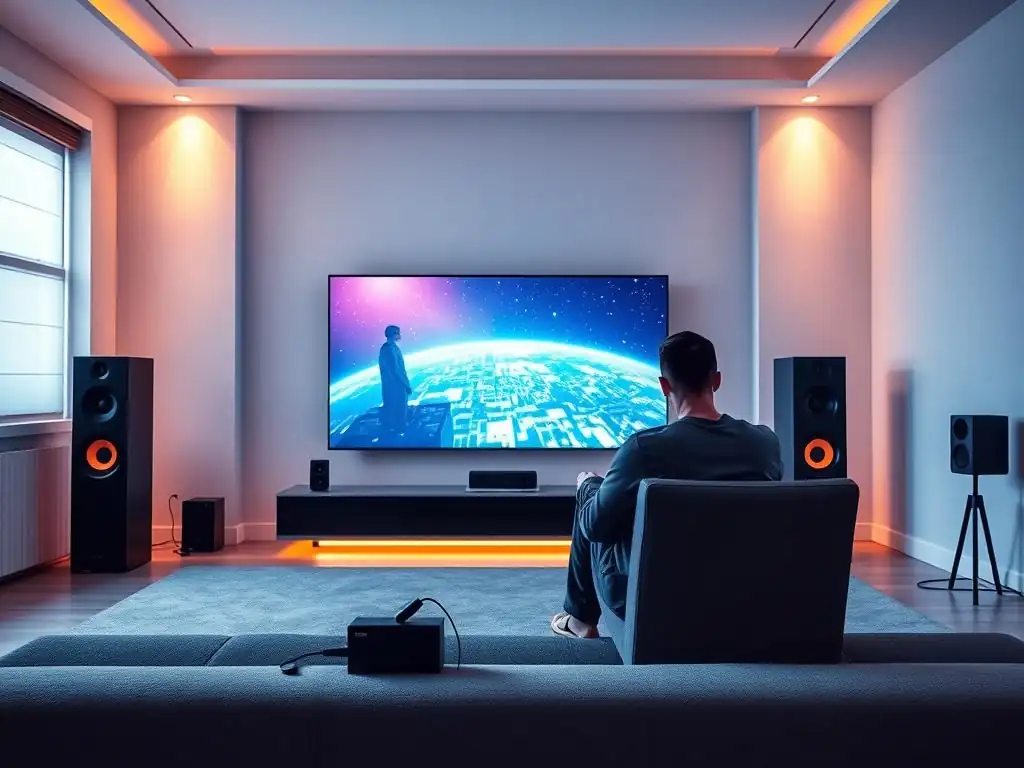
Ready to transform your living room into a cinematic paradise? At UltimateLifeHacks, we're dedicated to helping you unlock your potential and optimize every aspect of your life. This Immersive home theater setup guide isn't just about speakers and screens; it's about crafting an unforgettable viewing experience. Dive in and discover how to elevate your home entertainment to a whole new level – the secrets to truly immersive sound are waiting to be unveiled.
- Understanding True Immersive Home Theater: Beyond 5.1 Surround Sound
- Choosing the Right Equipment for an Immersive Home Theater Setup
-
Advanced Techniques for Optimizing Your Immersive Home Theater Setup
- Room Acoustics and Treatment: Minimizing Reflections and Improving Sound Clarity
- Calibration and Room Correction: Utilizing Audyssey MultEQ XT32 or Dirac Live
- Setting Up Your Audio System: A Step-by-Step Guide for Beginners
- Troubleshooting Common Audio Issues: Fixing Buzzing, Humming, and Other Problems
- Maximizing Your Immersive Home Theater Experience: Beyond the Technicalities
- Budget-Friendly Options for an Immersive Home Theater Setup
- Frequently Asked Questions
- Final Reflection: The Symphony of Sound in Your Living Room
- Unleash the Power of Cinematic Sound!
Understanding True Immersive Home Theater: Beyond 5.1 Surround Sound
Creating a truly immersive home theater experience goes far beyond simply connecting a soundbar or setting up a basic 5.1 surround sound system. This guide delves into the advanced techniques and technologies required to achieve a captivating and realistic soundscape that transports you directly into the heart of your favorite movies and games.
We'll explore the evolution of home theater audio, dissect the intricacies of different audio formats, and provide a detailed guide to speaker placement for optimal immersive sound. Mastering these elements is crucial for building the ultimate home theater setup—a sanctuary of cinematic audio that elevates your entertainment to a whole new level.
This comprehensive guide will help you navigate the world of immersive sound, transforming your home theater from a good experience to a truly unforgettable one. We'll cover everything you need to know to achieve a truly cinematic audio experience, making your "Immersive home theater setup guide" complete and effective.
The Evolution of Home Theater Audio: From Stereo to Dolby Atmos
The journey of home theater audio has been a remarkable one, evolving from simple two-channel stereo systems to the incredibly complex and sophisticated multi-dimensional setups available today. Initially, music and films were experienced through simple stereo systems, with sound emanating from two speakers. This offered a basic sense of directionality, but lacked the depth and immersion we now expect.
The introduction of surround sound, beginning with 5.1 systems (five speakers plus a subwoofer), marked a significant leap forward. These systems added rear speakers to create a more enveloping soundstage, enhancing the sense of realism. However, even 5.1 setups have limitations in their ability to place sound objects precisely within a three-dimensional space.
The next major advancement came with object-based audio formats such as Dolby Atmos, DTS:X, and Auro-3D. These formats moved beyond channel-based systems, allowing sound engineers to place individual sound objects anywhere within a three-dimensional space. This means sounds can be positioned not just left, right, front, and back, but also above and below the listener, creating a truly immersive and realistic soundscape.
This evolution has dramatically increased the realism and emotional impact of home theater audio, leading to a more captivating and engaging viewing experience. The transition from a simple stereo system to a modern Dolby Atmos setup showcases the incredible advancements in audio technology, significantly improving the home entertainment experience.
Decoding Audio Formats: Dolby Atmos, DTS:X, and Auro-3D Explained
Understanding the differences between Dolby Atmos, DTS:X, and Auro-3D is crucial for choosing the right system for your needs. While all three are object-based audio formats, they achieve immersion through slightly different methods.
| Audio Format | Key Features | Number of Channels (Potential) | Height Channels |
|---|---|---|---|
| Dolby Atmos | Height channels, object-based audio, flexible speaker configurations | Virtually unlimited | Up to 4 |
| DTS:X | Object-based audio, flexible speaker configurations, immersive sound | Virtually unlimited | Up to 4 |
| Auro-3D | Height and "Voice of God" channels, object-based audio | Typically 13.1 | Up to 3 |
Dolby Atmos is arguably the most popular, offering a wide range of speaker configurations and a focus on height channels to create a more encompassing soundscape. DTS:X is a strong competitor, known for its flexible speaker layouts and ability to seamlessly adapt to different speaker setups. Auro-3D, while less prevalent, offers a unique "Voice of God" channel for a heightened sense of presence.
The choice of format often depends on personal preference and the specific capabilities of your A/V receiver and speakers. The key takeaway is that all three offer significant improvements over traditional channel-based systems, providing a more immersive and realistic audio experience.
Speaker Placement for Optimal Immersive Sound: A Detailed Guide
Precise speaker placement is paramount for achieving the full potential of an immersive home theater setup. Incorrect placement can severely diminish the impact of object-based audio, leading to a muddled and less-than-ideal listening experience. The optimal placement will vary depending on the specific audio format and the number of speakers in your setup, but some general guidelines apply.
- Front Speakers: Should be placed equidistant from the listening position and at ear level.
- Center Speaker: Placed directly above or below your TV, ensuring dialogue is clear and centered.
- Surround Speakers: Positioned slightly behind and to the sides of the listening position, at ear level or slightly higher.
- Height Speakers: Ideally placed above the listening position, either on the ceiling or on stands, to accurately reproduce overhead sound effects. The exact placement is crucial for creating a realistic three-dimensional soundscape.
- Subwoofer: The placement of the subwoofer is less critical than the other speakers, but it is recommended to experiment with different positions to find the optimal bass response in your room.
Careful consideration of room acoustics is also vital. Room reflections and standing waves can negatively impact sound quality, so using acoustic treatment (bass traps, diffusers, absorbers) can significantly improve the overall listening experience. Achieving the ideal speaker placement might require some experimentation and adjustments, but the resulting improvement in sound quality is well worth the effort. Remember, the goal is to create a balanced and immersive soundscape that accurately recreates the audio environment intended by the sound engineers. A well-placed speaker system is the cornerstone of any truly great immersive home theater setup.
Subwoofer Calibration and Placement for Deep, Powerful Bass
Achieving truly immersive home theater audio hinges significantly on the proper calibration and placement of your subwoofer. A poorly positioned or improperly calibrated subwoofer can lead to muddy bass, uneven sound distribution, and a generally underwhelming listening experience, undermining the impact of even the most sophisticated surround sound system. This section will guide you through optimizing your subwoofer for maximum impact.
First, let's address placement. The ideal location avoids corners, which can cause excessive bass buildup and "one-note" bass response. Instead, experiment with placing your subwoofer along a wall, but away from corners. Consider the room's dimensions and acoustics. A larger room might benefit from a more centrally located subwoofer, while smaller rooms might find better results with the subwoofer positioned closer to the listening area.
Remember to keep it away from reflective surfaces like large windows or mirrors, which can distort the sound. Start with a few different positions, and use your ears to determine the best spot. You may find that subtle shifts of a few inches can make a significant difference. This process is iterative; don't be afraid to move it around!
Next, calibration is crucial. While many receivers offer automated calibration systems (like Audyssey or MCACC), these are often a starting point. Manual fine-tuning will provide a more precise and tailored sound. Start by adjusting the subwoofer's level control. Play a variety of audio content, including movies with significant low-frequency effects (LFE) and music with prominent bass lines. Listen carefully for any distortion or overpowering bass. If the bass is too loud, reduce the level; if it's too quiet, increase it. The goal is a balanced and seamless integration with the rest of your speaker system.
Furthermore, consider the crossover frequency. This setting determines the frequency range handled by the subwoofer versus your main speakers. Setting it too high can result in a lack of low-end power, while setting it too low can lead to muddy bass. Most receivers allow adjustment of the crossover frequency, usually ranging from 40Hz to 120Hz. Experiment with different settings to find the optimal balance for your system. Many modern subwoofers also offer built-in EQ settings and phase controls. Experimenting with these can further refine the bass response to match your room's acoustics and your personal preferences.
Finally, remember that room acoustics play a significant role in subwoofer performance. Room treatments, such as bass traps or acoustic panels, can help mitigate unwanted resonances and reflections, leading to a cleaner and more accurate bass response. This is a more advanced step, but it can significantly improve the overall sound quality of your immersive home theater setup. Investing time in proper subwoofer placement and calibration will dramatically improve the impact and realism of your home theater experience, making your investment in an immersive setup truly worthwhile.
Choosing the Right Equipment for an Immersive Home Theater Setup
This section delves into the crucial aspect of selecting the right components for your immersive home theater setup. A truly engaging and high-quality experience hinges on making informed choices about your audio equipment. This guide will help you navigate the options and build a system tailored to your needs and space. We'll be focusing on key equipment choices to create a truly immersive "Immersive home theater setup guide" experience.
Amplifiers and Receivers: Powering Your Immersive Sound System
The amplifier or AV receiver is the brain of your home theater system. It's responsible for processing audio signals from your source (Blu-ray player, streaming device, etc.) and distributing them to your speakers. For an immersive setup, you'll need a receiver that supports at least 5.1 channels (5 speakers + subwoofer) but ideally 7.1 or even Dolby Atmos/DTS:X for a truly enveloping soundscape.
Consider these factors when choosing an amplifier/receiver:
- Power Output: Measured in watts per channel, this determines how loud your speakers can get without distortion. Aim for at least 75 watts per channel for a decent-sized room. Larger rooms will require more power.
- Number of Channels: As mentioned, more channels mean a more immersive experience. 7.1 channels offer a wider soundstage than 5.1, and object-based audio formats like Dolby Atmos and DTS:X add height channels for a truly three-dimensional sound.
- Connectivity: Ensure your receiver has enough HDMI inputs to connect all your devices (Blu-ray player, game console, streaming box, etc.). Look for HDMI 2.1 for support of the latest features like 4K/120Hz and variable refresh rate (VRR).
- Features: Consider features like built-in Wi-Fi and Bluetooth for easy streaming, as well as support for high-resolution audio formats like Dolby TrueHD and DTS-HD Master Audio. Room correction features (like Audyssey MultEQ) can significantly improve sound quality by automatically calibrating your system to your room's acoustics.
Choosing the right amplifier is crucial for a powerful and balanced sound. Don't underestimate the impact of this component on your overall home theater experience. A high-quality receiver will significantly enhance the enjoyment of your movies and music.
Selecting the Perfect Speakers for Your Home Theater: Floorstanding vs. Bookshelf
The choice between floorstanding and bookshelf speakers depends largely on your room size, aesthetic preferences, and budget.
| Speaker Type | Advantages | Disadvantages | Ideal for |
|---|---|---|---|
| Floorstanding | Deeper bass response, more powerful sound, less clutter | Larger, more expensive, may require more space | Larger rooms, those prioritizing powerful sound |
| Bookshelf | Smaller, more versatile placement options, often more affordable | May require a subwoofer for full-range sound | Smaller rooms, those prioritizing space and budget |
Floorstanding speakers are generally larger and provide a fuller, more powerful sound, especially in the bass frequencies. They often eliminate the need for a separate subwoofer, simplifying the setup. However, they require more space and can be significantly more expensive.
Bookshelf speakers are more compact and can be placed on shelves or stands. They offer greater flexibility in placement but often lack the deep bass response of floorstanding speakers. A subwoofer is usually necessary to supplement the low frequencies.
High-Quality Soundbars for Simplified Setup (For Smaller Spaces)
Soundbars offer a convenient and space-saving alternative to a full multi-speaker setup, particularly suitable for smaller rooms or apartments. While they may not offer the same level of immersive detail as a dedicated 7.1 system, advancements in technology have made soundbars increasingly capable of delivering surprisingly good audio quality. Consider these factors when choosing a soundbar for your "Immersive home theater setup guide":
- Soundbar Size and Placement: Measure your space carefully to ensure the soundbar fits comfortably under your TV. Consider the placement options available in your room.
- Number of Channels: Look for soundbars with at least 5.1 channels for a more immersive experience. Some higher-end models offer Dolby Atmos or DTS:X support for height channels.
- Connectivity: Similar to receivers, ensure the soundbar has enough HDMI inputs and supports features like ARC (Audio Return Channel) for easy connection to your TV.
- Wireless Subwoofer: Many soundbars include a wireless subwoofer for added bass. Check the wireless range and ensure it's sufficient for your room layout.
Remember, even with a soundbar, careful placement and room acoustics play a crucial role in achieving optimal sound quality. While not as versatile as a full surround sound system, a high-quality soundbar can provide an excellent compromise for those prioritizing simplicity and space. Consider your space and budget carefully when making your decision. A well-chosen soundbar can still offer an impressive and engaging audio experience.
Advanced Techniques for Optimizing Your Immersive Home Theater Setup
This section delves into sophisticated strategies to elevate your home theater audio experience beyond the fundamentals. We'll explore techniques that significantly impact sound quality, ensuring a truly immersive and captivating environment. This guide focuses on maximizing your investment and achieving professional-level sound reproduction in your home.
Room Acoustics and Treatment: Minimizing Reflections and Improving Sound Clarity
Achieving truly immersive sound isn't solely about the equipment; it's critically about the listening environment. Room acoustics play a massive role in how your audio system performs. Uncontrolled reflections cause sound smearing, muddiness, and a lack of precision. Addressing these issues is crucial for a high-fidelity immersive home theater setup.
Several strategies can minimize detrimental reflections and improve sound clarity. These include:
- Bass Traps: These are crucial for managing low-frequency resonances that can muddy the bass response and create uneven sound throughout the room. Placement is key; strategically positioning bass traps in corners and along walls where bass frequencies tend to accumulate is essential. Consider using porous absorbers or Helmholtz resonators depending on your room's specific needs and frequency responses.
- Absorption Panels: These panels, typically made of acoustic foam or other sound-absorbing materials, effectively reduce mid-range and high-frequency reflections. They are particularly useful for treating areas with hard surfaces like walls and ceilings. The placement and quantity of absorption panels should be determined based on the room's dimensions and the results of acoustic measurements, if possible. Consider strategically placing panels behind speakers and along reflective walls to optimize their effectiveness.
- Diffusion Panels: Unlike absorption panels which aim to reduce reflections, diffusion panels scatter sound waves, breaking up standing waves and creating a more even and natural sound field. They are particularly effective in preventing "flutter echoes" and improving the overall sense of spaciousness. These are often beneficial in larger rooms where excessive absorption might lead to a "dead" sound.
- Acoustic Measurement: For optimal results, consider using room acoustic measurement software and a calibrated microphone to identify specific areas needing treatment. This data-driven approach ensures targeted treatment and maximizes the impact of your acoustic treatments. This allows for a more scientific and precise approach to room optimization, leading to a superior listening experience.
Calibration and Room Correction: Utilizing Audyssey MultEQ XT32 or Dirac Live
Even with meticulous room treatment, variations in speaker placement, room dimensions, and listening position inevitably affect sound quality. This is where room correction technologies come into play. Advanced systems like Audyssey MultEQ XT32 and Dirac Live use sophisticated algorithms and measurement microphones to analyze your room's acoustics and automatically adjust your audio system's equalization to compensate for these imperfections.
The benefits of using these technologies are significant:
- Improved Frequency Response: Room correction software addresses frequency imbalances, ensuring a flatter and more accurate frequency response across the entire listening area. This leads to a more balanced and natural sound, eliminating peaks and dips that can distort the audio.
- Enhanced Imaging and Soundstage: By correcting phase misalignments and time delays, room correction improves soundstage width, depth, and precision, enhancing the sense of immersion and realism. This creates a more three-dimensional and lifelike soundscape.
- Optimized Bass Management: These systems optimize subwoofer integration, ensuring a tight, controlled, and accurate bass response without muddiness or boominess. This is crucial for an impactful and immersive low-frequency experience.
- Personalized Tuning: Many systems offer advanced customization options, allowing you to fine-tune the sound to your personal preferences. While the automatic calibration is often excellent, the ability to personalize the settings allows for a truly tailored listening experience.
Setting Up Your Audio System: A Step-by-Step Guide for Beginners
Setting up an immersive home theater system, especially one employing advanced technologies, can seem daunting. However, a methodical approach simplifies the process. The following steps provide a comprehensive guide:
- Speaker Placement: Precise speaker placement is paramount. Consult your receiver's manual or online resources for recommended distances and angles for optimal performance. Accurate placement of your speakers, especially in surround sound setups, contributes significantly to the immersive experience. Pay close attention to toe-in angles and speaker height.
- Speaker Connections: Connect your speakers to your receiver using high-quality speaker wire, ensuring correct polarity (+ and -). Incorrect polarity can lead to phase cancellations and a loss of detail. Double-check all connections to prevent any issues.
- Subwoofer Placement: Experiment with subwoofer placement to find the optimal position for the best bass response in your listening area. This often involves moving the subwoofer around the room and listening for the most balanced and controlled bass. Avoid placing it in corners unless specifically recommended by the manufacturer.
- Receiver Setup: Use your receiver's auto-calibration system (like Audyssey or Dirac Live) to optimize your system's sound for your room. Follow the on-screen instructions carefully. This automated process significantly streamlines the setup procedure.
- Source Selection and Testing: Select your preferred source (Blu-ray player, streaming service, etc.) and play a variety of content to assess the sound. Listen for any imbalances, distortions, or other issues. Fine-tune settings as needed. Pay attention to both dialogue clarity and surround effects.
- Fine-tuning: Once your system is set up, take time to listen critically and make minor adjustments to speaker levels and tone controls to fine-tune the sound to your liking. This allows for personalization and optimization based on individual preferences. This final step ensures a tailored and pleasing listening experience.
Following these steps, combined with the advanced techniques discussed above, will significantly enhance the performance of your immersive home theater setup, transforming your home into a truly captivating entertainment space. Remember, patience and attention to detail are key to achieving the best possible results.
Troubleshooting Common Audio Issues: Fixing Buzzing, Humming, and Other Problems
Achieving truly immersive home theater audio requires meticulous attention to detail, and sometimes, despite your best efforts, you might encounter unexpected audio problems. Buzzing, humming, and other unwanted noises can significantly detract from the viewing experience, turning a cinematic masterpiece into a frustrating auditory assault. This section will guide you through troubleshooting common audio issues, equipping you with the knowledge to identify and resolve these problems effectively. Remember, a systematic approach is key to successful troubleshooting.
One common culprit of buzzing or humming is ground loops. These occur when there's a voltage difference between two grounded components in your system, creating a circulating current that manifests as a low-frequency hum. Identifying the source requires careful examination of your connections. Start by disconnecting components one by one, listening for any changes in the hum.
If the hum disappears when a particular device is unplugged, that's your likely suspect. Solutions include using a ground loop isolator, which breaks the loop by isolating the ground connection, or ensuring all your components are grounded to the same point within your electrical system. Improper grounding can also lead to static and crackling sounds.
Another frequent problem is speaker wire interference. Poorly shielded or improperly routed speaker wires can pick up electromagnetic interference (EMI) from other devices, resulting in buzzing or crackling. Ensure your speaker wires are well-shielded and routed away from power cords and other potential sources of EMI. Consider using high-quality speaker wire with good shielding to minimize interference. Proper cable management is crucial here; neatly bundling and securing cables prevents accidental contact and reduces the risk of interference.
Distorted audio can stem from several issues. Overdriven amplifiers are a common cause. Make sure your amplifier isn't being pushed beyond its capabilities. Check the volume levels, both on your receiver and individual components. Reducing the volume slightly might resolve the distortion. Another potential reason for distorted sound is damaged speakers. Inspect your speakers for any physical damage or signs of wear and tear. A blown tweeter or woofer will produce a distorted or weak sound. If you suspect a damaged speaker, consider professional repair or replacement.
Finally, static or crackling noises can be caused by a variety of factors, including poor connections, damaged cables, or interference from other electronic devices. Begin by checking all cable connections to ensure they are secure and free of corrosion. Replace any damaged or frayed cables. If the problem persists, consider the possibility of interference and try relocating components or using shielded cables.
Remember to check the connections on your receiver and speakers carefully – a simple loose connection can be the source of significant audio problems. A thorough inspection of your entire setup is vital for identifying and addressing the root cause of these audio anomalies. By following these steps, you can significantly improve the quality of your immersive home theater audio experience.
Maximizing Your Immersive Home Theater Experience: Beyond the Technicalities
This section delves into maximizing your immersive home theater setup beyond the purely technical aspects. We'll explore content selection, gaming integration, and future-proofing strategies to truly elevate your home entertainment experience. Remember, the best "Immersive home theater setup guide" considers more than just equipment; it encompasses the entire sensory experience.
Content Selection: Choosing Movies and Music Optimized for Immersive Audio
Selecting the right content is crucial for reaping the full benefits of your investment in an immersive home theater system. Not all movies and music are created equal when it comes to object-based audio formats like Dolby Atmos or DTS:X. To truly appreciate the spatialization and heightened realism these formats offer, you need to choose content specifically mixed for them.
Many modern Blu-rays and streaming services (like Netflix, Amazon Prime Video, and Disney+) offer a growing library of titles mixed in Dolby Atmos and DTS:X. Look for the logos on the packaging or in the streaming service's metadata. These logos indicate that the sound engineers have specifically designed the audio to utilize the full capabilities of your immersive sound system, placing sounds precisely in 3D space.
Furthermore, consider the genre. Action movies and adventure films often benefit most from immersive audio, with helicopters whizzing overhead, explosions booming around you, and subtle environmental sounds enhancing the realism. However, even genres like documentaries or dramas can be significantly enhanced by immersive audio, adding depth and atmosphere often missed in traditional stereo or 5.1 setups. Don't neglect the power of music, either. Many high-resolution music streaming services offer music mastered in immersive formats, creating a truly enveloping listening experience.
Using Your Home Theater System for Gaming: Enhance Your Gameplay with Surround Sound
Your immersive home theater setup isn't just for movies and music; it's a powerful tool for enhancing your gaming experience. Modern gaming consoles and PCs increasingly support advanced audio formats, allowing you to hear sounds with greater precision and realism. This heightened audio awareness translates directly into an improved gaming experience.
Imagine being able to pinpoint the exact location of an enemy based on the subtle sounds of their footsteps approaching from behind you, or hearing the whoosh of a projectile flying past your head. These subtle yet critical audio cues, provided by your immersive sound system, can significantly improve your reaction times and overall gameplay.
Many games now offer support for Dolby Atmos and DTS:X, providing a more immersive and realistic soundscape. Check your game's audio settings to enable these formats for the best possible experience. The difference between playing a game with a standard stereo setup versus an immersive one is night and day – the improved situational awareness alone is worth the upgrade. Consider also adjusting your in-game audio settings to optimize the balance between dialogue, sound effects, and music to further enhance the immersive quality.
Future-Proofing Your Setup: Preparing for Next-Generation Audio Technologies
The world of audio technology is constantly evolving. To ensure your immersive home theater setup remains at the forefront for years to come, consider future-proofing your investment. This involves selecting components with upgrade paths and anticipating upcoming audio technologies.
While Dolby Atmos and DTS:X are currently dominant, consider the potential for advancements such as 8K audio or further refinements in object-based audio processing. Look for receivers and speakers that are capable of handling higher bandwidths and future codecs to ensure compatibility with emerging standards.
A modular setup is also advantageous for future-proofing. This allows for easier upgrades and expansion as new technologies emerge. Instead of buying a complete, fixed system, opt for components that can be individually upgraded or replaced without needing to overhaul the entire setup.
For example, consider a receiver with ample processing power and expansion capabilities, allowing you to add more speakers or upgrade to a higher-resolution audio codec when available. Investing in quality components designed for longevity will ultimately save you money and hassle in the long run. This proactive approach ensures your immersive home theater experience remains cutting-edge for years to come.
Budget-Friendly Options for an Immersive Home Theater Setup
Creating an immersive home theater experience doesn't necessitate breaking the bank. With careful planning and strategic purchasing, you can achieve impressive results without emptying your wallet. This section explores practical, cost-effective strategies for building a high-quality immersive home theater system without compromising on sound quality. We'll focus on building a system that provides a significant upgrade over standard setups, aiming for a truly immersive experience, even on a budget.
Affordable Speaker Systems for Beginners
Starting with a complete, affordable 5.1 surround sound system is a great way to begin your journey towards immersive audio. Many reputable brands offer entry-level systems that punch above their weight. Look for systems with a subwoofer capable of deep bass response – this is crucial for the feeling of immersion.
Don't be afraid to explore refurbished options from trusted sellers; you can often find excellent deals on gently used equipment. Prioritize systems with good reviews emphasizing clarity and balanced sound across all channels. Consider the size of your room when choosing speakers; larger rooms will benefit from speakers with higher wattage capabilities.
A good 5.1 system will provide a noticeable improvement over a basic soundbar setup, offering a more enveloping soundscape for movies and games. Remember to check for features like Dolby Digital or DTS decoding for compatibility with a wide range of sources. For example, a system with a total power output of around 150W to 200W should be sufficient for a medium-sized living room.
Cost-Effective Room Treatment Solutions
Room acoustics play a significant role in the overall quality of your immersive home theater experience. While professional acoustic treatment can be expensive, several budget-friendly solutions exist. Simple adjustments can make a surprising difference. For example, strategically placing rugs and thick curtains can absorb unwanted reflections and reduce echo. Bookshelves packed with books also act as effective sound absorbers. Consider using heavy furniture to dampen vibrations.
For more targeted treatment, you can purchase affordable acoustic panels. These are available in various sizes and materials, often at a lower cost than professionally installed solutions. Start by addressing the areas where reflections are most noticeable – usually the walls behind and beside your listening position. Even small improvements in room acoustics will significantly improve clarity and reduce muddiness, enhancing the immersive effect. Remember, even small improvements can have a big impact on your overall experience.
Building a High-Quality System Gradually: A Step-by-Step Budget Plan
Instead of aiming for a complete high-end system immediately, consider a phased approach. This allows you to prioritize components and upgrade gradually as your budget allows. A sensible approach might be:
- Phase 1: Fundamental 5.1 Setup: Begin with an affordable 5.1 system as outlined above. This forms the base of your immersive experience.
- Phase 2: Subwoofer Upgrade: Once you have a basic 5.1 system in place, consider upgrading the subwoofer. A higher-quality subwoofer will significantly improve the low-frequency response, adding depth and impact to the sound.
- Phase 3: Speaker Upgrade: After the subwoofer, you can gradually upgrade your main speakers. Perhaps start with the front left and right channels, as these are most crucial for dialogue and primary audio sources.
- Phase 4: Room Treatment: Finally, incorporate room treatment solutions based on your budget and the perceived acoustic issues in your room.
This incremental approach allows you to enjoy improved audio quality at each stage, while remaining within a manageable budget. Remember to research and compare prices before making any purchases. By focusing on gradual improvements and strategic upgrades, you can build a truly immersive home theater system without the financial burden of a one-time, large investment. This phased approach allows for flexibility and ensures you are always getting the most value from your investment.
Frequently Asked Questions
What is an immersive home theater setup?
An immersive home theater setup goes beyond a basic surround sound system. It aims to create a completely enveloping audio experience that makes you feel like you're inside the movie. This is achieved through techniques like Dolby Atmos or DTS:X, utilizing multiple speakers and often a subwoofer for deep bass.
How many speakers do I need for an immersive home theater?
The number of speakers varies depending on the immersive audio format you choose. A basic 5.1 setup is a good starting point, but for a truly immersive experience, you'll want to consider adding height speakers (for Dolby Atmos or DTS:X) and potentially even more surround speakers.
What is the difference between Dolby Atmos and DTS:X?
Both Dolby Atmos and DTS:X are object-based audio formats that allow sound to be placed precisely in three-dimensional space. The key differences lie in their implementation and how they handle the placement and movement of sounds, leading to slightly different sonic experiences.
What type of receiver do I need for an immersive home theater?
You'll need an AV receiver that supports the specific immersive audio format you've chosen (Dolby Atmos, DTS:X, etc.). Ensure the receiver has enough channels to power all your speakers and that it offers the necessary processing capabilities for optimal sound quality. Check the receiver's specifications carefully.
How important is speaker placement in an immersive home theater setup?
Speaker placement is crucial for optimal sound quality and the immersive experience. Incorrect placement can lead to poor sound imaging and a less effective surround sound field. Consult your receiver's manual or online resources for precise placement guidelines based on your chosen format.
Final Reflection: The Symphony of Sound in Your Living Room
The pursuit of truly immersive home theater audio isn't just a hobby; it's a gateway to experiencing entertainment with unparalleled depth and emotional resonance. In a world increasingly dominated by digital distractions, the ability to create a captivating soundscape within your own home offers a powerful antidote – a sanctuary for storytelling, music, and unforgettable cinematic moments.
The impact of advanced audio technologies on our home entertainment experience is undeniable. We've moved beyond simple stereo setups, embracing the complexities of Dolby Atmos and DTS:X to achieve a level of realism that was once the exclusive domain of commercial cinemas. The goal is not to just hear the sound, but to feel it, to be enveloped by it.
This sentiment perfectly captures the transformative power of a well-designed immersive home theater system, elevating the mundane into an extraordinary experience. It's more than just improved sound; it's about creating an environment that fosters deeper engagement and connection with the content.
Now, consider your own listening space. What elements could you enhance to elevate your home theater experience? Perhaps it's time to explore room treatment options, experiment with speaker placement, or delve deeper into the intricacies of audio calibration. Don't just passively consume entertainment; actively shape your auditory environment to unlock its full potential. Embrace the journey of sonic exploration, and discover the transformative power of sound in your own home.
Unleash the Power of Cinematic Sound!
Thank you for exploring the world of immersive home theater audio! You now have the knowledge to transform your living room into a true cinematic haven. Ready to take the next step?
- Elevate your listening experience: Begin with a simple upgrade, such as adding a subwoofer or carefully repositioning your speakers based on the tips you've learned. The improvement will be remarkable!
- Share your setup: Show off your home theater and the enhancements you've made! Post a picture on social media and tag #UltimateLifeHacksHomeTheater – let's build a community of audio enthusiasts!
- Explore advanced sound calibration: Dive into the details of room acoustics, experimenting with different treatments to achieve the perfect sound balance in your space.
What's the first improvement you're most excited to make to your home theater? Let us know in the comments below!