The Complete Guide to Automated Bill Payments
😊 Stop wasting time manually paying bills! This guide provides a comprehensive walkthrough on how to automate bill payments easily, freeing up…
Read article
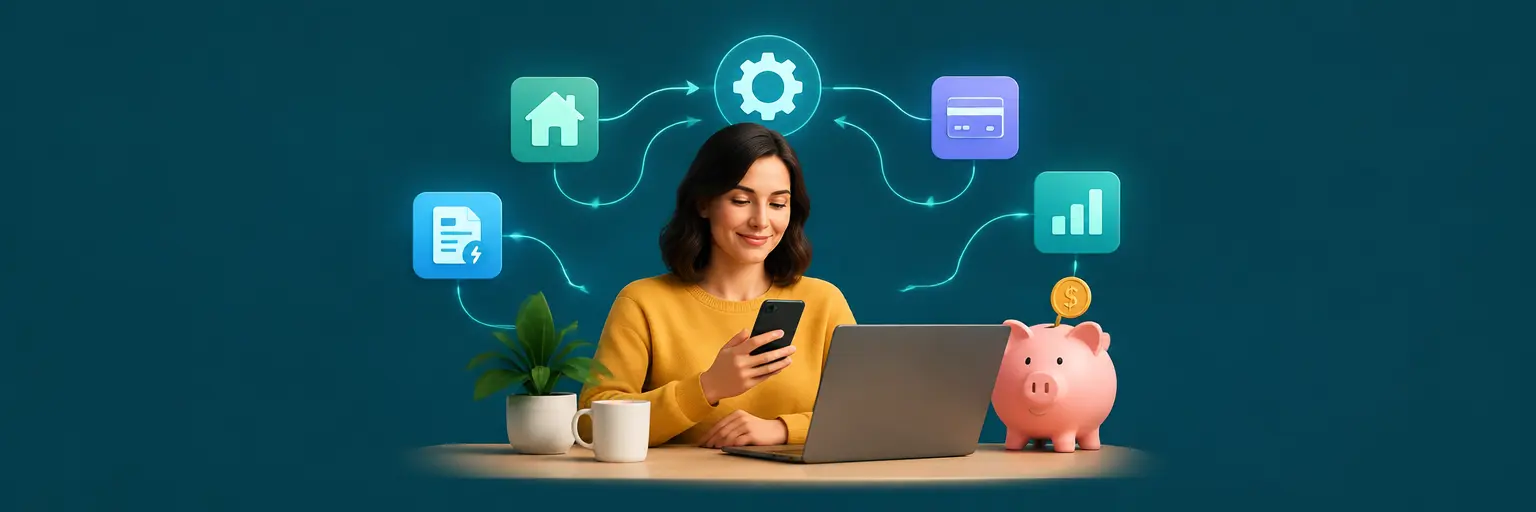
Unlock more free time and take control of your money with Personal Finance Automation—the ultimate life hack for effortless budgeting, saving, and investing. By setting up automatic transfers, bill payments, and smart alerts, you can eliminate missed due dates, reduce financial stress, and build wealth on autopilot. Imagine your savings growing every paycheck without a second thought, your investments rebalancing themselves, and your spending tracked in real time—all while you focus on what truly matters. This isn’t about complex spreadsheets; it’s about simplifying your daily routine with tools like recurring transfers, round-up apps, and smart budgeting software. Whether you’re a busy professional or a family juggling multiple goals, automating your finances helps you avoid late fees, boost your emergency fund, and stay ahead of subscriptions without constant manual effort. Start with small steps—auto-pay your fixed bills, schedule a weekly savings transfer, and use alerts for unusual activity—to create a system that works 24/7. Optimize your cash flow, improve your credit score, and enjoy peace of mind knowing your financial health is managed efficiently.

😊 Stop wasting time manually paying bills! This guide provides a comprehensive walkthrough on how to automate bill payments easily, freeing up…
Read article
😊 Stop stressing about money! This article reveals simple "set and forget" strategies to automate savings and achieve financial success, freeing up…
Read article
😊 Reclaim your time and boost your savings! Learn how to effortlessly automate personal finances, freeing you from tedious budgeting and maximizing…
Read article
😊 Stop dreaming, start achieving! This article reveals how automating financial goal achievement—from budgeting to investing—frees up your time and accelerates progress…
Read article
😊 Reclaim your time and sanity! This ultimate guide reveals simple strategies to automate personal finances easily, from bill payments to investments,…
Read articleWelcome to the Personal Finance Automation hub at UltimateLifeHacks. Here, we transform your financial management from a weekly chore into a seamless, self-running system. By leveraging smart tools, automated transfers, and rule-based workflows, you can eliminate late fees, boost savings without thinking, and gain real-time visibility into your cash flow. This subcategory is your blueprint for building a "set-and-forget" money engine that works 24/7, freeing your mental energy for bigger life goals.
Stop juggling due dates and worrying about missed payments. Financial automation here involves scheduling utility bills, subscriptions, rent, and credit cards through your bank’s auto-pay or third-party services like Mint or YNAB. You’ll also learn to set up email/text alerts for low balances and upcoming charges, ensuring you never face a late fee again. This creates a frictionless monthly cycle where your obligations are met instantly, improving your credit score and reducing financial stress.
Expect step-by-step guides on linking accounts securely, choosing the right auto-pay date (after payday), and auditing subscriptions to cancel unused ones. We also cover “grace period” tricks—keeping auto-pay on the last allowed day to maximize your cash float. By automating bills, you shift from reactive spending to proactive cash flow control, making your monthly budget a quiet, passive observer rather than a daily battle.
Pay yourself first—without the willpower. This facet focuses on round-up apps like Acorns, scheduled transfers to high-yield savings, and automated contributions to retirement (401k) or brokerage accounts. You’ll learn to “hide” money from your checking account on payday, using micro-saving rules (e.g., $5 per coffee) and “payraise” sweeps that funnel any raise directly into investments. The goal is to make saving a non-decision, so your future self benefits instantly.
Here, you’ll find practical techniques for setting up multi-account ladders, automating dollar-cost averaging into index funds, and using wealthfront or Betterment for tax-loss harvesting. We also discuss the psychology of “out of sight, out of mind” and how to calibrate transfer amounts to avoid overdrafts. By the end, you’ll have a silent wealth-building machine that grows your net worth even while you sleep, without needing a spreadsheet obsession.
Replace manual ledger entries with AI-driven tools that parse every transaction automatically. Services like Plum, Truebill (now Rocket Money), and PocketGuard categorize spending, flag anomalies, and predict future cash flow. You’ll learn to set custom rules—e.g., “any supermarket purchase over $100 gets flagged” or “all Uber rides are categorized as discretionary.” This gives you a real-time dashboard of your financial health without opening a single app to log data.
Expect tutorials on syncing bank feeds securely, building zero-based budgets that auto-adjust with variable income, and using spending analytics to identify leakages. We also cover automated savings rate calculations and how to set alerts when you breach category limits. With this automation, your budget becomes a living document that responds to your behavior—prompting you to course-correct instantly, not a month later. This is the core of efficient money management.
Debt snowballs and avalanches are easier when they run automatically. This area focuses on setting up minimum payments plus extra principal allocations, auto-sweeping windfalls (tax refunds, bonuses) to highest-interest debt, and using debt payoff apps that round up purchases to chip away at balances. Simultaneously, you’ll enable real-time fraud alerts from your bank and credit monitoring services that text you instantly on any irregular charge, minimizing identity theft damage.
You’ll learn to connect multiple creditors into a single dashboard, schedule double payments per month to reduce average daily balance, and automate balance-transfer negotiations. For fraud, we detail how to set up credit freezes, transaction limits, and geo-triggers. This dual automation protects your cash flow and credit score simultaneously. Debt reduction becomes a background process—steady, predictable, and emotionally lighter—while your security net runs in parallel, catching anomalies before they become disasters.
Tie everything together with a central command center. Learn to connect automation tools like Zapier or IFTTT to your banking APIs, creating workflows such as “if salary hits checking, then transfer 20% to savings” or “if credit card bill exceeds $500, then send me a Slack message.” This subcategory includes building a simple Google Sheet or Notion dashboard that pulls live data, plus integrating with Google Calendar for bill reminders and investment purchase schedules.
Expect guides on creating custom API calls (with security caveats), using Plaid connections, and setting up email-to-action for non-integrated banks. We also cover redundant triggers—e.g., if your primary auto-pay fails, a backup zap transfers the amount manually. By centralizing, you gain a holistic view of every automated rule, making it easy to audit or adjust. The result is a personal finance ecosystem that is transparent, flexible, and almost entirely self-managed, allowing you to spend your hours on life, not ledgers.
Yes, if you follow best practices. Use bank-grade encryption, enable two-factor authentication (2FA) on all linked accounts, and never share API credentials. Choose reputable automation tools with read-only access where possible. Regularly audit connections and revoke unused ones. The convenience of automation outweighs risk when you keep your digital perimeter tight.
Absolutely. Use income-triggered automations, not fixed-date ones. For example, set a Zapier rule that runs whenever a deposit over $500 appears, then splits it proportionally into savings and bills. You can also keep a minimum cash buffer (e.g., 20% of average income) to smooth over dry spells. This makes automation adaptive, not rigid.
Build a “margin rule”: automate transfers only when your checking balance exceeds a preset floor (e.g., $500). Most budgeting apps allow conditional logic. Alternatively, schedule transfers one day after payday and set up overdraft protection linked to savings. Start with small transfers and increase gradually to find your comfortable cash flow threshold.
Yes. Auto-pay for bills ensures on-time payments, which is the biggest credit score factor. Automating debt repayment also lowers your credit utilization ratio over time. However, keep credit card balances below 30% of limits and avoid closing old accounts unnecessarily. Automation ensures consistency, and consistency builds strong credit history.
For beginners, Mint (free) is excellent for tracking and categorization, while Ally Bank offers automated transfers and savings buckets. YNAB has a 34-day free trial and powerful scheduling. For more advanced automation, combine Zapier’s free tier with a Google Sheet. Start simple, get comfortable, then layer on complexity to avoid overwhelm.