Remote Control Your Life: Home Automation Hacks for Maximum Flexibility
😊 Reclaim your precious time with smart home automation time savers! This article unveils simple hacks to automate your home, boosting efficiency…
Read article
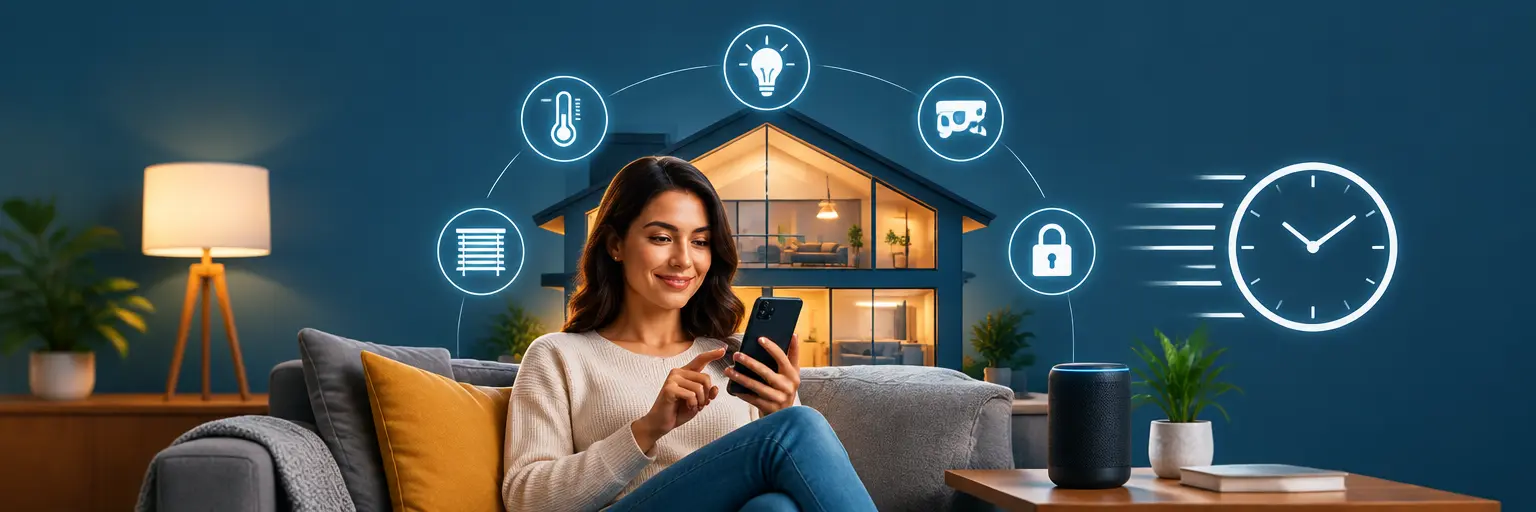
Transform your living space into a smart haven with clever home automation hacks that reclaim hours every week. From automating lighting, thermostats, and security to scheduling morning coffee and robot-vacuum runs, these efficiency-boosting tweaks minimize manual chores and let you focus on what truly matters. Discover simple, cost-effective ways to integrate voice commands, smart plugs, and routines that streamline your daily flow. Whether you’re a tech newbie or a seasoned enthusiast, these time-saving automation strategies cut down on repetitive tasks, reduce energy waste, and add effortless convenience to your routine. Unlock the power of a self-managing home and enjoy more free time, less stress, and a smarter, more productive lifestyle.
😊 Reclaim your precious time with smart home automation time savers! This article unveils simple hacks to automate your home, boosting efficiency…
Read article
😊 Transform your home into a productivity powerhouse without lifting a finger! This guide reveals simple home automation hacks—from smart lighting to…
Read article
😊 Reclaim your precious time with home automation timesaving hacks! This article reveals simple smart-home solutions to streamline your daily routines, boosting…
Read articleWelcome to the ultimate guide on home automation hacks designed to reclaim your most precious resource—time. Within the “Automation & Efficiency” category at UltimateLifeHacks, we focus on transforming your living space into a self-managing ecosystem. These smart home efficiency tips go beyond novelty; they are practical, repeatable routines that eliminate mundane tasks, reduce decision fatigue, and streamline your daily flow. From automated lighting to intelligent scheduling, each hack is curated to deliver measurable time savings, letting you focus on what truly matters while your home works silently in the background.
Your morning is the highest-value time of day, and smart triggers can slash those lost minutes dramatically. By linking your smart alarm, coffee maker, and smart blinds, you create a cascading effect: as your alarm goes off, the blinds slowly open, the thermostat adjusts to your preferred wake-up temperature, and your espresso begins brewing. These home automation hacks remove the friction of manual steps, letting you move from bed to productive state in minutes. The key is to use conditional triggers based on time, sunrise, or your sleep data—not just simple timers—to ensure the routine feels organic and never robotic.
Beyond the basics, consider voice-activated “Good Morning” commands that announce your schedule, weather, and traffic in one sentence. Adding smart plugs for your kettle or toaster completes the chain. The time saved—roughly 10-15 minutes per morning—accumulates to over 90 hours annually. For time-saving home automation that pays off instantly, automating your wake-up sequence is the highest-ROI starting point. Pair these with geofencing so your home warms up only when you are actually approaching, avoiding wasted energy and ensuring comfort exactly when you need it.
Repetitive chores like adjusting lights, locking doors, or running the vacuum are perfect candidates for scene scheduling. Instead of manually pressing buttons, create “scenes” that execute multiple actions with a single trigger. For example, a “Movie Night” scene dims lights, closes curtains, and turns on the TV bias lighting—all simultaneously. A “Goodnight” scene locks all doors, turns off non-essential outlets, and sets the security system. These smart home efficiency tips eliminate the mental checklist every evening, turning a five-minute ritual into a one-second voice command or automatic timer.
More advanced setups use sensors—motion, door, or light—to trigger scenes without any input. A laundry room motion sensor can turn on lights and extract fan only when someone enters, then off after inactivity. Robot vacuums can run on a schedule tied to your work calendar, cleaning while you are away. The cumulative effect is a home that self-maintains, freeing you from micro-managing appliances. For home automation hacks that feel magical, focus on scenes that combine multiple dull tasks into one intuitive action, drastically reducing the number of decisions you make daily.
Heating and cooling are among the largest time and money drains in a home, but adaptive climate control changes that. Smart thermostats learn your preferences and occupancy patterns, automatically adjusting temperatures when you sleep, leave, or return. This is not just a comfort feature—it is a time-saving home automation hack because you never have to fiddle with settings or wait for the house to reach the desired temperature. Integrating sensors in each room allows zoned heating, ensuring you only climate-condition occupied spaces, cutting energy bills by up to 20% while maintaining perfect comfort.
Pair thermostats with smart vents and window sensors to close vents when windows are open, preventing wasted energy. Use geofencing on your phone to trigger “Away” or “Arriving” modes automatically, so your home is always pre-conditioned right before you step in. For remote monitoring, a smart home dashboard app gives you real-time control from anywhere, so you can adjust temperatures while stuck in traffic. These smart home efficiency tips not only save hours of manual adjustment but also extend the life of your HVAC system through consistent, intelligent operation—truly set-and-forget efficiency.
Security automation is often overlooked as a time-saver, but its impact is profound. Automated locks, cameras, and motion detectors work together to handle routine security checks without your involvement. For instance, smart locks can auto-lock after 30 seconds of the door closing, eliminating the “Did I lock the door?” anxiety and the return trip home. Cameras with AI person detection send push notifications only for relevant events, not every passing car, filtering out noise so you don’t waste time reviewing footage. These home automation hacks turn passive security into an active, hands-off system.
Integrating security with lighting adds another layer: when motion is detected after dark, exterior lights turn on automatically, deterring intruders while saving you the hassle of toggling switches. You can also set “Vacation Mode” that randomly toggles lights and blinds to simulate occupancy, all controlled from your phone—no need to ask a neighbor to check on things. For time-saving home automation, automating your security routines means fewer manual checks, fewer false alarms, and complete remote visibility. The true time win comes from the prevention of emergencies, which would otherwise require hours of resolution and repair.
The kitchen is where many hours vanish, but smart appliances can shrink that time dramatically. Smart fridges with internal cameras show you what’s inside from your phone, eliminating the “forgot to buy” trips. Inventory management apps sync with your shopping list; when you use an item, you can instantly update it via voice, and the list auto-syncs to your grocery store’s pickup service. This creates a circular workflow: consumption → list update → automatic order. These smart home efficiency tips cut down on multiple store visits and reduce food waste, as you only buy what you actually need.
Automated cooking appliances, like smart ovens that preheat remotely or slow cookers with app controls, let you start dinner from your office desk. A smart kettle or espresso machine can be triggered by your morning wake-up scene, while smart scales send recipe measurements to a screen. Even mundane tasks—like a dishwashing cycle that runs after you leave for work—can be scheduled to avoid energy peaks. For home automation hacks in the kitchen, focus on reducing decision fatigue and manual tracking. The result is a streamlined meal prep that saves 20-30 minutes daily, plus the mental bandwidth to enjoy cooking rather than rushing.
The ultimate time-saving hack is orchestrating all your automations into a single, seamless daily routine. This requires an integration hub (like a smart speaker or a dedicated app) that connects your calendar, weather, and IoT devices. For example, your smart speaker can announce tomorrow’s calendar first thing in the morning, adjust the thermostat based on predicted weather, and remind you to take medication—all in sequence. These home automation hacks transform your home into a proactive assistant rather than a collection of gadgets. The key is to map your daily flow and identify every decision that can be automated or preemptively handled.
Start by auditing your day: where do you lose 5 minutes here, 2 minutes there? Then build rule-based automations—if-then triggers that operate without thought. For instance, if your phone GPS indicates you’re 10 minutes away, your garage opens, interior lights turn on, and your playlist starts. This orchestration saves not just minutes but also the cognitive energy spent on repetitive tasks. For time-saving home automation, the goal is invisibility—the system works so smoothly you forget it exists. Prioritize reliability in your hub, use redundant triggers (voice, app, sensor), and test each routine weekly to ensure it still aligns with your changing schedule.
The best starter device is a smart plug or smart bulb, as they are inexpensive, easy to set up, and immediately show time savings. For example, a smart plug can turn off your iron automatically or schedule your coffee maker. Start with one or two devices, integrate them with your phone, and then expand to sensors and hubs as you become comfortable.
No, not always. Many devices work via their own apps and voice assistants like Alexa or Google Assistant. However, a central hub (e.g., SmartThings or Home Assistant) is beneficial for cross-device automation, like linking motion sensors to lights from different brands. Start without one, then add a hub only if you find you need more complex triggers.
Yes, if you take basic precautions. Always change default passwords, enable two-factor authentication, and keep firmware updated. Use a separate Wi-Fi network for IoT devices to isolate them from your main computer. Additionally, disable features like remote access if you don’t use them, and regularly review connected devices in your app to spot any unauthorized additions.
Absolutely. Smart thermostats save about 10-15% on heating and cooling bills. Automated lighting with occupancy sensors reduces electricity waste. Smart plugs cut standby power, which can account for 5-10% of your energy bill. Over a year, these savings often offset the initial investment, making automation both a time and money saver.
Yes, most hacks require only Wi-Fi and standard outlets. You can retrofit smart switches, plugs, and sensors without rewiring. For older windows or doors, use battery-powered contact sensors. Even the most dated homes can become “smart” with add-on devices, so age is not a barrier. Start simple, and you’ll see benefits immediately.