The Untapped Potential: How to Leverage Marketing Automation
😊 Drowning in marketing minutiae? Reclaim your time and boost efficiency by automating marketing tasks efficiently. This article unveils simple strategies to…
Read article
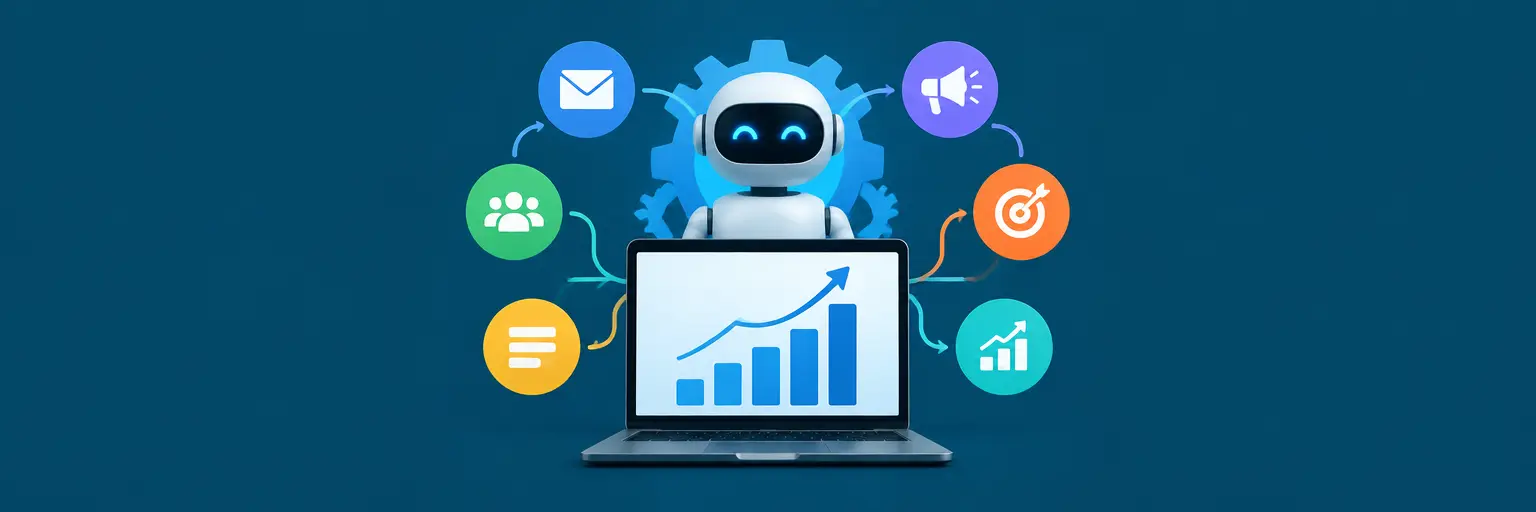
Unlock the power of marketing automation to reclaim hours every week while boosting your campaign performance. From email drip sequences and lead scoring to social media scheduling and customer segmentation, these business automation hacks simplify repetitive tasks, nurture leads on autopilot, and deliver the right message at the perfect moment. Whether you’re a solopreneur or scaling a small team, mastering these marketing automation basics transforms chaotic workflows into streamlined systems that drive conversions—without needing a tech degree. Save time, cut costs, and watch your engagement soar with smart, scalable strategies designed for everyday efficiency.

😊 Drowning in marketing minutiae? Reclaim your time and boost efficiency by automating marketing tasks efficiently. This article unveils simple strategies to…
Read article
😊 Drowning in marketing tasks? This guide shows you how to automate marketing tasks easily, saving you precious time and boosting productivity.…
Read article
😊 Stop wasting precious time on repetitive marketing tasks! This article reveals how to automate marketing tasks efficiently, boosting productivity and freeing…
Read articleWelcome to the ultimate starting point for streamlining your marketing efforts without burning out. This subcategory of UltimateLifeHacks is dedicated to showing you how to replace repetitive, manual marketing tasks with smart, automated systems. Whether you're a solopreneur, a busy freelancer, or a small team owner, mastering these marketing automation basics will help you reclaim hours every week, nurture leads on autopilot, and boost your return on investment. Here, you'll find practical, no-fluff hacks that transform your daily workflow into a lean, efficient machine.
Before diving into tactics, you need the right toolkit. We simplify the crowded landscape of email platforms, CRM systems, and social schedulers—focusing on budget-friendly, user-friendly options that integrate well with each other. Expect clear comparisons of tools like Mailchimp, HubSpot, Zapier, and ActiveCampaign, tailored to a beginner's learning curve. You’ll learn to identify which features matter most: lead capture, email sequencing, or social posting. This saves you from costly trial-and-error and ensures your automation foundation is solid from day one.
Moreover, we guide you through setting up a central “automation hub” using no-code integration tools like Zapier or Make. That means you can connect your email list to your customer database, your calendar to your booking forms, and your social media to your content calendar—all without touching a line of code. By the end of this section, you’ll know exactly which stack fits your niche and your daily workflow, eliminating decision paralysis. This is not about buying every shiny tool; it’s about building a lean, effective system that scales with you.
Email remains the highest-ROI marketing channel, and automation makes it effortless. Here, we break down how to create welcome sequences, abandoned cart reminders, and post-purchase follow-ups that run 24/7. You’ll discover the exact triggers and timing that keep subscribers engaged without annoying them. We’ll show you how to segment your audience based on behavior—like clicks, opens, or purchases—so every email feels personal, even though it’s automated. This turns your inbox into a conversion machine, not a spam folder.
Beyond basics, we share hacks for A/B testing subject lines, optimizing send times, and re-engaging cold subscribers automatically. You’ll learn to write compelling email copy hooks that work in automated sequences, plus how to use dynamic content blocks that change based on user data. The goal is to make your email system a “set-and-forget” lead generator that consistently moves prospects down the funnel. With these automation basics, you’ll grow your list and sales while only spending a few minutes weekly checking analytics—because the system does the heavy lifting.
Social media can eat up your entire day if you let it. This section gives you hacks to plan a week of posts in one sitting and let tools like Buffer, Later, or Meta Business Suite handle the rest. You’ll learn the best times to post for engagement, based on your audience’s time zone and platform algorithm. More importantly, we cover content repurposing: how to turn one blog post into five social posts, an email, and a video script automatically using tools like Repurpose.io. This multiplies your reach without multiplying your work hours.
We also dive into automated social listening and direct message (DM) triggers. For example, you can set up an automation that sends a welcome DM to anyone who follows your new account or comments a specific keyword. This builds community and drives traffic—all while you’re sleeping. We’ll even share hacks for cross-posting to LinkedIn, Twitter, and Instagram with platform-specific tweaks. By the end, you’ll have a calendar that fills itself, freeing you to focus on real interactions, not mundane posting duties.
Every sale starts with a captured lead, but messy data kills opportunities. Here, we teach you how to automate lead capture through web forms, landing pages, and chatbot popups that instantly sync with your CRM (like HubSpot or Pipedrive). You’ll learn to score leads automatically based on how they found you or what they clicked, so your sales team only focuses on hot prospects. This eliminates manual data entry and forgotten follow-ups—two major productivity killers.
We also show you how to create automated task reminders, follow-up emails, and even meeting scheduling links (using Calendly) that integrate with your CRM. For instance, when a lead fills out a form, the system can instantly send a personalized calendar invite for a demo call. We cover lifecycle stages: from new lead to qualified to customer—each with automated actions. This ensures no lead slips through the cracks. With these automation basics, you’ll maintain a spotless pipeline that predicts revenue and closes deals faster, all while you handle only the highest-value conversations.
What gets measured gets improved—but manually checking dashboards is tedious. This section introduces you to automated reporting dashboards (like Google Data Studio or built-in analytics) that pull data from all your channels into one view. You’ll set up weekly email summaries that show open rates, click rates, lead conversions, and ROI—no login required. Plus, we explain how to run A/B tests on your campaigns automatically, where the system picks the winner based on statistical significance, so you don’t have to guess.
We also cover the crucial habit of “automated iteration”: once a test concludes, the system can apply the winning variant to future emails or ads automatically. This compounds your gains over time. You’ll learn which metrics matter most for the beginner (deliverability, conversion rate, cost per lead) and how to set alerts for anomalies like a drop in sign-ups. With these hacks, you’ll stay ahead of problems before they become costly, making data-driven decisions feel effortless. The focus is on actionable insights, not data overload.
Beyond marketing-specific systems, we share universal business automation hacks that reduce your daily admin load. This includes automating invoice reminders, client onboarding paperwork via e-signature tools, and even meeting notes transcription with AI. You’ll discover how to use keyboard shortcuts and browser extensions to fill forms automatically, copy-paste repetitive answers, and switch between tools faster. These micro-automations may seem small, but they add up to hours saved per week.
We also cover “automation chains” that combine multiple steps. For example, a new client booking a call triggers a sequence: send a confirmation email, add to CRM, create a task for you, and post a thank-you to social—all via one Zapier recipe. You’ll learn to identify your most repetitive tasks and map them into automated flows. We even share templates for common workflows like “blog post to newsletter” or “podcast episode to LinkedIn.” With these hacks, you’ll not only automate marketing basics but also your whole business operation, giving you back time to innovate and grow.
Absolutely not. Most tools we recommend are visual, no-code platforms with drag-and-drop interfaces. You’ll be guided through step-by-step setups using templates. Basic logic like “if this, then that” is simple to understand. Within a weekend, you can have your first automation running without touching a single line of code.
You can start for free or under $20/month. Platforms like Mailchimp offer free tiers for up to 500 contacts, and Zapier has a free plan for basic connections. Many scheduling tools have free versions too. As you grow, you can scale to paid plans—but starting lean is entirely possible.
A simple automation, like an email welcome sequence, takes about 30–60 minutes. More complex workflows, like multi-step CRM pipelines, may take 2–3 hours. Once set up, maintenance is minimal, usually just occasional updates. The upfront time investment pays back within a week of saved hours.
No, if done right. Good automation uses personalization tokens (like first name) and behavioral triggers to send relevant content. Your audience will feel like you’re speaking directly to them because you are—the system just helps you at scale. Test and tweak to keep it human.
Yes. Scheduling posts at optimal times maintains consistency, which platforms reward. Engagement drops only if you never respond to comments. Use automation to post, but set aside 10 minutes daily to reply. This hybrid approach keeps your account active and human while saving you hours.