From Chaos to Control: The Ultimate Guide to Building Positive Habits
😊 Overwhelmed by daily chaos? This Build positive habits guide provides practical strategies and actionable tips to transform your routines, boosting productivity…
Read article

Unlock the science behind lasting change with Building Positive Habits, your ultimate guide to mastering the art of habit formation. Backed by behavioral psychology and neuroscience, this resource reveals how tiny, consistent actions can transform your productivity, health, and daily routines. Learn the cue-routine-reward loop, harness the power of habit stacking, and overcome the most common pitfalls—like the “all-or-nothing” mindset—that derail progress. Whether you’re aiming to wake earlier, exercise regularly, or read more, these evidence-based strategies turn willpower into automatic behavior, saving you time and mental energy for what truly matters. Discover how to design your environment for success, track wins without obsessing, and celebrate micro-milestones that fuel momentum. Perfect for busy professionals and self-improvers alike, this deep dive into habit science offers actionable steps to rewire your brain, break bad cycles, and build a foundation for lifelong growth. Skip the guesswork and start your transformation today—because your future self is built one small choice at a time.
😊 Overwhelmed by daily chaos? This Build positive habits guide provides practical strategies and actionable tips to transform your routines, boosting productivity…
Read article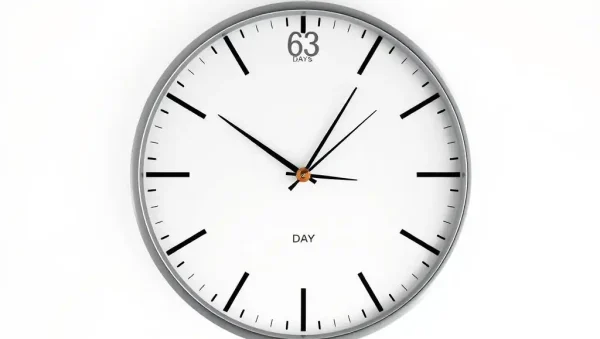
🤔 Discover the habit formation time reality: Forget the 21-day myth! We reveal the science-backed timeframe for building lasting habits and optimizing…
Read article
😊 Unlock your potential with proven strategies to build better habits faster. This playbook provides practical tactics to optimize your daily routine,…
Read articleWelcome to UltimateLifeHacks' deep dive into the science behind lasting change. Here, we don't just give you generic advice—we break down the neurological and psychological mechanisms that make habits stick. Whether you're looking to exercise more, eat better, or read daily, this subcategory equips you with evidence-based strategies to rewire your brain. Expect actionable frameworks, cue-routine-reward breakdowns, and practical troubleshooting for common habit pitfalls. Let’s transform your daily routine from willpower-dependent to automatic, saving you mental energy for what truly matters.
Understanding the three-part neurological loop—cue, routine, and reward—is the cornerstone of habit science. The basal ganglia, a primitive brain region, stores these sequences, freeing your prefrontal cortex from constant decision-making. By identifying your specific triggers (time, location, emotional state) and designing clear rewards, you can deliberately craft loops that serve you. This isn't just theory; it’s a blueprint for making desired behaviors as automatic as brushing your teeth.
To harness this, start by mapping your current habits. For one week, note the cue that precedes a behavior you want to change, the routine itself, and the reward you crave (even if subconscious). Then, replace the routine while keeping the cue and reward identical—this is the golden rule of habit change. For positive habits, introduce a new cue (e.g., morning coffee) and pair it with a tiny routine that culminates in a genuine reward, like a sense of accomplishment. Over 20-30 repetitions, your brain will begin to anticipate the reward, making the behavior feel effortless.
B.J. Fogg's "Tiny Habits" method revolutionizes habit formation by eliminating friction. Instead of "run 5 miles," you start with "put on running shoes." This micro-commitment lowers the activation energy to nearly zero, ensuring you actually begin. The emotional payoff—a celebratory "I did it!"—is the real driver, releasing dopamine that reinforces the loop. Scaling from two minutes to twenty becomes organic once the identity of "a person who runs" emerges, not through force, but through daily micro-wins.
To apply this, choose a habit you want, shrink it to a version that takes under 30 seconds, and anchor it to an existing routine. For example, after pouring your morning coffee (cue), do one push-up. Then immediately say, "I'm awesome" or fist-pump. This celebration is crucial—it signals success to your amygdala, strengthening the neural connection. Over weeks, you'll naturally add more reps or time. Remember, consistency beats intensity; a tiny habit completed daily outscores a grand attempt done once. This method is perfect for busy professionals on UltimateLifeHacks.
Habit stacking leverages the reliability of your current routines by attaching new behaviors to them. The formula is: "After [current habit], I will [new habit]." This creates a chain of automaticity, minimizing decision fatigue. For instance, after you brush your teeth (anchor), you floss one tooth (new). The stronger and more frequent the anchor, the more robust the new habit becomes. This technique works because your brain already treats the anchor as a non-negotiable, so the new behavior piggybacks on that momentum.
For optimal stacking, select an anchor that occurs daily and at the same time, like taking off your work shoes. Write down your stack and post it where you’ll see it—visual reminders boost adherence. To avoid overcomplicating, limit new stacks to two at a time. If you miss a day, never break the chain twice; simply restart the next morning. This method is especially effective for compound routines like evening wind-downs: after charging your phone, you write tomorrow's to-do list. Over months, these stacked micro-decisions build a fortress of productivity.
Contrary to popular belief, habits aren't magically wired after 21 days. Research by Lally et al. (2010) found that automaticity average is 66 days, but ranges from 18 to 254 days depending on complexity and person. The key isn't a fixed number—it's consistency without perfection. Each repetition strengthens the neural pathway, but missing one day doesn't erase progress; missing several does. Accepting this timeline reduces frustration and prevents quitting prematurely.
To optimize your timeline, track your habit on a calendar but focus on "streaks" rather than total days. If you break a streak, don't catastrophize—research shows that a single lapse doesn't undermine long-term formation if you resume within 48 hours. Also, measure "effortless execution" not time: ask yourself, "Do I do this without thinking?" Once you answer 'yes' on a consistent basis, you've reached automaticity. For complex habits like daily meditation, expect 100+ days; for simple ones like drinking water, it might take 30. Adjust expectations accordingly.
Relapse is not failure—it's a data point. Common causes: stress (cortisol hijacks the prefrontal cortex), environment triggers, and boredom with the routine. When you slip, your brain's default mode returns to old patterns because they're myelinated. The critical rebound strategy is immediate resumption without guilt. Guilt triggers emotional eating or avoidance, deepening the loop. Instead, analyze the slip: Was the cue too subtle? Did you remove the reward? Adjust the design.
Implement a "no-zero days" rule: even if you miss your target, do one miniscule version (e.g., one squat instead of a full workout). This keeps the neural pathway active. Also, pre-plan for high-risk moments (holidays, late nights) by creating if-then plans: "If I’m too tired, I will do 5 minutes of stretching." Forgive yourself, then re-commit to your tiny anchor. Remember, you are not starting from scratch; you're starting from experience. Each relapse teaches you a new threshold for your triggers, bringing you closer to automation.
On average, it takes 66 days for a behavior to become automatic, but this varies greatly—from 18 days for simple habits to over 200 for complex ones. The key is consistency, not a magic number. Focus on repeating the behavior daily, even if imperfectly. If you miss one day, resume immediately. Don't stress about the 21-day myth; instead, commit to 90 days of consistent effort for best results.
The most evidence-backed method is implementation intentions—creating a specific if-then plan, such as "If it's 7 AM, I will write for 10 minutes." This pairs a clear cue with your action, removing decision fatigue. Combine this with starting tiny (two minutes maximum) and celebrating immediately after. This trio of cue, small action, and positive emotion triggers dopamine release, accelerating habit formation significantly.
Failure after several weeks often stems from environmental friction or stress spikes. Your environment may be supporting the old habit (e.g., snacks in sight) or your routine lacks a meaningful reward. Also, many people increase difficulty too quickly, causing burnout. Reassess your cue and reward, simplify your tiny step, and add a "rebound plan" for high-stress days. Remember, lapses are normal; they don't erase your progress.
Research strongly suggests focusing on one habit at a time. Our willpower is a finite resource, and splitting it across multiple new behaviors reduces success rate. However, you can stack a new habit onto an existing one, which feels like adding a small extension rather than starting fresh. Once one habit becomes automatic (around 60-90 days), introduce the next. This sequential approach maximizes long-term retention.
Motivation is unreliable; rely on systems and identity instead. Design your environment to make the habit easy—prep your gym bag, leave the book on your pillow. Use habit stacking to piggyback on a non-negotiable routine. Also, shift your identity: instead of "I want to exercise," say "I am an active person." When behavior contradicts identity, you naturally course-correct. Finally, accept that some days you'll do the minimum—that's still a win for your neural pathway.