The Habit of Focus: Build a Positive Life by Eliminating Distractions
🤔 Reclaim your time and energy! Learn how to eliminate distractions, boost focus, and build a more positive and productive life. Simple,…
Read article

Master the art of lasting change with our proven, science-backed strategies for building positive habits that stick. Whether you’re aiming to boost productivity, improve health, or streamline your daily routine, we break down the psychology of habit formation into simple, actionable steps—from tiny habit stacking and cue-routing to reward loops that rewire your brain. Unlock the secrets to automatic consistency, overcome procrastination, and transform scattered intentions into effortless routines. These life hacks are designed to save you time, reduce decision fatigue, and optimize every part of your day for sustainable personal growth. Start small, think big, and watch how small daily changes compound into monumental, long-term success. Dive in and start designing the life you truly want—one positive habit at a time.

🤔 Reclaim your time and energy! Learn how to eliminate distractions, boost focus, and build a more positive and productive life. Simple,…
Read article
😊Unlock your potential with habit journaling for self-improvement! This powerful method uses daily reflection to identify patterns, build positive habits, and boost…
Read article
😊 Unlock peak productivity! This article reveals the power of a positive habit mindset shift, transforming your thinking to build lasting, efficient…
Read article
😊Unlock your potential! Master positive habits efficiently by cultivating expertise in key areas of your life. This article reveals practical strategies to…
Read article
😊Unlock your potential! Boost productivity through collaboration. This article reveals how teamwork, shared resources, and diverse perspectives significantly enhance efficiency and create…
Read article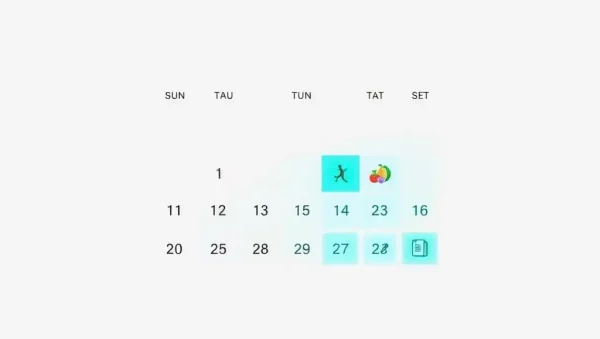
😊 Boost your productivity with the Visual Habit Tracker! This simple tool leverages the power of visual cues to build positive habits…
Read article
😊Unlock your potential with practical, daily habits! This article reveals how consistent self-improvement, focusing on manageable daily actions, builds a more positive…
Read articleWelcome to the Building Positive Habits subcategory of UltimateLifeHacks, where we transform fleeting motivation into permanent, life-enhancing routines. Here, you’ll discover science-backed strategies, actionable frameworks, and practical hacks to replace autopilot behaviors with intentional actions that stick. Whether you’re aiming to exercise more, read daily, or declutter your mind, this is your go-to resource for turning small, consistent steps into monumental personal growth.
Understanding habit anchoring is the first step to sustainable change. This technique involves pairing a new, desired behavior with an existing, automatic routine—like doing two minutes of stretching right after your morning coffee. We’ll break down the neurological loop (cue, craving, response, reward) and show you how to design your environment so the positive action becomes the path of least resistance. You’ll learn how to hijack your brain’s reward system to forge unshakeable routines.
Expect practical examples of anchor points for common goals—hydration, meditation, or deep work. We’ll also cover “habit stacking” formulas that minimize decision fatigue. By the end, you’ll see why willpower is overrated and why your daily micro-decisions, when anchored correctly, become effortless. This is the foundation every other positive habit builds upon.
Most people fail because they aim too big, too soon. The 2-Minute Rule flips that script: any new habit should start in under two minutes. Instead of “run 5k,” start with “put on running shoes.” Instead of “write a chapter,” start with “open a blank document.” This subcategory dives deep into why shrinking the start line reduces friction and dramatically increases consistency. You’ll see how these tiny victories compound into significant behavioral shifts over weeks.
We’ll share real-life case studies where micro-habits dramatically improved productivity and health. You’ll learn to scale up gradually—like adding one minute each week—without triggering burnout. The goal is not just to start, but to never miss twice. We’ll teach you the “streak strategy” and how to recover gracefully from inevitable slip-ups, turning failure into a learning tool rather than a reason to quit.
Your environment is a silent architect of your habits. This section focuses on cues and friction—how to use visual triggers and remove obstacles to make good habits obvious and bad habits invisible. You’ll learn to “pre-decide” your day by setting out workout clothes the night before, pre-cutting vegetables, or placing a book on your pillow. We’ll explore digital strategies too, like app blockers and scheduled “distraction-free” windows.
Expect a step-by-step guide to conducting your own “habit audit” of your home and workspace. We’ll also discuss the power of implementation intentions (“At 7 AM, I will meditate for 5 minutes in my bedroom”)—a research-proven tactic that boosts follow-through by up to 200%. This is about making your future self grateful for the decisions you design today.
Measurement fuels motivation, but the wrong tracking can crush it. Here, we cover simple, elegant ways to monitor your habit streak—from printable calendars to minimal habit apps—without turning into a data-obsessed robot. You’ll learn the difference between monitoring output (e.g., pages read) and process (e.g., reading session completed). We emphasize celebrating small wins, which releases dopamine and reinforces the loop.
We also address the “falling off the wagon” scenario with a forgiving mindset. Instead of all-or-nothing perfectionism, you’ll adopt a “never miss twice” philosophy. We’ll teach you how to weekly review your progress, adjust your anchors, and re-commit with fresh enthusiasm. The goal is sustainable growth, not perfection—and tracking should serve that mission, not derail it.
Even with the best plans, internal resistance will appear. This section gives you battle-tested hacks to beat procrastination and emotional blocks. We explore the “5-second rule” for starting tasks, the “temptation bundling” method (pairing a guilty pleasure with a positive habit), and how to leverage social accountability—like telling a friend or joining an online community. You’ll learn to reframe negative self-talk into supportive, future-focused language.
We also dive into “habit slumps” and plateaus—why they happen and how to push through with a fresh anchor or a tiny variation. You’ll discover the power of identity-based habits (“I am a reader” not “I want to read”) to internalize change. By the end, you’ll see resistance as a normal signal, not a stop sign, and have a toolkit to keep your momentum alive even on low-energy days.
Scientific consensus suggests an average of 66 days, but it ranges from 18 to 254 days depending on complexity and individual differences. The key is consistency, not calendar days. Focus on repetition and never missing twice—the neural pathway strengthens with each repeat, so a small daily action beats a big weekly one for automaticity.
Absolutely not. Missing one day has minimal impact on the overall trajectory. What matters is getting back on track immediately. The “never miss twice” rule is your safety net: one miss is an accident, two is the start of a new (bad) habit. Forgive yourself, re-anchor, and resume your next scheduled repetition.
It’s possible but risky, especially for beginners. Your willpower is a finite resource at first. Best practice is to focus on one keystone habit for at least two weeks before adding another. Once the first is semi-automatic, stack the next onto it. This reduces overwhelm and dramatically increases your long-term success rate.
Start with something tiny and immediately rewarding—like drinking a glass of water after waking up, or stretching for two minutes. These quick wins build confidence and establish the neural loop. Alternatively, choose a “keystone habit” like regular sleep or exercise, as they cause positive ripple effects across your other routines.
Motivation will fade; that’s normal. Shift from relying on motivation to relying on systems and identity. Remind yourself of your “why” and who you’re becoming. Use habit bundling—pair the boring habit with a favorite podcast or a special reward. Also, track your streak and set micro-challenges to inject novelty into an otherwise routine action.