Master Specific Habit Hacks for Lasting Change
Welcome to the Specific Habit Hacks corner of UltimateLifeHacks, where we break down the science of habit formation into bite-sized, actionable tactics. While general advice says “just be consistent,” this subcategory dives into the precise triggers, environmental tweaks, and micro-actions that make sticking to a new behavior effortless. Whether you’re trying to drink more water, read daily, or break a screen addiction, these targeted hacks are engineered for real-world reliability. Here, you’ll discover why most resolutions fail and exactly how to flip those failure points into automatic wins. Let’s turn intention into instinct.
🧠 Cue-Based Habit Stacks
Habit stacking is the practice of attaching a new habit to an existing one, but the specific hack lies in choosing the right anchor. Instead of vague cues like “after work,” you’ll learn to use micro-moments—like the moment you pour your morning coffee or unlock your phone. These precise anchors create a domino effect, reducing the mental friction of remembering. Research shows that habit stacking increases follow-through by up to 40% because your brain treats the sequence as one action.For example, pair “floss one tooth” right after brushing your top molars, or “do one squat” after closing your laptop lid. The key is to make the cue immediate and unmissable. You’ll also learn to avoid common pitfalls like stacking too many habits or selecting cues that are too infrequent. This section provides step-by-step templates for stacking 3-5 habits into a smooth morning or evening routine, turning busy schedules into predictable success loops.
⏰ Two-Minute Rule Variations
The classic “two-minute rule” says start any new habit in under two minutes, but the specific hack adapts this to your personality and energy levels. Instead of a blanket “read for two minutes,” you’ll master time-boxed micro-commitments that scale with motivation. For instance, on low-energy days, shrink the habit to one minute; on high-energy days, extend it to five—but never skip the trigger. This flexibility prevents the all-or-nothing mindset that kills consistency. You’ll also learn to use a timer as a visual anchor, making the start feel like a game.Beyond the basic rule, we cover “two-minute cleanup” for procrastination—like writing one sentence before closing a project—and “two-minute social check-ins” for relationship habits. The hack includes a strategic “first-rep rule” where you only commit to the first physical action, then stop; this downsizes resistance so the habit becomes automatic. By mastering these variations, you’ll never face a “gym dread” morning again, because the entry barrier is almost invisible.
🔗 Environmental Friction Engineering
Your environment is the silent puppeteer of your habits. The specific hack here is to deliberately add friction to bad habits and remove friction from good ones—but with surgical precision. For example, placing your phone in a drawer across the room adds physical steps, cutting check frequency by 60%. Conversely, putting a water bottle on your desk and a book on your pillow makes good habits the path of least resistance. You’ll learn the “one-inch rule” for rearranging your workspace and how to use visual blockers like app timers with automatic shutdowns.This section also teaches micro-environment tweaks: turning off notifications for specific apps, moving junk food out of sight, or swapping your chair for a yoga ball during work breaks. The key is contextual cues—each room should prime only the habit you want there. You’ll get checklists for bedrooms, offices, and kitchens, plus a guide to “digital environment” hacks like website blockers and dedicated browser profiles. By engineering your space, you no longer rely on willpower—your surroundings do the heavy lifting.
📉 Habit Tracking with Reverse Anchors
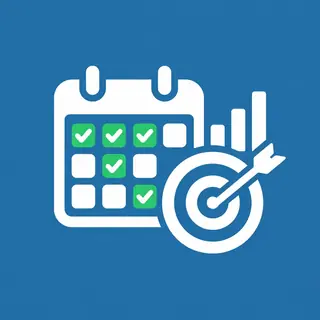
Most people track habits with a binary “done/not done,” but specific habit hacks use reverse anchors to catch slip-ups early. Instead of just marking X days, you’ll track “almost” days—like doing one push-up when you planned five—and use a color-coded system (green=full, yellow=partial, red=none). This tiny change reveals patterns: red days often follow late nights, busy Mondays, or missed meals. You’ll also implement “streak savers,” where a missed day requires a 60-second “rescue habit” to keep the neural loop alive, preventing guilt spirals.Reverse anchoring also includes a “why-why chart” that maps each red day to a root cause, turning emotional failure into data. You’ll learn weekly review rituals, where you spend five minutes adjusting your triggers and friction points based on your chart. The hack even includes a “3-day buffer” rule—never let a streak die without a rescue attempt—which has been shown to triple long-term retention. With these tools, your tracking app becomes a diagnostic tool, not a judgmental scoreboard.
🎯 Trigger Replacement for Bad Habits
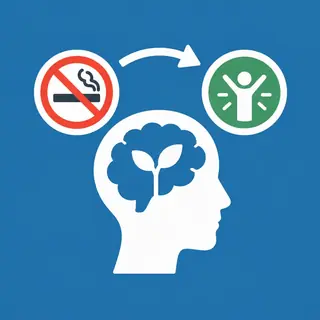
Breaking a bad habit isn’t about elimination—it’s about substitution with a better craving. The specific hack is to identify the exact trigger (time, emotion, location, or person) and then insert a “competing action” that satisfies the same psychological need. For example, if you scroll on social media when bored, replace it with a 5-minute puzzle or a quick stretch, keeping the same cue but a new response. This is based on habit loop theory but tweaked with a “cue-action-reward” mapping sheet you can fill in minutes. You’ll learn to test multiple replacement actions to find one that truly satisfies, not just distracts.This section also covers “unpleasant friction” additions, like putting a sticky note that says “Why?” on your snack jar, and “delay tactics” like a 10-minute rule before giving in. The key is to pair the replacement with a positive affirmation (“I’m choosing focus over escape”) to reframe your identity. With targeted triggers—like stress-eating only when you’re alone—you’ll map out a personalized “swap cheat sheet” for your top three bad habits. Over two weeks, these swaps become as automatic as the original, but with zero guilt.
🚀 Minimalist Habit Bundles
For busy people, the specific hack is to bundle multiple tiny habits into one seamless “power block” of 3-5 minutes. Instead of separate reminders, you’ll create a sequence like: drink water → do one stretch → write one sentence → deep breath. This saves mental overhead because you only activate one intention, yet you’ve completed four micro-habits. The magic is in the order—put the easiest habit first to build momentum, then the hardest second, then a reward habit third. You’ll learn to design bundles for mornings, lunch breaks, and pre-bedtime, each with a unique “trigger word” (e.g., “Go” or “Reset”) to start the chain.Bundle hacks also include “habit telescoping,” where you combine a physical habit with a mental one (e.g., listening to a language podcast while walking). This section provides pre-built bundles for common goals like “waking up energized” or “preparing for deep work,” plus a blank template for your own. You’ll also learn the “2/3 rule”—if you complete at least two of three bundled habits, count it as a win to avoid perfectionism. By consolidating actions, you reclaim minutes every day without feeling stretched thin.
Frequently Asked Questions
What if I fail to execute a specific habit hack for two days in a row?
That’s exactly when the “reverse anchor” and “rescue habit” kick in. On the second miss, set a timer for 60 seconds and do the absolute smallest version, like writing one word or taking one deep breath. Then, adjust your environmental friction—move the cue or shrink the timer. Never skip more than two days, as that breaks the neural loop.
Do these hacks work for both productive and unhealthy habits?
Yes, the same principles apply. For productive habits, you remove friction and add visual cues. For unhealthy habits, you add friction and replace the reward with a healthier alternative. The key is consistency in applying the trigger-replacement strategy, not the habit’s nature.
How quickly can I expect to see results with specific habit hacks?
Most people notice reduced effort within three to five days, but visible behavior change (like new automatic actions) typically takes two to three weeks of consistent practice. The reverse anchors let you see improvement in your “almost” days within the first week, which keeps motivation high.
Can I combine multiple specific habit hacks at once?
Yes, but start with one hack per habit to avoid mental clutter. Once one is automatic (about two weeks), add a second hack for another habit. Combining too many at first leads to decision fatigue. The bundle hack is an exception because it links actions into one cue.
Do I need apps or special tools to use these hacks?
No, most hacks use simple physical items like sticky notes, timers, or rearranged furniture. An app can help with tracking, but a paper chart works just as well. The core is environmental design and cue precision, which rely on your actions, not technology.