Staying Fit with Limited Time: Stress Management for Health
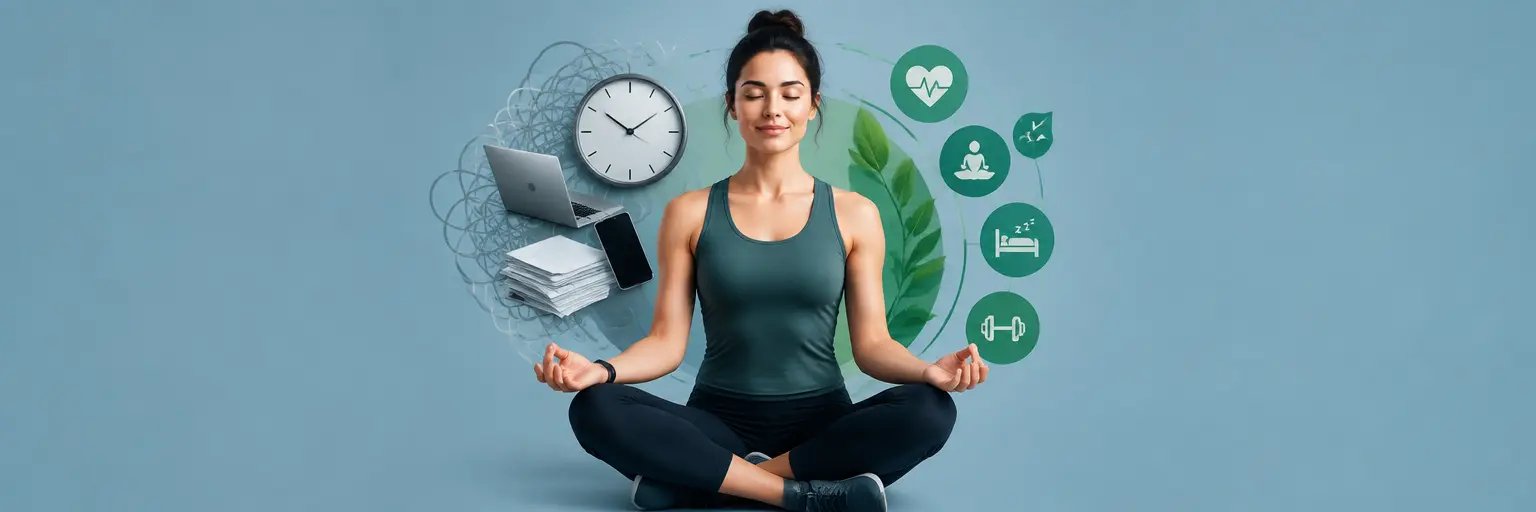
Balancing a packed schedule with your well-being can feel impossible, but it doesn’t have to be. This subcategory focuses on rapid-fire stress management techniques that double as fitness boosters, perfect for busy professionals, parents, and students. You’ll discover how to turn short breaks into recovery powerhouses, using breathing, movement, and mindset shifts to lower cortisol, improve heart rate variability, and maintain energy—all without carving out extra hours. Here, we merge efficiency hacks with science-backed stress relief so your health benefits even when your calendar doesn’t budge.
🧠 Micro-Mindfulness for Instant Calm
When you have only 2–5 minutes, micro-mindfulness is your secret weapon. Instead of a 30-minute meditation, you’ll learn to use box breathing (4-4-4-4), progressive muscle relaxation, or a quick body scan during your commute, between meetings, or while waiting for coffee. These techniques directly activate the parasympathetic nervous system, lowering blood pressure and reducing stress hormones. Because they’re time-boxed, you can repeat them 5–10 times daily without disrupting workflow.
Expect to see measurable changes in your mood and focus within a week. Pair these with a 30-second “gratitude reset”—mentally listing three positive things—which rewires your brain for resilience. For fitness, even a 2-minute breathing session improves oxygen delivery to muscles, making your shorter workouts more effective. The key is consistency over duration, so you’ll get a downloadable 7-day schedule to slot these into your existing routine.
🏃 High-Intensity Interval Training (HIIT) for Stress Hormone Regulation
Exercise is a proven stress reliever, but long sessions aren’t always feasible. HIIT workouts—like 20 seconds of sprinting or jumping jacks followed by 40 seconds of rest—are uniquely effective at lowering cortisol spikes while boosting endorphins. You’ll find 10-minute, no-equipment routines you can do in your living room or office stairwell. This subcategory explains how short bursts trigger a larger “relief response” than steady-state cardio, especially when your time is limited.
Beyond stress, HIIT improves insulin sensitivity and cardiovascular health faster than traditional jogging. Your guide includes interval timing charts and modifications for beginners and advanced athletes. By doing even 4–5 rounds during a lunch break, you’ll reset your nervous system and avoid the afternoon slump. Learn to pair your workout with a 2-minute cooldown stretch to prevent muscle tightness that mimics stress tension.
🧘 Desk-Based Stretching and Mobility for Tension Release
Sitting for hours creates physical stress—tight hip flexors, hunched shoulders, and neck pain—which feeds mental overwhelm. This section teaches 5-minute desk mobility routines that target those areas without sweating through your clothes. You’ll master doorway chest openers, seated spinal twists, and neck glides that take less than 60 seconds each. These moves increase blood flow and trigger mechanoreceptors that signal your brain to relax, breaking the fight-or-flight loop.
Your goal is to schedule these every 45 minutes using a simple timer app. We include a printable “desk stretch cheat sheet” with visual cues. Over time, this practice reduces chronic pain and improves your posture, which is directly linked to lower stress hormone levels. Even better, doing these stretches before your HIIT session primes your joints, decreasing injury risk—so you get two health benefits from one tiny time investment.
🌙 Sleep Hacks That Double as Stress Reset
Poor sleep is both a cause and effect of stress, but you can hack it with minimal extra time. Learn “sleep stacking”—attaching calming rituals to existing habits, like a 2-minute deep-breathing sequence right after brushing your teeth. Also, discover the 10-3-2-1-0 rule (no caffeine 10 hours before bed, no heavy meals 3 hours prior, no screens 2 hours prior, no stressful tasks 1 hour prior, and 0 times hitting snooze). These micro-adjustments reset your circadian rhythm, lowering nighttime cortisol spikes.
We’ll also cover progressive muscle relaxation in bed—a 4-minute technique that reduces anxiety and improves sleep onset by 30%. You’ll get a guided audio script to bookmark. Better sleep directly enhances your next day’s stress tolerance and makes your limited-time workouts more efficient because recovery is optimized. Expect to feel more rested within 48 hours of consistent implementation, even with your chaotic schedule.
🔁 Habit Looping for Automatic Stress Relief
Willpower fails under time pressure, so this subcategory teaches you to build automatic stress-relief habits using the “if-then” planning method. For example: “If I feel my shoulder tightening during a meeting, then I will do one deep breath and roll my shoulders.” You’ll map out triggers (emails, traffic, deadlines) and link them to 30-second coping actions. This is called implementation intention, and it’s proven to increase follow-through by 200% compared to general goals.
You’ll also learn to use habit stacking—pairing a new stress buffer with an existing routine, like doing a wall sit while brushing your teeth or leg lifts during phone calls. This turns idle moments into fitness and recovery opportunities. We provide a template to design your own loops, plus a real-world example from a busy executive. By shifting from reactive stress to proactive micro-habits, you’ll maintain healthier cortisol rhythms without extra time in your schedule.
Frequently Asked Questions
Can I really manage stress in 5 minutes a day?
Yes, because short, regular techniques—like 2-minute breathing or 3-minute mobility—are more effective than occasional long sessions. They keep your nervous system reset throughout the day, preventing cortisol accumulation. Consistency beats duration; even 5 minutes daily lowers perceived stress by 20% within two weeks.
Is HIIT safe for beginners with high stress?
Absolutely, if you start with low-impact modifications like march-in-place or wall push-ups. The key is keeping intensity at 70% of your max and listening to your body. Overexertion can spike cortisol, so we recommend starting with 10 minutes twice weekly, then gradually increasing. Always consult your doctor if you have heart or joint issues.
What’s the best desk stretch for stress headaches?
Target your neck and shoulders with the “chin tuck”—sit tall, gently pull your chin straight back, hold for 10 seconds, repeat 5 times. Follow with shoulder shrug rolls. This releases upper trapezius tension that often causes tension headaches. Do it every hour for prevention.
How does sleep affect my workout efficiency?
Poor sleep lowers growth hormone, reducing muscle repair and increasing perceived exertion—so a 10-minute workout feels like 20. It also raises cortisol, making your body hold onto fat. Prioritizing even 30 extra minutes of sleep can improve workout output by 15%, making your limited time more productive.
Will habit looping really work without reminders?
Yes, because the “if-then” format creates an automatic cue-response link in your brain. After about two weeks of repetition, the action becomes spontaneous. Use sticky notes or a phone widget initially, but soon you’ll find yourself breathing deeply before you even think about it—no reminder app needed.