Emergency Travel Plans: What To Do When Disaster Strikes
🤔 Disasters disrupt travel; don't let them derail your life. Our Emergency travel plan checklist ensures you're prepared for anything, optimizing your…
Read article

Travel smart, not stressed—discover the fastest hacks for securing travel insurance and boosting safety on the go. From comparing policies in minutes to packing emergency essentials, these time-saving shortcuts help you skip the fine print, avoid common pitfalls, and stay protected without slowing your adventure. Whether you’re a weekend wanderer or a globe-trotter, learn how to automate coverage alerts, use one-tap safety apps, and remember critical numbers with zero hassle. Save hours, travel safer, and enjoy peace of mind with these proven efficiency tips.
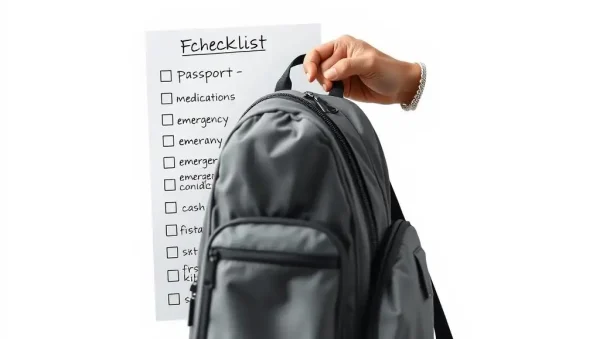
🤔 Disasters disrupt travel; don't let them derail your life. Our Emergency travel plan checklist ensures you're prepared for anything, optimizing your…
Read article
🤔 Don't let lost luggage ruin your trip! This article provides essential tips for navigating a lost luggage travel insurance claim, maximizing…
Read articlePlanning a trip can feel overwhelming, but with the right shortcuts, you can secure both your wallet and your well-being in minutes. This subcategory focuses on fast, actionable travel insurance hacks and safety protocols that save you time, stress, and money. Whether you’re a frequent flyer or a first-time adventurer, these tips help you skip the research rabbit hole and get straight to protecting your journey.
Stop manually visiting a dozen insurer websites. Use aggregator tools like Squaremouth or PolicyBazaar that let you compare policies in under 60 seconds, filtering by trip cost, age, and pre-existing conditions. The shortcut is to look for “cancel for any reason” (CFAR) riders only if you’ve paid a premium; otherwise, focus on medical evacuation and trip interruption coverage.
Another pro move: set a reminder to buy insurance immediately after booking your flight—many policies require purchase within 14 days for pre-existing condition waivers. Most travel hackers also bundle insurance with credit card perks, like Chase Sapphire’s automatic rental car and trip delay coverage, which can eliminate the need for separate policies on short domestic trips.
Spend just ten minutes before leaving to run a digital safety audit. This includes sharing your itinerary with a trusted contact via a shared Google Doc, downloading offline maps, and saving emergency numbers (local police, embassy, and your insurer’s 24/7 hotline) to your phone’s lock screen. Also, enable two-factor authentication on all banking apps to prevent unauthorized access if your device is stolen.
For physical safety, pack a doorstop alarm and a portable power bank—but the real hack is to use a VPN before connecting to any airport or hotel Wi-Fi. This encrypts your data, blocking hackers from intercepting your passport or credit card details. Finally, photograph your passport and visa pages, storing copies in a secure cloud folder like iCloud or Google Drive for instant retrieval if documents vanish.
Your phone can be your best safety ally if set up right. Use location-sharing features (e.g., Google Maps “share trip progress”) with family members so they can track your movements in real-time without calling. Additionally, create a medical ID card (available on both iOS and Android) that displays allergies, blood type, and emergency contacts—even if your screen is locked—saving vital minutes in an accident.
Another shortcut is to pre-program local emergency numbers into your favorites list, since 911 doesn’t work abroad. For example, in the EU use 112, in Australia dial 000, and in Japan call 119. Also, download your insurer’s mobile app and enable push alerts for claim status, so you never miss a payment deadline. Remember to disable auto-connect to unknown Wi-Fi networks in your settings to prevent data leakage.
Before buying a standalone policy, inspect your existing coverage—many homeowner’s or auto insurance policies include limited travel accident protection. Your credit card may already cover trip cancellation up to $10,000. The shortcut is to review your card’s benefits guide online (e.g., American Express or Capital One) to list what’s included, then fill gaps only with a supplementary policy.
Beware common exclusions: extreme sports, alcohol-related incidents, and travel to high-risk countries are often not covered. For adventure travelers, purchase a special rider like World Nomads’ “Adventure Sports” add-on. Also, note that pre-existing conditions are typically excluded unless you buy within a specific window—so always date-stamp your purchase. Avoid “non-refundable” hotel bookings if you’re uninsured; instead, opt for free cancellation rates that let you rebook without penalty.
Packing for safety doesn’t mean hauling a heavy lockbox. Prioritize multi-use items: a portable charger with a flashlight, a sarong that doubles as a towel and sling, and a silicon ring that replaces a metal wedding band to avoid mugging risks. Also, pack a spare copy of your passport’s data page inside your luggage, separate from the original, and a paper list of emergency contact numbers—don’t rely on your phone’s battery.
For hotel rooms, bring a pepper spray (only where legal) and a plug-in door light timer that simulates occupancy. Use a TSA-approved lock on your suitcase, but avoid hardcoded combos—write them in your phone notes. Lastly, carry a travel insurance card physically in your wallet, not just a PDF on your phone, since some providers require proof of coverage for hospital admissions. These small items save space but dramatically boost your security net.
For trips under 3 days within your own country, your health insurance and credit card benefits often suffice. However, if you’re driving a rental car, check if your auto policy covers liability. Short trips to remote areas with poor medical facilities are still worth insurance due to evacuation costs, which can exceed $50,000.
Use an aggregator like Squaremouth and filter for “trip must start within 24 hours.” Many insurers like Allianz offer instant online policies that are effective immediately after payment. The hack: choose a plan with “anytime cancellation” and no waiting period—most cheap plans have a 24-hour delay, which can void coverage for day-one incidents.
Yes, activate “Battery Saver” mode and set Google Maps location sharing to “until you turn off” rather than continuous live tracking. Alternatively, share your route via WhatsApp’s “Live Location” for a limited 1-hour window, which uses less power. Also, turn off background app refresh for non-essential apps to extend battery life.
Read the “Benefit Summary” PDF and search for “quarantine” or “COVID-19” terms. As of 2025, most major insurers cover medical treatment for COVID-19, but many exclude trip cancellation due to fear of contracting the virus. For full coverage, purchase a policy with “COVID-19 sickness” included, and check if treatment abroad requires pre-approval.
Third-party insurance through aggregators is usually cheaper and offers broader coverage. Airline “add-ons” are often overpriced and limited—they rarely cover pre-existing conditions or cancellation for reasons like job loss. Always compare a third-party policy against your credit card’s built-in travel protection to avoid double coverage.