
UltimateLifeHacks: The GTD Mindset: Cultivating a Productive Approach to Life


Welcome to UltimateLifeHacks, your gateway to a more efficient and fulfilling life! Are you ready to conquer your to-do list and unlock your true potential? We delve into the world of practical productivity, and in this article, we explore the power of GTD productivity life hacks—a revolutionary system to streamline your workflow and achieve peak performance. Discover how to transform your approach to daily tasks and reclaim your time. Let's get started on building a more productive you!
- Understanding the GTD Methodology for Enhanced Productivity
-
Practical GTD Life Hacks for Daily Application
- Mastering the Art of Capture: Tools and Techniques for GTD
- Clarifying Your Tasks: Breaking Down Projects into Actionable Steps
- Organizing Your Tasks: Choosing the Right GTD System for You
- The Power of Reflection: Regular Reviews for Optimal GTD Workflow
- Engaging with Your Tasks: Prioritization and Effective Execution
- Advanced GTD Techniques for Maximum Productivity
- GTD Productivity Life Hacks: Case Studies and Success Stories
- GTD and Long-Term Life Goals: Sustainable Productivity Strategies
-
Frequently Asked Questions
- What is the GTD methodology, and how does it relate to productivity?
- How can I implement GTD principles into my daily routine?
- What are some common challenges people face when adopting GTD?
- How does the GTD system differ from other productivity methods?
- Are there any specific tools or apps that can help with GTD?
- Final Reflection: Mastering Your Life's Symphony: The Enduring Power of GTD
- Unlock Your Productivity Potential: Master the Getting Things Done (GTD) Method Today!
Understanding the GTD Methodology for Enhanced Productivity
The relentless pace of modern life often leaves us feeling overwhelmed and unproductive. Juggling work, family, personal projects, and social commitments can quickly lead to stress and a sense of being perpetually behind. But what if there was a system, a methodology, designed to help you conquer this chaos and achieve a state of focused, stress-free productivity?
That's where the Getting Things Done (GTD) methodology comes in. This comprehensive system, developed by David Allen, provides a structured approach to managing tasks and projects, transforming overwhelming to-do lists into manageable workflows. This article will explore the core principles of GTD, demonstrating how its practical application can unlock significant improvements in your productivity and overall well-being.
We'll delve into the specific techniques and strategies that make GTD a powerful tool for achieving your goals and reclaiming control of your time. By the end, you'll understand how to effectively leverage GTD productivity life hacks to transform your daily routine and achieve peak performance.
Defining GTD: Getting Things Done for a Stress-Free Life
Getting Things Done (GTD) is more than just a to-do list; it's a comprehensive system for managing your workflow and achieving clarity. At its heart, GTD aims to alleviate mental clutter by externalizing all your commitments and tasks. This process involves capturing every item demanding your attention – from fleeting thoughts and ideas to larger projects and recurring responsibilities.
Once captured, these items are clarified, organized, and then systematically processed, ensuring nothing slips through the cracks. The ultimate goal is to achieve a state of mental clarity and peace of mind, allowing you to focus on the tasks at hand without the constant nagging worry of forgotten obligations. The system emphasizes a proactive approach, empowering you to take control of your workload and achieve a sense of accomplishment.
Think of it as a mental detox, freeing up cognitive resources for more creative and strategic thinking. It's about moving from a reactive mode to a proactive one, fostering a sense of control and reducing stress. This shift in mindset is crucial for long-term productivity and well-being.
Core Principles of GTD: Capture, Clarify, Organize, Reflect, Engage
The GTD methodology rests on five core principles, each playing a critical role in achieving its overarching goal of stress-free productivity. These principles work synergistically, creating a robust and effective system:
- Capture: This initial stage involves collecting every task, project, and idea that demands your attention. Use a trusted system – a notebook, digital app, or even voice recorder – to capture everything, no matter how small or seemingly insignificant. The key is to get it out of your head and into your system. This prevents mental overload and allows for focused processing later.
- Clarify: Once captured, each item needs clarification. Is it actionable? If so, is it a next action, a project, or something else? If it's not actionable, decide whether to delegate it, defer it, or eliminate it. This process ensures that only actionable items proceed to the next stage.
- Organize: This involves sorting your clarified items into appropriate contexts and lists. These contexts might include "@home," "@work," "@computer," or by project. This organization ensures that you always know what needs to be done and where. This is about creating a system that makes sense to you.
- Reflect: Regular reflection (weekly reviews are recommended) is crucial for maintaining the system's effectiveness. This involves reviewing your lists, identifying bottlenecks, and adjusting your priorities as needed. It's a proactive step to stay on top of your commitments.
- Engage: This is the action phase where you actually do the work. Drawing from your organized lists, you select and execute tasks based on your context and priorities. This is where the real productivity happens.
GTD Workflow: A Step-by-Step Guide to Implementing the System
Implementing GTD effectively involves a structured workflow. While the details can be tailored to individual preferences, the basic steps remain consistent. The process begins with capturing every single item that requires attention, regardless of its size or importance. Then, each item is clarified to determine its nature (task, project, etc.).
Next, the clarified items are organized into lists categorized by context or project. Regular reflection ensures the system stays current and effective. Finally, you engage in the tasks, drawing from your organized lists. This structured approach ensures that no task is overlooked, allowing for seamless workflow management and improved productivity.
The key is consistency and regular review. By following this workflow diligently, you'll experience the transformative power of GTD and cultivate a more productive and less stressful approach to life. This structured system is designed to help you achieve a state of flow, where you can focus on the task at hand without the distractions of a cluttered mind.
Practical GTD Life Hacks for Daily Application
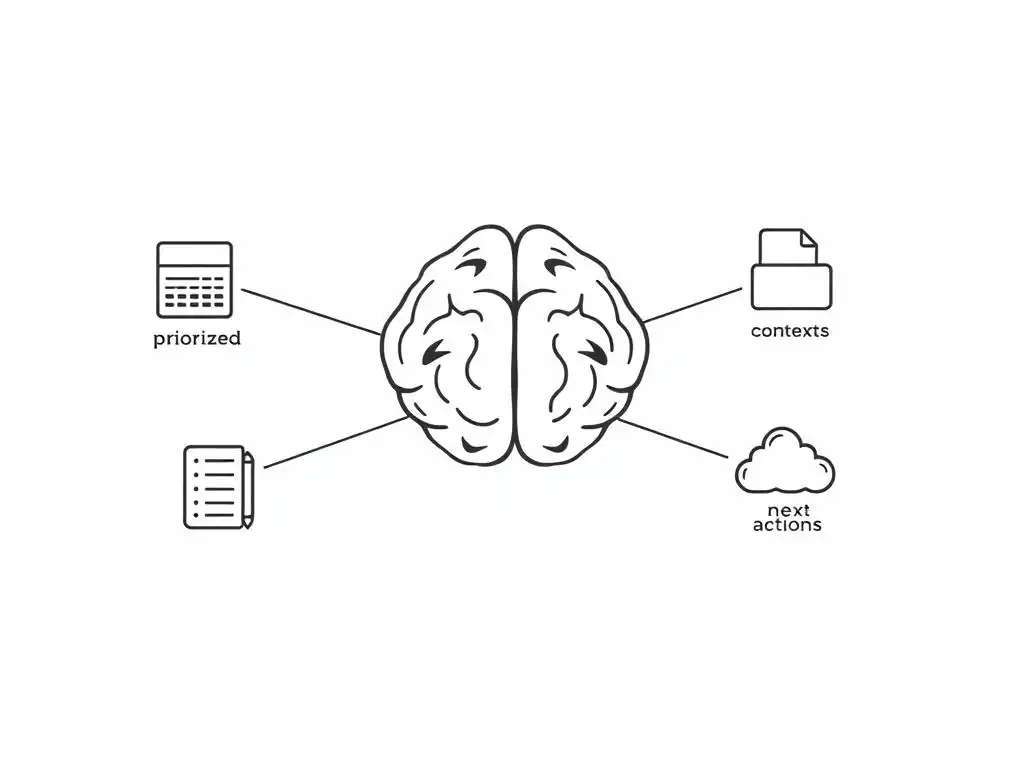
This section delves into practical applications of the Getting Things Done (GTD) methodology, offering actionable strategies to boost your productivity and streamline your daily routines. We'll explore specific techniques and tools to help you effectively manage your tasks and projects, transforming the GTD philosophy from a theoretical concept into a powerful engine for personal effectiveness. Mastering GTD isn't about rigid adherence to a specific system; it's about adapting the core principles to your unique workflow and personality. This ensures that GTD productivity life hacks genuinely work for you.
Mastering the Art of Capture: Tools and Techniques for GTD
The cornerstone of GTD is the "capture" phase – getting everything out of your head and into a trusted system. This prevents mental clutter and allows you to focus on the present task without the nagging feeling of forgotten responsibilities. Effective capture is crucial for GTD productivity life hacks to truly shine.
Several tools can facilitate this process. A simple notepad and pen can be surprisingly effective, particularly for capturing fleeting thoughts. However, digital tools offer significant advantages in terms of searchability, organization, and accessibility. Many individuals find success using dedicated GTD apps, while others integrate capture into existing note-taking or task management applications.
Consider these techniques to improve your capture process:
- Time Blocking for Capture: Dedicate specific times during your day, perhaps 15 minutes in the morning and evening, solely for capturing tasks and ideas. This prevents constant interruptions and ensures thoroughness.
- Inbox Zero Philosophy: Aim to process your inbox (physical or digital) regularly, ensuring that nothing remains unaddressed for extended periods. This proactive approach prevents tasks from piling up and becoming overwhelming.
- Voice-to-Text Integration: Utilize voice-to-text functionality on your smartphone or computer to quickly capture ideas and tasks while on the go. This is particularly beneficial for those who prefer verbal brainstorming.
- Utilizing Email Filters: Implement email filters to automatically sort incoming messages into relevant categories, making it easier to identify and process action items efficiently.
Clarifying Your Tasks: Breaking Down Projects into Actionable Steps
Once captured, tasks need clarification. This involves identifying the next concrete action required for each item. This is where many struggle to effectively implement GTD productivity life hacks; projects often feel overwhelming because they lack clear, actionable steps.
Consider this example: "Plan a vacation to Italy." This is a project, not an actionable task. Clarifying this involves breaking it down into smaller, manageable steps:
- Research flight options to Rome.
- Book accommodation in Florence.
- Create a preliminary itinerary.
- Research visa requirements (if applicable).
- Secure travel insurance.
Each of these sub-tasks is a concrete action that can be scheduled or delegated. This process of decomposition is critical for turning seemingly insurmountable projects into manageable chunks of work. The key is to break down tasks until they are small enough to complete in under two minutes or easily schedule. This makes the entire process far less daunting and encourages consistent progress. This approach is a cornerstone of effective GTD productivity life hacks.
Organizing Your Tasks: Choosing the Right GTD System for You
The final crucial element of GTD is organizing your clarified tasks. This involves choosing a system that works for you, whether it's a digital application, a physical planner, or a combination of both. The most effective system is the one you consistently use.
Popular methods include:
- Kanban boards: Visualize workflow stages (To Do, Doing, Done) using cards or sticky notes. This provides a clear overview of progress.
- Calendar scheduling: Use a calendar to schedule time-sensitive tasks and appointments.
- Prioritization matrices: Employ methods like the Eisenhower Matrix (urgent/important) to prioritize tasks strategically.
- Contextual lists: Categorize tasks by context (e.g., @Home, @Work, @Computer) to optimize workflow during specific times or locations.
Remember, there's no single "best" GTD system. Experiment with different approaches to find the one that best suits your working style and preferences. The goal is to create a system that is both effective and enjoyable to use—a crucial aspect of long-term GTD productivity life hacks success. The right system will promote consistent action and prevent task overload, ultimately leading to a more productive and fulfilling life.
The Power of Reflection: Regular Reviews for Optimal GTD Workflow
Regular reviews are the cornerstone of a successful GTD (Getting Things Done) system. They're not just about looking at your to-do list; they're about actively engaging with your workflow, identifying bottlenecks, and ensuring you're on track to achieve your goals. Without consistent review, your GTD system can quickly become cluttered and ineffective, defeating the purpose of improved productivity. Think of it as a crucial maintenance check for your personal productivity engine.
Effective reviews involve more than simply glancing at your task lists. You need to dedicate focused time, perhaps 15-30 minutes weekly, to a thorough examination of your system. This dedicated time allows for a more comprehensive and detailed assessment. During this time, you should address several key areas. First, process any new inputs: emails, phone calls, notes, etc., capturing them appropriately within your system. Next, review your Next Actions list, ensuring that each task remains relevant and prioritized correctly. Are there any tasks you can delegate? Are there any that require further breakdown into smaller, more manageable steps?
Furthermore, consider your Projects list. Are you still on track for each project's completion? Do you need to adjust deadlines or re-prioritize tasks to ensure timely completion? Finally, some time should be dedicated to a broader perspective. Review your calendar, your waiting-for list, and your someday/maybe list.
This holistic approach ensures you're not only managing your immediate tasks but also planning for the future and letting go of irrelevant items. The frequency of reviews is adjustable; some individuals prefer daily reviews, while others opt for weekly or even monthly reviews depending on their workload and personal preferences. The key is consistency and a structured approach to ensure maximum benefit. Without regular reflection, your GTD system risks becoming a static, ineffective tool rather than a dynamic, productivity-enhancing system.
Engaging with Your Tasks: Prioritization and Effective Execution
Prioritization is the lifeblood of effective task management within the GTD methodology. Simply having a list of tasks isn't enough; you need a system to determine which tasks demand your immediate attention and which can be handled later. Effective prioritization prevents overwhelm and ensures you focus your energy on the most impactful activities. Several techniques can enhance your prioritization skills. The Eisenhower Matrix (urgent/important) is a classic method that helps categorize tasks based on their urgency and importance, allowing you to focus on the high-impact activities first.
Another powerful technique is the MoSCoW method – Must have, Should have, Could have, Won't have. This method helps you prioritize features or tasks within a project, ensuring you focus on the critical elements first. Remember, this isn't just about ticking off items on a list; it's about strategically allocating your time and energy to achieve maximum results. For example, a project manager might use the MoSCoW method to prioritize features in software development, ensuring the must-have features are completed before moving on to the should-have features. This ensures the core functionality is always addressed first.
Beyond prioritization, effective execution requires a mindful approach. Break down large tasks into smaller, manageable steps. This makes them less daunting and easier to accomplish. Timeboxing – allocating a specific amount of time to a task – can also improve focus and efficiency.
Finally, don't forget the importance of regular breaks and self-care. Burnout is a productivity killer, so ensure you incorporate rest and rejuvenation into your workflow. By combining thoughtful prioritization with mindful execution and self-care, you can transform your GTD system from a mere to-do list into a powerful engine for achieving your goals and maximizing your productivity. This strategic approach to task management is key to unlocking the full potential of GTD productivity life hacks.
Advanced GTD Techniques for Maximum Productivity

This section delves into advanced Getting Things Done (GTD) techniques to supercharge your productivity and truly master the system. We'll explore strategies beyond the basics, focusing on refining your workflow for optimal efficiency. Remember, the goal isn't just to get things done, but to get the right things done, at the right time, and with the right focus.
This is where the power of GTD truly shines, transforming task management into a streamlined, productive force in your daily life. This section will equip you with the tools to seamlessly integrate GTD into your life, maximizing its potential for achieving your goals.
Implementing Contextual Lists for Enhanced Focus
Contextual lists are a cornerstone of effective GTD. Instead of a single, overwhelming to-do list, you categorize tasks based on their context. This means grouping tasks you can do only in specific situations or locations. For example:
- @Home: Tasks only doable at home (e.g., "Clean the gutters," "Order groceries online").
- @Work: Tasks requiring your workplace (e.g., "Submit project proposal," "Attend team meeting").
- @Computer: Tasks needing computer access (e.g., "Write blog post," "Edit presentation").
- @Phone: Tasks completed using your phone (e.g., "Schedule doctor appointment," "Reply to emails").
- @Errands: Tasks requiring you to leave home (e.g., "Pick up dry cleaning," "Visit the bank").
This approach significantly improves focus. When you're at home, you only look at your @Home list; no distractions from work or errands. This minimizes mental clutter and maximizes your efficiency in each context. Consider adding sub-contexts for even more granular organization. For instance, under @Computer, you might have @Computer-Writing and @Computer-Admin. Experiment to find the level of detail that works best for you. The key is to eliminate decision fatigue by pre-defining where and how you'll tackle each task.
Utilizing Time Blocking for Efficient Task Management
Time blocking is a powerful technique that complements GTD beautifully. It involves allocating specific time slots in your day for particular tasks or types of work. Instead of reacting to incoming demands, you proactively schedule your most important tasks, ensuring they get done. This is especially useful for tackling large, complex projects.
Let's say you're working on a major presentation. Instead of vaguely scheduling "work on presentation," you might block out 9:00 AM - 11:00 AM for research and outlining, 1:00 PM - 3:00 PM for slide creation, and 4:00 PM - 5:00 PM for a review. This focused approach eliminates the need for constant prioritization during those blocks. You're simply executing the planned tasks. Remember to build in buffer time between blocks to account for unexpected delays or interruptions. This structured approach makes your workday remarkably more efficient and less stressful. ⏰
Integrating GTD with Other Productivity Tools and Apps
GTD isn't a standalone system; it thrives when integrated with other productivity tools that support its core principles. Many apps offer features that align perfectly with GTD's workflow. Some popular choices include task management apps, calendar apps, and note-taking apps. The key is to find tools that allow you to easily capture, process, organize, and review your tasks and projects. For example:
| Tool Category | Example Apps | GTD Integration |
|---|---|---|
| Task Management | Todoist, Any.do, Microsoft To Do | Capture tasks, organize into contexts and projects |
| Calendar | Google Calendar, Outlook Calendar | Schedule time blocks, set reminders for tasks and meetings |
| Note-Taking | Evernote, OneNote, Bear | Capture ideas, project details, meeting notes |
By thoughtfully selecting and integrating these tools, you can create a highly personalized and efficient GTD system. Experiment with different combinations to discover the perfect fit for your workflow and preferences. The ultimate goal is to streamline your processes, minimizing friction and maximizing your productivity. Remember, the best tools are the ones you consistently use and find genuinely helpful. Don't be afraid to try different options until you find what works best for you.
Overcoming Common GTD Challenges and Roadblocks
Implementing GTD, while incredibly effective for many, presents certain hurdles. One common challenge is the initial time investment. Setting up your system, defining contexts, and capturing all your tasks can feel overwhelming at first. Many individuals find themselves spending more time organizing their tasks than actually doing them.
This is often due to a lack of initial planning or an over-engineered system. The key here is to start small, focusing on the core principles of GTD rather than striving for immediate perfection. Begin with a simple system and gradually add complexity as you become more comfortable. Regular review and refinement are crucial; don't be afraid to adjust your workflow to fit your needs.
Another significant roadblock is the potential for task procrastination, even within a well-structured GTD system. The sheer volume of tasks, even when categorized and prioritized, can lead to analysis paralysis. To combat this, utilize techniques like timeboxing – allocating specific time slots for tackling particular tasks.
The Pomodoro Technique, for instance, can be a powerful ally, breaking down work into manageable intervals with short breaks in between. Furthermore, regularly reviewing your "Next Actions" list and selecting the most impactful, high-value tasks can significantly improve focus and prevent procrastination. Remember, the goal is not to complete every task immediately but to consistently move forward.
Finally, maintaining momentum is crucial. Life often throws unexpected curveballs, disrupting even the most meticulously planned GTD system. Unexpected meetings, urgent requests, and personal emergencies can derail progress. To mitigate this, incorporate buffer time into your schedule. This allows for unexpected events without completely derailing your day. Regularly reviewing and adjusting your system in light of these disruptions is also essential for maintaining long-term effectiveness. Flexibility and adaptability are key to long-term success with GTD. Don't be afraid to adjust your approach as needed, and remember that consistency, not perfection, is the ultimate goal.
Adapting GTD to Different Life Stages and Work Styles
GTD's beauty lies in its adaptability. Its principles can be applied effectively across various life stages and work styles, though adjustments are often necessary. For students, GTD can help manage academic workloads, assignments, and extracurricular activities. The "Projects" list might encompass course projects, while "Next Actions" could include studying specific chapters or attending lectures. Contextualizing tasks – "at library," "at home," "during study break" – allows for efficient time management amidst a busy academic schedule. Regular weekly reviews are crucial for ensuring assignments are on track and deadlines are met.
Professionals in fast-paced environments might find that adapting GTD to agile methodologies enhances productivity. The iterative nature of agile projects aligns well with GTD's emphasis on breaking down large tasks into smaller, manageable steps. Regular stand-up meetings can serve as a mini-weekly review, ensuring tasks remain on track and allowing for quick adjustments. Prioritizing tasks based on urgency and business value becomes paramount in this context. The ability to quickly re-prioritize and adapt to changing project requirements is crucial for success.
For entrepreneurs and freelancers, GTD offers a framework for managing multiple projects simultaneously. Clear project definitions, well-defined next actions, and regular reviews are crucial for staying organized amidst the inherent chaos of self-employment. The ability to delegate tasks effectively and utilize project management tools alongside GTD can significantly improve efficiency. The flexibility of GTD allows for seamless integration with various project management software, enhancing overall productivity.
Remember to adjust the level of detail in your system based on your workload and personal preferences, ensuring it remains a tool for productivity, not a source of additional stress. Ultimately, the core principles of GTD remain constant, regardless of life stage or professional setting. The key is to tailor the system to your specific needs and context.
GTD Productivity Life Hacks: Case Studies and Success Stories
This section delves into real-world applications of the Getting Things Done (GTD) methodology, showcasing its effectiveness across diverse scenarios. We'll explore specific examples demonstrating how individuals have leveraged GTD principles to achieve remarkable productivity gains. Understanding these case studies will provide tangible evidence of GTD's power and inspire you to implement it in your own life. The core of GTD productivity life hacks lies in its adaptability and ability to be tailored to individual needs and contexts.
Implementing GTD in a Fast-Paced Work Environment
The demands of a fast-paced work environment can often feel overwhelming. Constant interruptions, urgent deadlines, and a never-ending to-do list can lead to stress, burnout, and ultimately, decreased productivity. However, GTD offers a structured approach to navigate this chaos.
Consider Sarah, a marketing manager at a tech startup. Before adopting GTD, Sarah felt constantly behind, juggling multiple projects and struggling to prioritize effectively. Emails piled up, deadlines were missed, and she often felt a sense of frantic urgency. Implementing GTD involved several key steps:
- Capturing: Sarah used a digital inbox to capture all incoming tasks, emails, and ideas. This ensured nothing slipped through the cracks.
- Clarifying: She processed each item, deciding whether it was actionable, delegable, or simply information to be filed.
- Organizing: She used a project-based system, breaking down large projects into smaller, manageable tasks. She prioritized tasks based on urgency and importance.
- Reflecting: Regular weekly reviews allowed Sarah to assess her progress, adjust priorities, and identify potential roadblocks.
- Engaging: She focused on executing her highest-priority tasks, knowing she had a clear system in place to manage the rest.
The results were transformative. Sarah reported a significant reduction in stress, improved time management, and a noticeable increase in her overall productivity. She consistently met deadlines, felt more in control, and was able to dedicate more time to strategic initiatives. This demonstrates how GTD can be a powerful tool for navigating the complexities of a demanding professional life, a key element of effective GTD productivity life hacks.
Using GTD to Manage Personal Projects and Goals
GTD isn't just for the workplace; it's equally effective in managing personal projects and achieving personal goals. Many people struggle to balance their professional and personal lives, often leaving personal aspirations neglected. GTD offers a solution by providing a framework for organizing and prioritizing both work and personal tasks.
Let's consider John, an architect who wanted to learn how to play the guitar. He had always dreamed of playing, but life's demands consistently pushed it to the back burner. Using GTD, John:
- Defined his goal: Learning to play the guitar proficiently within a year.
- Broke it down: He defined smaller, actionable steps, such as practicing scales for 30 minutes daily, learning basic chords, and joining a beginner's class.
- Scheduled time: He allocated specific time slots in his weekly schedule dedicated to guitar practice.
- Tracked progress: He used a simple spreadsheet to monitor his progress and identify areas needing improvement.
By applying GTD principles, John successfully integrated his personal goal into his already busy schedule. He found that the structured approach of GTD not only helped him achieve his personal goal but also improved his overall time management skills, enhancing his productivity in both his professional and personal life. This highlights another facet of GTD productivity life hacks: its applicability to personal growth and fulfillment.
GTD for Students: Balancing Academics and Personal Life
The academic life presents unique challenges. Students often juggle multiple courses, assignments, extracurricular activities, and social commitments. GTD can be a game-changer, helping students manage their workload effectively and reduce stress.
Imagine Maria, a college student majoring in engineering. Overwhelmed by coursework, projects, and part-time work, she felt constantly stressed and struggled to keep up. Applying GTD, Maria:
- Captured all assignments and deadlines: She used a calendar and a to-do list to keep track of everything.
- Broke down large projects: She divided complex assignments into smaller, more manageable tasks.
- Prioritized tasks: She focused on the most important and urgent assignments first.
- Scheduled study time: She allocated specific time slots for studying each subject.
- Regularly reviewed her progress: She reviewed her schedule weekly to ensure she was on track.
The structured approach of GTD allowed Maria to manage her time more effectively, reducing her stress levels and improving her academic performance. She found that the clarity and organization provided by GTD gave her the mental space to focus on her studies and enjoy her college experience more fully. This showcases the versatility of GTD productivity life hacks, proving its effectiveness even in the demanding environment of higher education. The key takeaway is that GTD is not just a system; it’s a mindset that fosters a proactive and productive approach to life, regardless of your circumstances.
GTD and Long-Term Life Goals: Sustainable Productivity Strategies
The Getting Things Done (GTD) methodology, while excellent for managing daily tasks, truly shines when integrated with long-term life goals. Many mistakenly view GTD as solely a task management system, overlooking its potential to drive significant progress towards broader ambitions. Successfully leveraging GTD for long-term success requires a mindful approach, ensuring your daily actions consistently contribute to your larger objectives. This synergy is crucial for sustainable productivity and avoiding the feeling of being busy but unproductive.
The key lies in strategically aligning your short-term tasks with your overarching aspirations. Think of it as a roadmap where GTD helps you navigate the daily journey while keeping your destination – your long-term goals – firmly in sight. This section will explore how to effectively bridge this gap, maximizing the power of GTD for both immediate and long-term achievements.
Setting SMART Goals and Aligning Them with Your GTD System
To effectively use GTD for long-term goals, start by defining them using the SMART framework: Specific, Measurable, Achievable, Relevant, and Time-bound. Instead of a vague goal like "improve my health," a SMART goal might be: "Lose 10 pounds by December 31st by exercising three times a week and tracking my calorie intake daily." This specificity is crucial.
Once your SMART goals are defined, break them down into smaller, actionable steps. These steps then become projects within your GTD system. For example, the "lose 10 pounds" goal might be broken down into projects like: "research healthy meal plans," "find a gym and create a workout schedule," and "track my progress using a fitness app." Each project is further dissected into individual tasks, which are then captured and processed within your GTD workflow.
This ensures that every action you take contributes directly to your larger goal. Regularly reviewing your projects and tasks within the GTD system helps maintain focus and track progress. Using a project management tool alongside your GTD system can further enhance this process, providing a visual representation of your progress towards your long-term objectives. Remember consistency is key; even small daily actions, meticulously managed through GTD, accumulate to significant progress over time.
Measuring Progress and Adapting Your GTD Workflow
Regularly assessing your progress towards your long-term goals is paramount. This isn't just about ticking off tasks; it's about evaluating whether your GTD workflow is effectively supporting your overarching ambitions. Use measurable metrics to track your progress. For instance, if your goal is to write a book, measure progress by word count or chapters completed. If your goal is to improve your fitness, track weight loss, distance run, or strength gains.
If your progress isn't aligning with your expectations, don't hesitate to adapt your GTD workflow. This might involve re-prioritizing tasks, breaking down projects into smaller, more manageable steps, or even re-evaluating your goals themselves. Flexibility is key; life throws curveballs, and your GTD system should be adaptable enough to accommodate unexpected changes. Regular reviews – weekly or monthly – are essential for identifying areas needing adjustment.
Don't be afraid to experiment with different techniques and tools within your GTD system to find what works best for you and your specific goals. This iterative process of tracking, analyzing, and adapting is central to maximizing the effectiveness of GTD in achieving long-term success. The ability to adjust your strategy based on data-driven insights is a key differentiator between simply managing tasks and strategically achieving your ambitions.
Maintaining Momentum and Avoiding Burnout with GTD
While GTD promotes productivity, it's vital to avoid burnout. Overwhelm can easily arise if your GTD system becomes cluttered and unmanageable. Therefore, maintaining momentum requires a balance between action and rest. Regularly review your GTD system to ensure it remains organized and reflects your current priorities. This includes clearing out completed tasks, re-prioritizing projects, and delegating where possible.
Remember that rest and rejuvenation are integral components of sustained productivity. Schedule time for breaks, hobbies, and activities that help you recharge. Integrate self-care into your GTD system, treating it as a crucial project with dedicated tasks. This might include regular exercise, mindfulness practices, or simply setting aside time for relaxation. The goal is to create a sustainable system that supports your well-being while driving you towards your goals.
Burnout is the enemy of productivity, and a well-maintained, balanced GTD system is your best defense against it. Prioritize self-care and ensure your GTD system actively contributes to, rather than detracts from, your overall well-being. This holistic approach ensures long-term success and avoids the pitfalls of unsustainable productivity strategies. 🧘♀️
The Long-Term Benefits of a GTD Approach to Life Management
Adopting a Getting Things Done (GTD) methodology isn't just about immediate task completion; it's about cultivating a sustainable system for managing your life and achieving long-term goals. The consistent application of GTD principles yields significant benefits that extend far beyond simply clearing your to-do list. These benefits manifest in various aspects of your life, contributing to a more balanced, fulfilling, and ultimately, more successful existence.
One of the most significant long-term benefits is reduced stress and anxiety. By systematically capturing, clarifying, organizing, reflecting on, and engaging with your tasks and projects, you eliminate the mental clutter that often leads to overwhelm. This proactive approach prevents tasks from slipping through the cracks, reducing the nagging feeling of forgotten responsibilities and the associated stress. Imagine the peace of mind knowing that everything you need to do is accounted for, organized, and scheduled appropriately. This clarity allows for better focus and reduces the mental energy spent on worrying about unfinished business.
Furthermore, a GTD approach fosters improved focus and concentration. When you're not constantly battling mental clutter, you're able to dedicate more cognitive resources to the task at hand. This enhanced focus translates to increased productivity and higher quality work. The ability to single-mindedly concentrate on a project, without the distraction of looming deadlines or forgotten tasks, is a powerful tool for achieving ambitious goals, both professionally and personally. This improved concentration isn't just a temporary boost; it's a sustainable habit cultivated through the consistent application of GTD principles.
Finally, and perhaps most importantly, GTD helps you align your daily actions with your long-term goals. By regularly reviewing your projects and next actions, you ensure that your efforts are consistently directed towards achieving what truly matters to you. This mindful approach prevents you from getting bogged down in less important tasks, allowing you to dedicate your time and energy to the initiatives that will bring you closer to your aspirations. This alignment provides a sense of purpose and direction, leading to a more fulfilling and meaningful life.
It's about creating a sustainable system that supports your personal and professional growth over the long haul. The consistent practice of GTD helps you stay on track, making your long-term goals feel less daunting and more attainable. This, ultimately, contributes to a greater sense of accomplishment and overall well-being.
Frequently Asked Questions
What is the GTD methodology, and how does it relate to productivity?
GTD, or Getting Things Done, is a productivity method focused on capturing, clarifying, organizing, reflecting on, and engaging with tasks. It helps you clear your mind and focus on what truly matters by externalizing your to-dos. This leads to increased efficiency and reduced stress.
How can I implement GTD principles into my daily routine?
Start by capturing all your tasks in a central location (e.g., a notebook, app). Then, clarify each task, breaking down larger projects into smaller, actionable steps. Organize these items into contexts (e.g., @home, @work) and next actions for efficient execution.
What are some common challenges people face when adopting GTD?
Many find the initial setup overwhelming, or struggle with maintaining the system consistently. Others may overthink the process or become bogged down in details. Regular review and adjustment are key to overcoming these hurdles.
How does the GTD system differ from other productivity methods?
While other methods focus on time management or prioritization, GTD emphasizes complete task capture and clarification. This ensures nothing slips through the cracks and allows for a more holistic and mindful approach to productivity. It's less about scheduling and more about managing your workflow.
Are there any specific tools or apps that can help with GTD?
Many apps support GTD, including Todoist, Any.do, and Notion. The best tool depends on your preferences, but the core principle is to find a system that helps you capture, clarify, organize, reflect, and engage with your tasks effectively.
Final Reflection: Mastering Your Life's Symphony: The Enduring Power of GTD
The principles of Getting Things Done (GTD) aren't just productivity techniques; they're a philosophy for navigating the complexities of modern life. In a world saturated with information and demands, GTD offers a powerful antidote to overwhelm, providing a framework for clarity, focus, and ultimately, a more fulfilling existence. Its relevance today is undeniable, as we grapple with ever-increasing workloads and the constant pressure to "do it all."
The impact of GTD extends far beyond simple task management; it's a shift in mindset, a conscious choice to take control of one's time and energy. It's about moving from reactive to proactive, from feeling buried under obligations to feeling empowered and in charge. This resonates deeply with me, as I've personally witnessed the transformative power of embracing this system. The key is not to prioritize what's on your schedule, but to schedule your priorities.
– Stephen Covey. This quote perfectly encapsulates the essence of GTD: aligning your actions with your values and goals.
Now, it's your turn. Consider how you currently manage your time and energy. Are you feeling overwhelmed, or do you possess a sense of control and purpose? I invite you to explore the GTD methodology, to experiment with its principles, and to discover the profound impact it can have on your life. Embrace the power of intentionality, and begin orchestrating your own life's symphony – a harmonious blend of productivity, peace, and purpose.
Unlock Your Productivity Potential: Master the Getting Things Done (GTD) Method Today!
Getting Things Done (GTD) can significantly improve your productivity and overall well-being. We hope this introduction has provided valuable insights. Now, let's put these principles into practice.
Here's how you can begin transforming your approach:
- Implement a GTD system: Start by applying the GTD methodology to a single area of your life—work, home, or a personal project. Begin with capturing tasks and identifying the next steps. This is the foundation for lasting productivity improvements.
- Share your key takeaway: Tell us—and others—what resonated most with you. What is one immediate action you plan to take? Let's spread the productivity!
- Explore GTD tools and apps: Experiment with different digital or analog tools to find what best supports your workflow. The key is finding what works best for you.
Ready to become a productivity master? What's the first task you'll tackle using the GTD method?