
Automate Your Email Marketing: Business Automation Hacks for Better Open Rates

Ready to unlock the secrets to a more productive and efficient you? At UltimateLifeHacks, we're dedicated to providing practical strategies for optimizing your daily life. This time, we’re diving deep into the world of automation, revealing how you can dramatically improve your email marketing open rates. Discover the surprising techniques and tools that will transform your email marketing from a chore into a powerful engine for growth. Let's explore how to automate email marketing open rates and reclaim your valuable time – read on to learn more!
- Understanding the Importance of High Email Open Rates
- Automate Email Marketing for Improved Open Rates: Strategies and Tactics
- Leveraging Automation Tools to Boost Open Rates
- Advanced Techniques to Supercharge Your Email Open Rates
- Case Study: How a SaaS Company Increased Open Rates by 25% Through Automation
- Conclusion: Mastering Email Marketing Automation for Sustainable Growth
-
Frequently Asked Questions
- How can I automate my email marketing to improve open rates?
- What are some key email automation features to focus on for higher open rates?
- Does automation guarantee higher email open rates?
- What are some common mistakes to avoid when automating email marketing?
- What tools can help me automate my email marketing for better open rates?
- Final Reflection: Unlocking the Power of Automated Email Engagement
- Unlock Your Email Marketing Potential: Start Automating Today!
Understanding the Importance of High Email Open Rates
Email marketing remains a powerful tool for businesses of all sizes, but its effectiveness hinges on a crucial metric: the open rate. A high email open rate signifies not only successful deliverability but also a highly engaged audience receptive to your message. This article delves into practical strategies to automate your email marketing process, ultimately boosting your open rates and, consequently, your return on investment (ROI). We'll explore the vital connection between automation, open rates, and business success, providing actionable hacks to improve your email marketing performance.
Ignoring email automation in today's fast-paced digital landscape is akin to leaving money on the table; mastering it is key to unlocking sustainable growth and reaching your target audience effectively. We'll equip you with the knowledge and techniques to automate your email marketing efforts for significantly higher open rates, leading to improved conversions and a healthier bottom line. Let's dive in!
Why High Open Rates Matter for Business Success
High email open rates are paramount to a thriving business because they directly correlate with increased engagement and ultimately, higher conversions. A higher open rate indicates that your subject lines are compelling, your email content is relevant, and your audience is genuinely interested in what you have to say. This translates to:
- Increased Brand Awareness: More opens mean more exposure to your brand messaging, fostering familiarity and trust among potential customers.
- Improved Customer Relationships: Consistent engagement through email nurtures relationships, turning leads into loyal customers.
- Higher Conversion Rates: Emails opened are more likely to be read and acted upon, leading to more sales, sign-ups, or whatever your desired conversion action is.
- Better ROI on Marketing Spend: A successful email marketing campaign with a high open rate maximizes your return on investment by ensuring your message reaches and resonates with your target audience.
- Data-Driven Optimization: Tracking open rates provides valuable insights into what resonates with your audience, allowing you to refine your strategies and improve future campaigns.
Consider this: An email campaign with a 50% open rate versus one with a 10% open rate will generate significantly more engagement and ultimately, revenue. The difference is substantial, highlighting the critical importance of optimizing for high open rates. Failing to prioritize this metric can severely limit your marketing effectiveness.
Open Rates and Conversions: A Direct Correlation
The relationship between email open rates and conversions is not merely correlational; it's causal. A higher open rate directly contributes to a higher conversion rate. Think of it this way: if your email isn't even being opened, it certainly won't be leading to a sale or desired action. The more people who open your emails, the greater the opportunity for them to engage with your content and take the desired action.
This correlation is supported by countless case studies and data points across various industries. Businesses that prioritize email automation and optimization consistently report higher open rates and, consequently, higher conversion rates. This isn't just about luck; it's a result of strategic planning and execution. By focusing on improving your open rates through automation and personalization, you directly impact your bottom line.
Key Metrics for Measuring and Tracking Email Open Rates
Tracking and analyzing key metrics is crucial for understanding the effectiveness of your email marketing efforts and identifying areas for improvement. Here's a breakdown of essential metrics to monitor:
| Metric | Description | Importance |
|---|---|---|
| Open Rate | Percentage of recipients who opened your email. | Primary indicator of email engagement and campaign success. |
| Click-Through Rate (CTR) | Percentage of recipients who clicked on a link within your email. | Measures how effectively your email content drives recipients to take action (e.g., visit your website). |
| Conversion Rate | Percentage of recipients who completed a desired action (e.g., purchase, signup). | Ultimate measure of your email marketing campaign's success. |
| Unsubscribe Rate | Percentage of recipients who unsubscribed from your email list. | Indicates potential issues with email content relevance or frequency. |
| Bounce Rate | Percentage of emails that were not delivered. | Highlights problems with email list hygiene or deliverability. |
Regularly monitoring these metrics allows you to identify trends, make data-driven decisions, and continuously improve your email marketing strategy. By tracking these key performance indicators (KPIs), you can refine your automation processes and optimize for even higher open rates and conversions. Remember, consistent monitoring and analysis are key to long-term email marketing success.
Automate Email Marketing for Improved Open Rates: Strategies and Tactics
This section delves into specific, actionable strategies to automate your email marketing efforts and, consequently, improve your open rates. We'll explore techniques that move beyond simple automation and focus on intelligent, targeted approaches that resonate with your audience. Remember, automation isn't just about sending emails; it's about sending the right emails to the right people at the right time. This targeted approach is key to achieving higher open rates and ultimately, better ROI.
Audience Segmentation for Targeted Email Campaigns
Effective email marketing hinges on understanding your audience. Generic blasts rarely yield impressive open rates. By segmenting your audience based on various criteria, you can tailor your messaging for maximum impact. This requires a strategic approach to data collection and analysis.
Consider these segmentation strategies:
- Demographic Segmentation: Categorize your subscribers based on age, location, gender, and occupation. A 25-year-old in San Francisco will likely respond differently to an email than a 60-year-old in rural Iowa.
- Behavioral Segmentation: Analyze past interactions with your emails. Have they opened previous emails? Clicked on links? Made purchases? This data provides invaluable insights into their interests and preferences. For example, subscribers who frequently open emails about product X should receive more content related to product X.
- Purchase History Segmentation: Segment your audience based on their past purchases. This allows for highly targeted promotions and recommendations, increasing the relevance and thus, the likelihood of opening your emails. Someone who purchased running shoes might be interested in running apparel or accessories.
- Engagement Segmentation: Identify your most engaged subscribers (high open rates, click-through rates) and tailor exclusive content or offers to reward their loyalty. This fosters a stronger relationship and increases the chance they'll open future emails.
Implementing robust audience segmentation requires a capable email marketing platform. Choose a platform that offers advanced segmentation features and allows for dynamic email content personalization. The effort invested in precise segmentation will significantly improve your automated email marketing open rates. This targeted approach ensures that every email is relevant and valuable to the recipient.
Personalizing Email Subject Lines to Boost Engagement
The subject line is the first—and often the only—impression you make. A compelling, personalized subject line is crucial for enticing recipients to open your email. Generic subject lines often land in the trash, while personalized ones pique curiosity and drive opens.
Here's how to leverage personalization:
- Use the subscriber's name: A simple "Hi [Name]," goes a long way in establishing a personal connection.
- Dynamic content based on segmentation: If you segmented by purchase history, your subject line could reflect that. For example, "Your Favorite Product is Back in Stock!" or "New Arrivals You Might Like."
- A/B testing: Experiment with different subject lines to determine what resonates best with your audience. Test variations in tone, length, and personalization to optimize your open rates.
- Urgency and scarcity: Create a sense of urgency or scarcity to incentivize immediate action. Examples include: "Limited-Time Offer," "Don't Miss Out," or "Sale Ends Tonight!"
Remember, the goal is to craft subject lines that are both personalized and intriguing. Avoid spammy keywords and overly promotional language. Focus on adding value and creating a genuine connection with your audience. This personalized approach to subject lines directly impacts automated email marketing open rates.
Optimizing Email Send Times for Maximum Impact
Sending emails at the optimal time drastically increases the chances of them being opened. The best time to send depends on your audience and their behavior. However, some general guidelines can be helpful:
- Analyze your data: Use your email marketing platform's analytics to identify when your subscribers are most active. This data-driven approach is crucial for maximizing your open rates.
- Consider time zones: If you have a global audience, send emails at times relevant to each time zone.
- Weekday vs. weekend: Experiment to see if your audience is more receptive on weekdays or weekends.
- Avoid peak hours: Avoid sending emails during times when inboxes are likely to be flooded with other messages.
Automated email marketing platforms often offer features to optimize send times. Take advantage of these features to schedule emails for optimal delivery. Regularly review and adjust your send times based on performance data. This continuous optimization is essential for maintaining high open rates in your automated email campaigns. By carefully analyzing your data and adapting your sending schedule, you can significantly improve your automated email marketing open rates.
A/B Testing Subject Lines and Email Content for Continuous Improvement
A/B testing is crucial for optimizing your email marketing campaigns and boosting open rates. It allows you to systematically test different variations of your subject lines and email content to identify what resonates best with your audience. By analyzing the results, you can refine your approach and consistently improve your campaign performance. Don't just guess what works—let data guide your decisions.
For example, you might A/B test two subject lines: one using a more direct, benefit-driven approach ("Get 20% Off Your Next Purchase!") and another employing a more intriguing, question-based approach ("Is This the Secret to [Desired Outcome]?"). Analyzing the open rates for each variation will reveal which approach performs better with your specific audience. This data-driven approach is far superior to relying on intuition or guesswork.
Furthermore, A/B testing isn't limited to subject lines. You can also test different email body copy, calls to action (CTAs), and even the overall email design. Perhaps one version of your email includes a visually compelling hero image, while another uses a more text-heavy approach. Tracking the open rates for each variation allows you to understand which design element contributes most effectively to engagement. Remember to only change one element at a time to isolate the impact of each variation.
The key to successful A/B testing is to maintain a consistent testing schedule. Regularly experiment with different elements of your email campaigns to keep optimizing and improving your open rates. This continuous improvement process will ensure that your email marketing efforts remain effective and efficient over time. Tools exist to automate much of this process, freeing up your time to focus on other aspects of your business.
Consider incorporating A/B testing into your automation workflow for a truly streamlined approach to optimizing email open rates. This iterative process, coupled with analyzing the data generated, will lead to significant improvements in your overall email marketing ROI. Don't be afraid to experiment; even small changes can have a substantial impact.
Leveraging Automation Tools to Boost Open Rates
This section delves into the practical application of automation tools to significantly improve your email marketing open rates. We'll explore how strategic automation, beyond simply scheduling emails, can lead to higher engagement and ultimately, better results. The key is to leverage automation to personalize the recipient experience, making each email feel less like a mass message and more like a targeted conversation. Ignoring automation in today's fast-paced business environment is akin to leaving money on the table. Let's explore how to avoid that.
Selecting the Right Email Marketing Automation Platform
Choosing the right email marketing automation platform is paramount for success. The platform you select should align with your business needs, budget, and technical expertise. Consider factors such as ease of use, integration capabilities (particularly CRM integration, discussed below), and the available features. Some platforms offer advanced segmentation capabilities, allowing for hyper-personalized email campaigns that significantly boost open rates. Others excel at A/B testing, enabling you to continuously optimize your email strategies.
A poorly chosen platform can lead to wasted time and resources, hindering your ability to automate email marketing effectively. Don't underestimate the value of a user-friendly interface; a complicated platform can lead to frustration and ultimately, less effective email marketing. Consider these key factors when making your selection:
- Ease of Use: How intuitive is the interface? Can your team easily navigate the platform and create campaigns?
- Integration Capabilities: Does it integrate with your CRM and other essential business tools? Seamless integration is crucial for effective automation.
- Advanced Features: Does it offer A/B testing, segmentation, and other features necessary for optimizing your campaigns?
- Pricing: Does the cost align with your budget and projected ROI?
- Customer Support: What level of support does the platform offer? Reliable support is essential, especially when troubleshooting issues.
Consider the following table comparing hypothetical features of three different platforms:
| Feature | Platform A | Platform B | Platform C |
|---|---|---|---|
| Ease of Use | ⭐⭐⭐⭐ | ⭐⭐⭐ | ⭐⭐⭐⭐⭐ |
| CRM Integration | Yes | Yes | Yes |
| A/B Testing | Yes | Yes | Yes |
| Segmentation | Basic | Advanced | Advanced |
| Pricing | $$$ | $$ |
Remember, the "best" platform depends entirely on your specific requirements. Thorough research is crucial before committing to a particular solution.
CRM Integration for Personalized Email Campaigns
Integrating your email marketing automation platform with your CRM (Customer Relationship Management) system is a game-changer for boosting open rates. This integration allows you to personalize emails based on individual customer data, creating a more relevant and engaging experience. Instead of generic blasts, you can send highly targeted messages based on customer behavior, purchase history, demographics, and other valuable insights.
For example, if a customer recently viewed a specific product on your website, you can send a targeted email highlighting that product with a personalized discount code. This level of personalization significantly increases the likelihood of the email being opened and read. The more you know about your customers, the more effective your automated email campaigns can be. This data-driven approach leads to higher engagement and better conversion rates. Don't underestimate the power of a well-integrated CRM; it's the engine that drives truly effective automated email marketing.
Imagine the impact of automated email sequences triggered by specific customer actions:
- Abandoned Cart Emails: A customer adds items to their cart but doesn't complete the purchase. An automated email reminds them of their cart contents and offers a discount to incentivize completion.
- Welcome Series: New subscribers receive a series of automated emails introducing your brand, products, and offers. This helps nurture leads and build relationships.
- Post-Purchase Follow-up: Customers who make a purchase receive automated emails with tracking information, product care instructions, and related product recommendations.
Proper CRM integration allows for this kind of sophisticated automation, moving beyond simple scheduled emails to truly personalized engagement.
Automating Follow-up Emails for Enhanced Engagement
Automating follow-up emails is another crucial strategy for improving open rates. Instead of manually sending multiple emails to the same contact, automation allows for the creation of sophisticated sequences that nurture leads and keep your brand top-of-mind. This strategy is particularly effective for lead nurturing, converting prospects into customers, and building lasting relationships.
These automated follow-up emails shouldn't be generic; they should be strategically timed and personalized to address specific pain points or offer relevant information. For instance, a series of emails could educate prospects about your products or services, provide helpful resources, or offer exclusive deals. This approach helps build trust and authority, increasing the likelihood of engagement. The key is to provide value at each stage of the customer journey. A well-crafted automated follow-up series can significantly boost your open rates and overall engagement metrics.
Consider structuring your automated follow-up sequences based on customer behavior:
- Email #1 (Immediately after signup): A welcome email thanking them for subscribing and offering a valuable resource.
- Email #2 (3 days later): An email highlighting a key benefit of your product or service.
- Email #3 (7 days later): A case study or testimonial showcasing the success of other customers.
- Email #4 (14 days later): A special offer or discount to encourage a purchase.
Remember to analyze the performance of your automated email sequences and adjust them as needed. Continuous optimization is key to maximizing your ROI. By strategically automating your follow-up emails, you can nurture leads, build relationships, and ultimately drive higher conversions. This is a fundamental aspect of effective email marketing automation and a key strategy for improving open rates.
Utilizing Email Marketing Automation for Lead Nurturing and Sales
Automating your email marketing isn't just about sending out blasts; it's about strategically nurturing leads and driving sales. A well-structured automated email sequence can significantly improve your open rates and, more importantly, your conversion rates. This is achieved by delivering the right message at the right time, fostering engagement and building trust with potential customers. Think of it as a personalized conversation, scaled to reach hundreds or even thousands of individuals.
One key aspect is segmentation. Instead of sending a generic email to your entire list, segment your audience based on demographics, behavior (website activity, downloads, purchases), or engagement levels. This allows you to tailor your messages, ensuring relevance and increasing the likelihood of opens and clicks.
For example, a segment of users who downloaded a specific whitepaper might receive a follow-up email offering a related webinar, while another segment might receive a promotional offer based on their browsing history. This personalized approach dramatically improves the chances of an email being opened and acted upon, directly impacting your "automate email marketing open rates."
Furthermore, automation allows for drip campaigns, a series of pre-written emails sent automatically over a set period. These campaigns can guide leads through the sales funnel, educating them about your product or service and ultimately encouraging a purchase. A successful drip campaign might start with a welcome email, followed by educational content, testimonials, case studies, and finally, a compelling call to action.
The timing of these emails is crucial; too frequent, and you risk being perceived as spam; too infrequent, and you lose the momentum. Finding the optimal cadence requires testing and analysis, but the rewards are substantial in boosting open rates and ultimately, sales. Properly implemented, these automated sequences are a powerful tool in maximizing your return on investment (ROI) and enhancing your overall email marketing strategy.
Successful automation means higher engagement, better open rates, and improved lead conversion – all contributing to a healthier bottom line. Careful consideration of the customer journey and a well-defined strategy are key to successfully leveraging automation for lead nurturing and sales.
Advanced Techniques to Supercharge Your Email Open Rates

This section delves into sophisticated strategies to significantly boost your email open rates beyond the basics. We'll explore how leveraging advanced automation techniques can personalize your email marketing efforts, leading to higher engagement and ultimately, better results. Remember, the goal is to automate email marketing open rates, and these techniques are key to achieving that.
Implementing Behavioral-Based Email Automation
Behavioral-based email automation goes beyond simple scheduled sends. It involves tracking subscriber actions and triggering emails based on their specific behaviors. This highly personalized approach significantly improves engagement. For example, if a subscriber abandons their shopping cart, an automated email reminding them of the items and offering a small discount can dramatically increase conversion rates. This proactive approach transforms passive subscribers into active customers.
This strategy requires robust email marketing software capable of tracking various user actions, such as:
- Website activity: Pages visited, time spent on pages, products viewed.
- Email engagement: Opens, clicks, forwards, unsubscribes.
- Purchase history: Products purchased, frequency of purchases, average order value.
By analyzing this data, you can segment your audience into highly specific groups and tailor your email messaging accordingly. For instance, subscribers who frequently view a particular product category could receive targeted emails showcasing new arrivals or related items. Those who haven't engaged with your emails in a while might receive a re-engagement campaign designed to win them back.
The effectiveness of this approach is undeniable. Studies show that personalized emails have significantly higher open and click-through rates compared to generic blasts. The key is to carefully track and analyze data to understand what triggers work best for your audience. Don't be afraid to A/B test different approaches to continuously optimize your campaigns.
Using Predictive Analytics for Personalized Email Delivery
Predictive analytics takes behavioral-based automation a step further. Instead of simply reacting to past behavior, it uses algorithms to predict future actions. This allows for even more personalized and proactive email marketing.
Imagine predicting which subscribers are most likely to make a purchase in the next 24 hours. You could then send them a highly targeted email with a special offer or a reminder about items in their cart, maximizing your chances of a sale. This level of personalization dramatically improves customer experience and boosts your bottom line. This is the ultimate goal of automating email marketing open rates - converting potential into actual.
Implementing predictive analytics requires specialized software and expertise in data analysis. While it might represent a higher initial investment, the potential return on investment (ROI) can be substantial. Factors considered by predictive models include:
| Factor | Description | Impact on Prediction |
|---|---|---|
| Purchase History | Frequency, recency, and monetary value of past purchases. | High |
| Website Activity | Pages visited, time spent on site, products viewed. | Medium to High |
| Email Engagement | Open rates, click-through rates, forwards. | Medium |
| Demographic Information | Age, location, gender, interests. | Low to Medium (depends on relevance to your product) |
| Customer Service Interactions | Number of support tickets, nature of inquiries. | Medium (can indicate potential issues or needs) |
Predictive analytics is a powerful tool, but remember that data privacy and ethical considerations are paramount. Ensure compliance with all relevant regulations when collecting and using customer data.
Leveraging Email Automation for Customer Retention
Customer retention is crucial for long-term business success. Email automation plays a vital role in nurturing customer relationships and encouraging repeat business. Automating email marketing open rates is only part of the equation; keeping those customers engaged is equally important.
A well-structured automated email sequence can provide valuable resources, exclusive offers, and personalized support to foster loyalty. Examples include:
- Welcome series: A series of emails welcoming new subscribers and introducing your brand.
- Post-purchase follow-up: Emails thanking customers for their purchase and offering helpful tips or related products.
- Birthday emails: Personalized messages wishing customers a happy birthday and offering a special discount.
- Anniversary emails: Celebrating the anniversary of a customer's first purchase.
- Re-engagement campaigns: Emails targeting inactive subscribers to rekindle their interest.
These automated sequences keep your brand top-of-mind, reinforcing customer loyalty and driving repeat purchases. By consistently providing value and engaging with customers, you not only improve retention but also build a strong brand reputation. This, in turn, will naturally lead to higher email open rates and improved overall marketing performance. The key here is to focus on building genuine relationships, rather than simply pushing sales. This long-term strategy is crucial for sustainable business growth. 📈
Analyzing Email Performance Data to Refine Strategy
Analyzing your email marketing performance data is crucial for optimizing your automation strategy and boosting open rates. Don't just send emails and hope for the best; actively monitor key metrics to understand what's working and what's not. This iterative process of analysis and refinement is key to achieving consistently high open rates.
Several key performance indicators (KPIs) should be at the forefront of your analysis. Firstly, open rates themselves are paramount. Tracking these over time, segmented by audience group (e.g., new subscribers vs. long-term customers), allows you to identify trends and pinpoint areas for improvement. A sudden drop in open rates might signal a problem with your subject lines, sender reputation, or even the timing of your emails.
Beyond open rates, examine your click-through rates (CTR). A high open rate with a low CTR suggests a disconnect between your subject line's promise and the email's content. This indicates a need to refine your messaging to better align expectations and deliver value. Analyzing which links within your emails receive the most clicks can highlight particularly engaging content or calls to action.
Furthermore, consider unsubscribe rates. While some unsubscribes are inevitable, a high unsubscribe rate points to a significant problem. It might indicate irrelevant content, excessive email frequency, or poor email design. Investigating the reasons behind unsubscribes, perhaps through exit surveys, can provide invaluable insights for improving future campaigns and preventing further losses.
Finally, deliverability is a critical factor often overlooked. Tracking your email deliverability rate, bounce rates, and spam complaints will help you identify potential issues with your email infrastructure or sender reputation. A low deliverability rate means your emails aren't even reaching your audience, rendering all other optimization efforts futile. Regularly reviewing these metrics and addressing any problems promptly is essential for maintaining a healthy sender reputation and maximizing open rates.
By consistently monitoring these KPIs and analyzing the data, you can gain a deep understanding of your audience's engagement patterns. This data-driven approach allows for continuous improvement, leading to more effective email automation and significantly higher open rates over time. Remember, email marketing is a continuous learning process; embrace the data and use it to refine your strategy for optimal results. This iterative process is the key to unlocking the full potential of automated email marketing and achieving sustainable success.
Case Study: How a SaaS Company Increased Open Rates by 25% Through Automation
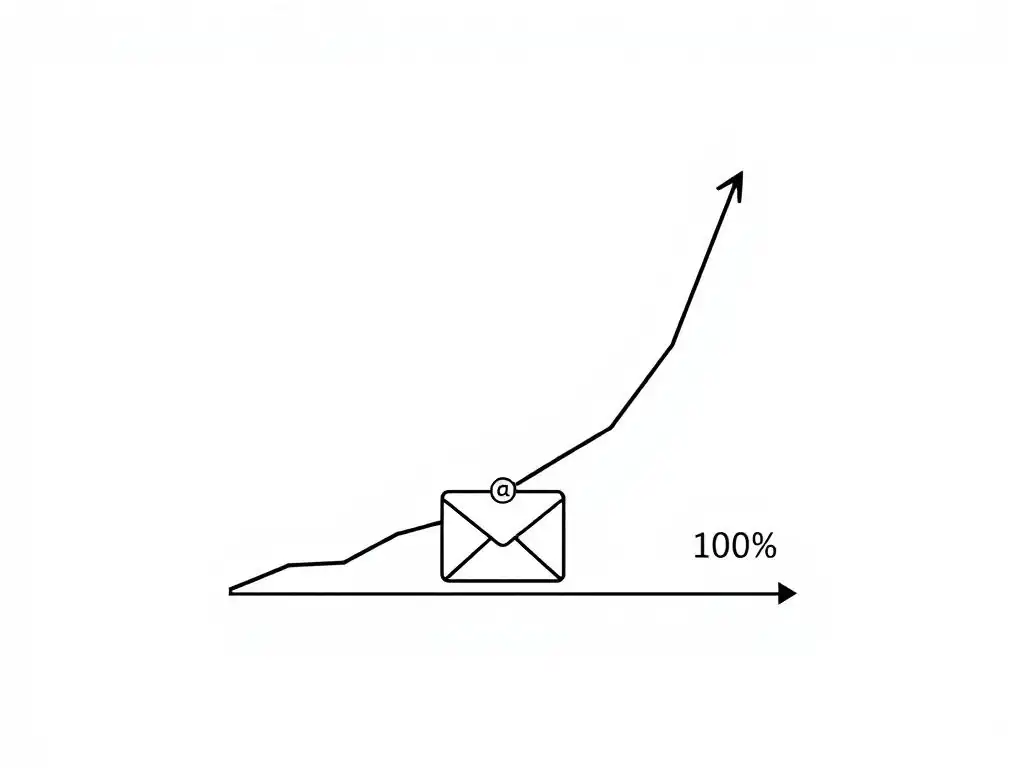
This case study examines how "ProjectZenith," a SaaS company offering project management software, significantly improved their email marketing open rates through strategic automation. Their success highlights the power of automated email sequences and personalized messaging in boosting engagement and, ultimately, driving conversions. The focus here is on demonstrating the practical application of automation techniques to directly impact "automate email marketing open rates."
Initial Email Marketing Challenges
Before implementing automation, ProjectZenith faced several challenges hindering their email marketing effectiveness. Their open rates hovered around a dismal 15%, significantly below industry averages. This low engagement stemmed from several factors:
- Inconsistent messaging: Emails lacked a cohesive strategy, with inconsistent branding and calls to action. This led to confusion and reduced subscriber interest.
- Generic email blasts: ProjectZenith sent generic, mass emails to their entire subscriber list, failing to personalize content based on individual user behavior or preferences.
- Lack of segmentation: The company didn't segment its audience, resulting in irrelevant emails reaching subscribers who weren't interested in the specific content. This led to high unsubscribe rates.
- Poor timing: Emails were sent at random times, often landing in inboxes during periods of low engagement.
The lack of data-driven insights further exacerbated these issues. They lacked a robust system for tracking email performance and identifying areas for improvement. This made it difficult to measure the impact of their efforts and make informed decisions. This lack of personalization directly impacted their ability to effectively "automate email marketing open rates."
Implementing Automation Strategies for Improved Open Rates
To address these challenges, ProjectZenith implemented several key automation strategies:
- Automated welcome sequence: New subscribers were greeted with a personalized welcome series, delivering valuable content tailored to their onboarding experience. This series included tips on using the software, success stories, and exclusive offers. The welcome emails were carefully timed to maximize engagement and minimize unsubscribes.
- Segmented email campaigns: ProjectZenith segmented its audience based on user behavior (e.g., free trial users vs. paid customers, engagement levels, etc.) and tailored email content to each segment. This ensured that subscribers received relevant and timely information.
- Behavioral-triggered emails: Automated emails were triggered based on specific user actions, such as abandoning a trial or downloading specific resources. These targeted emails provided timely support and reminders, increasing engagement. For example, an abandoned cart email was automatically sent to those who added items to their cart but didn’t complete the purchase.
- A/B testing: ProjectZenith consistently A/B tested different email subject lines, content, and send times to optimize open rates. This data-driven approach allowed them to refine their email marketing strategy over time and continuously improve performance.
- Improved email deliverability: They invested in improving their sender reputation and email list hygiene, ensuring emails reached the inbox and weren't flagged as spam. This is critical for any strategy to "automate email marketing open rates."
Results and Key Learnings
The implementation of these automated strategies yielded impressive results. Within three months, ProjectZenith saw a remarkable 25% increase in their email open rates, rising from 15% to 40%. This improvement was directly attributed to:
- Increased engagement: Personalized and timely emails resonated better with subscribers, leading to higher click-through rates and conversions.
- Improved customer relationships: Automated sequences fostered stronger relationships with subscribers by providing relevant and valuable information.
- Data-driven optimization: A/B testing allowed for continuous improvement of email campaigns, leading to further increases in open rates.
ProjectZenith’s success story underscores the vital role of automation in boosting email marketing open rates. By focusing on personalization, segmentation, and data-driven optimization, businesses can significantly improve their email marketing ROI and nurture stronger customer relationships. Their experience provides a clear example of how to effectively "automate email marketing open rates" and achieve significant improvements in campaign performance. The key takeaway is that a well-planned, automated email strategy is not just about technology; it's about understanding your audience and providing them with valuable, relevant content at the right time.
Conclusion: Mastering Email Marketing Automation for Sustainable Growth
This section summarizes the key advantages of automating your email marketing efforts and provides actionable steps to implement these strategies effectively. We've explored how automation can significantly boost your open rates, leading to improved engagement and ultimately, sustainable business growth. Remember, the goal isn't just to automate but to optimize your automated email marketing campaigns for maximum impact. This means continuous monitoring, analysis, and adjustment based on performance data. Ignoring this crucial aspect can lead to wasted resources and diminished returns. Effective automation is a continuous process of refinement and improvement.
Key Takeaways and Actionable Steps
Let's recap the most crucial takeaways from our exploration of automating email marketing for better open rates. Successful automation hinges on a few key principles:
- Targeted Segmentation: Don't treat all subscribers the same. Segment your audience based on demographics, behavior, and purchase history to deliver highly relevant content. This dramatically increases the likelihood of emails being opened and engaged with. For example, segmenting users based on their last purchase can allow you to send targeted promotions or product recommendations, increasing the relevance of your message.
- Personalized Messaging: Generic emails are easily ignored. Personalization, even on a small scale, can significantly improve open rates. Use subscriber names, past purchase details, or even their preferred communication style to create a more individualized experience. Consider A/B testing different personalization strategies to determine what resonates best with your audience.
- Strategic Timing and Frequency: Sending emails at the right time and with the right frequency is critical. Analyze your data to determine when your audience is most active and adjust your sending schedule accordingly. Avoid overwhelming subscribers with excessive emails – a well-planned cadence is key to maintaining engagement.
- Compelling Subject Lines: Your subject line is the first (and often only) impression you make. Craft compelling, concise, and intriguing subject lines that entice recipients to open your emails. A/B test different subject lines to determine which performs best. Consider using emojis strategically to enhance your subject line's visual appeal. 😉
- Mobile Optimization: Ensure your emails are optimized for mobile devices, as a significant portion of email opens occur on smartphones. Test your emails on various devices and screen sizes to guarantee readability and optimal rendering.
- Continuous Monitoring and Optimization: Regularly analyze your email marketing metrics (open rates, click-through rates, conversions) to identify areas for improvement. Use this data to refine your automation strategies, segmentation, and messaging. Remember, this is an iterative process.
| Metric | Goal | Actionable Step |
|---|---|---|
| Open Rate | >[Target Open Rate]% | A/B test subject lines, personalize messaging |
| Click-Through Rate | >[Target Click-Through Rate]% | Optimize email content, improve call-to-actions |
| Conversion Rate | >[Target Conversion Rate]% | Refine landing pages, improve offer relevance |
| Unsubscribe Rate | <[Target Unsubscribe Rate]% | Improve email quality, segment audience effectively |
The Future of Automated Email Marketing and Best Practices
The future of automated email marketing is bright, driven by advancements in AI and machine learning. Expect to see even more sophisticated personalization, predictive analytics for optimal sending times, and improved email deliverability. AI-powered tools will increasingly assist in tasks like content generation, subject line optimization, and even the creation of hyper-personalized email journeys.
Best practices for the future will revolve around:
- Ethical Considerations: Transparency and respect for user privacy will be paramount. Ensure compliance with relevant regulations like GDPR and CCPA.
- Data-Driven Decisions: Continue to rely on data-driven insights to inform your automation strategies.
- Personalization at Scale: Leverage AI and machine learning to achieve hyper-personalization at scale, delivering unique experiences to every subscriber.
- Multi-Channel Integration: Integrate email marketing with other channels like SMS and social media for a holistic approach.
- Continuous Learning and Adaptation: Stay updated on the latest trends and technologies in email marketing to maintain a competitive edge.
By embracing these best practices and staying adaptable, you can leverage the power of automated email marketing to achieve sustainable growth and build stronger relationships with your audience. Remember, the key to success lies in a combination of sophisticated technology and a deep understanding of your customers' needs and preferences.
Frequently Asked Questions
How can I automate my email marketing to improve open rates?
Automating your email marketing involves using marketing automation software to segment your audience, personalize emails, and schedule sends based on optimal times and days. This targeted approach improves engagement and, consequently, open rates.
What are some key email automation features to focus on for higher open rates?
Prioritize features like A/B testing subject lines and email content, personalized email content based on user behavior and segmentation, and drip campaigns to nurture leads effectively. These features directly impact engagement and open rates.
Does automation guarantee higher email open rates?
No, automation isn't a magic bullet. While it significantly increases your chances of higher open rates, high-quality content and a well-defined strategy remain crucial for success. Focus on deliverability and list hygiene as well.
What are some common mistakes to avoid when automating email marketing?
Avoid sending too many emails, ignoring unsubscribe requests, and failing to segment your audience properly. These actions can harm your sender reputation and drastically lower open rates.
What tools can help me automate my email marketing for better open rates?
Many platforms offer email marketing automation, including Mailchimp, Constant Contact, and ActiveCampaign. Choose a tool that fits your budget and technical skills, offering the features you need for segmentation, personalization, and A/B testing.
Final Reflection: Unlocking the Power of Automated Email Engagement
The strategic automation of email marketing isn't just a trend; it's the key to unlocking sustainable growth in today's hyper-competitive digital landscape. Businesses that fail to leverage automation risk being left behind, losing valuable leads and crucial revenue streams in the process. The sheer volume of emails sent daily necessitates a more efficient, targeted approach, and automation provides precisely that.
The impact of automated email marketing extends far beyond simply increasing open rates; it fundamentally reshapes the customer journey. It allows for personalized, timely communication that fosters stronger relationships and builds brand loyalty. This shift towards data-driven engagement is profoundly altering how businesses interact with their audience. The future of marketing is not about the number of messages you send, but the value those messages deliver.
This quote perfectly encapsulates the essence of effective email automation – focusing on quality over quantity.
Now, consider your own email marketing strategy. Are you harnessing the power of automation to its full potential? Take a moment to reflect on the insights shared in this article. Identify areas where you can streamline your processes, personalize your messaging, and ultimately, enhance the value you deliver to your subscribers. The journey towards optimized email marketing is an ongoing process of learning and adaptation, but the rewards – increased engagement, stronger customer relationships, and ultimately, business success – are well worth the effort.
Unlock Your Email Marketing Potential: Start Automating Today!
Congratulations on taking the first step towards more efficient and effective email marketing! You've already learned valuable strategies to improve open rates and simplify your workflow. Now it's time to put your new knowledge into practice.
Here's how to get started:
- Implement your most impactful automation strategies. Don't delay! Choose the most promising techniques from the guide and implement them right away. Even small improvements can significantly boost your results.
- Refine your A/B testing approach. Experiment with different subject lines, send times, or email templates to discover what resonates best with your audience. The results may surprise you!
- Share your successes (and challenges!) in the comments below. Let's build a supportive community where we can learn from each other's experiences.
What automation strategy are you most eager to try, and why?