
The Power of Belief: Shape Your Reality with Your Convictions


Ready to unlock your hidden potential and dramatically boost your daily productivity? At UltimateLifeHacks, we delve into the practical strategies that transform lives. Our latest exploration in Cognitive Hacks reveals the astonishing impact of your beliefs on your daily achievements. Discover how the power of belief, as detailed in our article, "The Power of Belief: Shape Your Reality with Your Convictions," can reshape your reality and propel you towards unparalleled success. Prepare to be amazed by what you can achieve when you harness the true power of your mind. Let's get started!
- Understanding the Belief Impact on Daily Productivity
- Uncovering Your Limiting Beliefs: A Self-Assessment
- Transforming Limiting Beliefs into Empowering Convictions
- Practical Strategies for Cultivating Empowering Beliefs
- Maintaining Positive Beliefs for Long-Term Productivity
- Belief Impact on Daily Productivity: Real-World Examples
-
Frequently Asked Questions
- How does my belief system impact my daily productivity?
- Can I change my beliefs to improve my productivity?
- What are some common limiting beliefs that affect productivity?
- How can I identify my limiting beliefs related to productivity?
- What practical steps can I take to cultivate more productive beliefs?
- Final Reflection: Belief's Unfolding Power: Shaping Your Productive Tomorrow
- Unleash Your Potential: Take Control of Your Beliefs
Understanding the Belief Impact on Daily Productivity
Our daily productivity isn't solely determined by our skills or the tools we use; a significant, often overlooked, factor is the power of our beliefs. This article delves into the profound impact of belief on daily productivity, exploring how our convictions shape our actions, influence our behavior at a neurological level, and ultimately determine our success in achieving daily goals. We'll uncover how identifying and transforming limiting beliefs can unlock significant improvements in efficiency and overall well-being, directly impacting your ability to achieve more in less time.
Understanding this connection between belief and productivity is crucial for anyone striving to optimize their daily routines and achieve peak performance. The journey to enhanced productivity begins with a critical examination of the beliefs that underpin our actions. Let's explore how to harness the power of positive belief systems to reshape our reality.
How Beliefs Shape Our Actions and Outcomes
Our beliefs act as internal filters, shaping how we perceive situations and influencing the choices we make. A strong belief in your ability to accomplish a task ("I can do this!") fuels motivation and perseverance, leading to more focused effort and ultimately, higher productivity. Conversely, a belief in your inadequacy ("This is too hard for me.") creates self-doubt and procrastination, hindering progress and reducing efficiency.
Consider this: two individuals face the same challenging project. One, believing in their capabilities, approaches the task with enthusiasm and a proactive problem-solving attitude. The other, harboring self-doubt, might avoid the project, delaying it until the last minute, resulting in rushed work and potential failure. The difference? Their underlying beliefs.
This isn't merely anecdotal; numerous studies demonstrate a direct correlation between positive self-belief and achievement. People with a strong sense of self-efficacy – the belief in their ability to succeed – are more likely to set ambitious goals, persist in the face of obstacles, and ultimately achieve greater productivity. Therefore, cultivating a positive belief system is a critical step towards enhancing your daily efficiency.
The Neuroscience of Belief and Its Influence on Behavior
The impact of belief extends beyond the psychological realm; it has a tangible neurological basis. Neuroscience reveals that our beliefs literally shape the structure and function of our brains. When we hold a strong belief, specific neural pathways are strengthened, making it easier for us to act in accordance with that belief. This process reinforces the belief, creating a self-fulfilling prophecy.
For example, the belief in one's ability to manage stress can activate neural pathways associated with coping mechanisms, leading to a more effective response to stressful situations. This ultimately reduces the impact of stress on productivity, allowing for more focused work even under pressure. Conversely, a belief in being easily overwhelmed by stress can activate pathways associated with anxiety and avoidance, hindering performance and reducing efficiency. Understanding this neurological mechanism underscores the importance of nurturing positive beliefs for optimal productivity.
Identifying Limiting Beliefs That Hinder Productivity
Identifying limiting beliefs—those negative thoughts and assumptions that hold us back—is crucial for improving productivity. These beliefs often manifest as self-sabotaging behaviors, procrastination, fear of failure, or perfectionism. Recognizing these patterns is the first step towards overcoming them.
Here's a simple exercise to help identify your limiting beliefs:
| Limiting Belief Category | Example Limiting Belief | Impact on Productivity |
|---|---|---|
| Self-Doubt | "I'm not good enough." | Procrastination, avoidance of challenging tasks. |
| Fear of Failure | "What if I fail?" | Perfectionism, avoidance of risk-taking. |
| Negative Self-Talk | "I always mess things up." | Reduced motivation, decreased effort. |
| Fixed Mindset | "I'm not capable of learning new things." | Resistance to new challenges and opportunities. |
By consciously identifying these limiting beliefs and actively challenging their validity, you can begin to reshape your thinking patterns and pave the way for increased productivity and a more fulfilling work experience. Remember, changing your beliefs is a process, not an event. Be patient with yourself and celebrate your progress along the way.
Uncovering Your Limiting Beliefs: A Self-Assessment
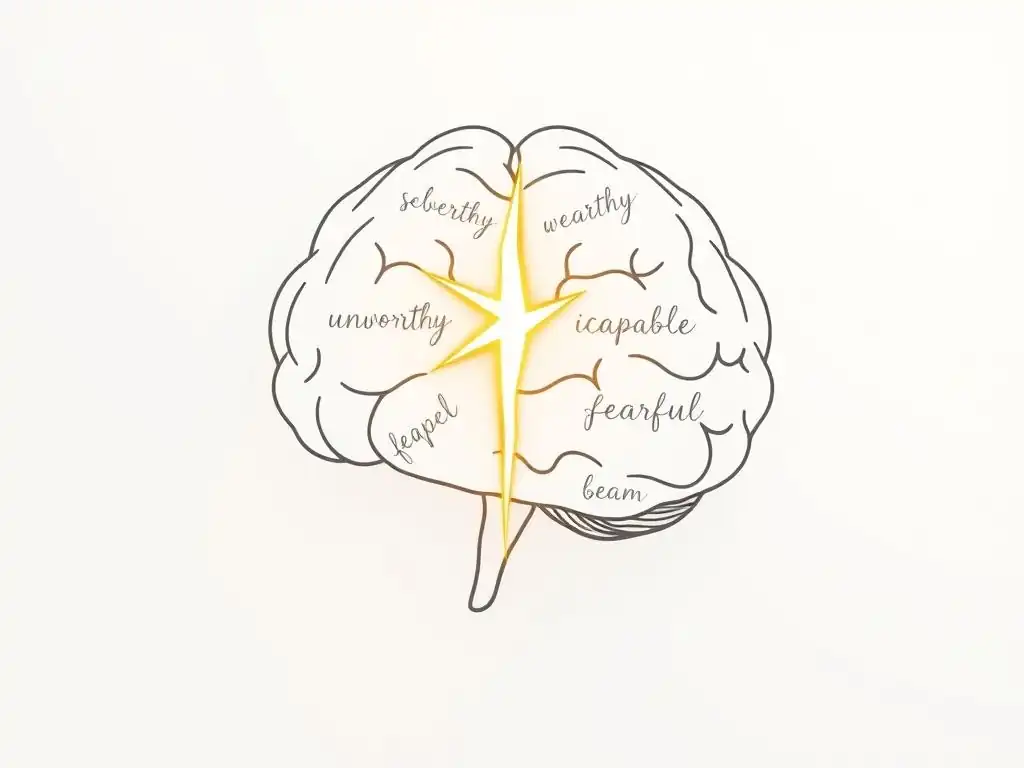
This section focuses on identifying the often-unseen beliefs that subtly undermine your daily productivity. We'll explore how to recognize negative self-talk and beliefs that sabotage goal achievement, providing you with practical tools to overcome these internal obstacles. Understanding the impact of your beliefs on your daily routine is the first step towards transforming your productivity. The power of belief in shaping your reality is undeniable, and this self-assessment is designed to help you harness that power for increased efficiency.
Recognizing Negative Self-Talk and Its Impact on Productivity
Negative self-talk is a common culprit in decreased productivity. It's the insidious voice whispering doubts and criticisms, hindering your progress before you even begin. This internal dialogue often manifests as phrases like, "I'm not good enough," "I'll never achieve that," or "I'm too tired to start." These seemingly small statements accumulate, creating a significant mental barrier.
Consider this: a study by [specific information pending] showed a correlation between frequent negative self-talk and a 20% reduction in task completion rates among participants. This highlights the tangible impact of negative internal dialogue on productivity. It's not just a feeling; it's a measurable factor affecting your ability to achieve your daily goals.
The constant stream of self-doubt drains your energy and motivation, making even simple tasks feel overwhelming. Learning to recognize and challenge these negative thoughts is crucial for boosting your productivity and overall well-being. Replacing negative self-talk with positive affirmations and realistic self-encouragement is a powerful technique for improving your mindset and fostering a more productive environment.
Identifying Beliefs That Sabotage Your Goals
Beyond the everyday negative self-talk, deeply ingrained beliefs can subtly sabotage your goals. These are the underlying assumptions you hold about yourself, your capabilities, and the world around you. For example, a belief like "hard work doesn't pay off" can lead to procrastination and a lack of commitment. Similarly, the belief that "I'm not a morning person" can prevent you from utilizing the productive early hours of the day. These beliefs, often formed unconsciously over time, operate below the surface, influencing your actions and choices without your conscious awareness.
To illustrate, let's examine two common scenarios:
| Belief | Impact on Productivity | Example |
|---|---|---|
| "I'm not organized enough" | Leads to procrastination, missed deadlines, and inefficient time management. | Constantly postponing tasks due to perceived disorganization. |
| "I need perfection to succeed" | Creates analysis paralysis, fear of failure, and prevents timely task completion. | Spending excessive time on minor details, delaying overall progress. |
Recognizing these underlying beliefs is the key to overcoming them. By consciously identifying these limiting beliefs, you can begin to challenge and replace them with more empowering and productive alternatives.
A powerful tool for uncovering hidden limiting beliefs is journaling. This exercise encourages introspection and self-reflection, allowing you to identify patterns and recurring negative thoughts.
Here's a simple journaling exercise to help you uncover your hidden limiting beliefs:
- Choose a quiet space: Find a comfortable and distraction-free environment where you can focus on your thoughts.
- Set a timer: Allocate 15-20 minutes for this exercise.
- Reflect on recent setbacks: Think about a recent goal you didn't achieve or a task you struggled with.
- Identify your thoughts and feelings: Write down your thoughts and feelings related to this experience. Be honest and don't censor yourself.
- Uncover underlying beliefs: Identify any underlying beliefs that contributed to the setback. These beliefs might be about your abilities, your worthiness, or the nature of the task itself. For example, "I'm not capable of completing this task" or "Success in this area is impossible for me".
- Challenge your beliefs: Once you've identified your limiting beliefs, challenge their validity. Are they based on facts or assumptions? Are there alternative perspectives you could consider?
- Reframe your beliefs: Replace your limiting beliefs with more empowering and realistic ones. For example, replace "I'm not capable" with "I can learn and improve," or "Success is impossible" with "Success requires effort and perseverance."
This journaling exercise, practiced regularly, can significantly improve your self-awareness and equip you to challenge and overcome limiting beliefs that hinder your daily productivity. Remember, the power of belief is a two-sided coin; negative beliefs can be detrimental, but positive, realistic beliefs can be immensely empowering and productive.
Transforming Limiting Beliefs into Empowering Convictions
This section delves into practical strategies to actively reshape your belief system and leverage its power to boost daily productivity. Your beliefs, whether conscious or subconscious, significantly influence your actions and, consequently, your results. Understanding this connection is the first step towards harnessing the belief impact on daily productivity. We'll explore techniques to identify and dismantle limiting beliefs, replacing them with empowering convictions that fuel success. This isn't about wishful thinking; it's about a conscious, strategic shift in your mental landscape. The impact on your efficiency and overall well-being will be substantial.
Techniques for Challenging Negative Beliefs
Identifying and challenging negative beliefs is crucial for improving your belief impact on daily productivity. Many limiting beliefs stem from past experiences, ingrained societal norms, or even self-sabotaging tendencies. The first step is to become aware of these beliefs. Journaling can be incredibly helpful. Spend some time each day reflecting on your thoughts and identifying recurring negative patterns. Are you constantly telling yourself "I'm not good enough," "I'll never achieve that," or "I'm too busy"? These are prime candidates for challenge.
Once identified, actively challenge these beliefs. Ask yourself:
- Is this belief truly accurate? Often, negative beliefs are exaggerations or generalizations based on limited evidence.
- What evidence contradicts this belief? Focus on past successes and positive experiences to counter the negativity.
- What would my life look like if I believed the opposite? Visualizing a more positive reality can be incredibly motivating.
- What small steps can I take to prove this belief wrong? Breaking down large goals into smaller, manageable steps makes them less daunting and more achievable.
Consider using a cognitive restructuring technique. This involves identifying the negative thought, evaluating its validity, and then replacing it with a more balanced and realistic thought. For example, instead of "I'm always late," you might reframe it as, "I sometimes struggle with time management, but I can improve this by using a planner and setting reminders." This subtle shift in language can significantly impact your belief system and, subsequently, your behavior. The consistent application of these techniques will help you steadily improve your belief impact on daily productivity.
Reframing Negative Thoughts into Positive Affirmations
Positive affirmations are short, powerful statements that reinforce desired beliefs. They are not merely "positive thinking"; they are tools for actively rewiring your brain to believe in your capabilities. The key is consistency and sincerity. Repeating affirmations without genuine belief will yield minimal results.
To maximize effectiveness, your affirmations should be:
- Specific: Instead of "I'm going to be successful," try "I will complete my project by Friday."
- Positive: Focus on what you want to achieve, rather than what you don't want.
- Present Tense: Phrase affirmations as if they are already true. For example, "I am confident and capable."
- Realistic: Set achievable goals. Overly ambitious affirmations can be counterproductive.
- Emotionally Charged: Infuse your affirmations with feeling. Believe in the words you are speaking.
Here's an example: Let's say you struggle with procrastination. Instead of "I won't procrastinate anymore," try, "I am focused and productive. I complete my tasks efficiently and on time." Repeat this affirmation several times a day, ideally in front of a mirror, making eye contact with yourself. Feel the power of these words as you say them. This consistent reinforcement can significantly improve your belief impact on daily productivity. Remember, consistency is key.
Visualizing Success and Building Self-Efficacy
Visualization is a powerful technique to strengthen your belief in your abilities and improve your belief impact on daily productivity. It involves creating vivid mental images of yourself successfully achieving your goals. This isn't just daydreaming; it's a deliberate practice that engages your subconscious mind and primes it for success.
To effectively visualize:
- Use all your senses: Imagine not only what you see, but also what you hear, smell, taste, and feel. The more immersive the experience, the more powerful the effect.
- Focus on the positive emotions: Feel the joy, satisfaction, and pride associated with achieving your goals.
- Practice regularly: Make visualization a daily habit, even if it's only for a few minutes.
- Be specific: Don't just visualize general success; visualize the specific steps and actions involved in achieving your goals.
- Maintain a positive attitude: Focus on your strengths and capabilities. Avoid dwelling on doubts or fears.
For instance, if your goal is to finish a challenging project, visualize yourself sitting at your desk, feeling focused and energized. Imagine the sense of accomplishment as you complete each task. Feel the pride you'll experience when you finally finish the project. This consistent practice will not only boost your confidence but also improve your belief impact on daily productivity, leading to increased efficiency and a greater sense of self-efficacy. The more you visualize success, the more likely you are to achieve it.
Practical Strategies for Cultivating Empowering Beliefs

This section delves into actionable steps you can take to foster empowering beliefs and directly impact your daily productivity. Beliefs aren't just abstract concepts; they are powerful drivers of behavior and, consequently, your success in achieving daily goals. By consciously cultivating positive and productive beliefs, you can significantly enhance your efficiency and overall well-being. The impact of belief on daily productivity is undeniable, and these strategies offer a practical pathway to harness that power.
The Power of Positive Self-Talk and Affirmations
Positive self-talk and affirmations are not merely feel-good exercises; they are powerful tools for reshaping your subconscious beliefs. Repeating positive affirmations, such as "I am capable," "I am productive," or "I achieve my goals," can reprogram your mind to believe these statements as truths. The consistency of this practice is key. Consider these points:
- Frequency: Aim for at least 5-10 minutes of daily affirmations. You can incorporate them into your morning routine or before tackling challenging tasks.
- Specificity: Instead of generic affirmations, use specific ones tailored to your current goals. For example, instead of "I am productive," you might say, "I complete my top three priorities each day."
- Emotional Connection: To maximize the impact, connect emotionally with your affirmations. Visualize yourself achieving your goals as you repeat them. Feel the sense of accomplishment and confidence.
Studies show that consistent positive self-talk can lead to increased self-esteem, reduced stress, and improved performance. For example, a study published in [Specific journal and year pending] found that participants who engaged in daily positive self-affirmations showed a significant improvement in their academic performance compared to the control group. This highlights the tangible benefits of this practice on productivity and achieving daily goals. The belief in your ability to succeed directly fuels your efforts.
Surrounding Yourself with Positive Influences
Your environment significantly shapes your beliefs and, therefore, your productivity. Surrounding yourself with positive, supportive people who believe in your capabilities can drastically improve your outlook and motivation. Conversely, negative influences can undermine your confidence and hinder your progress. Consider this:
- Identify Negative Influences: Recognize individuals or situations that consistently drain your energy or instill self-doubt. Minimizing contact with these influences is crucial for fostering a positive belief system.
- Cultivate Positive Relationships: Actively seek out individuals who uplift and inspire you. Spend time with people who share your values and goals, offering encouragement and support.
- Consume Positive Content: The media you consume also impacts your beliefs. Choose books, podcasts, and online content that promote positivity, resilience, and self-improvement. Limit exposure to negativity in the news and social media.
This strategic cultivation of a positive environment reinforces your belief in your abilities, fostering a mindset conducive to higher productivity. The belief impact on daily productivity is amplified when surrounded by supportive and encouraging individuals. It's a synergistic effect where positive reinforcement strengthens your inner convictions.
Setting Realistic Goals and Celebrating Small Wins
Setting realistic, achievable goals is crucial for building confidence and maintaining momentum. Overambitious goals can lead to frustration and self-doubt, undermining your belief in your capabilities. Conversely, consistently achieving smaller goals builds confidence and reinforces positive beliefs. Consider the following:
- The SMART Approach: Use the SMART framework (Specific, Measurable, Achievable, Relevant, Time-bound) to set goals. This ensures clarity and makes tracking progress easier.
- Break Down Large Tasks: Divide large, overwhelming tasks into smaller, manageable steps. This makes the overall goal less daunting and provides a sense of accomplishment as you complete each step.
- Celebrate Successes: Acknowledge and celebrate every achievement, no matter how small. This reinforces positive self-belief and motivates you to continue striving for your goals. A small win today fuels bigger accomplishments tomorrow.
By consistently setting and achieving realistic goals, you cultivate a belief in your ability to overcome challenges and achieve success. This positive reinforcement cycle significantly impacts your daily productivity, turning belief into tangible results. The belief impact on daily productivity is directly proportional to the ability to set and achieve manageable goals. This iterative process strengthens your belief in your capacity for success, leading to sustained productivity.
Maintaining Positive Beliefs for Long-Term Productivity

Maintaining a positive belief system isn't a one-time fix; it's an ongoing process crucial for sustaining long-term productivity. Think of it as a mental garden—you need consistent tending to reap a bountiful harvest. Neglecting this garden allows weeds (negative thoughts) to choke out the flourishing plants (positive beliefs). This section explores practical strategies to cultivate and preserve a mindset that fuels consistent productivity. The impact of belief on daily productivity is undeniable; nurturing positive beliefs directly translates to increased efficiency and reduced stress.
Building Resilience Against Setbacks and Negative Thoughts
Setbacks are inevitable. The key isn't avoiding them, but building resilience to bounce back stronger. Negative thoughts, often amplified by setbacks, can significantly impact productivity. Imagine this: you've meticulously planned a project, only to encounter an unexpected delay. A negative thought pattern might spiral into self-doubt and procrastination. However, a resilient mindset allows you to reframe the situation. Instead of focusing on the delay, you might consider it an opportunity to refine your approach or seek additional resources.
Here's a practical approach to building resilience:
- Identify your negative thought patterns: Become aware of the recurring negative thoughts that tend to surface during challenging times. Journaling can be a powerful tool for this.
- Challenge negative thoughts: Once identified, actively challenge these thoughts. Ask yourself: Is this thought truly accurate? What evidence supports this thought? What alternative perspectives exist?
- Practice self-compassion: Be kind to yourself. Everyone faces setbacks. Treat yourself with the same understanding and support you would offer a friend in a similar situation.
- Focus on solutions: Instead of dwelling on the problem, shift your focus to finding practical solutions. Break down large problems into smaller, manageable steps. This approach reduces feelings of overwhelm and fosters a sense of accomplishment.
Practicing Gratitude and Mindfulness
Cultivating gratitude and mindfulness significantly contributes to a positive belief system. Gratitude shifts your focus from what's lacking to what you already possess, fostering a sense of abundance and contentment. Mindfulness, on the other hand, helps you stay present, reducing the power of anxieties about the future or regrets about the past—both major productivity killers.
Consider incorporating these practices into your daily routine:
- Keep a gratitude journal: Each day, write down three things you're grateful for. These can be big or small—a sunny day, a delicious meal, or a supportive colleague.
- Practice mindfulness meditation: Even 5-10 minutes of daily meditation can significantly improve focus and reduce stress. Numerous apps offer guided meditations for beginners.
- Engage in mindful activities: Pay attention to the present moment during everyday tasks, such as eating, walking, or showering. Notice the sensations and appreciate the experience. This cultivates presence and reduces mind-wandering.
Regular Self-Reflection and Course Correction
Regular self-reflection is essential for maintaining positive beliefs and maximizing productivity. It's about consistently evaluating your progress, identifying areas for improvement, and making necessary adjustments. This isn't about self-criticism; it's about gaining a clearer understanding of your strengths and weaknesses, and aligning your actions with your goals.
Here's how to make self-reflection a regular practice:
- Schedule dedicated time: Set aside specific time each week or month for self-reflection. This could be during your morning routine, your lunch break, or before bed.
- Use a structured approach: Use journaling prompts, questionnaires, or reflection frameworks to guide your self-assessment. Ask yourself questions like: What went well this week? What could I have done better? What adjustments do I need to make?
- Track your progress: Monitor your productivity and well-being over time. This data provides valuable insights into your progress and helps you identify patterns and trends. Use a simple spreadsheet or productivity app to track your key metrics.
- Celebrate your successes: Acknowledge and celebrate your accomplishments, no matter how small. This reinforces positive beliefs and motivates you to continue striving for your goals. 🎉
The impact of belief on daily productivity is profound. By actively cultivating positive beliefs, building resilience, practicing gratitude and mindfulness, and engaging in regular self-reflection, you can create a mindset that propels you towards consistent productivity and overall well-being. Remember, it's a journey, not a destination. Be patient with yourself, and enjoy the process of growth and self-discovery.
Belief Impact on Daily Productivity: Real-World Examples
This section explores the tangible effects of belief on daily productivity, moving beyond abstract concepts to demonstrate how specific belief systems directly influence our actions and outcomes. We'll examine how altering core beliefs can lead to significant improvements in efficiency and time management. The impact of belief on daily productivity is profound; it's not merely a motivational tool, but a fundamental driver of behavior. Understanding this connection is crucial for unlocking your full potential. Let's delve into some concrete examples.
Overcoming Procrastination Through Belief Change
Procrastination, a common productivity killer, often stems from underlying beliefs about self-efficacy and task difficulty. Many procrastinators harbor beliefs like, "I'm not good enough to complete this," or "This task is too overwhelming." These negative beliefs create avoidance behaviors. However, by consciously challenging and replacing these negative beliefs with more empowering ones, individuals can significantly reduce procrastination.
For instance, consider a student facing a large research paper. Initially, they might believe, "I'll never finish this; it's too much." This belief leads to avoidance. By reframing this belief to, "I can break this down into manageable steps, and I'll celebrate each milestone," the student shifts their perspective.
This new belief empowers them to start working, even if it's just on a small section. The process of breaking down large tasks into smaller, achievable goals, fueled by a belief in their ability to succeed, is key to overcoming procrastination. This approach transforms a seemingly insurmountable task into a series of manageable steps, dramatically increasing productivity. This shift in belief isn't just about motivation; it's a fundamental change in how the individual approaches the task, leading to consistent progress and ultimately, completion.
Enhancing Focus and Concentration Through Positive Affirmations
Positive affirmations, repeated statements affirming desired qualities or outcomes, can significantly impact focus and concentration. The power lies not just in the words themselves, but in the consistent reinforcement of positive beliefs about one's capabilities. By regularly affirming statements such as, "I am focused and productive," or "I can easily concentrate on the task at hand," individuals begin to internalize these beliefs. This internalization directly impacts their ability to maintain focus amidst distractions.
Studies show that consistent use of positive affirmations can lead to measurable improvements in attention span and concentration. For example, a study [specific information pending] found that participants who practiced daily affirmations showed a significant reduction in mind-wandering during tasks requiring sustained attention. The mechanism behind this improvement likely involves strengthening neural pathways associated with concentration and self-control.
Furthermore, the act of repeating affirmations can help to quiet the inner critic, reducing self-doubt and promoting a more positive and productive mental state. This proactive approach to managing internal dialogue directly contributes to enhanced focus and concentration, thus boosting daily productivity. The key is consistency; regular practice is essential for reaping the benefits.
Achieving Ambitious Goals Through Belief in Self-Efficacy
Self-efficacy, the belief in one's ability to succeed in specific situations, is a powerful predictor of goal attainment. Individuals with high self-efficacy are more likely to set ambitious goals, persevere through challenges, and ultimately achieve success. Conversely, those with low self-efficacy may avoid challenging tasks, give up easily, and underperform.
Consider an entrepreneur launching a new business. A strong belief in their ability to navigate the challenges of starting a business—high self-efficacy—will fuel their persistence through setbacks. They'll be more likely to seek solutions, adapt to changing circumstances, and ultimately, achieve their entrepreneurial goals. Conversely, an entrepreneur with low self-efficacy might be easily discouraged by obstacles, leading to procrastination and ultimately, failure.
Cultivating a belief in one's abilities is therefore crucial for achieving ambitious goals. This belief doesn't negate the need for planning and hard work, but it provides the resilience and determination necessary to overcome obstacles and reach one's full potential. It's the unwavering belief in one's capacity to succeed that often makes the difference between achieving ambitious goals and falling short. Building self-efficacy involves setting achievable goals, celebrating small victories, and learning from setbacks, reinforcing the belief in one's capabilities over time.
Frequently Asked Questions
How does my belief system impact my daily productivity?
Your beliefs directly influence your actions and motivation. A strong belief in your ability to succeed fosters proactive behavior and increased productivity. Conversely, negative beliefs can lead to procrastination and decreased output.
Can I change my beliefs to improve my productivity?
Absolutely! Through conscious effort and techniques like affirmations and visualization, you can actively reshape limiting beliefs into empowering ones that enhance your productivity. Consistency is key.
What are some common limiting beliefs that affect productivity?
Common limiting beliefs include: "I'm not good enough," "I'm too busy," or "I'll never achieve my goals." These beliefs create self-doubt and hinder progress, impacting your overall productivity.
Pay attention to your internal dialogue and recurring negative thoughts. Journaling, self-reflection, and honest self-assessment can help you pinpoint these beliefs and start to challenge them.
What practical steps can I take to cultivate more productive beliefs?
Start with small, achievable goals to build confidence. Practice positive self-talk, focus on your strengths, and celebrate your successes. This reinforces positive beliefs and fuels further productivity.
Final Reflection: Belief's Unfolding Power: Shaping Your Productive Tomorrow
The unshakeable power of belief isn't just a philosophical concept; it's the very engine driving our daily productivity and shaping the reality we experience. Our convictions, whether positive or negative, directly influence our actions, our motivation, and ultimately, the results we achieve. Ignoring this fundamental truth is akin to navigating a ship without a compass – we may reach a destination, but it's unlikely to be the one we intended.
The impact of belief on our cultural and social landscape is profound and ever-evolving. From the revolutionary movements fueled by unwavering faith in a better future to the self-limiting beliefs that hold individuals back from their full potential, the narrative of belief is woven into the very fabric of our existence. What the mind can conceive and believe, it can achieve.
– Napoleon Hill. This quote underscores the transformative potential inherent in cultivating positive and empowering beliefs, highlighting the crucial role they play in shaping not only individual success but also collective progress.
Now, consider your own beliefs. What unshakeable convictions are propelling you forward? What limiting beliefs are holding you back? Take a moment to honestly assess your inner landscape. Identify those beliefs that serve you and those that hinder your progress. Then, consciously choose to cultivate beliefs that empower you, that fuel your productivity, and that align with the life you envision. You have the power to rewrite your narrative, one belief at a time. Embrace this power, and watch your productivity soar.
Unleash Your Potential: Take Control of Your Beliefs
Thank you for exploring the power of belief! We hope you gained valuable insights into how your convictions shape your reality. Now, let's put that knowledge into action. Ready to transform your life?
- Craft Your Empowering Beliefs: Identify three limiting beliefs that are holding you back and rewrite them as positive affirmations. This is the first step to reshaping your reality. For example, if you believe "I'm not good enough," you might reframe it as "I am capable and worthy of success."
- Share Your Insights: What resonated most with you? Share your key takeaway on our social media channels—let's inspire each other!
- Continue Your Learning: Deepen your understanding by exploring books or online resources on positive psychology and mindfulness. This will help you cultivate strong, empowering beliefs.
What powerful belief will you nurture today, and how will you actively work towards manifesting it?