
The Ultimate Guide to Automating Customer Service for Increased Efficiency


Ready to reclaim your time and boost your business's efficiency? At UltimateLifeHacks, we're dedicated to providing you with practical strategies to optimize your daily life. This guide dives deep into how to automate customer service efficiently, a game-changer for anyone seeking to streamline operations and improve customer satisfaction. Discover the secrets to freeing up valuable time and resources – let's explore the transformative power of automation together!
- Understanding the Need to Automate Customer Service Efficiently
- Key Strategies to Automate Customer Service Efficiently
- Advanced Techniques for Efficient Customer Service Automation
- Measuring the Success of Your Customer Service Automation Strategy
- The Future of Automated Customer Service: Emerging Trends
-
Frequently Asked Questions
- What is the biggest benefit of automating customer service?
- How can I automate customer service without losing the personal touch?
- What are some common tools for automating customer service?
- Is automating customer service expensive?
- How do I measure the success of my automated customer service system?
- Final Reflection: The Future of Human-AI Collaboration in Customer Service
- Unlock Your Customer Service Potential: Automate Now!
Understanding the Need to Automate Customer Service Efficiently
Automating customer service is no longer a luxury; it's a necessity for businesses striving for efficiency and growth in today's fast-paced digital landscape. The sheer volume of customer inquiries, coupled with the ever-increasing expectation for immediate responses, makes manual customer service increasingly unsustainable. This ultimate guide will explore practical strategies to automate your customer service operations, significantly improving efficiency, reducing operational costs, and ultimately boosting customer satisfaction.
We'll delve into the challenges of manual processes, examine the evolving demands of modern customers, and present actionable steps to implement effective automation solutions. By the end, you'll have a comprehensive understanding of how to leverage automation to streamline your customer service and gain a competitive edge.
This guide focuses on efficiently automating customer service, a crucial aspect of optimizing business operations and achieving sustainable growth in the modern market. Learn how to effectively integrate automation tools to enhance your customer experience and free up valuable resources for other essential business functions.
The Challenges of Manual Customer Service
Manual customer service, while offering a personalized touch in some instances, often struggles to keep up with the demands of modern business. Consider these common challenges:
- Scalability Issues: As your business grows, so does the volume of customer inquiries. Manually handling this increase becomes increasingly difficult and resource-intensive, leading to longer wait times and potentially frustrated customers.
- Increased Operational Costs: Employing and training a large customer service team to handle a high volume of inquiries is expensive. Salaries, benefits, and training costs all contribute to significantly higher operational expenses.
- Inconsistent Service Quality: The quality of service can vary greatly depending on the individual agent handling the inquiry. This inconsistency can damage your brand reputation and lead to customer churn.
- Limited Availability: Manual customer service is typically limited to specific business hours. This can be frustrating for customers who require assistance outside of these hours, leading to missed opportunities and lost revenue.
- Difficulty Tracking Performance: Measuring the effectiveness of manual customer service can be challenging. Tracking key metrics like response times, resolution rates, and customer satisfaction requires significant effort and specialized tools.
The cumulative effect of these challenges can severely impact a business's bottom line and overall success. Automating customer service processes offers a solution to many of these problems, paving the way for increased efficiency and improved customer satisfaction.
Rising Customer Expectations and the Need for Instant Support
Today's customers expect instant responses and readily available support. They are accustomed to the speed and convenience offered by digital platforms and expect similar levels of service from businesses. This expectation is driven by several factors:
- The Rise of Digital Channels: Customers increasingly interact with businesses through various digital channels such as websites, social media, email, and messaging apps. They expect immediate responses across all these platforms.
- 24/7 Availability: Customers expect support around the clock, regardless of time zone or business hours. This necessitates a customer service solution that can operate continuously and provide immediate assistance.
- Personalized Experiences: Customers value personalized interactions and expect businesses to understand their individual needs and preferences. Automation can personalize interactions through targeted messaging and tailored responses.
- Self-Service Options: Customers often prefer self-service options, such as FAQs, knowledge bases, and chatbots, to quickly resolve simple issues without having to wait for human assistance.
Failing to meet these rising expectations can lead to negative reviews, lost customers, and damage to your brand reputation. Automating customer service processes allows businesses to meet these demands efficiently and effectively, providing instant support and personalized experiences across multiple channels.
Improving Customer Satisfaction Through Automation
Implementing effective customer service automation can significantly improve customer satisfaction by:
- Reducing Wait Times: Automated systems can provide immediate responses to common inquiries, eliminating long wait times for human assistance. This instant gratification significantly improves the customer experience.
- Providing 24/7 Availability: Automated systems are available around the clock, ensuring customers can get help whenever they need it. This continuous availability enhances customer satisfaction and loyalty.
- Personalizing Interactions: Automation allows for personalized greetings, targeted offers, and customized responses based on customer data. These personalized interactions create a more positive customer experience.
- Offering Self-Service Options: Providing self-service options such as FAQs, knowledge bases, and chatbots empowers customers to resolve issues independently, leading to increased satisfaction and reduced reliance on human agents.
- Improving First Contact Resolution (FCR): Automated systems can be designed to efficiently resolve many common issues on the first contact, reducing the need for multiple interactions and improving customer satisfaction. This streamlined process contributes to higher efficiency and improved customer experience.
By focusing on these key areas, businesses can leverage automation to create a more positive and efficient customer service experience, leading to increased customer satisfaction and loyalty. The strategic implementation of automation tools is crucial for enhancing customer engagement and building stronger customer relationships.
Measuring the ROI of Automated Customer Service Solutions
Automating customer service isn't just about implementing shiny new software; it's a strategic investment demanding careful evaluation. Measuring the Return on Investment (ROI) of automated customer service solutions is crucial to justify the initial costs and ensure long-term success. This involves a multi-faceted approach, going beyond simple cost savings.
One key aspect is quantifying the reduction in operational costs. This includes assessing the decrease in labor expenses associated with handling routine inquiries. For example, a company might analyze the average handling time per ticket before and after automation implementation. A reduction from, say, 15 minutes per ticket to 5 minutes, represents a significant saving when multiplied across thousands of customer interactions per month. This data should be meticulously tracked and compared against the cost of the automation software and any associated maintenance fees.
Beyond direct cost savings, consider the impact on customer satisfaction. Automated systems, when implemented correctly, can provide faster response times and 24/7 availability, leading to improved customer experience. This can be measured through surveys, feedback forms, and Net Promoter Score (NPS) analysis. A higher NPS correlates to increased customer loyalty and ultimately, higher revenue. The improved customer satisfaction should be translated into a quantifiable metric, such as increased sales or reduced churn rate, to demonstrate the ROI.
Furthermore, the efficiency gains from automation extend beyond cost savings and customer satisfaction. Automated systems can free up human agents to focus on more complex issues requiring empathy and problem-solving skills. This allows for a more strategic allocation of human resources, leading to improved employee morale and productivity. While difficult to quantify directly in monetary terms, this improved efficiency can contribute to overall business growth and profitability, indirectly impacting the ROI.
Finally, consider the impact of automation on scalability. As your business grows, the ability of your customer service to scale efficiently becomes paramount. Automated systems are inherently more scalable than manual processes, enabling you to handle a larger volume of inquiries without proportionally increasing staffing costs.
This long-term scalability should be factored into the ROI calculation, projecting future savings and efficiency gains as the business expands. By meticulously tracking these various metrics, businesses can accurately assess the true ROI of their automated customer service solutions and make data-driven decisions about future investments. Ignoring this critical step can lead to underestimating the value and potential of such crucial technology.
Key Strategies to Automate Customer Service Efficiently
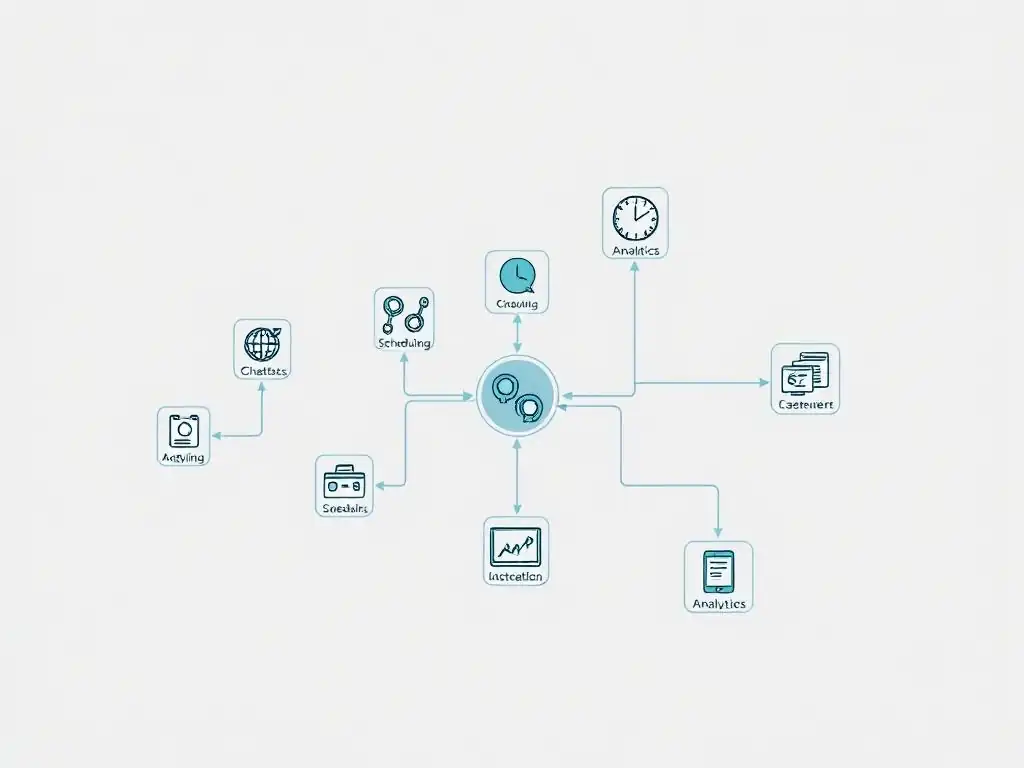
This section delves into practical strategies for automating customer service to boost efficiency and improve customer satisfaction. We'll explore specific tools and techniques to streamline your support processes, ultimately freeing up your team to focus on more complex issues and strategic initiatives. Automating customer service efficiently is key to scaling your business and delivering excellent service, even with limited resources.
Implementing a Robust Chatbot System for Instant Responses
Implementing a chatbot system is a cornerstone of efficient customer service automation. Chatbots provide immediate responses to common queries, freeing up human agents to handle more complex problems. The key to success lies in careful planning and execution.
Choosing the Right Chatbot Platform for Your Business Needs
Selecting the right chatbot platform is crucial. Consider factors like:
- Scalability: Can the platform handle your current and projected customer volume?
- Integration capabilities: Does it integrate seamlessly with your existing CRM and other business tools?
- Customization options: Can you tailor the chatbot's personality and responses to match your brand voice?
- Analytics and reporting: Does it provide detailed data on chatbot performance, allowing you to continuously optimize its effectiveness?
- Pricing model: Does the pricing align with your budget and anticipated usage?
For example, some platforms offer robust natural language processing (NLP) capabilities, while others might be better suited for simpler, rule-based interactions. The choice depends heavily on your specific needs and technical expertise.
Designing Effective Chatbot Conversations and Flows
Designing effective chatbot conversations is an art. You need to anticipate common customer questions and create conversational flows that guide users to solutions quickly and efficiently. Poorly designed chatbot conversations can lead to frustration and a negative customer experience.
Consider using a decision tree approach to map out possible conversation paths. Each node represents a question or statement, and each branch represents a possible response or action. Ensure your chatbot can handle both simple and complex inquiries, escalating to a human agent when necessary. A well-designed chatbot should be able to handle a wide range of inquiries, including order tracking, returns, and technical support. Remember to regularly review and update your chatbot's knowledge base to ensure it stays current and relevant.
Integrating Chatbots with Your Existing CRM System
Integrating your chatbot with your CRM (Customer Relationship Management) system is essential for a holistic customer service strategy. This integration allows the chatbot to access customer data, personalize interactions, and provide more accurate and relevant responses. This seamless data flow allows for a more unified and informed customer experience, improving satisfaction and efficiency. For instance, the chatbot could access past purchase history to offer relevant product recommendations or quickly resolve order issues. This integration is a critical step towards automating customer service efficiently.
Leveraging Email Automation for Efficient Communication
Email automation is another powerful tool for boosting customer service efficiency. By automating responses to common inquiries and personalizing communications, you can significantly reduce response times and improve customer satisfaction. Efficient email automation frees up your team to focus on more complex and high-value tasks.
Automating Email Responses to Frequently Asked Questions
Automating responses to frequently asked questions (FAQs) is a simple yet effective way to improve response times. You can create automated email responses for common inquiries such as order confirmations, shipping updates, and password resets. This instant response improves customer satisfaction and minimizes the workload on your support team. Consider using email templates for consistency and efficiency. These templates can include personalized details, such as the customer's name and order number.
Personalizing Automated Email Responses for a Better Customer Experience
While automation is key, personalization is crucial for maintaining a human touch. Automated emails should feel personalized, not generic. Use the customer's name, order details, and past interactions to tailor the message. This personalized approach makes customers feel valued and understood, improving their overall experience. For example, you could include a customer’s name and order details in an automated shipping confirmation email, making the message feel more personal and less like a generic notification.
Tracking Email Automation Performance and Making Adjustments
Regularly track the performance of your email automation campaigns. Monitor metrics such as open rates, click-through rates, and customer satisfaction scores to identify areas for improvement. Use this data to refine your automated responses and ensure they are effective and engaging. A/B testing different subject lines and email content can help you optimize your campaigns for maximum impact. Continuously analyzing and adjusting your automation strategy is vital for maintaining efficiency and improving customer experience. This iterative process ensures that your automated customer service continues to evolve and improve.
Social media has become a crucial touchpoint for customer interaction. Automating aspects of your social media presence can significantly improve customer engagement and free up valuable time for your team. Effective automation goes beyond simply scheduling posts; it involves strategically using tools to monitor conversations, respond to inquiries, and build relationships.
By leveraging the right tools, businesses can achieve a more proactive and personalized customer service experience, ultimately leading to greater customer satisfaction and loyalty. This proactive approach transforms reactive customer service into a more efficient and engaging process. The key is selecting tools that integrate seamlessly with your existing CRM and social media platforms, ensuring a unified view of customer interactions across all channels.
Failing to do this can lead to fragmented communication and a less-than-optimal customer experience. For example, a poorly integrated system might result in a customer receiving a canned response on Twitter while simultaneously having a different representative address their concern via email, leading to confusion and frustration. The goal is seamless, unified engagement.
Monitoring Social Media Mentions and Responding Promptly
Prompt responses are critical in maintaining a positive brand image and resolving customer issues efficiently. Social media listening tools allow businesses to track brand mentions, hashtags, and keywords relevant to their business. This proactive monitoring enables immediate identification of customer queries, complaints, or praises, allowing for swift and appropriate responses. Delaying responses can lead to negative word-of-mouth and a damaged reputation, highlighting the importance of real-time monitoring.
Consider implementing alerts for negative mentions or urgent requests, ensuring your team is notified instantly and can address issues before they escalate. For instance, a system that instantly notifies the team when a customer mentions a product defect can enable a quick response, offering a solution and potentially preventing further damage to brand reputation. The speed and efficiency of this response directly impact customer satisfaction and loyalty.
Automating Social Media Responses to Common Queries
Automating responses to frequently asked questions (FAQs) can significantly reduce response time and free up human agents for more complex issues. Many social media management platforms offer features for creating automated responses or chatbots that can handle common inquiries. These automated responses should be carefully crafted to be helpful, informative, and maintain a brand voice that is consistent with your overall communication style.
Using pre-written responses for common questions, like shipping times or return policies, streamlines the process and ensures consistent information is provided to all customers. This consistency avoids conflicting information and reduces the potential for errors. However, it's crucial to carefully consider which queries are suitable for automation.
Highly personalized or sensitive issues should always be handled by a human agent to maintain a human touch and avoid impersonal interactions. The balance between automation and human interaction is key to efficiently handling a high volume of inquiries while maintaining a positive customer experience.
Scheduling Social Media Posts for Consistent Engagement
Maintaining a consistent social media presence is crucial for building brand awareness and engaging with your audience. Scheduling tools allow you to plan and automate the publishing of content across various platforms. This ensures a regular flow of updates, keeping your audience engaged and informed.
Consistent posting helps build anticipation and maintains visibility, increasing the likelihood that your brand will be top-of-mind when customers are ready to make a purchase. Furthermore, scheduling allows you to optimize your posting times based on your audience's activity, maximizing reach and engagement. Consider using analytics to identify peak engagement times and schedule posts accordingly.
This strategic approach to content distribution enhances the effectiveness of your social media efforts, making your automation strategy more efficient and impactful. Remember to diversify your content to maintain audience interest and avoid repetitive messaging. A well-rounded, consistently updated social media presence is a powerful tool for building brand loyalty and driving business growth.
Advanced Techniques for Efficient Customer Service Automation
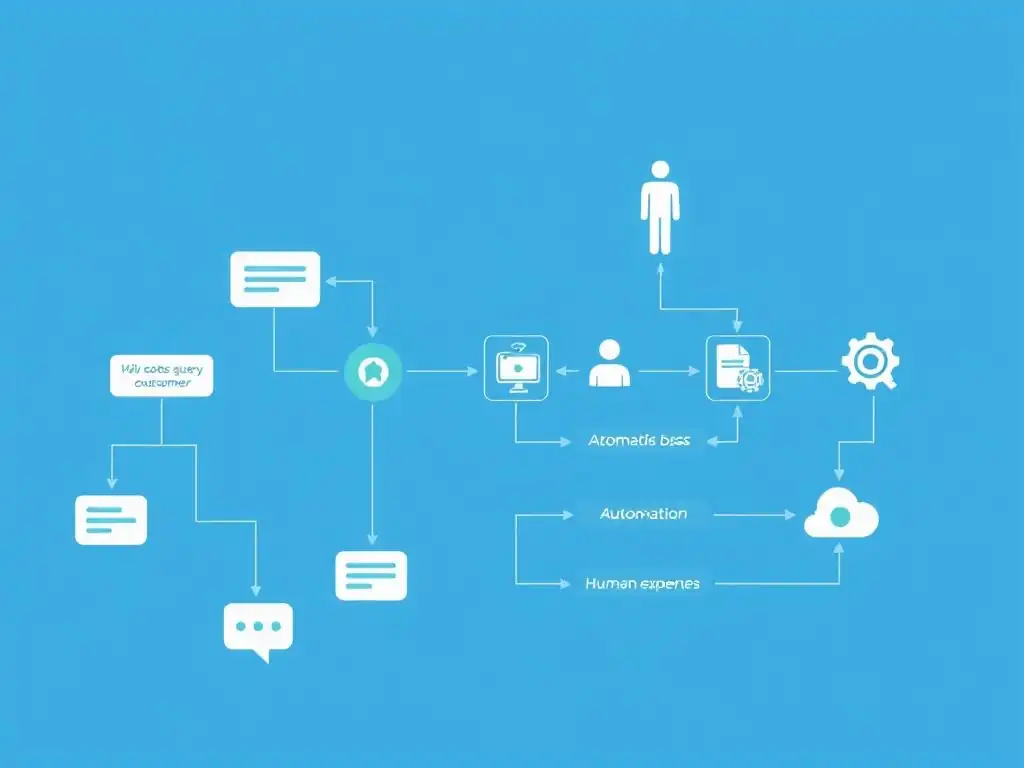
This section delves into sophisticated strategies to automate customer service, going beyond basic chatbots and exploring the power of artificial intelligence (AI) and workflow automation to significantly boost efficiency and customer satisfaction. We'll examine how integrating AI-powered tools, streamlining processes, and leveraging machine learning can transform your customer support operations. Successfully implementing these advanced techniques will allow you to automate customer service efficiently, leading to significant cost savings and improved customer experience.
Integrating AI-Powered Tools for Enhanced Customer Support
The integration of AI is revolutionizing customer service, offering capabilities previously unimaginable. AI's ability to process vast amounts of data and learn from patterns enables personalized, efficient, and scalable support. Let's explore some key applications.
Using AI for Sentiment Analysis and Personalized Responses
AI-powered sentiment analysis tools can automatically gauge the emotional tone of customer interactions (emails, chats, social media comments). By analyzing the sentiment, the system can prioritize urgent or negative interactions, allowing agents to address upset customers promptly. Furthermore, this analysis informs personalized responses, ensuring a more empathetic and tailored customer experience.
For example, a customer expressing frustration might receive a more apologetic and proactive response than a customer simply requesting information. This level of personalization significantly improves customer satisfaction and loyalty. Accurate sentiment analysis requires robust training data and ongoing monitoring to ensure accuracy and adapt to evolving language nuances.
Implementing AI-Driven Knowledge Bases for Self-Service Options
AI can power sophisticated self-service knowledge bases that go beyond simple keyword searches. These systems can understand natural language queries, providing accurate and relevant answers even to complex questions. This reduces the load on human agents, freeing them to handle more intricate issues. Moreover, AI can analyze user interactions with the knowledge base, identifying gaps in information or areas requiring improvement. This continuous learning and optimization ensures the knowledge base remains current and effective, constantly improving the self-service experience. The implementation of such a system requires careful planning and integration with existing CRM and ticketing systems.
Leveraging Machine Learning for Predictive Customer Support
Machine learning algorithms can analyze historical data to predict potential customer issues and proactively address them. For example, by analyzing past support tickets, the system might identify a pattern suggesting a particular feature is frequently problematic. This allows proactive communication with customers, offering solutions or preventative measures before they encounter the issue. This predictive approach is highly effective in minimizing disruptions and improving customer satisfaction. The accuracy of predictions depends on the quality and quantity of data used for training the machine learning models. Regular model retraining and monitoring are essential for maintaining accuracy and effectiveness.
Streamlining Customer Service Processes Through Workflow Automation
Automating repetitive tasks frees up human agents to focus on complex and high-value interactions, leading to increased efficiency and improved customer experience. This section explores key areas where automation excels.
Automating Ticket Routing and Assignment
Intelligent routing systems, powered by AI, can automatically assign incoming support tickets to the most appropriate agent or team based on factors such as the ticket's subject, priority, and the agent's skillset. This ensures quicker response times and reduces the risk of misrouting. For instance, a ticket concerning billing issues would be automatically routed to the billing team, while a technical question would be routed to the technical support team. This streamlined approach minimizes delays and improves overall efficiency. The system should be regularly reviewed and adjusted based on performance data to optimize routing effectiveness.
Automating Follow-up Processes for Improved Customer Satisfaction
Automated follow-up emails or messages can be triggered after specific events, such as the resolution of a ticket or the completion of a purchase. These automated messages can check customer satisfaction, offer additional assistance, or promote related products or services. This proactive approach demonstrates care and enhances customer loyalty. For example, after resolving a technical issue, an automated email could ask for feedback and offer further assistance if needed. Careful crafting of these follow-up messages is crucial to avoid appearing impersonal or intrusive. A/B testing different message versions can help optimize their effectiveness.
Using Automation to Reduce Customer Service Response Times
Automation plays a vital role in minimizing response times. By automating initial responses, ticket routing, and knowledge base access, customers receive prompt attention. This reduces wait times and improves overall customer satisfaction. For example, an automated system can instantly acknowledge receipt of a ticket and provide an estimated resolution time. This proactive communication sets clear expectations and minimizes customer frustration. Continuous monitoring and optimization of automated responses are critical to ensure they remain accurate, efficient, and effective in reducing response times. Data analysis can pinpoint bottlenecks and inform improvements to the automated systems.
Measuring the Success of Your Customer Service Automation Strategy

Automating customer service is a significant investment, but its effectiveness hinges on meticulous monitoring and analysis. Simply implementing automated systems isn't enough; you need a robust strategy to measure their impact and ensure a return on your investment. This section focuses on key metrics and data analysis techniques to gauge the success of your automation efforts and identify areas for improvement. Effectively automating customer service efficiently requires a data-driven approach.
Key Metrics to Track for Automated Customer Service Efficiency
Several key performance indicators (KPIs) are crucial for evaluating the efficiency and effectiveness of your automated customer service systems. Tracking these metrics provides valuable insights into your strategy's success and helps pinpoint areas needing optimization. Let's delve into some of the most critical ones:
Average Resolution Time (ART)
Average Resolution Time (ART) measures the average time taken to resolve a customer's issue. For automated systems, this includes the time from initial contact (e.g., chatbot interaction, automated email response) to the final resolution. A lower ART indicates greater efficiency. For example, a well-designed chatbot might reduce ART from an average of 24 hours with human agents to under 5 minutes for simple queries. Tracking ART helps identify bottlenecks in your automated workflows and allows you to refine processes for faster resolution. Regular monitoring of ART is essential to ensure your automated systems are truly improving efficiency.
Customer Satisfaction (CSAT) Scores
Customer Satisfaction (CSAT) scores reflect how satisfied customers are with their experience. This is a crucial metric, as even the most efficient system is useless if customers are dissatisfied. CSAT is typically measured through post-interaction surveys, asking customers to rate their satisfaction on a scale (e.g., 1-5 stars or a Likert scale).
High CSAT scores indicate that your automated systems are meeting customer expectations and providing a positive experience. Analyzing low CSAT scores can reveal specific areas where your automation strategy needs refinement, perhaps indicating a need for more human intervention in certain scenarios. Remember, efficient automation should improve the customer experience, not detract from it.
First Contact Resolution (FCR) Rate
First Contact Resolution (FCR) rate signifies the percentage of customer issues resolved during the first interaction with your automated system. A high FCR rate indicates that your automation is effectively addressing common issues without requiring further interaction. For instance, a well-trained chatbot might achieve an FCR rate of 70% for simple technical questions, significantly reducing the workload on human agents.
A low FCR rate might suggest the need for improved knowledge base content, more sophisticated chatbot programming, or better routing of complex issues to human agents. Improving your FCR rate is key to maximizing the efficiency of your automation strategy.
Net Promoter Score (NPS)
The Net Promoter Score (NPS) gauges customer loyalty and overall experience. While not directly tied to automation speed, a high NPS indicates customers are likely to recommend your service. This indirectly reflects the success of your automation strategy in improving the overall customer journey. A positive NPS suggests your automation is not only efficient but also contributes to a positive brand perception. A low NPS might signal areas where your automation, while efficient, may be lacking in personalization or empathy, and requires further refinement.
Analyzing Data to Identify Areas for Improvement in Customer Service Automation
Analyzing the data collected from the above metrics is crucial for continuous improvement. Don't just track the numbers; understand the why behind them. For example:
- Low ART but low CSAT: This might indicate that while issues are resolved quickly, the automated process lacks personalization or empathy.
- High ART and low CSAT: This points to a serious problem in your automation strategy, requiring a thorough review of processes and potentially a redesign of your automated systems.
- High FCR but low NPS: While your automation efficiently resolves initial issues, the overall customer experience might need improvement. Consider adding features for personalized follow-ups.
Regular data analysis, coupled with customer feedback, allows for iterative improvements to your automated customer service strategy. By continually monitoring and refining your approach, you can optimize efficiency, increase customer satisfaction, and ultimately achieve a significant return on your investment. Remember, automating customer service efficiently is an ongoing process, not a one-time fix. Embrace data-driven decision-making to ensure your strategy remains effective and adaptable to evolving customer needs.
Continuously Optimizing Your Automated Customer Service System for Enhanced Efficiency
Continuously optimizing your automated customer service system is crucial for maintaining high efficiency and customer satisfaction. This isn't a set-it-and-forget-it process; rather, it requires ongoing monitoring, analysis, and adaptation. Think of it as a living, breathing entity that needs regular attention to thrive. Ignoring this aspect can lead to decreased efficiency, frustrated customers, and ultimately, lost revenue.
One key aspect of optimization involves analyzing the performance data generated by your automation tools. Most platforms offer detailed reports on metrics such as response times, customer satisfaction scores (CSAT), resolution rates, and the number of escalated cases. Regularly reviewing these metrics allows you to pinpoint areas needing improvement. For example, if you notice a significant spike in escalated cases related to a specific chatbot response, you can revise that response to be more accurate and comprehensive. This proactive approach prevents minor issues from snowballing into major problems.
Furthermore, customer feedback is invaluable in the optimization process. Actively solicit feedback through post-interaction surveys or in-app feedback mechanisms. This allows you to directly address customer pain points and understand their experiences with your automated system. Analyzing this feedback reveals areas where the system falls short of expectations, allowing for targeted improvements. For instance, if many customers express difficulty navigating the automated system's menu, you can redesign the menu to be more intuitive and user-friendly. This iterative process of improvement, based on data and customer feedback, is essential for long-term success.
Another critical element of optimization is staying abreast of the latest advancements in automation technology. The field of customer service automation is constantly evolving, with new tools and techniques emerging regularly. By staying informed about these advancements, you can identify opportunities to integrate new technologies into your system, enhancing its capabilities and efficiency. This could involve upgrading your chatbot with advanced natural language processing (NLP) capabilities or integrating AI-powered sentiment analysis to better understand customer emotions and tailor responses accordingly. Regularly evaluating and updating your system ensures it remains at the cutting edge of efficiency.
Finally, remember that optimization is not just about technology; it's also about your team's processes. Regularly review your team's workflows to identify any bottlenecks or inefficiencies in how they interact with the automated system. This may involve streamlining internal communication channels or providing additional training to improve their understanding and use of the automation tools. A well-oiled machine requires not only advanced technology but also a well-trained and efficient team to support it. By focusing on both technological and process optimization, you can create a robust and highly efficient automated customer service system.
The Future of Automated Customer Service: Emerging Trends
The landscape of customer service is rapidly evolving, driven by advancements in technology and shifting customer expectations. To truly automate customer service efficiently, businesses must understand and adapt to these emerging trends. We're moving beyond simple chatbots to sophisticated systems capable of handling increasingly complex interactions. This section explores key trends shaping the future of automated customer service.
The Role of Artificial Intelligence (AI) in Shaping the Future of Customer Service
Artificial intelligence is no longer a futuristic concept; it's a cornerstone of modern customer service automation. AI-powered solutions are transforming how businesses interact with their customers, offering significant improvements in efficiency and customer satisfaction. AI's capabilities extend far beyond simple automated responses. We're seeing the rise of:
- Natural Language Processing (NLP): NLP allows systems to understand and respond to human language in a more natural and nuanced way. This enables more sophisticated chatbots capable of handling a wider range of inquiries and resolving issues more effectively. For instance, an NLP-powered chatbot can understand the context of a customer's complaint, even if it's phrased differently than expected.
- Machine Learning (ML): ML algorithms allow automated systems to learn from past interactions and improve their performance over time. This means chatbots become increasingly accurate and efficient at resolving issues, reducing the need for human intervention. Data analysis reveals patterns in customer queries, enabling proactive improvements to the system and anticipating future needs.
- Sentiment Analysis: AI can analyze the emotional tone of customer interactions, identifying frustrated or angry customers who require immediate attention. This enables businesses to prioritize high-priority cases and improve customer satisfaction by addressing negative experiences promptly. One study showed a 25% reduction in customer churn through proactive identification of negative sentiment. 1
- Predictive Analytics: AI can analyze customer data to predict future needs and proactively offer assistance. This might involve suggesting relevant products or services based on past purchases or anticipating potential issues before they arise. For example, a system might proactively contact a customer whose subscription is about to expire, offering a renewal option.
The Importance of Omnichannel Customer Service Automation
Customers expect seamless interactions across multiple channels – website, mobile app, email, social media, and more. Efficiently automating customer service requires a truly omnichannel approach. This means integrating automation across all touchpoints, providing consistent and personalized experiences regardless of how customers choose to interact. A fragmented approach, where different automation systems handle different channels, leads to confusion and frustration.
A successful omnichannel strategy requires:
- Centralized Customer Data: All customer interactions, regardless of channel, should be accessible in a single, unified view. This allows agents (both human and AI) to access complete customer history and provide personalized support.
- Consistent Branding and Messaging: The brand voice and messaging should be consistent across all channels, ensuring a unified customer experience. This avoids the jarring inconsistencies that can arise when different teams manage different channels.
- Seamless Channel Switching: Customers should be able to easily switch between channels without losing context or having to repeat information. For example, a customer who starts a chat on the website should be able to seamlessly transfer the conversation to email or phone if needed.
The Rise of Hyper-Personalization in Automated Interactions
Generic automated responses are becoming increasingly ineffective. Customers expect personalized interactions, even when dealing with automated systems. Hyper-personalization in automated customer service uses data and AI to tailor interactions to individual customer needs and preferences. This can involve:
- Personalized Greetings: Addressing customers by name and referencing past interactions creates a more personal and engaging experience.
- Customized Recommendations: Offering product or service recommendations based on individual customer data enhances the relevance of interactions.
- Proactive Support: Anticipating customer needs and offering assistance before they even ask shows a genuine understanding of their requirements.
- Dynamic Content Adjustment: Adapting the content of automated responses based on individual customer profiles, purchase history, and past interactions.
1 [Specific information pending: Source for the 25% reduction in customer churn statistic]
Frequently Asked Questions
What is the biggest benefit of automating customer service?
Automating customer service significantly increases efficiency by handling a high volume of inquiries simultaneously and freeing up human agents to focus on complex issues. This leads to faster response times and improved customer satisfaction.
How can I automate customer service without losing the personal touch?
By implementing a hybrid approach, combining automated systems (like chatbots) with human agents for escalated issues, you maintain a personal touch while improving efficiency. Careful chatbot design is crucial for a positive customer experience.
What are some common tools for automating customer service?
Popular tools include chatbots, helpdesk software, and email automation platforms. Choosing the right tool depends on your specific needs and budget. Consider integration with existing systems for seamless workflow.
Is automating customer service expensive?
The initial investment in software and potentially training can seem high, but the long-term cost savings from increased efficiency and reduced labor costs often outweigh the initial expense. Consider the return on investment (ROI).
How do I measure the success of my automated customer service system?
Key metrics include customer satisfaction scores (CSAT), resolution time, first contact resolution (FCR), and the number of inquiries handled automatically. Regularly monitor these to optimize your system.
Final Reflection: The Future of Human-AI Collaboration in Customer Service
The seamless integration of automation into customer service isn't just a trend; it's the future of efficient and scalable support. Businesses that fail to embrace this evolution risk falling behind in a rapidly changing market where customer expectations are constantly rising. The ability to provide instant, personalized, and consistently high-quality service is no longer a luxury—it's a necessity.
The shift towards automated customer service has profoundly impacted the landscape of business interaction, altering not only how companies operate but also how customers perceive and engage with brands. This change necessitates a re-evaluation of the role of human agents, moving away from repetitive tasks and towards more strategic, empathetic interactions. The best minds are now working on making machines more human, while the best human minds are working on making themselves more like machines.
This paradox highlights the crucial balance we must strike between technological advancement and the irreplaceable value of human connection in customer service.
Consider the implications of this transformation. How can you leverage automation to enhance, not replace, the human element in your customer service strategy? What new opportunities for growth and innovation does this technological shift unlock? I urge you to actively explore the possibilities, to experiment with different automation tools, and to continuously refine your approach based on data and customer feedback. The journey towards truly efficient and effective customer service is an ongoing process, one that requires both technological prowess and a deep understanding of the human experience.
Unlock Your Customer Service Potential: Automate Now!
Ready to transform your customer service? You've already learned how automating key processes can dramatically boost efficiency and free up valuable time. Let's put that knowledge into action!
Here's how to get started:
- Start with a small, manageable automation: Begin by automating a single aspect of your customer service workflow, such as setting up automated email responses or implementing a basic chatbot. Even small improvements can yield significant results.
- Explore automation solutions: Research software designed to meet your specific business needs. Take advantage of free trials and read user reviews to find the right fit for your company.
- Share your experience: Join our community and share your initial steps in automating your customer service! Let's learn from each other's successes and challenges.
What's the first step you'll take to improve your customer service through automation?