Unlock Your Data Science Potential: Top Online Platforms for Mastery
🤔 Short on time but want to boost your data science skills? Discover the best online data science courses and platforms to…
Read article
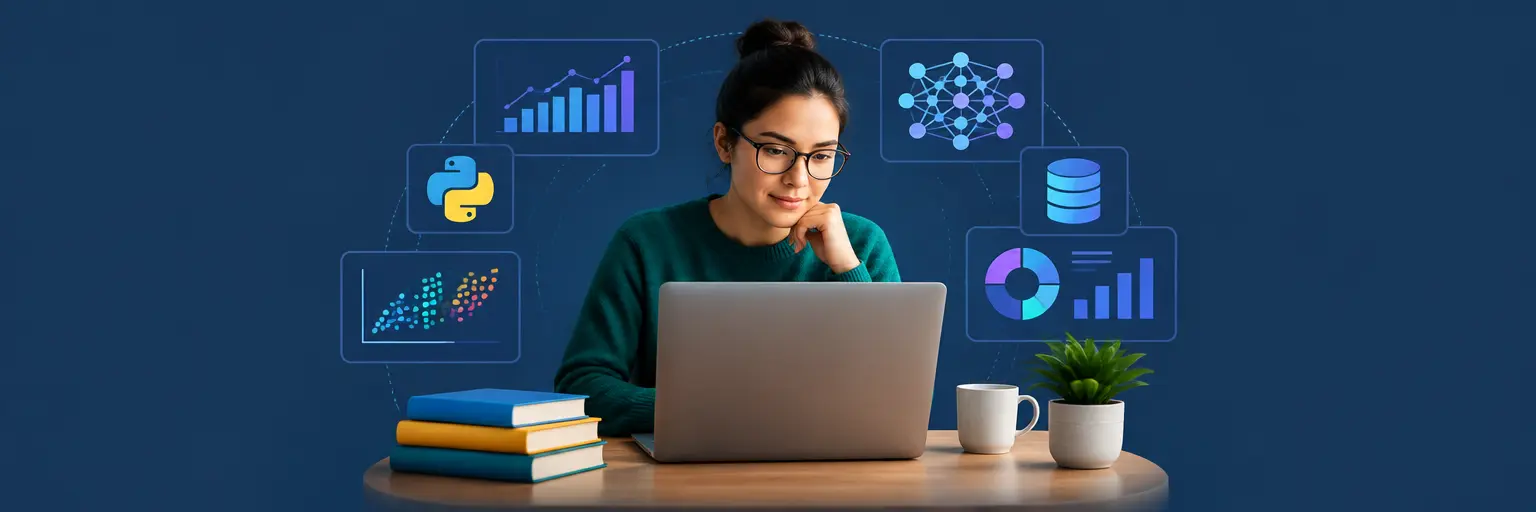
Discover the best online learning platforms for tech skills and turn your career ambitions into reality—especially if you’re aiming to master data science online. Whether you’re a busy professional or a curious beginner, these curated platforms offer flexible, high-quality courses that fit seamlessly into your daily routine. From interactive coding challenges to comprehensive bootcamps, you’ll gain hands-on experience with Python, machine learning, SQL, and data visualization—all without leaving your home. Save time by choosing platforms with expert-led video tutorials, real-world projects, and community support, ensuring you learn faster and retain more. Perfect for upskilling on a schedule, these resources combine practical life hacks for learning efficiency—like spaced repetition and micro-lessons—so you can optimize your study time while building in-demand tech skills. Jumpstart your journey today and transform your productivity into career growth with the right online training at your fingertips.
🤔 Short on time but want to boost your data science skills? Discover the best online data science courses and platforms to…
Read article
🤔 Unlock your data science potential anytime, anywhere! Our guide reveals top-rated online data science courses global, boosting your career and saving…
Read article
🤔 Master data science faster! This article reveals the best online platforms, categorized by skill level, to boost your efficiency and accelerate…
Read articleWelcome to the ultimate guide on the best online learning platforms for tech skills, specifically laser-focused on mastering data science online. Whether you’re a complete beginner or a professional looking to upskill, this subcategory breaks down the most effective, affordable, and flexible ways to learn Python, machine learning, statistics, and data visualization—all from the comfort of your home. We’ve curated this resource to save you hours of research, aligning with our mission of practical life hacks for efficiency. Here, you’ll discover how to optimize your learning journey, avoid common pitfalls, and choose the right platform that fits your schedule, budget, and career goals. Let’s transform your daily routine into a data-driven success story.
When it comes to data science courses, these three giants dominate the landscape. Coursera partners with universities like Stanford and Imperial College, offering accredited certificates and full degree paths. Udemy is your go-to for budget-friendly, project-based bootcamps with lifetime access—perfect for quick wins. edX provides MicroMasters programs and professional certificates from MIT and Harvard, ideal for deep academic rigor. Each platform excels in different areas, so your choice depends on whether you prefer structured university curricula, flexible self-paced tutorials, or high-stakes industry credentials.
For efficiency hacks, we recommend starting with Udemy’s “Python for Data Science” (often under $20 during sales) to build foundational skills, then advancing to Coursera’s “IBM Data Science Professional Certificate” for a portfolio-ready capstone. edX is best if you crave peer-reviewed assignments and rigorous exams. To save time, filter courses by “most recent” and check ratings above 4.5 stars. Always leverage free audits on Coursera and edX to preview content before committing to a certificate. This approach maximizes your ROI while minimizing wasted hours.
If you want hands-on, interactive learning without video fatigue, DataCamp and Dataquest are game-changers. DataCamp offers bite-sized exercises in R, Python, SQL, and Power BI, with instant feedback and gamified streaks to keep you motivated. Dataquest, on the other hand, focuses on real-world projects like analyzing Uber rides or predicting housing prices, all within your browser—no setup required. These platforms are designed for active recall, a scientifically proven method to boost retention. They are ideal for busy professionals because each lesson takes only 5-10 minutes, easily fitting into coffee breaks or commutes.
For a productivity life hack, pair these interactive platforms with a spaced repetition app (like Anki) to review key concepts. DataCamp’s “Career Tracks” and Dataquest’s “Data Scientist Path” provide a structured roadmap, eliminating decision paralysis. Both offer free tiers with limited content—use them to test your interest before subscribing. Many learners find that combining DataCamp for daily practice with a project-based bootcamp on Udemy accelerates mastery by 2x. This hybrid approach is a classic “smart work, not hard work” strategy we champion at UltimateLifeHacks.
For those seeking industry-recognized credentials, university-backed microcredentials on platforms like Coursera and edX are unmatched. The IBM Data Science Professional Certificate (Coursera) and MIT’s Statistics and Data Science MicroMasters (edX) are gold standards. These programs include capstone projects where you build a real-world portfolio piece, which employers actively look for. They also cover job-relevant tools like Jupyter Notebooks, Tableau, and Apache Spark. Unlike standalone courses, these credentials signal to recruiters that you have both theoretical grounding and practical application skills.
To optimize your time, take advantage of financial aid—Coursera and edX offer 100% free access if you qualify, making these elite programs accessible to everyone. A pro tip: enroll in the audit track first to watch lectures, then decide if you need the paid certificate for your resume. Many learners also pair these with LinkedIn Learning’s short “How to approach” videos to polish interview skills. This careful curation turns a potentially overwhelming career switch into a step-by-step, low-risk process. Remember, the goal is not just to learn, but to become job-ready with verifiable proof.
If your budget is zero, you can still master data science using free, high-quality resources. YouTube channels like StatQuest with Josh Starmer and sentdex explain complex algorithms with intuitive visuals. Kaggle offers free Python and SQL courses, plus a massive community where you can join competitions and share notebooks. GitHub is a treasure trove of open-source projects—clone a repository, run the code, and tinker with it to learn by doing. These resources are perfect for the “learn by building” methodology, which is the most efficient way to internalize data science concepts.
Here’s a life hack: create a daily 30-minute “deep dive” slot—20 minutes watching a YouTube explainer, 10 minutes replicating the code on Kaggle. Consistency beats intensity, so track your streaks with a simple habit tracker. Kaggle’s free course “Intro to Machine Learning” is a fantastic starting point, and its “Competition” tab lets you apply skills to real datasets immediately. To avoid information overload, bookmark only 3-4 trusted channels and commit to finishing one project per month. This free pathway is slower but equally valid, especially for self-starters who thrive on autonomy and community feedback.
For working professionals, time is the scarcest resource. Hence, we recommend micro-learning sprints—short, focused bursts that fit into lunch breaks. Platforms like Maven Analytics and 365 Data Science offer condensed tracks with downloadable cheat sheets and Excel-heavy modules for quick wins. The “365 Data Science” program bundles 15+ courses covering everything from SQL to deep learning, with a linear roadmap that saves you from piecing together random tutorials. Maven’s “Dashboard in a Day” modules are perfect for learning Tableau or Power BI in under 4 hours.
To maximize efficiency, use Pomodoro sessions: 25 minutes of focused learning, then 5 minutes of review. Set a monthly learning goal, like “Complete one capstone project” rather than “finish this course.” Automate your environment with pre-configured Docker containers (available on Dataquest) to skip setup time. Also, leverage mobile apps like SoloLearn or DataCamp’s mobile version to practice on commutes. By strategically combining these platforms, you can achieve data science proficiency in half the usual time—true winning life hack for career advancement.
For absolute beginners, we recommend DataCamp or Kaggle Learn. Both offer interactive, browser-based exercises without installation headaches. They start from basic Python syntax and gradually introduce pandas, visualization, and machine learning. DataCamp’s guided projects are especially friendly, while Kaggle’s community forums provide instant help. Start there, then transition to Coursera for certificates.
On average, 6-9 months of consistent daily study (1-2 hours) makes you job-ready for entry-level roles. Use a structured path like IBM’s Professional Certificate or 365 Data Science’s integrated track. Focus on building 3-5 portfolio projects, not just completing quizzes. Networking on LinkedIn and Kaggle competitions significantly speed up the process by showcasing your skills to recruiters.
Yes, but only if you pair them with hands-on practice. Free YouTube playlists (e.g., StatQuest, FreeCodeCamp’s 4-hour Python course) explain theory brilliantly, but you must code along on Kaggle or your local Jupyter notebook. Supplement with free SQL tutorials on W3Schools and practice problems on LeetCode. The caveat is the lack of certificates—create a GitHub portfolio to prove your skills instead.
The Google Data Analytics Professional Certificate (Coursera) and IBM Data Science Professional Certificate are currently the most recognized, especially for analytics-focused roles. For more technical positions, the MIT MicroMasters in Statistics and Data Science (edX) is highly prestigious. However, employers value demonstrable projects equally—ensure your portfolio includes real-world datasets, clear narratives, and visualizations.
Set micro-goals with rewards, like a coffee treat after finishing a module. Join a study group on platforms like Discord or Reddit’s r/DataScience for accountability. Use the “Don’t break the chain” method with a habit tracker. Focus on projects that interest you personally—predicting sports outcomes or analyzing your spending habits makes learning fun. Remember: progress, not perfection, is the ultimate life hack.