Mastering a New Language Online: Your Ultimate Toolkit for Fast, Fun Fluency
Welcome to the Learning a New Language Online hub at UltimateLifeHacks. Here, we bridge the gap between ambitious goals and daily reality. Instead of drowning in grammar drills, we focus on smart productivity hacks, time-efficient study loops, and the best digital tools to accelerate your path to fluency. Whether you’re a busy professional or a curious traveler, these resources are curated to optimize your learning process, cut wasted hours, and make consistent progress a habit—not a chore. Let’s turn your commute, lunch breaks, and idle minutes into powerful language-building moments.
🗣️ Top-Rated Language Apps & Platforms: Choose Your Perfect Match
Not all apps are created equal. We dissect the most popular platforms—Duolingo, Babbel, Rosetta Stone, and newer AI-driven tutors like Speakly or Lingvist—to help you pick based on your learning style, goals, and schedule. Our focus is on time-to-proficiency ratio, not just gamified streaks. Expect honest comparisons on vocabulary retention, speaking practice, and spaced repetition effectiveness.
You’ll find actionable advice on combining apps for synergistic learning, such as using Duolingo for daily vocabulary and a live tutor platform for conversational confidence. We also cover hidden features like offline modes and PDF export, so you can study even without an internet connection. By the end, you’ll have a personalized app stack that fits your life, not the other way around.
🧠 Spaced Repetition & Memory Hacks: Learn 10x Faster
Memory is the bottleneck of language learning. Here, we reveal how to leverage spaced repetition software (SRS) like Anki and Quizlet to lock in vocabulary permanently. We provide pre-made flashcard decks tailored to common travel, business, and daily-life terms, plus a simple system to review them in under 15 minutes a day. This is pure productivity gold—maximize retention while minimizing study time.
Beyond SRS, we explore mnemonic techniques, the Method of Loci, and audio-looping tricks to make irregular verbs and gendered nouns stick. We also bust the myth of “polyglot geniuses” and show you the exact routines they use, like the “one-sentence-a-day” rule. These hacks are designed to align with your existing habits, so you never forget a word again.
🎧 Immersive Listening & Podcasts: Turn Dead Time into Fluency
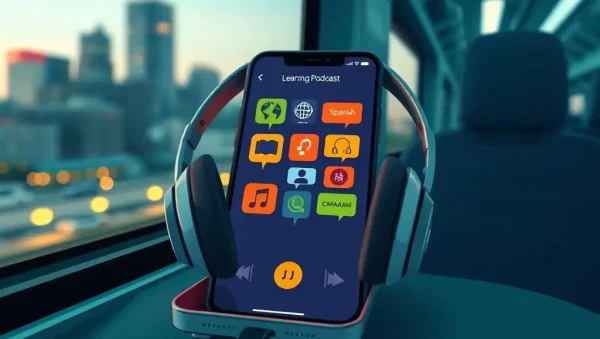
Listening is 50% of communication, yet most learners ignore it. We curate the best beginner-to-intermediate podcasts (like Coffee Break Languages, Duolingo Podcast, and Language Transfer) that you can stream during your commute, workout, or chores. Our “shadowing” technique—repeating aloud while listening—will sharpen your accent and comprehension faster than any textbook exercise.
We also share tools to slow down or loop audio from YouTube or Netflix, plus interactive transcripts that let you click and translate unknown words instantly. This section is about passive learning made active: set your phone on auto-play, and absorb the language while your hands are busy. You’ll be amazed how many “free” hours you unlock each week, turning idle time into rapid progress.
💬 Real Conversation Practice: AI Tutors & Language Exchange
Speaking from day one is the ultimate hack. We review the most effective platforms for live practice—iTalki, Preply, HelloTalk, and Tandem—with tips to find affordable tutors and avoid awkward exchanges. For introverts, we highlight AI conversation partners like ChatGPT’s voice mode or specialized chatbots that simulate real dialogues without judgment. This is the secret to building confidence before you ever speak to a native.
We also give you a framework for structured language exchange calls, including icebreaker questions and error-correction rules. You’ll learn how to book a 30-minute session that yields maximum speaking time, not lengthy explanations. Our goal is to reduce the “fear wall” and help you speak in complete sentences within weeks—not months—by prioritizing reps over perfection.
🧰 Productivity & Habit-Stacking for Consistent Daily Study
Consistency beats intensity. Here, we show you how to habit-stack language learning onto existing routines—like brushing your teeth, checking email, or drinking morning coffee. We provide a 10-minute micro-study plan that includes vocabulary flashcards, one podcast clip, and a five-sentence journal entry. This is designed for busy people who think they “have no time.”
We also tackle common productivity killers: perfectionism, app overload, and scheduling chaos. You’ll get a weekly planner template that spaces out skill areas (listening, speaking, reading, writing) across days, reducing burnout. Plus, we share apps to block distracting websites while you study and a simple streak tracker that keeps you motivated without guilt. This is the ultimate life hack to make fluency inevitable.
Frequently Asked Questions
How much daily time is really needed to learn a language online?
Consistency is key—15 to 20 minutes of focused daily practice beats a two-hour cram session. Use spaced repetition for vocabulary, 5 minutes of listening, and 5 minutes of speaking aloud. Even 10 minutes daily yields visible progress in six weeks. The trick is to automate the habit and never miss two days in a row.
Are free language apps enough for fluency?
Free apps like Duolingo and basic Anki decks are excellent for building a foundation with ~2,000 core words. However, they often lack real conversation practice and cultural nuance. To reach fluency, pair them with free resources like HelloTalk for speaking and YouTube immersion. If you budget for one monthly paid tool, invest in tutor-led speaking on iTalki—that’s where breakthrough happens.
What’s the best way to memorize vocabulary without rote learning?
Use mnemonics and imagery—associate a new word with a vivid picture or a familiar sound in your native tongue. For example, the Spanish “perro” (dog) sounds like “pear,” so imagine a dog eating a pear. Combine this with spaced repetition (Anki) and use the word in three different sentences within a day. This creates multiple neural connections, making retrieval effortless.
Can I learn a language entirely through podcasts and listening?
Absolutely, for comprehension and accent. You can achieve strong listening skills via podcasts, but speaking and writing need active output. Use the “shadowing” method: repeat each sentence aloud after hearing it. Also, pause and summarize what you heard in the language. Pair podcasts with an AI chatbot that corrects your spoken sentences to round out your skills.
How do I stay motivated when progress feels slow?
Track micro-wins: record yourself speaking on week one and again at month two—the difference will shock you. Set a goal to understand one joke or order food without looking at the menu. Use a habit tracker to visualize your streak, and celebrate every 50 new words mastered. Also, join an online community like Reddit’s language learners to share milestones. Progress is non-linear; plateaus are normal, so shift your practice method when bored.