Learn at Your Own Pace: The Most Flexible Online Coding Courses
🤔 Master coding on YOUR schedule. Our flexible online coding courses offer unparalleled convenience, fitting seamlessly into busy lives. Boost your skills…
Read article
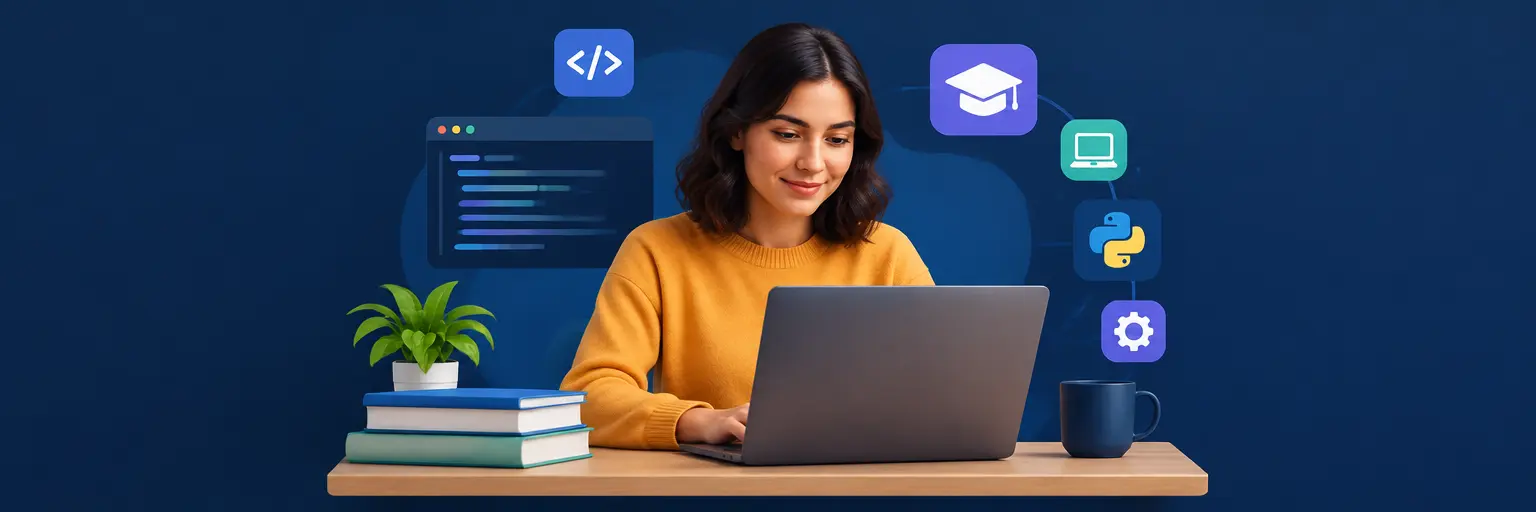
Unlock your dream tech career without quitting your day job or breaking the bank! 🚀 From coding bootcamps that fast-track you into software development to flexible online courses in data science, AI, and web design, these top-rated platforms offer hands-on projects, real-world mentorship, and job-ready certificates. Whether you’re a complete beginner or a seasoned pro looking to upskill, discover the best value, flexibility, and career support to master in-demand skills at your own pace. Start learning smarter, not harder, and transform your productivity into tangible tech expertise today! 💡
🤔 Master coding on YOUR schedule. Our flexible online coding courses offer unparalleled convenience, fitting seamlessly into busy lives. Boost your skills…
Read article
🤔 Level up your coding skills without wasting precious hours! Discover the best online courses for developers, handpicked for maximum efficiency and…
Read article
🤔 Short on time? Discover the best mobile app development platforms to streamline your workflow and launch your app faster. This guide…
Read articleIn today’s fast-paced digital economy, mastering tech skills is no longer optional—it’s a strategic life hack for career resilience and personal growth. At UltimateLifeHacks, we blend productivity principles with actionable education, and this subcategory is your shortcut to cutting through the noise. Here, we dissect the top online learning platforms that offer coding bootcamps and specialized courses, helping you save time, avoid costly mistakes, and accelerate your journey from beginner to job-ready developer. Whether you’re pivoting careers or upskilling for a promotion, these platforms are engineered for maximum efficiency.
Coding bootcamps are the sprinters of tech education, designed to compress months of learning into 8-16 weeks. Platforms like Flatiron School, General Assembly, and Le Wagon offer immersive, project-based curricula that simulate real-world engineering workflows. The key advantage is time efficiency—you’ll build a portfolio, network with peers, and receive career coaching in a fraction of traditional degree time. However, this pace demands intense commitment, often 40-60 hours weekly.
Expect hands-on debugging, pair programming, and daily stand-ups that mirror agile teams. While bootcamps are pricier (ranging $10k-$20k), many offer income-share agreements or money-back guarantees if you don’t land a job within six months. For UltimateLifeHacks readers, this is a productivity trade-off: you’re paying for structure and accountability, which can be the ultimate hack against procrastination. Choose a bootcamp if you thrive under deadlines and need a career switch faster than a self-paced course allows.
For those juggling a full-time job or family, self-paced platforms like Coursera, Udemy, and edX offer unmatched flexibility. These courses range from micro-lessons on Python to full university-level specializations from MIT or Stanford. The productivity hack here is modular learning—you can tackle 15-minute video segments during commutes or lunch breaks, using spaced repetition to retain concepts without burnout.
Expect lifetime access to materials, quizzes, and peer-reviewed assignments. Unlike bootcamps, costs are often under $100 per course or $50/month subscriptions (e.g., Coursera Plus). While you miss live mentorship, many platforms now include AI-driven code reviewers and discussion forums. For ultimate efficiency, pair these courses with the Pomodoro Technique—25-minute focused sessions—to mimic bootcamp intensity without the fixed schedule. This option is ideal for systematic upskillers who prefer to learn at their own rhythm while maintaining work-life balance.
Not all tech skills are equal; high-demand niches like data science, cloud computing, and machine learning command premium salaries. Platforms like DataCamp, Pluralsight, and Cloud Academy focus exclusively on these domains, offering interactive coding environments and real datasets. The advantage is deep relevance—you skip generic programming and dive into SQL, TensorFlow, AWS, or Azure with industry-specific case studies.
Expect hands-on labs where you build predictive models or deploy cloud infrastructure in sandboxes. Many such platforms integrate skill assessments that benchmark you against industry standards, helping you identify gaps efficiently. For UltimateLifeHacks, this subcategory is a golden opportunity to leverage micro-credentials—like Google Data Analytics Professional Certificate—that stack toward career shifts. While not as structured as bootcamps, these specialized platforms often include career paths with milestones, making them a strategic choice for professionals targeting niches with less competition and higher pay.
If traditional video lectures bore you, interactive platforms like Codecademy, freeCodeCamp, and Scrimba turn learning into a game. These tools provide instant feedback—you type code directly in the browser and see results immediately, which is the ultimate efficiency hack for muscle-memory building. Expect streaks, badges, and progress bars that gamify consistent effort, aligning perfectly with behavioral psychology for habit formation.
freeCodeCamp is entirely free and offers certifications in web development, while Codecademy’s Pro tier adds real-world projects and career paths. Scrimba’s interactive screencasts let you pause and edit the instructor’s code—a powerful way to learn by tinkering. The productivity lesson here is low barrier to start: you can begin in minutes without installation. This approach is best for visual learners who need dopamine hits to stay motivated. Pair these with daily 20-minute sprints to rapidly build portfolio pieces that impress hiring managers more than certificates alone.
For those who want the highest ROI, platforms like Springboard, Thinkful, and TripleTen blend self-paced learning with one-on-one mentorship and job placement support. They often feature career tracks with a guaranteed job or tuition refund, reducing financial risk. Expect weekly calls with mentors, mock interviews, and resume reviews—services that simulate a personal career coach without the six-figure cost of a degree.
These platforms emphasize portfolio development through capstone projects and real client work. For UltimateLifeHacks users, they solve the accountability problem: you’re assigned a mentor who tracks your progress and pushes you beyond comfort zones. Completion rates are higher (75%+) compared to self-paced courses (15%), thanks to structured deadlines and community support. If you’re serious about a career pivot in UX design, software engineering, or data analytics, this high-touch model is worth the premium. It’s a productivity hack that outsources your motivation to external accountability—proven to double completion rates.
Intensive bootcamps like General Assembly or Flatiron offer the fastest route, typically 12-16 weeks, but they require full-time commitment. Alternatively, interactive platforms like freeCodeCamp combined with daily 1-hour practice can land you a junior role in 6-9 months. Focus on building a portfolio with 3-5 projects, networking on LinkedIn, and practicing coding interviews on LeetCode—speed comes from deliberate practice, not just passive lectures.
Yes, for foundational skills, free resources like freeCodeCamp, CS50 from Harvard (via edX), and The Odin Project are excellent. However, they lack mentorship and structured career support, which can delay job placement for beginners. Paid bootcamps add accountability, peer review, and industry connections—critical for navigating hiring pipelines. Ultimately, your discipline determines success; free platforms work if you’re a self-starter, but paid options accelerate the transition for most.
Choose a bootcamp if you need skills in under six months, have a portfolio-ready project in mind, and prefer hands-on learning. Choose a degree if you seek deep computer science theory, research opportunities, or plan to enter academia. Bootcamps cost $10-20k and yield quick employability, while degrees take 2-4 years and cost more. For career changers, bootcamps are cost-effective; for entry-level freshmen, a degree may offer broader long-term growth.
Data science, machine learning, cloud architecture (AWS/Azure), cybersecurity, and full-stack JavaScript are top-tier—they command salaries above $100k in most markets. Additionally, skills in AI prompt engineering and DevOps (Docker, Kubernetes) are rising rapidly. For job security, focus on transferable skills like Python and SQL, which are used across domains. Platforms like DataCamp and Pluralsight update their curricula quarterly to match employer needs.
Absolutely. Self-paced platforms like Udemy or Coursera are designed for part-timers, requiring 5-10 hours weekly. Use calendar blocking to reserve evenings or early mornings—consistency beats intensity. Consider a “micro-bootcamp” like Springboard’s part-time track, which spans 6-9 months with evening mentor calls. Avoid burnout by setting weekly milestones and using tools like Notion to track progress. With discipline, you can transition roles within a year without quitting your job.