Is Duolingo Really Enough? Unveiling the Truth About Language Apps
🤔 Discover if language apps like Duolingo truly deliver on their promises. We cut through the hype to reveal whether they're a…
Read article
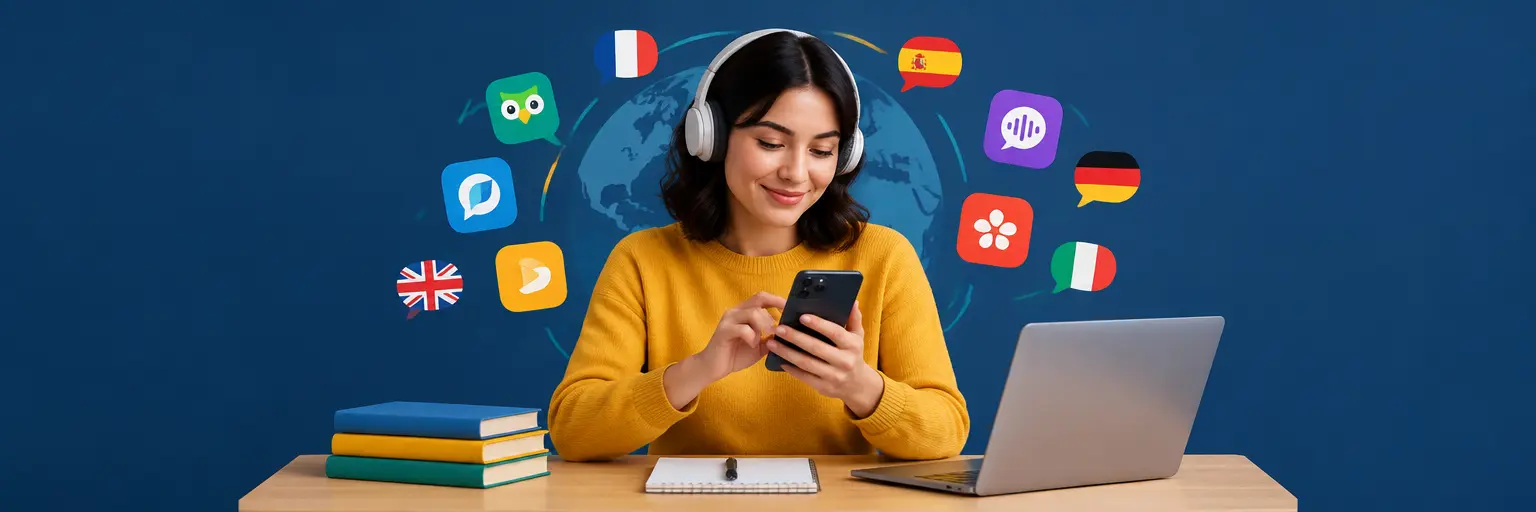
Unlock the world with the best language learning apps of 2024—whether you’re a busy professional or a curious traveler, mastering a new tongue has never been easier or more efficient. Our expert comparison cuts through the noise, pitting top-tier platforms like Duolingo, Babbel, Rosetta Stone, and Memrise against each other on price, teaching style, gamification, and real-world fluency. Discover which app fits your unique learning pace, saves you precious time, and turns daily commutes into productive mini-lessons. From bite-sized sessions for hectic schedules to immersive AI-powered conversations, we break down the pros, cons, and hidden features that truly accelerate progress. Stop guessing and start speaking—this guide is your ultimate shortcut to choosing the tool that matches your goals, budget, and lifestyle. Optimize your downtime, boost your brainpower, and watch your language skills soar with actionable insights tailored for smart, time-conscious learners.
🤔 Discover if language apps like Duolingo truly deliver on their promises. We cut through the hype to reveal whether they're a…
Read article
🤔 Unlock fluency faster! This best language learning app comparison reveals the top contenders, saving you time and boosting your productivity. We…
Read articleMastering a new language from the comfort of your home has never been easier, thanks to a surge of innovative apps designed to fit every learning style and schedule. Whether you’re a busy professional seeking productivity hacks or a travel enthusiast preparing for your next adventure, choosing the right tool can make or break your progress. This guide breaks down the most popular platforms—from gamified daily streaks to immersive AI tutors—so you can optimize your study time, avoid common pitfalls, and achieve fluency faster. Discover which app aligns with your goals, budget, and daily routine.
Gamified apps like Duolingo and Memrise turn vocabulary into bite-sized challenges, rewarding you with points, streaks, and leaderboard rankings. This approach is ideal for building consistent habits and keeping motivation high, especially for beginners. However, the playful format often prioritizes recognition over real-world conversation, so you may find yourself translating phrases but struggling to speak spontaneously.
Immersive platforms such as Babbel and Pimsleur focus on contextual dialogues and audio repetition, simulating natural conversations. They excel at training your ear and pronunciation, making them perfect for auditory learners who want practical travel or business phrases quickly. For a balanced routine, many learners combine a gamified app for daily vocabulary and an immersive one for speaking practice, leveraging each app’s core strength to cover all four language skills.
Duolingo remains the most downloaded free app, offering 40+ languages with a friendly mascot and short lessons. Its adaptive learning path uses spaced repetition, but advanced users often hit a plateau where grammar rules become unclear. Babbel, on the other hand, is subscription-based and focuses on practical conversation with real-life dialogues, plus built-in speech recognition to fine-tune your accent. It’s particularly strong for European languages like Spanish, French, and German.
Rosetta Stone has pivoted to a more immersive, no-translation method, using images and intuition to teach grammar. It’s excellent for building a solid foundation, but the lack of explicit explanations frustrates some learners. For a lower-cost alternative, consider Memrise’s user-generated videos of native speakers, which provide authentic slang and regional accents—a plus if you want to sound less robotic. Try free trials of each to see which interface keeps you engaged beyond the first week.
Regardless of the app you choose, integrating spaced repetition—reviewing words at increasing intervals—dramatically boosts retention. Anki is a gold-standard flashcard tool that lets you create custom decks, but its interface is clunky. Many learners prefer apps like Quizlet or Brainscape, which automate this process with pre-made decks for popular languages. Pairing these with a main app ensures you revisit tricky vocabulary before you forget it.
Another productivity hack is active recall: instead of passively tapping translations, close your eyes and say the word aloud before checking. Turn on “speaking exercises” in any app and record yourself, then compare with native audio. Also, set a 10-minute daily micro-learning window rather than cramming weekly; consistent small sessions outperform marathon study. Finally, use the app’s offline mode to practice during commutes, turning dead time into productive language practice.
If your goal is career advancement, Lingvist uses AI to adapt vocabulary to your profession, offering industry-specific terms for tech, finance, and medicine. Conversely, Pimsleur excels for travel due to its 30-minute audio lessons that teach survival phrases and polite small talk—perfect for listening on a plane. For young learners, LingoDeer provides colorful, story-based lessons with cultural insights, though it’s more geared toward Asian languages.
Budget-conscious learners should explore Busuu, which combines community feedback with official certificate prep, and Clozemaster, which gamifies filling in missing words from real sentences. Meanwhile, serious polyglots often add iTalki for one-on-one video lessons with native tutors, albeit at an extra cost. Match the app to your end goal—fluency for a job interview, survival basics for a trip, or playful exposure for kids—to maximize your return on time.
Most premium apps charge $10–$15 per month, with annual plans often reducing the cost to under $100—a fraction of traditional class fees. Free tiers like Duolingo include ads and limit hearts, but you can still learn basic vocabulary. Rosetta Stone is the priciest at around $179/year, yet it offers lifetime access to all languages, which is ideal for polyglots. For success rates, studies show learners who use an app daily for at least 15 minutes retain 60% more vocabulary than those who study twice a week.
Time-wise, reaching B1 (intermediate) typically requires 200–400 hours of study; apps help but don’t replace real conversation. Most users quit within the first month due to lack of variety—so choose two apps with different formats and rotate them. Also, set a clear milestone: “order food in Spanish without hesitating” or “pass a level on a placement test.” Track your progress using the app’s built-in analytics, then adjust your routine weekly based on your weakest skill (listening, speaking, or grammar).
Duolingo offers a fully functional free tier with ads and a limited number of “hearts” (lives) per day, causing interruptions after mistakes. For an ad-free, heart-free experience, try Anki (free, open-source flashcard app) or Busuu’s community-exercise features. However, no major app provides unlimited premium features for free; you can use free trials to cycle through options.
Reaching conversational fluency (B2) typically takes 600–750 hours of focused study, which at 30 minutes daily equals 2–3 years. Apps alone rarely achieve fluency because they lack spontaneous dialogue; you’ll need to supplement with speaking partners like iTalki or local meetups. For basic travel phrases, a dedicated app can get you functional in 3–6 months.
Yes, for early beginners, Duolingo builds a solid base of 1,000+ common words and simple sentence structures. However, its lack of grammar explanations and natural conversational practice often leaves learners plateauing at A2. Combine it with a grammar textbook or YouTube tutorials, and use the “Stories” feature to improve reading comprehension. For serious progress, pair it with a tutor once weekly.
For Japanese, LingoDeer excels with its script (hiragana/katakana) drills and grammar patterns, while Bunpo offers detailed grammar explanations. For Korean, Talk To Me In Korean provides structured lessons with native audio, and LingoDeer’s Hangul lessons are stellar. For vocabulary, use Anki with pre-made decks from the “Korean Language” or “Japanese Core 2000” sets, which are free and highly effective.
Yes, but limit yourself to two at most and choose languages from different families (e.g., Spanish and Japanese) to reduce confusion. Dedicate separate apps for each language—e.g., Babbel for Spanish and LingoDeer for Japanese—and alternate study days. Avoid learning French and Italian at the same time, as similar vocabulary can cause cross-contamination. Most experts suggest mastering one to A2 level before adding another to avoid burnout.