DistractionProof Your Day: Mindfulness Tips for Uninterrupted Productivity
😊 Reclaim your focus! Learn practical mindfulness tips to boost productivity and eliminate distractions. Our expert advice helps you optimize your daily…
Read article

Struggling to stay focused in a world full of notifications, noise, and endless to-dos? Discover powerful mindfulness and focus techniques that help you silence mental clutter, reclaim your attention, and supercharge your productivity. From quick breathing exercises to deep-work rituals, these science-backed hacks turn distraction into deep concentration—so you can work smarter, stress less, and get more done in less time.

😊 Reclaim your focus! Learn practical mindfulness tips to boost productivity and eliminate distractions. Our expert advice helps you optimize your daily…
Read article
😊 Overwhelmed? Learn simple yet powerful techniques to eliminate distractions and boost productivity. This article reveals practical hacks to reclaim your focus…
Read article
🤔 Conquer procrastination and boost productivity with mindfulness! Harnessing simple mindfulness techniques beats procrastination by sharpening focus and enhancing self-awareness, leading to…
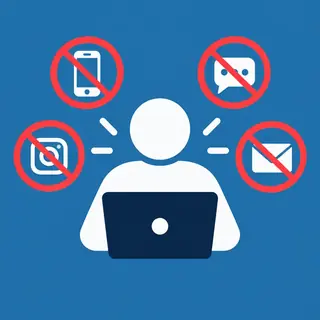
Read articleIn today’s hyper-connected world, distractions are the silent killers of productivity. Whether it’s a buzzing smartphone, an overflowing inbox, or a wandering mind, these interruptions fragment your attention and drain your energy. This subcategory of UltimateLifeHacks dives deep into the science-backed methods of mindfulness and focus techniques that help you reclaim your mental clarity. Here, you’ll discover actionable strategies to train your brain for deep work, reduce digital noise, and build a distraction-proof daily routine. Expect practical, step-by-step guidance that fits into real life—no fluff, just results.
Understanding why your brain craves distractions is the first step to conquering them. Your brain is wired to seek novelty, which is why a notification ping triggers a dopamine spike. This section explains the cognitive mechanisms behind distraction, including the role of the prefrontal cortex and the “default mode network.” You’ll learn how multitasking actually reduces efficiency by up to 40%, and why your mind wanders during tedious tasks. By grasping these biological triggers, you can design your environment to outsmart your own neural habits, rather than fighting your biology blindly.
This knowledge transforms your approach from willpower-based to system-based focus. You’ll discover that creating a “distraction budget” and using attention residue management—where you consciously switch between tasks—can dramatically improve output. We also share micro-habits like the “2-minute rule” to prevent small interruptions from becoming major time sinks. With this foundation, you’ll be equipped to implement every other technique in this subcategory with greater precision and long-term success.
Your smartphone is likely your biggest productivity saboteur, but you can turn it into a tool for focus with the right settings. This section covers advanced digital hygiene practices, such as grayscale mode to reduce app allure, scheduled “do not disturb” windows, and uninstalling time-wasting apps. You’ll learn how to use app blockers like Freedom or Forest to create enforced deep work periods. More importantly, we discuss the psychology of notification design—why badges and sounds are engineered to hook you—and how to strip them away without fear of missing out.
Beyond apps, we tackle the broader digital environment: email batching, disabling push notifications for non-essential platforms, and creating a single “focus dashboard” on your computer. You’ll also get tips for setting boundaries with colleagues and friends, so they respect your focus hours. By implementing these steps, you can cut your daily screen time by up to 2 hours, reclaiming that time for meaningful, high-value work. The goal isn’t to abandon tech, but to use it on your terms—making it a servant to your focus, not the master.
Mindfulness isn’t just sitting cross-legged for an hour; it’s a practical skill you can deploy in 60-second bursts. This section introduces micro-meditation techniques—like the 4-7-8 breathing method and the “STOP” pause (Stop, Take a breath, Observe, Proceed)—that calm your nervous system and reset attention. You’ll learn how to practice somatic awareness with a quick body scan before starting a complex task, which reduces anxiety and sharpens focus. These techniques are especially effective during transition moments, such as after a meeting or before diving into a report.
For deeper practice, we guide you through setting up a minimal daily meditation routine (5-10 minutes) using apps like Calm or Headspace, but with a focus on concentration rather than relaxation alone. We also explore walking meditation and mindful listening, which train you to anchor attention in the present. Over time, these practices increase your “attentional stamina,” allowing you to stay engaged for longer periods without mental fatigue. The result is a calmer, more resilient mind that naturally resists the pull of distractions.
Deep work—the ability to focus without distraction on a cognitively demanding task—is a superpower in the modern economy. Here, you’ll learn how to structure your day around time blocking, dedicating specific 90-minute “focus sprints” to high-priority projects. We break down the optimal work-rest ratio, showing you why 25-minute Pomodoro sessions are great for beginners, but seasoned pros often benefit from longer 52/17 intervals. You’ll also discover how to create a “shutdown ritual” to mark the end of work, preventing mental clutter from spilling into personal time.
We also provide templates for planning your ideal deep work schedule, including how to batch similar tasks and avoid context switching. You’ll learn about environmental triggers—like wearing the same hoodie or using a specific playlist—to signal your brain that it’s time for focused work. Combine this with physical tweaks: a clean desk, noise-canceling headphones, and a “distraction notebook” to jot down intrusive thoughts for later. These protocols transform your workday from reactive chaos to intentional flow, boosting both output quality and job satisfaction.
Willpower is a finite resource, so the best focus hacks rely on habit loops and physical design. This section shows you how to stack new focus habits onto existing routines—like starting a deep work session right after your morning coffee. You’ll learn to “cue” your brain with consistent triggers, such as putting your phone in another room or using a specific desk lamp. We also cover the concept of “temptation bundling,” where you pair a guilty pleasure (like a favorite podcast) with an activity you avoid (like tidying up). This makes focus feel rewarding, not punishing.
Environmental design goes beyond your desk. We explore setting up a home office that minimizes visual clutter, using plants to reduce stress, and positioning your monitor to reduce eye strain. For open-plan offices, we share tactics for creating “focus zones” with visual indicators, like a red cup or a “do not disturb” flag. You’ll also learn how to audit your daily routine for hidden time wasters—like excessive social media scrolling—and replace them with micro-focus exercises. Over two weeks, these small changes compound into a dramatically more productive and less distracted life.
Most people notice improved attention within 2-3 weeks of consistent practice, even with just 10 minutes daily. However, significant changes in neural wiring—like reduced mind-wandering—typically require 8-12 weeks. The key is consistency over intensity; short daily sessions outperform occasional marathon meditations. You’ll also see immediate benefits from environmental tweaks, like turning off notifications, which can boost focus within minutes.
Absolutely. The most powerful methods are low-tech: paper to-do lists, a physical timer, and leaving your phone in another room. Many find that analog tools reduce the temptation to check screens. You can also use body-based techniques—like the 4-7-8 breath—to reset attention. The brain doesn’t need digital aids to focus; it needs a structured environment and clear priorities.
The biggest error is relying solely on willpower, which depletes quickly. People try to “just focus” without changing their environment or habits. Successful distraction-proofing involves redesigning your workspace, scheduling focus blocks, and training attention with mindfulness. Another common mistake is attempting to multitask during focus sessions; instead, single-task intensely and take scheduled breaks to reset.
Yes, but with slight modification. For creative work that requires deep immersion, longer intervals—like 50 minutes on, 10 minutes off—often yield better results than the standard 25/5. The core benefit is enforced short breaks that prevent burnout and mental fatigue. Many creatives find the initial 5-minute warm-up phase helps enter “flow,” so start with a low-stakes warm-up task before tackling your main project.
Internal distractions are common, but you can manage them with a “thought parking lot.” Keep a notebook beside you and write down any intrusive thought to address later. This externalizes the worry, freeing your mind. Pair this with a quick grounding exercise—like naming five things you see or feel—to anchor attention. Regular mindfulness practice also reduces the intensity of racing thoughts over time, making them less disruptive.