Are Distractions Ruining Your Life? Find Out How to Take Back Control
🤔 Feeling overwhelmed? Learn to minimize daily distractions and reclaim your focus. This article reveals practical strategies to boost productivity and optimize…
Read article
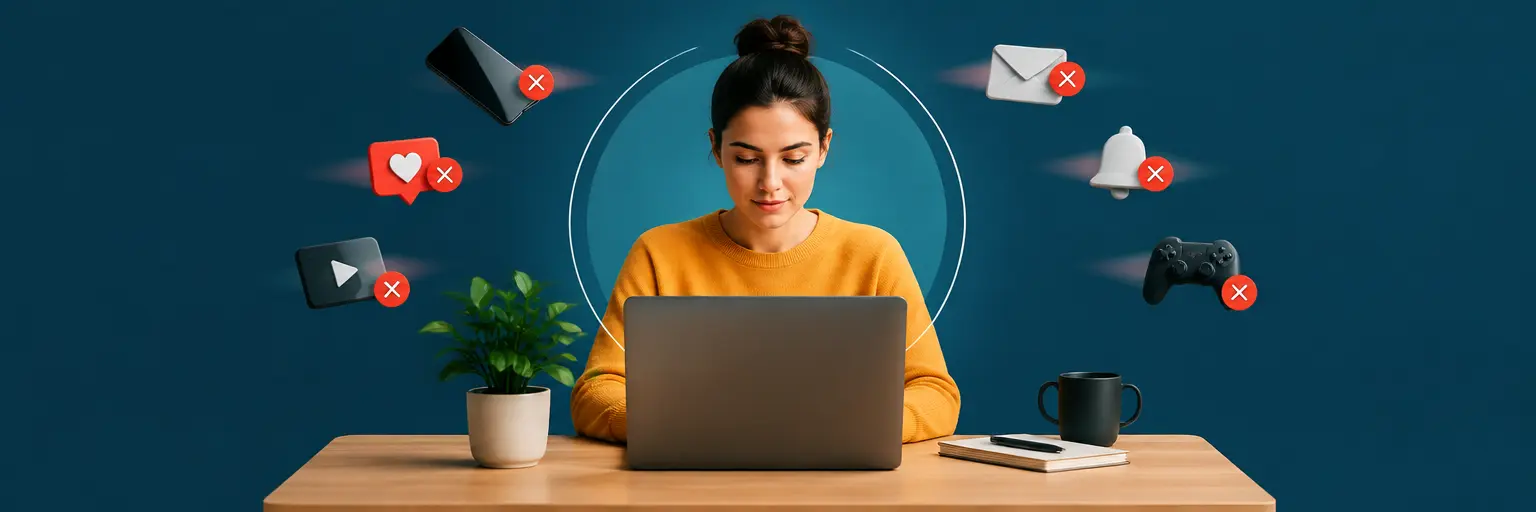
Struggling to stay focused in a world full of pings, pop-ups, and endless tabs? Minimizing distractions is the secret weapon behind every productive day, and it’s simpler than you think. From silencing non-essential notifications to creating a dedicated deep work zone, these actionable hacks help you reclaim your attention, boost concentration, and finish tasks faster. Whether you’re working from home or in a bustling office, learn how to tame digital noise, manage interruptions, and train your brain to enter flow state on demand. Say goodbye to constant context-switching and hello to laser-like focus—your to-do list will thank you. Optimize your environment, sharpen your mental clarity, and turn time-wasting habits into productive rituals with practical solutions you can implement today.

🤔 Feeling overwhelmed? Learn to minimize daily distractions and reclaim your focus. This article reveals practical strategies to boost productivity and optimize…
Read article
🤔 Unlock your creative potential by minimizing distractions. This article reveals practical strategies to create a focused environment, boosting efficiency and maximizing…
Read article
🤔 Reclaim your time! Learn powerful techniques to minimize social media distractions and boost productivity. This article reveals practical strategies for a…
Read article
🤔 Reclaim your focus and boost productivity! Learn practical techniques to minimize distractions and achieve deep work, unlocking your potential for focused,…
Read article
🤔 Conquer distractions and unlock peak productivity! This article delivers actionable distraction-free work environment tips to transform your workspace and maximize focus,…
Read article
🤔 Unlock your potential with distraction-free focus! This article reveals practical strategies to cultivate improved skills and distraction-free habits, boosting efficiency and…
Read article
🤔 Reclaim your day! Our Distraction-Free Calendar offers practical productivity tips to banish interruptions and maximize focus. Schedule smarter, not harder, for…
Read articleIn today’s hyper-connected world, distractions are the silent killers of productivity. The Minimizing Distractions subcategory within UltimateLifeHacks dives deep into actionable, science-backed strategies to reclaim your attention, boost deep work, and transform chaotic days into streamlined success. Whether you’re battling smartphone pings, noisy environments, or mental clutter, these hacks are designed to help you build a distraction-proof lifestyle—saving hours each week and improving the quality of every task you tackle. Here, you’ll find practical solutions that blend technology, environment design, and mindset shifts for lasting focus.
Your phone is likely your biggest attention thief. This section reveals how to systematically audit your apps, disable non-essential notifications, and use focus modes (like iOS Focus or Android’s Digital Wellbeing) to create tech-free time blocks. You’ll learn the “two-minute rule” for app usage—if an app doesn’t add real value, delete it—and how to schedule “notification batching” to check messages at set intervals rather than on impulse.
Expect practical setup guides for turning off badge icons, using grayscale mode to reduce visual appeal, and setting up automatic Do Not Disturb schedules during deep work hours. We also cover browser extensions like StayFocusd and Forest to block distracting websites, plus how to create a dumb phone hybrid setup that retains essential functions without the endless scroll. These tips are perfect for remote workers, students, and anyone who feels addicted to their feed.
Your physical environment silently dictates your mental clarity. This subcategory teaches you how to design a workspace that naturally minimizes interruptions—from the placement of your desk to lighting and noise control. You’ll discover the visual noise principle: clearing clutter from your immediate line of sight reduces cognitive load by up to 40%, according to Princeton research. We share checklists for desk organization, cable management, and using plants or white noise machines to mask disruptive sounds.
Expect guides on creating “focus zones” in open-plan offices or busy homes, using noise-cancelling headphones effectively, and implementing the 10-foot rule—keeping your phone and unrelated devices at least 10 feet away from your primary work area. For home workers, we cover setting boundaries with family members via visual signals (like a red “do not disturb” door hanger) and scheduling “meeting-free hours” to protect deep work blocks. These environmental tweaks require zero willpower, making them the most sustainable distraction fixes.
Distractions often flourish in unstructured time. In this section, we explore advanced time-management frameworks that turn vague intentions into rigid focus windows. You’ll learn how to time-block your entire day—assigning specific minutes to tasks, breaks, and even procrastination—so your brain knows exactly when to switch gears. We break down the Pomodoro Technique’s 25/5 cycle and its variations (like 50/10 or 90/20) for those with longer attention spans.
Expect templates for weekly planning, a step-by-step guide to setting up calendar invites that block distracting meetings, and how to use “transition rituals” (like stretching or making tea) to mentally prepare for deep work. We also address common pitfalls, such as multitasking during breaks, and share tools like Toggl Track and Clockify to measure your distraction-free time. This section is ideal for freelancers, creatives, and executives who need predictable, high-output work periods.
External distractions are only half the battle—internal mental chatter can be just as disruptive. Here, we focus on cognitive techniques to strengthen your attentional control. You’ll learn quick 2-minute breathing exercises to reset before challenging tasks, the “5-4-3-2-1” grounding method for anxious moments, and how to implement a daily “worry dump” journal to clear intrusive thoughts from your mind before work begins.
Expect guides on cognitive defusion—acknowledging distracting thoughts without acting on them—and how to build a “temptation bundling” habit (pairing a low-focus task with a high-reward treat) to stay motivated. We also cover the power of single-tasking over multitasking, backed by neuroscience showing that task-switching costs up to 40% of your productive time. These mental filters are essential for anyone prone to anxiety, perfectionism, or persistent daydreaming during critical work.
Not all productivity apps are created equal—many create more noise than they eliminate. This section provides a curated, honest review of distraction-minimizing software, from website blockers (Freedom, Cold Turkey) to email schedulers (Boomerang, SaneBox) and focus playlists (Brain.fm, Endel). We cut through the hype, sharing what works for different personality types and work styles, plus free alternatives for budget-conscious readers.
Expect step-by-step setup guides for Focus Assist on Windows and Night Shift on Mac to reduce eye strain, plus how to use “app timers” on your phone to auto-limit social media usage. We also discuss analog tools—like paper planners, whiteboards, and the “index card trick” (writing one task on a card and hiding others)—which many find even more effective than digital versions. This no-nonsense overview saves you hours of trial-and-error testing, ensuring you only adopt tools that deliver measurable focus improvements.
Quick wins are great, but lasting change requires habit formation. Here, we guide you through creating a personalized distraction-reduction routine that sticks. Using the “habit loop” (cue, routine, reward), you’ll design cues that trigger focus—like a specific playlist or a clean desk—and rewards that reinforce the behavior, such as a short walk after a completed time block. We also cover the “2-day rule” to avoid breaking your streak and how to use habit tracking apps like Habitica or Streaks.
Expect practical advice on habit stacking (linking new focus habits to existing ones, like brushing your teeth) and how to conduct a weekly “distraction audit” to identify repeating interruptions and adjust your environment accordingly. We also address social accountability—sharing your focus goals with a friend or colleague to stay committed. This section ensures that minimizing distractions becomes second nature, freeing your mental energy for what truly matters in your personal and professional life.
Enable “Do Not Disturb” or Focus mode with a custom schedule, then turn your phone’s display to grayscale. This removes color cues that trigger app cravings. Also, move distracting apps off your home screen into a folder—this adds friction that reduces opening them. Finally, set a 15-minute “no phone” window before each work block to build a cue.
It depends on the task. For repetitive or creative tasks, lyric-free instrumental music or white noise can mask environmental sounds and improve focus. For complex problem-solving or reading, silence is best. Use apps like Brain.fm for science-backed focus tracks, and always test your own performance—if music causes you to sing along or shift attention, skip it.
Set clear physical and visual boundaries: wear headphones (even if off), place a “Do Not Disturb” sign, and communicate your deep work hours via a shared calendar. For colleagues, schedule “office hours” for questions. For family, agree on specific “quiet time” blocks. Reinforce these boundaries calmly and consistently—politeness plus predictability works best.
For Chrome and Firefox, use StayFocusd (free) to set time limits on sites like YouTube or news pages. Cold Turkey (free for basic features) is excellent for Windows and Mac. For a simple interim solution, edit your hosts file to block domains, or use the built-in “Screen Time” on Mac to restrict web content during specific hours.
No—multitasking is a myth. Your brain rapidly switches between tasks, losing focus and increasing errors. Even routine tasks like listening to a podcast while cleaning are fine, but for cognitive work, you need single-tasking. Instead, batch similar low-focus tasks (like email checking) into one time block to reduce switching costs and preserve your attention.