The Future of Lighting is Smart: Why You Should Upgrade Today
💡 Transform your home with smart lighting! Experience unparalleled convenience and energy savings through home automation benefits; upgrade today and reclaim valuable…
Read article
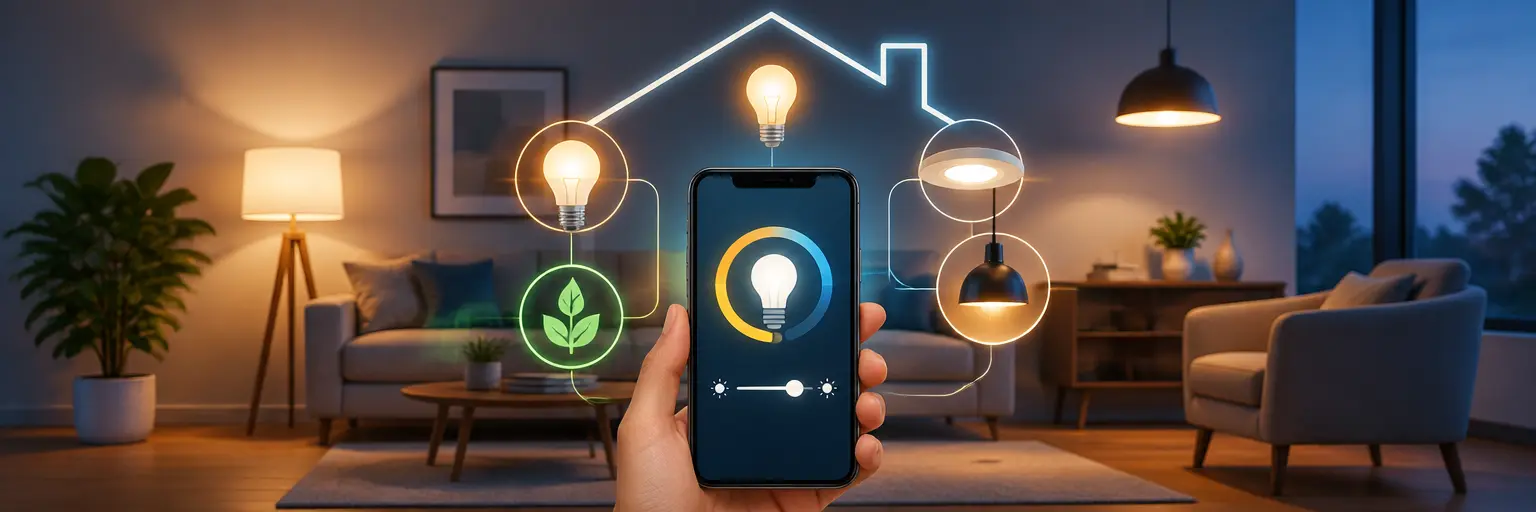
Smart lighting is the easiest, most impactful upgrade for an energy-efficient smart home—slashing electricity bills while boosting convenience. By swapping traditional bulbs for LED smart lights, you can cut lighting energy use by up to 75%, and with automation, you’ll never waste power on empty rooms again. Motion sensors, scheduling, and daylight-mimicking routines turn your lighting into a self-managing system that adapts to your lifestyle, not the other way around. Whether you’re dimming for movie night, setting sunrise alarms, or controlling every bulb from your phone, smart lighting delivers instant savings and seamless control—no rewiring needed. It’s a low-effort, high-reward life hack for anyone looking to optimize daily routines and keep their carbon footprint (and utility bills) in check. Perfect for busy households, renters, or tech-curious DIYers, this tech transforms your home into a smarter, greener, and more comfortable space—starting with a simple bulb change.
💡 Transform your home with smart lighting! Experience unparalleled convenience and energy savings through home automation benefits; upgrade today and reclaim valuable…
Read article
💡 Draining energy and money? Uncover hidden energy vampires in your home and learn how smart lighting solutions can drastically cut your…
Read articleWelcome to UltimateLifeHacks’ dedicated guide on smart lighting for energy efficiency—your shortcut to cutting electricity bills, reducing waste, and automating comfort without lifting a finger. By integrating intelligent bulbs, sensors, and schedules, you can slash lighting energy use by up to 80% while boosting home security and mood. In this subcategory, we focus strictly on practical, cost-effective hacks that fit into any daily routine, from retrofitting existing fixtures to syncing lights with your sleep cycle. Expect actionable setups, product-agnostic tips, and measurable savings—no jargon, just results.
Unlike conventional bulbs that run at full brightness until switched off, smart lighting systems use LED technology, motion detection, and adaptive dimming to consume only what you need. For example, a smart LED bulb uses roughly 75% less energy than an incandescent equivalent, while sensors can turn lights off automatically when a room is empty—eliminating the “forgot to switch off” habit that wastes up to 10% of household electricity. Even better, advanced systems learn your occupancy patterns over time, pre-adjusting brightness based on natural daylight and your presence, which translates to consistent, measurable monthly savings without any behavioral change.
From a practical standpoint, retrofitting is simple: replace your most-used bulbs (living room, kitchen, hallway) with smart LEDs and pair them with a hub or app. You can then schedule “away” modes, set timers for morning routines, and use geofencing so lights turn off the moment you leave the house. This subcategory will guide you through selecting the right color temperature (warm vs. cool) for energy efficiency—cooler light at 5000K can reduce the need for extra lamps—and show you how to calculate your payback period, typically under 6 months for a 3-bedroom home. No need for an electrician; most setups are plug-and-play.
Scenes are pre-set lighting configurations that trigger automatically, and they are your secret weapon against wasted energy. For instance, a “Morning Boost” scene gradually brightens your kitchen from 6:00 AM to 6:15 AM, using only 20% power until you actually walk in—saving up to 1.5 kWh weekly per family member. Similarly, a “Movie Night” scene dims all lights to 10% and turns off unused zones, reducing consumption by 90% during entertainment hours. The key is to map scenes to your real routine: wake time, work hours, cooking windows, and bedtime, so lights never burn when nobody’s there.
Beyond scenes, integrate your smart lights with other sensors—like door/window contacts or smart plugs—to create cascading “if-then” rules. For example, when you open your front door at dusk, the porch light turns on at 50% for 5 minutes, then off—eliminating the all-night outdoor lighting that wastes energy. You can also sync with weather forecasts: on cloudy days, lights stay at 70% longer; on sunny days, they dim automatically. These micro-automations compound into annual savings of 30-40% on lighting alone, and we’ll walk you through building them in less than ten minutes using free apps like Home Assistant, SmartThings, or Alexa routines.
This is a common dilemma, but the answer depends on your fixture type. Smart plugs are ideal for lamps, fans, and holiday lights because they cut power completely when off, eliminating standby “vampire” drain (which can account for 5-10% of your bill). They cost $8-15 each, work with existing bulbs, and are perfect for non-LED fixtures. Meanwhile, smart bulbs (starting at $10) offer dimming, color tuning, and occupancy sensing, but they still draw a small standby power (0.5-1W) even when “off.” For maximum efficiency, use smart bulbs in high-traffic rooms with automation, and smart plugs for rarely used devices like printers or guest room lamps.
Our recommendation: for a typical home, start with smart plugs on your top five energy hogs—media centers, space heaters, and decorative lamps—and add smart bulbs only where you need dimming or color. This hybrid approach reduces upfront cost and still cuts energy use by 25-35%. We’ll also cover dimmer switches (often overlooked) that work with smart bulbs to lower energy use further, since dimming a light to 50% can save up to 40% electricity. Test your setup with a smart meter or energy monitor (like Sense or Emporia) to see real-time savings, then tweak schedules—your wallet will thank you by month’s end.
The most powerful energy-saving feature of smart lighting is geofencing—using your phone’s location to control lights. When you leave home, all lights turn off automatically; when you’re within 500 meters, lights you designate (hallway, porch) turn on at low brightness, so you never return to a dark house. This alone prevents the “left for work with bathroom light on” scenario, saving an average of 15 minutes of lighting per day per person. Combine geofencing with sunrise/sunset schedules, and you’ll never waste energy during daylight hours. For shift workers or irregular schedules, use “smart presence” simulation that cycles lights at varied times to mimic occupancy, deterring burglars while keeping energy use under 0.5 kWh nightly.
Implementation is straightforward: in your app (e.g., Philips Hue, LIFX, or Kasa), set “Home” and “Away” zones, then assign lights per room. For optimal savings, add “vacation mode” which randomizes on/off every 15-30 minutes—this matches human behavior better than fixed timers and avoids the “same time every night” pattern that wastes energy and signals absence. Remember to disable geofencing when you have guests or pets, as sensors might keep lights off unexpectedly. We’ll also share a free template for scheduling that aligns with your workweek and weekend sleep patterns, cutting lighting runtime by up to 5 hours daily.
Lighting at night is a major hidden waste—many homes keep hallways, kitchens, and bathrooms at full brightness from 10 PM to 7 AM. Smart lighting solves this with “night mode” scenes that reduce intensity to 5-15% and shift to warm amber tones (2700K or lower). This not only saves electricity (dimmed LEDs use exponentially less power) but also protects your circadian rhythm by avoiding blue light, which suppresses melatonin. For example, a dimmed night light in the bathroom uses 1.2W instead of 9W, saving roughly 0.15 kWh per night—over a year, that’s 55 kWh per fixture, enough to power a laptop for weeks. Motion-activated night lights in corridors can cut that further to <0.1 kWh yearly.
To set this up, create a “Night Owl” scene that activates 30 minutes after sunset: all lights drop to 10% except essential paths (stairs, bathroom), and any light you turn on manually stays dimmed for 15 minutes before returning to “normal” in the morning. Use smart sensors with adjustable sensitivity and timeout (30-60 seconds) to avoid constant triggering. Also consider “sunset smoothing”—lights gradually dim over 20 minutes as daylight fades, reducing the need for electric lights altogether. This subcategory provides step-by-step dimming curves and sensor placement maps to maximize savings without sacrificing safety. You’ll notice better sleep and a lower bill simultaneously.
On average, households cut lighting energy use by 40-60% in the first month. For a typical 2,000 sq ft home spending $30/month on lighting, that’s $12-18 saved per month—or $144-216 yearly. Over 5 years, including bulb replacement costs, net savings exceed $800. The exact number depends on your current bulbs (LED vs. incandescent) and how many lights you automate.
Yes, most smart bulbs draw 0.5-1W in standby for Wi-Fi or Bluetooth connectivity. Over a month, that’s 0.36-0.72 kWh per bulb—about 5-10 cents each. For 10 bulbs, that’s $6-12 extra yearly. To minimize, use smart plugs on non-smart bulbs (they cut power fully when off) and group bulbs on a single smart switch that can disconnect standby power.
Usually no—traditional dimmers are incompatible with smart LEDs and can cause flickering, buzzing, or permanent damage. Instead, replace the wall switch with a smart dimmer (like Lutron Caseta) or use smart bulbs with your standard on/off switch left fully on. Always check compatibility before installation; many smart bulbs are “dimmable” only via app or hub, not wall switches.
Absolutely. Renters can buy smart bulbs and plugs that simply unscrew and plug in—no permanent wiring needed. You can achieve 50% energy savings with portable sensors and strips. Plus, you can take them when you move, making it a low-risk investment. Many brands offer renter-friendly mounting tapes for sensors that leave no residue.
Start with a starter kit (e.g., Philips Hue or Wyze) that includes 2-4 bulbs and a hub for under $50. Focus on high-use rooms: living room, kitchen, and entryway. Set up geofencing and one schedule—that alone will show a 20% drop on your next bill. Then expand gradually, buying one smart plug or bulb per month as savings accumulate.