The Eisenhower Matrix: A StepbyStep Guide for Time Management Success
😊 Conquer your to-do list with our Eisenhower Matrix time management guide! This step-by-step tutorial shows you how to prioritize tasks effectively,…
Read article

Master your day with the Eisenhower Matrix—a powerful, time-tested framework that helps you separate the urgent from the important so you can focus on what truly moves the needle. Instead of drowning in a chaotic to-do list, this simple 2×2 grid lets you prioritize like a pro: tackle high-impact tasks first, schedule meaningful work, delegate distractions, and ruthlessly eliminate time-wasters. By learning to sort tasks into “Do,” “Decide,” “Delegate,” and “Delete,” you’ll cut decision fatigue, slash procrastination, and reclaim hours every week. Whether you’re an entrepreneur, a busy professional, or a student juggling deadlines, these practical time management tips will transform your productivity system from reactive to strategic. Ready to stop spinning your wheels and start achieving more with less stress? Dive in to discover how to apply the Eisenhower Matrix to your daily routine, avoid common pitfalls, and build a sustainable habit that keeps your attention locked on high-value work—not just the loudest task. Optimize your workflow, boost efficiency, and take full control of your calendar with this essential productivity hack.
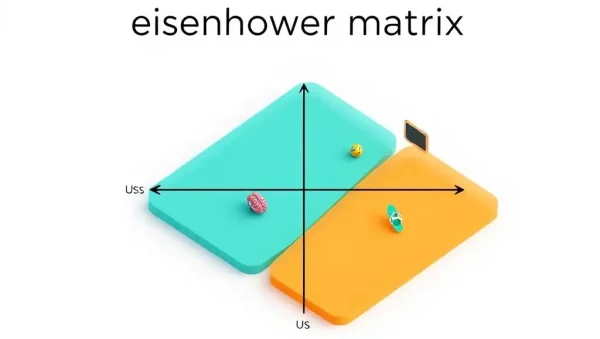
😊 Conquer your to-do list with our Eisenhower Matrix time management guide! This step-by-step tutorial shows you how to prioritize tasks effectively,…
Read article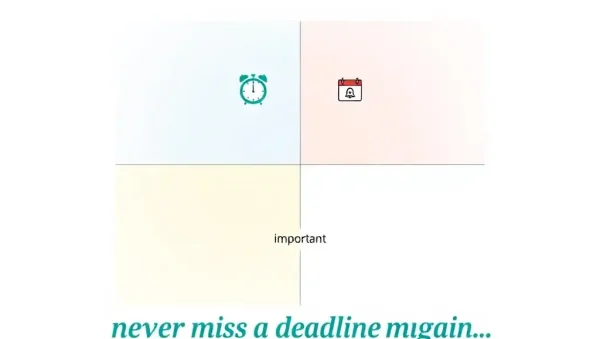
😊 Conquer procrastination and boost your Eisenhower Matrix deadline productivity! This simple matrix prioritizes tasks by urgency and importance, ensuring you never…
Read articleWelcome to the ultimate guide on the Eisenhower Matrix—a proven time management technique that helps you prioritize tasks by urgency and importance. At UltimateLifeHacks, we break down this powerful decision-making tool into actionable steps, so you can stop firefighting and start focusing on what truly moves the needle. Whether you're a busy professional, student, or entrepreneur, these productivity hacks will transform your daily workflow, reduce stress, and boost efficiency. Dive in to learn how to categorize tasks, avoid common pitfalls, and integrate the matrix with digital tools for lasting results.
The Eisenhower Matrix, also known as the Urgent-Important Matrix, divides tasks into four distinct quadrants: Urgent & Important (do now), Important but Not Urgent (schedule), Urgent but Not Important (delegate), and Neither Urgent nor Important (delete). This framework, inspired by President Dwight D. Eisenhower, forces you to evaluate every task's true impact. By mastering this classification, you’ll immediately reduce decision fatigue and reclaim hours in your day. It’s not just about working harder—it’s about working smarter by aligning your efforts with long-term goals.
In practice, most people spend too much time on urgent-but-unimportant distractions like constant emails or unplanned meetings. The matrix helps you consciously shift time toward Quadrant II—tasks like planning, exercise, and relationship building—that prevent crises before they start. As a core productivity hack, this system reveals why you feel busy yet unproductive. Start by listing your top 10 tasks for the day, then place each into a quadrant. Over time, you’ll develop an intuitive sense of what deserves your energy, making your time management more strategic and less reactive.
Creating your own matrix takes less than ten minutes daily. First, draw a 2x2 grid on paper or use a spreadsheet. Label the vertical axis "Urgency" and the horizontal axis "Importance." Next, brainstorm all pending tasks—from work deadlines to personal errands—and assign each to a quadrant based on two simple questions: "Does this require immediate action?" and "Does this significantly impact my goals?" This deliberate process eliminates guesswork and gives you a clear visual of your priorities. For best results, do this every morning before checking notifications; it sets a focused tone for the day.
To maximize effectiveness, use a digital template from apps like Notion, Trello, or even a simple Google Sheet. Color-code your quadrants—red for do now, yellow for schedule, blue for delegate, and gray for delete—to trigger quick recognition. Also, set a weekly review session where you examine your completed tasks to refine your priority-setting skills. This habit ensures you’re consistently applying the Eisenhower Matrix to real-life scenarios, not just theorizing. Over time, you’ll notice a dramatic drop in last-minute panic and a steady rise in proactive, meaningful work.
Imagine you’re a project manager: a server crash (urgent & important) requires immediate action, while preparing next quarter’s strategy (important, not urgent) should be scheduled for a quiet hour. Meanwhile, an unscheduled client call (urgent, not important) can be delegated to a teammate, and scrolling social media (neither) is deleted. These examples illustrate how the matrix adapts to any profession—from healthcare to creative fields. By categorizing tasks objectively, you avoid the trap of "everything feels urgent," which is common in high-pressure environments.
Consider personal life too: paying a late bill is urgent & important; booking a dentist appointment is important but not urgent; answering spam texts is urgent but not important; watching endless TV is neither. This universal applicability makes the Eisenhower Matrix a cornerstone of productivity hacks for all ages. The key is to be brutally honest with yourself—most tasks aren’t as important as they seem. Use the 80/20 rule: the top 20% of your efforts produce 80% of results, so channel your energy into Quadrant I and II tasks that yield the greatest returns.
Many beginners fail by confusing urgency with importance. For instance, a buzzing phone feels urgent but is rarely important—unless it’s a critical call. Another mistake is overloading Quadrant I until you’re constantly stressed; the goal is to reduce this quadrant by proactively handling Quadrant II tasks. Also, avoid “delegation avoidance”—if you can hand off a task, do it, even if it takes initial time to explain. Without these corrections, the matrix becomes just another list, not a transformative time management tool.
Additionally, some users make the matrix too rigid, ignoring that tasks can shift quadrants during the day. For example, a non-urgent report becomes urgent if the deadline arrives. Therefore, review your matrix mid-morning and mid-afternoon. Also, don’t forget to include breaks and self-care—they belong in Quadrant II as important for long-term health. By avoiding these traps, you’ll see the matrix as a flexible guide rather than a strict rulebook. Enjoy the clarity it brings and the freedom from constant mental clutter.
To leverage technology, integrate the matrix into productivity apps like Todoist, ClickUp, or Asana, which offer customizable priority labels that mimic quadrants. For a dedicated experience, try apps like "Eisenhower Matrix" or "Priority Matrix" available on iOS and Android—they sync across devices and provide reminders. Using these tools automates the categorization process, allowing you to focus on execution. Pair your app with calendar blocking: schedule Quadrant II tasks as fixed appointments to ensure they happen.
For a low-tech yet effective approach, use a physical whiteboard in your workspace, divided into four sections—this visual cue is hard to ignore. Alternatively, use voice assistants to quickly log tasks ("Hey Siri, add 'draft budget' to important-not-urgent"). Regardless of the tool, the core principle remains: prioritize ruthlessly. These digital aids reduce friction and make the matrix a daily habit. With consistent use, you’ll notice higher output, less stress, and more time for what truly matters—both at work and at home.
A to-do list only shows what to do, not what to prioritize. The matrix adds a decision layer by rating tasks on urgency and importance, helping you avoid spending time on low-value activities. It forces you to delegate or delete tasks, leading to more strategic time management.
Absolutely. Parents can use it to balance family emergencies (urgent-important) with planning school projects (important-not-urgent). Students can categorize exam prep as urgent-important and social media as neither. Its flexibility makes it ideal for any role with competing demands.
Review it every morning for daily task planning and at the end of each week for a bigger picture. Mid-day updates are also helpful, especially if new urgent tasks arise. Consistent reviews keep your priorities aligned with changing circumstances.
That’s a common sign of burnout or poor planning. Step back and ask: "What happens if I delay this by a day?" Many tasks lose urgency. Focus on delegating or saying no more often, and deliberately schedule Quadrant II activities to prevent future crises.
The main downside is misjudging a task’s importance, which can lead to neglect. Also, it doesn’t account for energy levels—some people are better at deep work in mornings. However, with practice and self-awareness, these drawbacks are manageable. Use it flexibly, not rigidly.